Launching a 360 photo booth business is an exciting venture where your creative flair meets business savvy. While the startup costs are often more manageable than for other event services, that accessibility means you'll face competition and need a solid plan to succeed.
This guide will take you through the practical steps of validating your concept, acquiring the right equipment, getting the proper licenses, and marketing your packages to help you launch a successful 360 photo booth business in the U.S.
Step 1: Create your business plan and validate your idea
Start by researching your local market. Check event planning websites like The Knot and WeddingWire for your area. Also, search Instagram and Facebook for hashtags like #[YourCity]PhotoBooth to see who is active and what kind of events they work.
Analyze your local competition
Look up at least five direct competitors. Note their pricing, package details, and the style of their setup. A common mistake is to simply copy a competitor's pricing without calculating your own costs, which can hurt your profitability from day one.
You can use Google Maps to find businesses near you and review their customer feedback. This research helps you find a gap in the market, whether it is a lower price point, a unique theme, or better service.
Estimate your startup costs
With a better sense of the market, you can now budget. Your 360 photo booth platform is the main investment. A frequent misstep is opting for the cheapest option online, only to find it lacks support or reliability. Consider U.S.-based suppliers with good reviews.
Here is a typical breakdown of initial expenses:
- 360 Photo Booth Platform: $3,000 - $7,000
- Camera (iPhone/GoPro): $500 - $1,200
- Sharing Software: $50 - $150 per month
- Lighting and Props: $200 - $500
- Business Registration & Insurance: $300 - $800
Your total initial investment will likely fall between $4,000 and $10,000. This range depends heavily on the quality of the platform and camera you choose.
Here are 4 immediate steps to take:
- Research five local competitors on Instagram and Google Maps.
- Create a spreadsheet to list your potential startup costs.
- Check Google Trends for "360 photo booth" search volume in your city.
- Draft a list of three potential business names.
Step 2: Set up your legal structure and licensing
With your research done, it is time to make your business official. This step protects you legally and financially. It is a foundational part of building a sustainable company rather than just a weekend hobby.
Choose your business structure
You might want to consider forming a Limited Liability Company (LLC). It separates your personal assets from your business debts. Many new owners operate as a sole proprietorship to save money, but this puts personal assets like your home at risk if a lawsuit happens.
Filing for an LLC typically costs between $50 and $500, depending on your state. You can file directly with your Secretary of State. An LLC also allows for pass-through taxation, which simplifies your tax filings by letting you report business income on your personal tax return.
Secure licenses and insurance
First, get a federal Employer Identification Number (EIN) from the IRS website; it is free and you will need it for taxes and banking. Next, apply for a general business license from your city or county clerk's office. This usually costs between $50 and $100 per year.
General liability insurance is non-negotiable. Most event venues will not let you operate without proof of at least a $1 million policy. This can cost between $400 and $600 annually, but it protects you from claims related to injuries or property damage.
Here are 4 immediate steps to take:
- Decide between forming an LLC or operating as a sole proprietorship.
- Apply for a free EIN on the official IRS website.
- Check your local city government's website for business license forms.
- Contact an insurance agent for a quote on a $1 million general liability policy.
Step 3: Secure your insurance and manage risks
Most venues require a $1 million general liability policy before you can set up. This protects you if a guest trips over the platform or the rotating arm causes an injury. Expect annual premiums to be between $400 and $700.
Protect your gear and operations
You will also want equipment insurance, sometimes called inland marine insurance, to cover your booth and camera from damage or theft. Some owners learn the hard way that their policy does not cover gear in transit, so confirm this detail with your agent.
If you use a vehicle exclusively for your business, you will need a commercial auto policy. Once you hire your first employee, you must also add workers' compensation insurance. These policies address different risks than your general liability coverage.
You might want to consider providers who specialize in event services. Look into companies like Thimble, Hiscox, or The Hartford for quotes. They understand the specific risks of the photo booth industry and can issue a Certificate of Insurance (COI) quickly.
Here are 4 immediate steps to take:
- Request quotes for a $1 million general liability policy.
- Ask insurers if their equipment policy covers gear in transit.
- Check with providers like Thimble, Hiscox, and The Hartford.
- Determine if you need commercial auto or workers' comp insurance.
Step 4: Purchase your equipment and set up storage
You do not need a commercial storefront. A 5x10 foot climate-controlled storage unit provides about 50 square feet, which is plenty of space for your gear. This approach avoids complex lease negotiations and zoning issues that come with a retail location.
Invest in your core setup
Your main purchase is the 360 platform. Many new owners are tempted by low prices on overseas marketplace sites, but they often face support and software issues. You might want to consider U.S.-based suppliers like RevoSpin or OrcaVue for better reliability.
For your camera, a recent iPhone model or a GoPro HERO series camera works well. Pair it with sharing software like Touchpix or LumaBooth, which costs around $50 per month. Always confirm the software is compatible with your chosen booth platform before you buy.
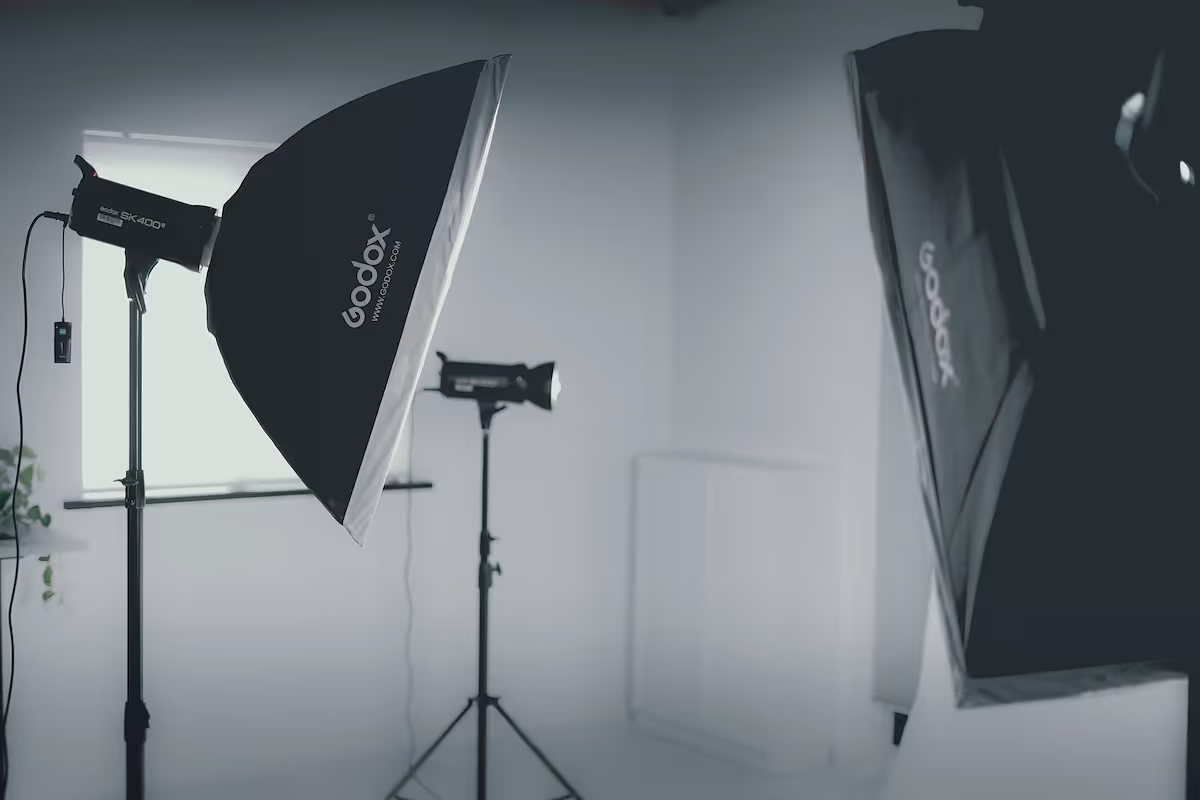
Finally, budget about $300 for a good ring light and a starter set of props. Good lighting is what separates amateur-looking videos from professional ones. You can find prop kits on Amazon or Etsy to match different event themes.
Here are 4 immediate steps to take:
- Research U.S.-based 360 booth suppliers like RevoSpin and OrcaVue.
- Compare the latest iPhone and GoPro models for video quality.
- Get pricing for a 5'x10' climate-controlled storage unit near you.
- Check out the features of sharing software like Touchpix and LumaBooth.
Step 5: Set up your payment processing
Define your payment terms
A standard practice is to require a 50% non-refundable deposit to secure a booking. This protects you from last-minute cancellations. The remaining balance is usually due 7 to 14 days before the event date. Make sure these terms are clearly stated in your client contract.
For payments, you should be ready to accept credit cards and digital wallets. Relying on cash or checks can seem unprofessional and adds the hassle of bank deposits. A streamlined digital process makes you look more established and simplifies your bookkeeping.
Choose your payment solution
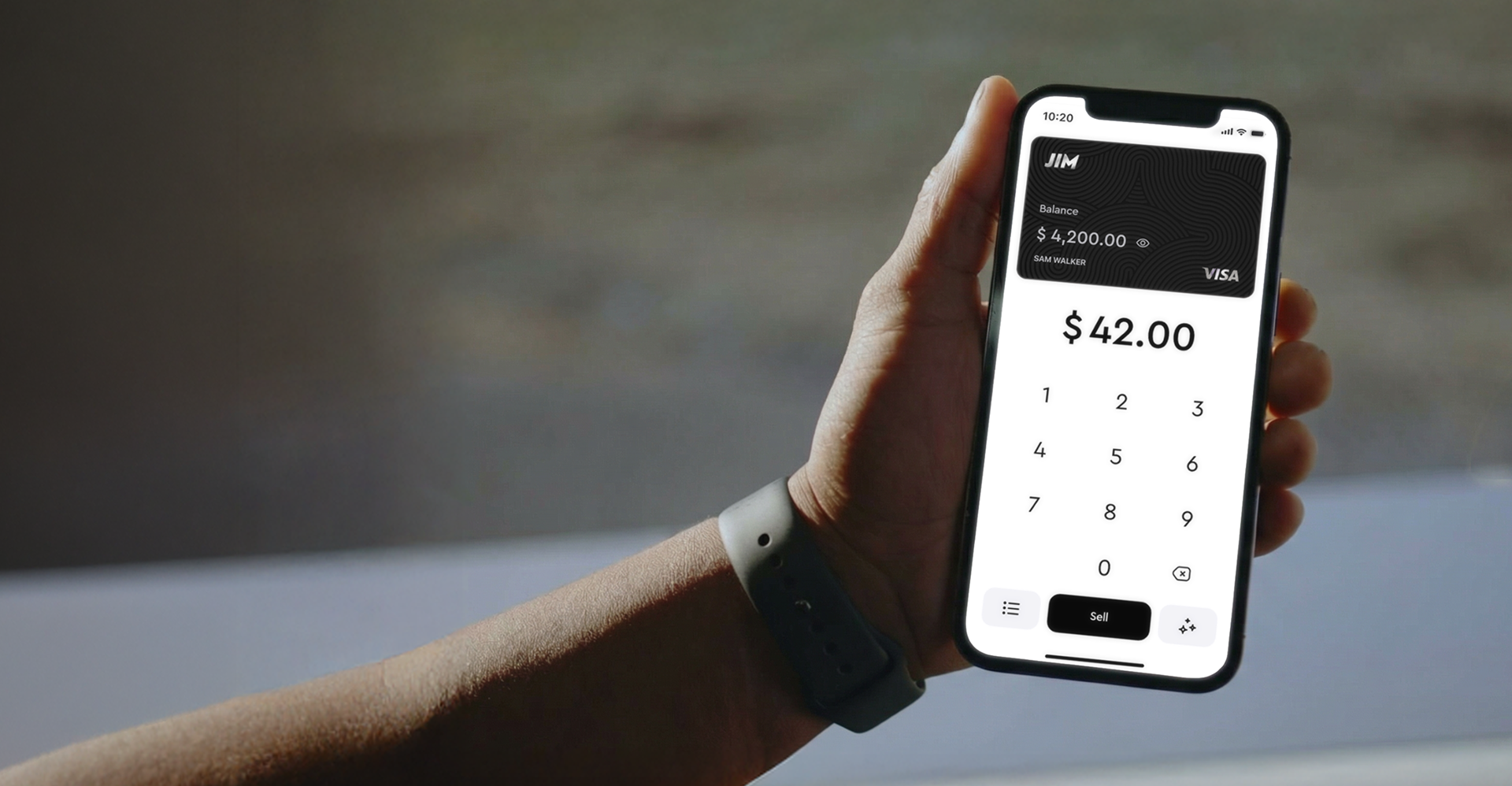
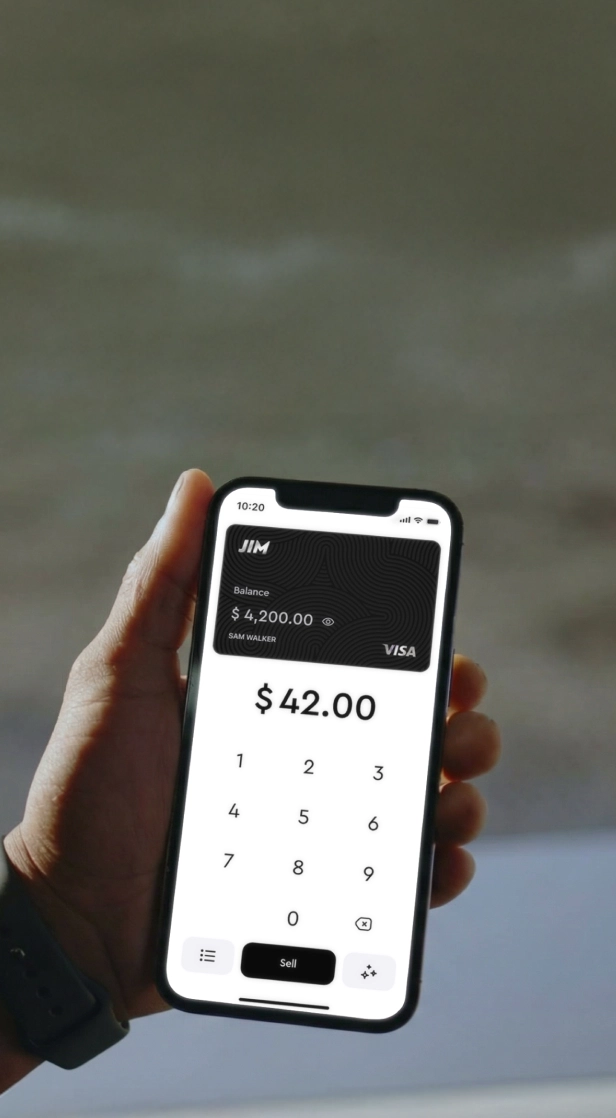
For a 360 photo booth business that needs to accept payments on-site, JIM offers a streamlined solution. With JIM, you can accept debit, credit, and digital wallets directly through your smartphone. Just tap and you are done. Many processors charge between 2.5% and 3.5% per transaction.
JIM is different, at just 1.99% per transaction with no hidden costs or extra hardware needed. It is particularly useful for collecting final payments or selling extra time at an event. Here is how it works:
- Get Started: Download the JIM app for iOS.
- Make a Sale: Type the sales amount, hit sell, and ask your customer to tap their card or device on your phone.
- Access Funds: Your money is available right on your JIM card as soon as the sale is done, no waiting for bank transfers.
Here are 4 immediate steps to take:
- Draft your standard payment terms, including deposit and final balance dates.
- Find a basic event service contract template to review.
- Compare JIM's 1.99% rate with other mobile payment options.
- Download the JIM app to explore its interface.
Step 6: Secure your funding and manage finances
Explore your funding options
Many owners self-fund with personal savings. You can also consider a personal loan, which may offer $5,000 to $15,000 with interest rates from 8% to 20%, depending on your credit score. A strong score above 670 improves your chances.
Another path is an SBA Microloan. These government-backed loans range from $500 to $50,000 and are great for new businesses. Lenders will want to see the business plan you created in step one. Interest rates typically fall between 8% and 13%.
Calculate your working capital
Some owners only budget for the equipment, forgetting the monthly costs that hit before bookings roll in. You will need working capital for software subscriptions, insurance payments, and marketing ads. This is the money that keeps you running.
For the first six months, you should have at least $2,000 to $4,000 set aside. This buffer ensures you can operate professionally without financial stress while you build your client base. Also, open a separate business checking account to keep your finances clean from day one.
Here are 4 immediate steps to take:
- Check your credit score to assess personal loan eligibility.
- Research SBA-approved microlenders in your state.
- Calculate your working capital needs for the first six months.
- Open a dedicated business checking account to separate your funds.
Step 7: Hire your team and set up operations
Your first hire will likely be a part-time Booth Attendant. This person handles setup, operates the booth, assists guests, and tears down the equipment. Expect to pay between $20 and $35 per hour, depending on your local market and the attendant's experience.
Train for success
No formal certifications are needed, but your team must know your specific equipment and software. Some owners focus only on technical skills. You should also train your attendant on how to interact with guests and represent your brand professionally. This person is the face of your business.
For scheduling, a shared Google Calendar works well when you start. As you book more events, you might consider client management software like HoneyBook or Dubsado. These platforms help manage bookings, contracts, and scheduling in one place.
Scale your operations
You will likely operate the booth yourself at first. Once you have multiple bookings on the same day, you will need to hire. A good benchmark is to have one attendant for every $50,000 to $75,000 in annual revenue you generate.
Here are 4 immediate steps to take:
- Draft a job description for a part-time Booth Attendant.
- Set an hourly pay rate for your first hire based on local market rates.
- Create a short training checklist for your specific equipment and software.
- Explore client management software like HoneyBook and Dubsado.
Step 8: Market your services and book your first clients
Your marketing starts with a strong visual portfolio. Before you even look for clients, you need high-quality video examples. You can offer to set up for free at a friend's party or a local community event to capture your first few videos.
Focus your efforts on Instagram and TikTok. Post your best clips as Reels and TikTok videos, using hashtags like #[YourCity]Events and #[YourCity]Weddings. This is how most clients will find and evaluate your service. A weak social media presence is a common reason new businesses struggle.
Build local partnerships
Reach out to at least five local event planners and wedding venues. Introduce yourself and offer a 10-15% commission for any clients they refer to you. This creates a powerful sales channel that brings you qualified leads without upfront marketing costs.
You might also want to list your business on event directories like The Knot or WeddingWire. These platforms put you directly in front of your target audience, though they often come with a monthly or annual fee. It is a direct path to your first bookings.
Here are 4 immediate steps to take:
- Create your business profiles on Instagram and TikTok.
- Film and edit three high-quality demo videos for your portfolio.
- Draft an email template to introduce your services to local event planners.
- Research the listing fees for The Knot and WeddingWire in your market.
Step 9: Price your packages for profitability
Start by building hourly packages, which is the industry standard. A 2-hour package typically runs from $500 to $800, while a 3-hour event can command $700 to $1,100. These prices should include an attendant, props, and a digital gallery for guests after the event.
Some new owners price too low just to get their first clients. This can signal poor quality and hurt your brand long-term. Instead, analyze your competitors' pricing and position yourself in the middle of the market, focusing on the value you provide.
Create profitable add-ons
Your base packages get you in the door, but add-ons significantly boost your revenue per event. With this in mind, you can create a menu of premium extras. For example, you could offer a custom-branded backdrop for $150 or an extra hour of service for $200.
Your profit margins on these services are high. A typical 3-hour event might cost you $100 to $150 in direct expenses like attendant pay. If you charge $900 for the package, your gross profit is around $750, showing just how lucrative this business can be.
Here are 4 immediate steps to take:
- Analyze the package prices of three local competitors.
- Create a 2-hour and a 3-hour package for your business.
- List three add-ons and set a price for each one.
- Calculate your estimated profit for one 3-hour event.
Step 10: Maintain quality and scale your operations
Set your quality standards
To measure service quality, aim for a 95% client satisfaction score from post-event surveys. You can create these with Google Forms. Also, establish a technical standard that all videos must be delivered in 1080p resolution within 24 hours of the event.
Your attendant's performance is a direct reflection of your brand. A key standard is to have them arrive 60 minutes before the start time for a full setup and test. Some owners run into trouble by skipping this test, which can cause technical glitches during the event.
Know when to grow
Use your booking data to decide when to expand. Once you start turning down three or more qualified leads in a single month because you are already booked, it is a strong signal to invest in a second 360 photo booth setup.
A good benchmark for hiring another attendant is when you consistently hit over $4,000 in monthly revenue. This allows you to step away from operating every event yourself and focus on business growth. At this stage, you are managing the business, not just working in it.
As you add more events and staff, a simple calendar is not enough. You might want to move your operations to a client management platform like HoneyBook or Dubsado. These systems help you manage contracts, invoices, and multiple event schedules without letting details slip through the cracks.
Here are 4 immediate steps to take:
- Create a one-page document outlining your quality standards for video and staff.
- Build a simple post-event client feedback survey using Google Forms.
- Set a monthly revenue goal that will trigger hiring your next attendant.
- Review the features of client management software like HoneyBook or Dubsado.
You have the blueprint for your 360 photo booth venture. Remember that your energy at events is as vital as your gear. Guests respond to your enthusiasm, which makes for better videos and more referrals. Go make it happen.
As you book clients, you will need a simple way to get paid. JIM turns your phone into a card reader for a flat 1.99% fee, with no extra hardware. Download JIM and you are ready for business.
.avif)