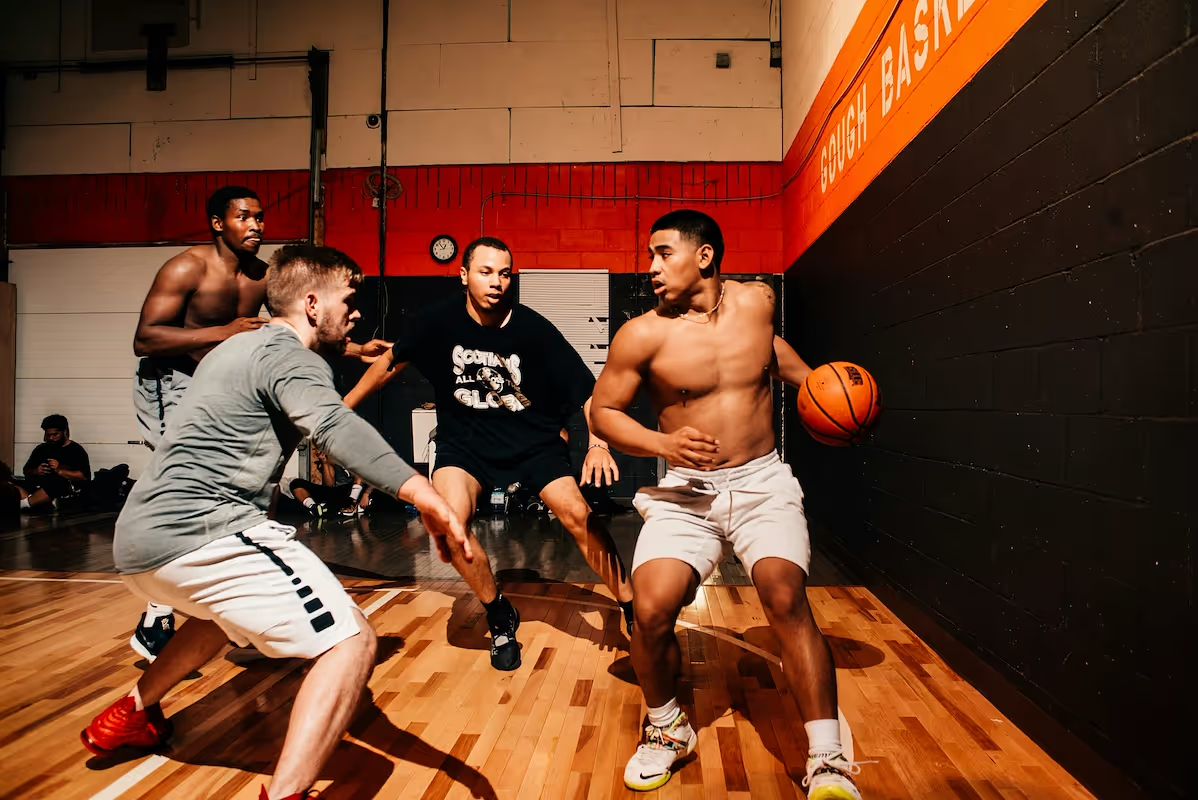
Starting a basketball training business is an exciting venture that combines a passion for the game with sharp business savvy. The youth sports market is a multi-billion dollar industry, and there is steady demand for quality coaching for young athletes, high school teams, and even adult league players.
This guide will take you through the practical steps of validating your business concept, obtaining the right licenses, finding a location, and acquiring equipment to help you launch a successful basketball training business in the U.S.
Step 1: Validate your concept and plan your business
First, gauge local demand. You can survey parents at school games or post in community Facebook groups. Find your niche early. Instead of general training, you might focus on shooting mechanics for guards or footwork for elementary school players. Many new trainers fail by trying to be everything to everyone.
Next, analyze your competition. Use Google Maps to find other trainers and facilities in your area. Review their websites and social media to understand their pricing, session types, and what age groups they serve. This research helps you position your services uniquely.
Estimate your startup costs
Your initial investment will vary, but you can start lean. Many costs are manageable if you begin as a solo trainer without a dedicated facility. A common misstep is to underestimate recurring costs like court time, so get firm quotes upfront.
- Equipment: Expect to spend $500 to $1,500 for quality basketballs, cones, agility ladders, and resistance bands.
- Business Formation: An LLC registration typically costs between $100 and $500, depending on your state.
- Insurance: General liability insurance is non-negotiable and runs about $400 to $700 annually.
- Court Rental: This can range from $50 to $150 per hour. It will likely be your largest ongoing operational expense.
Here are 3 immediate steps to take:
- Survey at least 20 local parents to confirm interest in your specific training idea.
- Analyze the pricing and services of 3 to 5 local competitors.
- Call two nearby gyms or community centers to get exact hourly court rental rates.
Step 2: Set up your legal structure and get licensed
You should consider forming a Limited Liability Company (LLC). This structure separates your business and personal assets, which is important for liability protection. Many new trainers skip this to save money, but that choice puts your home and savings at risk if a client gets hurt.
An LLC also offers tax flexibility. Profits pass through to your personal tax return, avoiding the double taxation of a corporation. Once your LLC is approved, get an Employer Identification Number (EIN) from the IRS. It is free and takes minutes to get online.
Secure your licenses and permits
Next, contact your city or county clerk’s office for a general business license. Costs typically range from $50 to $150 annually. Processing can take a few weeks, so start this early. This is a non-negotiable step for you to operate legally in your area.
While there is not a single government body for basketball coaching, certifications build trust. A background check and a safety certification from an organization like USA Basketball are standard. These show parents you are a serious and responsible professional.
Here are 4 immediate steps to take:
- Decide on a business name and register your LLC with your state's Secretary of State.
- Apply for a free Employer Identification Number (EIN) directly from the IRS website.
- Call your local city hall to confirm the cost and application process for a business license.
- Research the requirements for a USA Basketball coach license to add to your credentials.
Step 3: Secure your insurance and manage risk
Key insurance policies for trainers
General liability insurance is your first line of defense. It covers client injuries and property damage. You should look for a policy with at least $1 million in coverage, which typically costs between $400 and $700 annually.
In addition, you might consider professional liability insurance. This protects you if a client claims your coaching advice caused them harm or was negligent. This separate policy usually adds another $300 to $600 per year to your expenses.
If you hire other coaches, you will need workers' compensation. A frequent oversight is personal auto insurance; it often does not cover travel for business. If you drive to different training locations, you need a commercial auto policy.
Find a sports-focused provider
Work with an agent who understands sports. General providers may not grasp the specific risks of basketball training, such as joint injuries or concussions during drills. A specialist ensures your policy has no gaps in coverage for on-court activities.
You can get quotes from companies like K&K Insurance, Next Insurance, or Philadelphia Insurance Companies. They have experience with fitness professionals and can offer plans tailored to your operation. Get at least two quotes to compare rates and coverage details.
Here are 4 immediate steps to take:
- Get a quote for a general liability policy with at least $1 million in coverage.
- Ask an agent about adding professional liability insurance to your plan.
- Contact two sports insurance specialists like K&K Insurance or Next Insurance.
- Confirm if your personal auto policy covers travel to client sessions.
Step 4: Find a location and buy equipment
Find your court space
Start by renting court time instead of leasing a facility. This keeps your overhead low. Contact local schools, community centers, and churches. Many offer hourly rates between $50 and $150. This approach lets you test demand without a long-term financial commitment.
A half-court space, around 2,400 square feet, is enough for individual or small group sessions. If you decide to lease a dedicated space later, you must check with your city’s planning department. You will need a property zoned for commercial or recreational use.
Purchase your gear
You can equip your business for under $1,000 if you focus on fundamentals. Many new trainers make the mistake of buying complex gadgets that collect dust. Start with a solid base of equipment and add more as your client list and revenue grow.
Focus on these items first.
- Basketballs: A set of 10-15 quality balls will run you $200 to $500.
- Agility Gear: Expect to pay $100 to $200 for cones, small hurdles, and agility ladders.
- Resistance Bands: A versatile set for strength work costs between $50 and $100.
You can find this gear from suppliers like BSN Sports or Eastbay. They do not typically require large minimum orders for these types of items.
Here are 4 immediate steps to take:
- Contact three local gyms or schools to compare hourly court rental fees.
- Check your city’s zoning regulations for sports training facilities.
- Create a starter equipment list and price it on a site like BSN Sports.
- Ask potential rental locations about their liability insurance requirements for trainers.
Step 5: Set up your payment processing
Choose your payment methods
Most trainers require payment upfront for single sessions. For multi-session packages, you can offer monthly recurring billing. This secures your income and saves you from chasing payments. A frequent mistake is using personal apps like Venmo for business, which can complicate your taxes.
When you look for a payment solution, prioritize low transaction fees and fast access to your money. Many new trainers get caught by high processing rates, which can average 2.5% to 3.5% plus other fees. These costs add up quickly and eat into your profit.
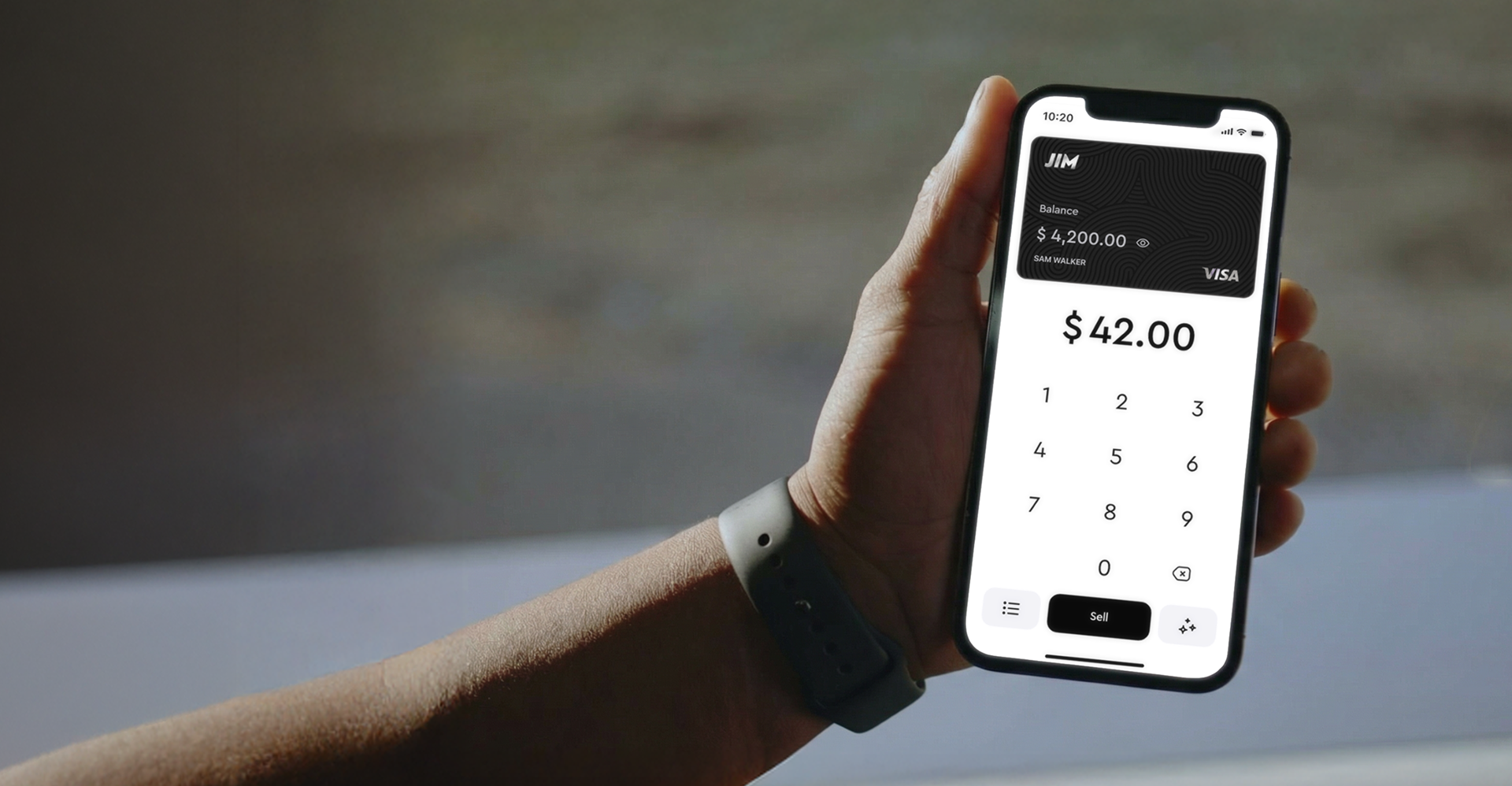
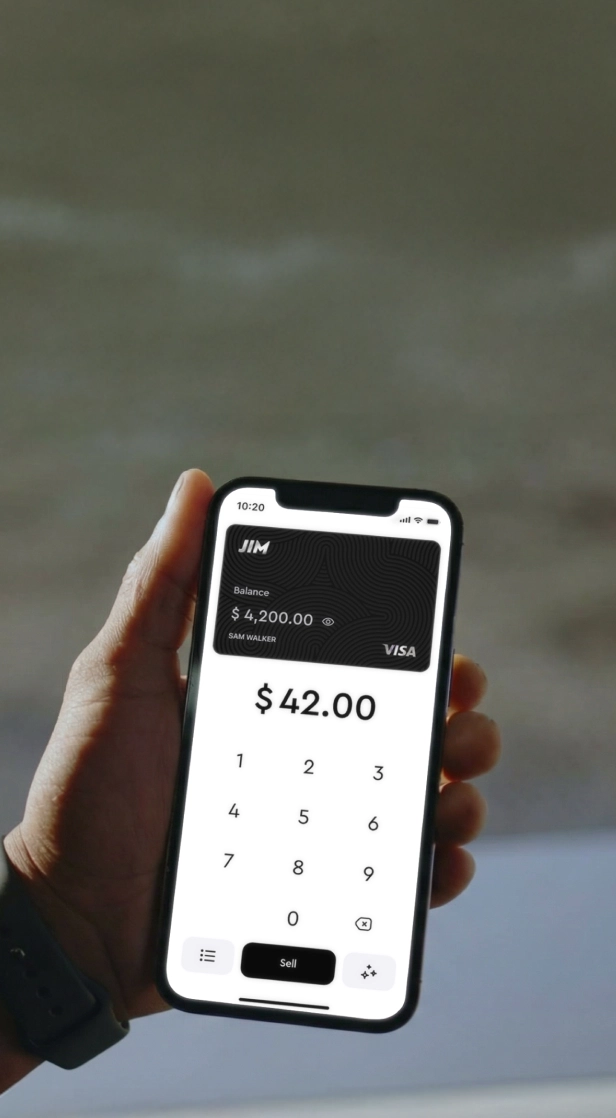
For trainers who need to accept payments on-site, JIM offers a streamlined solution. With JIM, you can accept debit, credit, and digital wallets directly through your smartphone. Just tap and it is done. At just 1.99% per transaction with no hidden costs or extra hardware, it is particularly useful for collecting payment right after a one-on-one session.
Here is how it works:
- Get Started: Download the JIM app for iOS.
- Make a Sale: Type the sales amount, hit sell, and ask your customer to tap their card or device on your phone.
- Access Funds: Your money is available right on your JIM card as soon as the sale is done. There is no waiting for bank transfers.
Here are 3 immediate steps to take:
- Decide if you will bill per session or offer monthly packages.
- Download the JIM app to explore its features for on-court payments.
- Draft your payment terms, including your policy for upfront deposits on training packages.
Step 6: Fund your business and manage finances
Most trainers self-fund with personal savings. If you need outside capital, an SBA Microloan is a great option. These loans are designed for small startups and typically range from $5,000 to $10,000, which is often enough to cover initial equipment and operating costs.
To qualify for an SBA Microloan, you will need a solid business plan and a decent credit score. Interest rates usually fall between 8% and 13%. While grants are rare for for-profit sports businesses, you can search the SBA's database for local opportunities. A loan remains the more reliable path.
Plan your first six months of cash flow
With funding in mind, let's talk about cash flow. You need enough working capital to cover expenses before you have a full client roster. Many new trainers stumble because they underestimate these early costs. A dedicated business bank account is a must to avoid tax headaches.
Here is a sample budget for your first six months:
- Court Rental: $1,200 - $3,600 (for 4-6 hours per week)
- Insurance: $200 - $350 (for a six-month premium)
- Marketing: $300 - $600 (for flyers and social media ads)
- Miscellaneous: $200 (for new gear and payment fees)
This brings your estimated need to between $1,900 and $4,750. This buffer ensures you can operate smoothly while you build your client base. Open a separate business checking account right away to track your profitability accurately.
Here are 4 immediate steps to take:
- Research SBA Microloan lenders in your state.
- Open a dedicated business checking account for your LLC.
- Create a detailed 6-month operating budget for your business.
- Search the SBA's website for any relevant local grants.
Step 7: Hire your first coaches and manage operations
As your client list grows, you will need help on the court. You can start by hiring an Assistant Coach to help run drills and manage small groups. This frees you up to provide more focused, one-on-one instruction.
Expect to pay an assistant between $15 and $25 per hour. All staff must have a background check and CPR certification. A USA Basketball Coach License is a credential that builds significant trust with parents. A mistake some trainers make is hiring friends without checking credentials, which can create liability issues.
Streamline your scheduling
With more people involved, you need a system to prevent scheduling mix-ups. Many trainers use software like Acuity Scheduling or Calendly. These platforms let clients book and pay for sessions online, which cuts down your administrative work.
As a benchmark, try to keep coach payroll at 30-40% of session revenue. This ratio helps you maintain profitability as you scale your team. Misclassifying coaches as contractors is a frequent error, so check your state's labor laws to stay compliant.
Here are 4 immediate steps to take:
- Draft a job description for an Assistant Coach that lists required certifications.
- Research two scheduling platforms like Acuity Scheduling or Calendly.
- Review your state’s guidelines on classifying employees versus independent contractors.
- Set your session prices to keep coach payroll under 40% of revenue.
Step 8: Market your business and get clients
Start with grassroots marketing. You can post in local parent Facebook groups and partner with school coaches for referrals. A simple flyer at a community center or local sports store still works wonders. These low-cost efforts build initial momentum.
A great way to get early traction is to offer a free group clinic. This lets potential clients experience your coaching style firsthand. Word-of-mouth from a positive event is powerful and generates your first wave of paying customers.
Build your digital footprint
Use Instagram to post short videos of drills or client progress. This visually demonstrates your expertise. A simple one-page website on a platform like Squarespace can list your services, prices, and capture leads through a contact form.
As you get website traffic, aim for a 5% conversion rate from visitors to inquiries. Your Customer Acquisition Cost (CAC) should be low at first, ideally under $50 per client, since you are using mostly free channels.
Many new trainers make the mistake of pouring money into paid ads right away. Build a solid reputation through free channels and testimonials first. Once you have a steady stream of clients, you can explore targeted Google or Facebook ads.
Here are 4 immediate steps to take:
- Post an offer for a free clinic in two local parent Facebook groups.
- Design a simple flyer to distribute at community centers and sports shops.
- Film and post one 30-second drill video on Instagram.
- Outline the content for a one-page website listing your services.
Step 9: Price your services for profit
Set your session rates
You can structure your pricing in a few ways. Offer single one-hour sessions for new clients. Create discounted packages of 5 or 10 sessions to encourage commitment. Small group sessions of 3-5 players should have a lower per-player rate but generate more total hourly revenue.
Here are some typical price points to consider:
- Single Session: $60 to $100 per hour
- 10-Session Package: $500 to $900 (a 10-20% discount)
- Small Group Rate: $30 to $50 per player, per hour
Before you set your final prices, research what 3-5 other local trainers charge. Some new coaches make the mistake of pricing too low to attract clients. This can make it difficult to raise your rates later. Instead, price based on the value and expertise you provide.
Now, let's talk profit. Your biggest variable cost is court time. If a court costs $75 per hour and you charge $125 for a private session, your gross profit is $50. Aim for a gross profit margin of at least 50% per session to cover insurance, marketing, and your own salary.
Here are 3 immediate steps to take:
- Research the single session and package rates of three local competitors.
- Calculate your cost-per-session by adding your hourly court rental and a small amount for equipment wear.
- Draft your pricing sheet with options for single sessions, a 10-session package, and a small group rate.
Step 10: Scale your business and maintain quality
As your client list grows, your main challenge shifts to maintaining the quality that got you there. Your reputation depends on it. A key metric to watch is client retention. You should aim to keep at least 80% of your clients who sign up for multi-session packages.
Establish your quality standards
You need a consistent training experience. Require all coaches to hold a USA Basketball Coach License and be certified in CPR and First Aid. This is your baseline for safety and professionalism. A mistake some owners make is relaxing standards for new hires, which hurts client trust.
To measure progress, track specific skills. For example, record a player’s free-throw percentage at the start of a 10-session package and again at the end. A 10-15% improvement is a great result to show parents and a solid internal benchmark for your coaching effectiveness.
Know when to grow
Once you are consistently booked at 80% capacity for three months, it is time to hire an assistant. For managing a larger team and client base, scheduling software like Acuity Scheduling or Calendly is a lifesaver. It automates booking and payments so you can focus on coaching.
Thinking about your own facility? Hold off until you have a steady waitlist of at least 10 clients and your first coach is also nearing full capacity. Leasing a space is a major financial step, so your demand must be undeniable before you commit to that overhead.
Here are 4 immediate steps to take:
- Calculate your client retention rate from the last quarter.
- Create a document listing the non-negotiable certifications for any new coach.
- Set a client capacity number that will be your trigger to start the hiring process.
- Start tracking one skill metric, like shooting percentage, for five of your current clients.
You have the steps to build your basketball training business. Remember that your reputation for quality coaching is your most valuable asset. Focus on player improvement above all else. Now you have a solid game plan, go make it happen.
As you get clients, keep payments simple. JIM turns your phone into a card reader for a flat 1.99% fee, with no extra hardware needed. It is an easy way to accept payments right on the court. Download JIM to be ready for day one.
.avif)