Opening a bed and breakfast is an exciting venture that combines a love for hospitality with smart business sense. The industry is worth billions, with steady demand from tourists, couples on getaways, and travelers after a unique local experience.
This guide will take you through the practical steps of validating your concept, selecting the right location, securing funding, and getting the necessary permits to help you launch a successful bed and breakfast in the U.S.
Step 1: Plan your business and validate your concept
Analyze your market and competition
First, study your area's tourism data from the local chamber of commerce. This reveals visitor demographics and peak seasons. Also, browse sites like Airbnb and TripAdvisor to gauge demand, nightly rates, and what guests value in your specific location.
Identify at least five direct competitors. Look at their websites and reviews to understand their unique offerings, pricing strategies, and guest complaints. This helps you find a gap in the market that your B&B can fill.
Estimate your startup costs
Many new owners miscalculate their initial budget. To avoid this, create a detailed financial forecast. While the property itself is the biggest expense, other costs require careful planning to ensure a smooth launch.
You might want to budget for the following typical ranges:
- Renovations and design: $10,000 - $50,000+
- Furnishings per room: $5,000 - $15,000
- Licenses and permits: $500 - $2,000
- Initial marketing and website: $2,000 - $5,000
- Operating cash for 3-6 months: $15,000 - $40,000
Here are 3 immediate steps to take:
- Request visitor data from your local chamber of commerce.
- Create a spreadsheet of five local competitors, noting their prices and amenities.
- Draft a preliminary budget with line items for renovations and furnishings.
Step 2: Set up your legal structure and get licensed
Most new B&B owners form a Limited Liability Company (LLC). This structure protects your personal assets, like your home and savings, if the business faces a lawsuit. It also offers tax flexibility, letting profits pass through to your personal tax return.
Once your business entity is registered with your Secretary of State, you can focus on the required licenses. The paperwork can feel like a lot, but tackling it systematically makes it manageable.
Secure your licenses and permits
First, get your Employer Identification Number (EIN) from the IRS. It is your business's social security number and is necessary for taxes and hiring. You can apply for an EIN online for free, and the process usually takes just a few minutes.
Next, visit your city or county clerk to get a general business license, which can cost between $50 and $400. You will also need a health department permit to serve food. This involves an inspection and can range from $100 to $1,000.
Before you go further, contact your local planning department about zoning. Many people assume they can run a B&B from any home, but you need the correct commercial or mixed-use zoning. Getting this wrong can stop your project entirely.
Also, secure the right insurance. A standard homeowner's policy will not cover business activities. You need specific bed and breakfast insurance that includes liability and property coverage for your guests and operations. This is a detail many new owners overlook.
Here are 4 immediate steps to take:
- Decide on an LLC structure and register your business with your state.
- Apply for a free Employer Identification Number (EIN) on the IRS website.
- Contact your local planning department to confirm your property’s zoning status.
- Inquire with your local health department about the food service permit application.
Step 3: Secure your insurance and manage risk
Understand your coverage needs
With your legal structure in place, the next focus is to protect your investment. You need a dedicated bed and breakfast policy, as a standard homeowner's policy will not cover business activities. This bundles several types of coverage.
General liability is your first line of defense against guest injuries. You should look for policies with at least $1 million in coverage, which typically costs $1,200 to $3,000 annually. Property insurance protects the building and its contents from fire or theft.
Many new owners forget to properly insure valuable antiques, so create a detailed inventory. If you hire staff, you will need workers' compensation. You may also need liquor liability if you serve alcohol or commercial auto if you use a vehicle for business.
Find a specialized provider
You might want to work with an agent who understands the hospitality industry. General agents often miss risks specific to B&Bs, like foodborne illness liability or guest property damage. This can leave you with costly coverage gaps.
Consider getting quotes from providers that specialize in lodging, such as CBIZ, USI, or Distinguished Programs. They understand the unique risks and can often find more comprehensive coverage for your budget. They know exactly what your business requires.
Here are 4 immediate steps to take:
- Request quotes for a general liability policy with at least $1 million in coverage.
- Create a detailed inventory of your property, noting valuable items and antiques.
- Contact a specialized insurance provider like CBIZ or USI for a consultation.
- Ask about coverage for workers' compensation, liquor liability, and food service.
Step 4: Choose your property and buy equipment
Secure the right location
A typical 4-6 room B&B requires 2,500 to 4,000 square feet. Before you commit, confirm the property has the correct zoning. You will need a commercial or specific lodging classification from your local planning department. Getting this wrong can halt your entire project.
If you decide to lease, you can negotiate a tenant improvement allowance to help pay for renovations. Also, ask for a specific clause in the lease that explicitly permits B&B operations. This protects you from future disputes with the property owner.
Purchase your furnishings
New owners often buy residential furniture, which wears out quickly with constant guest use. You might want to source commercial-grade pieces for durability. Look at hotel suppliers like American Hotel Register or National Hospitality Supply for beds, linens, and seating.
Your initial shopping list will be long. Here are some average costs for key items:
- Commercial coffee station: $500 - $1,500
- Complete bed set per room: $1,500 - $3,000
- Commercial washer and dryer set: $2,000 - $5,000
Here are 4 immediate steps to take:
- Review your town’s zoning map for properties approved for lodging.
- Create a spreadsheet to budget furniture and linens for one guest room.
- Browse websites for hotel suppliers like American Hotel Register.
- If you plan to lease, draft questions about a tenant improvement allowance.
Step 5: Set up your payment processing
Choose your payment solution
Most guests expect to pay with a credit card. You might want to require a deposit, like the first night's stay, at the time of booking. This secures the reservation and protects you from last-minute cancellations and no-shows.
When you choose a payment processor, look closely at the fees. Many providers charge 2.5% to 3.5% per transaction, plus monthly fees and hardware costs. These expenses can add up quickly and eat into your profits.
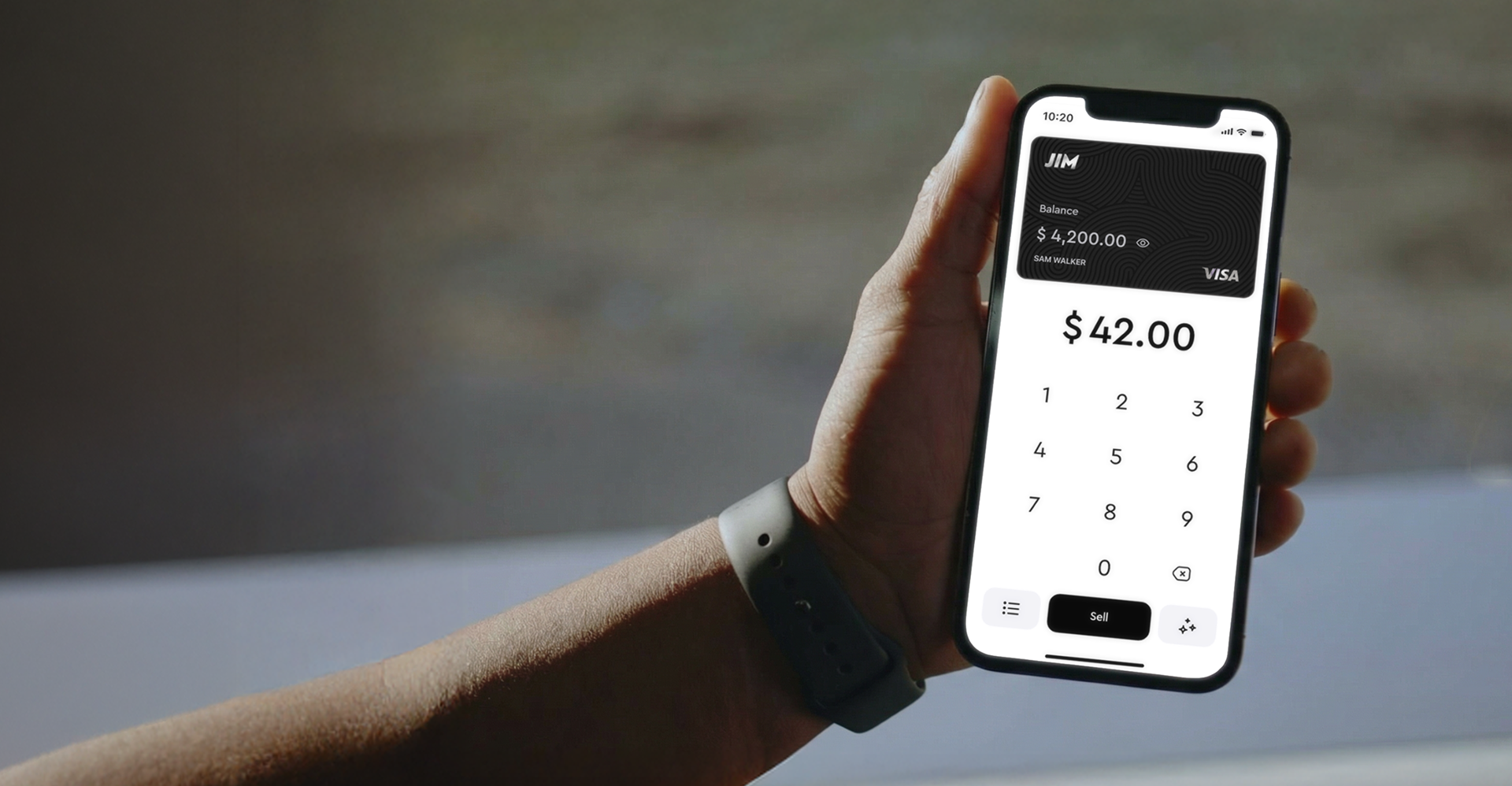
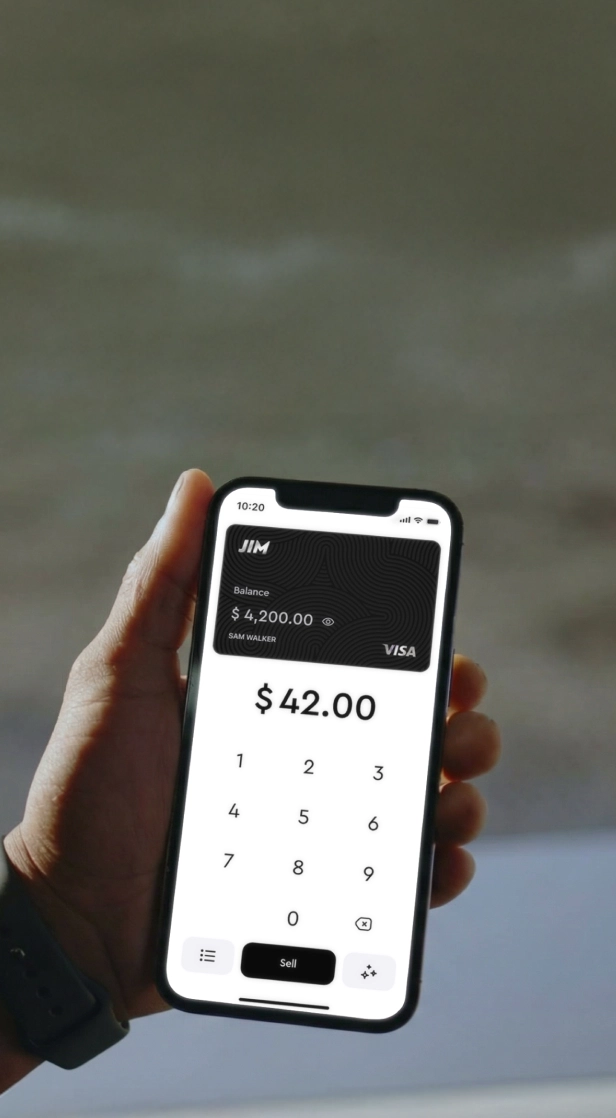
For B&Bs that need to accept payments on-site or on-the-go, JIM offers a streamlined solution. With JIM, you can accept debit, credit, and digital wallets directly through your smartphone. Your guest just has to tap and it is done.
At just 1.99% per transaction with no hidden costs or extra hardware needed, it is particularly useful for charging for last-minute room upgrades or selling local crafts in the lobby. Getting started is straightforward.
- Get Started: Download JIM app for iOS.
- Make a Sale: Type the sales amount, hit sell, and ask your customer to tap their card or device on your phone.
- Access Funds: Your money is available right on your JIM card as soon as the sale is done, no waiting for bank transfers.
Here are 3 immediate steps to take:
- Decide on your deposit policy, such as one night's stay upon booking.
- Compare JIM's 1.99% transaction rate with other payment solutions.
- Download the JIM app to explore its features on your phone.
Step 6: Secure your funding and manage finances
Many aspiring innkeepers look to SBA loans. The SBA 7(a) program is a popular choice because it can fund real estate, equipment, and working capital. Lenders typically want to see a credit score above 680 and a down payment of 10-20%.
Loan amounts can reach $5 million, with interest rates often set at Prime plus a few percentage points. A frequent misstep is not having enough for the down payment. Lenders need to see your financial commitment before they approve the loan.
You might also want to explore options with local credit unions and community banks. They often have a vested interest in local economic growth and may offer more personalized terms than larger national banks.
With funding in mind, let's talk about cash flow. You will need enough working capital to cover at least six months of operations. This buffer, typically $20,000 to $50,000, ensures you can pay bills before your booking calendar is consistently full.
Grants are harder to secure but not impossible. Check your state's tourism board website for hospitality-focused programs. Also, search Grants.gov, especially if your property has historical significance or is in a designated rural development area.
Here are 4 immediate steps to take:
- Review the SBA 7(a) loan requirements on the SBA website.
- Contact two local credit unions to ask about their small business loan programs.
- Calculate your estimated operating expenses for the first six months.
- Search your state's tourism board website for any available hospitality grants.
Step 7: Hire your team and set up operations
Hire your core team
For a small B&B, you will likely be the main innkeeper. Your first hire is often a part-time housekeeper. This role handles room turnovers and laundry. You should budget around $15 to $20 per hour for this position.
Many new owners try to do everything and burn out quickly. Hiring help for even 10-15 hours a week can make a huge difference. If you or your staff prepare food, you must get a food handler's permit from your local health department.
Streamline your daily operations
Managing bookings manually is a recipe for double-booked rooms and unhappy guests. You might want to use a Property Management System (PMS) from day one. This software automates online reservations and syncs your calendar across all booking sites.
Look into systems designed for small properties, like Cloudbeds or Little Hotelier. These typically cost between $100 and $150 per month. As you grow, a good benchmark is to have one full-time employee for every three to four guest rooms.
Here are 4 immediate steps to take:
- Draft a job description for a part-time housekeeper, outlining daily tasks.
- Research food handler's permit requirements on your local health department's website.
- Schedule demos with two property management systems, like Cloudbeds or Little Hotelier.
- Calculate a weekly staffing budget based on hiring one housekeeper for 15 hours.
Step 8: Market your B&B and attract guests
Get listed on booking sites
Start by listing your rooms on Online Travel Agencies (OTAs) like Airbnb and Booking.com for immediate visibility. Many new owners underestimate the fees. Expect to pay commissions of 15-20% per booking, which can significantly impact your profit margins if it is your only channel.
Develop your direct booking channels
To keep more of your revenue, you should encourage direct bookings. Create a simple website with professional photos and a direct booking engine. This becomes your digital storefront. Also, use social media like Instagram to showcase your property's unique charm and local attractions.
You might also want to build local partnerships. Connect with wedding planners, local tour operators, and nearby businesses. Offer them a small commission for referrals. This can create a steady stream of guests at a low cost.
Measure your marketing efforts
Track your Customer Acquisition Cost (CAC). To calculate it, divide your total monthly marketing spend by the number of new bookings. A healthy CAC for a B&B is typically 10-15% of the total booking value. This helps you see which channels are most effective.
Here are 4 immediate steps to take:
- List one room on Airbnb to understand the platform and its fee structure.
- Create an Instagram business profile and post five high-quality photos of your property.
- Draft an email to a local wedding planner proposing a referral partnership.
- Calculate your target Customer Acquisition Cost based on your room rates.
Step 9: Set your pricing strategy
First, analyze your competitors' rates on sites like Booking.com and their direct websites. This gives you a baseline. You can also use a data service like AirDNA to see occupancy rates and average daily rates for similar properties in your specific area.
Select your pricing model
You might want to use dynamic pricing. This means you adjust rates based on demand. For example, a room might be $175 on a weekday but increase to $250 during a holiday weekend or local festival. Many new owners make the mistake of setting one flat rate and miss out on revenue.
Your goal should be a gross profit margin of 60-75% per room. This means the price must cover your direct costs, like breakfast supplies and cleaning, and still leave a healthy profit. For a room with $40 in direct costs, a rate of $160 yields a 75% margin.
Here are 4 immediate steps to take:
- Track nightly rates for three local competitors for one full week.
- Calculate your break-even rate per room based on your operating costs.
- Identify three local events and set a higher potential rate for those dates.
- List two potential add-on packages, like a romance package or a local wine tasting.
Step 10: Maintain quality and scale your business
Set and measure your quality
Your online reputation is your most valuable asset. You might want to aim for a consistent guest review score of 4.8 stars or higher. Respond to all reviews within 24 hours to show you are engaged and value feedback.
For a formal benchmark, you could look into the AAA Diamond program. Achieving a Three or Four Diamond rating can elevate your brand and justify higher rates. The program provides a clear roadmap for service and amenity standards.
Decide when to expand
A consistent occupancy rate above 80% for six months is a strong signal to grow. Some owners expand too soon. You should ensure your current operations run smoothly before you add more rooms or services to avoid a drop in quality.
As a benchmark, plan for one full-time employee for every three to four rooms. If you find yourself working over 60 hours a week, it is time to hire more help. This allows you to focus on the guest experience instead of just operations.
Your Property Management System is your command center for growth. Use the reporting features in systems like Cloudbeds to track Revenue Per Available Room (RevPAR). This metric helps you make data-driven decisions about expansion and pricing adjustments.
Here are 4 immediate steps to take:
- Set a target guest review score of 4.8 stars and a 24-hour response time.
- Review the requirements for the AAA Diamond rating program online.
- Track your monthly occupancy rate for the next six months.
- Calculate your RevPAR from your PMS reports for the last quarter.
Opening a bed and breakfast is more than a business, it is about creating a unique guest experience. Your personal touch is what sets you apart. With the right plan in place, you have what it takes to turn your vision into a successful reality.
And when it comes to payments, keep it simple. JIM lets you accept cards right on your smartphone for a flat 1.99% fee, no extra hardware needed. This lets you focus on your guests, not your payment system. Download JIM and you are set.
.avif)