How to start a bungee fitness business
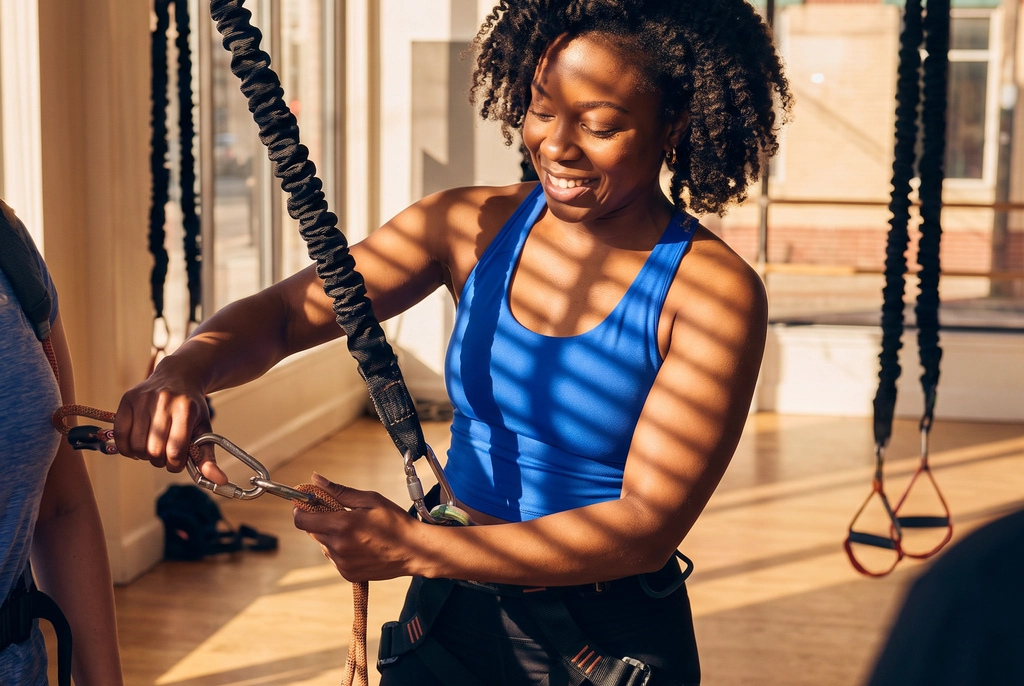
See article summary
- A small bungee fitness studio costs $11,500 to $35,000 to launch, including rigging, equipment, and rent.
- Expect to spend 4 to 9 months from planning to opening day, depending on permits and build-out.
- Plan for 12 to 14 foot ceilings, a Certificate of Occupancy, and suspension-fitness liability coverage.
- Form an LLC, get a free IRS EIN, and budget six months of working capital.
- Start marketing 30 to 60 days before launch with a Founding Members offer.
A bungee fitness studio costs $11,500 to $35,000 to launch, runs on 8 to 10 rigging stations, and turns profitable once you fill peak classes above 85% capacity. Bungee fitness blends aerial suspension training with cardio and strength work, and the niche has grown into a loyal community category inside the boutique studio market.
Most owners take 4 to 9 months to move from market research to opening day, with the longest delays coming from rigging installation and the Certificate of Occupancy. This guide walks through the steps that decide whether you open on budget and on time: validating demand, structuring the business, buying equipment, insuring an aerial activity, and pricing for a 15 to 25% profit margin.
How much does it cost to start a bungee fitness studio?
Startup costs for a small bungee fitness studio range from $11,500 to $35,000, with rigging and rent as the largest line items.
Research local demand before you spend on a lease. Search Instagram and Facebook for hashtags like #bungeefitness and join local community groups, then post polls to gauge interest. This direct feedback tells you more than generic fitness industry reports. Next, map nearby studios on Google Maps and booking apps like Mindbody, noting their schedules, pricing, and specialties so you can find a gap to fill.
Your initial investment shapes your business plan. Underestimating the cost of professional rigging is the most common budget failure, and rigging must be done by a certified structural engineer. Here is a typical cost breakdown, based on the ranges above:
- Bungee Systems: $300-$500 per station
- Rigging and Installation: $2,000-$10,000+
- Rent Deposit and First Month: $5,000-$15,000
- Business Licenses and Insurance: $500-$2,000
- Initial Marketing and Website: $1,000-$3,000
A clear budget from the start helps you seek the right amount of funding and prevents financial strain. Plan to launch with at least eight stations so your per-class revenue covers the fixed cost of the instructor and the space.
Here are 4 immediate steps to take:
- Survey potential clients in local online community groups.
- Map all fitness studios within a five-mile radius and list their services.
- Request quotes for bungee systems from at least two suppliers.
- Draft a preliminary budget with low-end and high-end cost estimates.
What licenses and permits does a bungee fitness studio need?
You need an LLC registration, a free IRS Employer Identification Number, and a local Certificate of Occupancy, plus suspension-specific liability insurance.
Choose a business structure first. Most small fitness studios operate as a Limited Liability Company (LLC), a structure that protects your personal assets from business debts and passes profits through to your personal taxes, which simplifies filing. An S-Corp election is another option for potential tax savings once revenue grows.
Secure federal, state, and local permits
Once you register your business with your Secretary of State, which costs about $50-$200, get an Employer Identification Number (EIN) from the IRS. The EIN is free and the online application takes minutes. Your most important local permit is the Certificate of Occupancy (CO).
Certificate of Occupancy (CO), the permit that confirms your studio is safe and zoned for fitness use. An inspector must approve it, a process that can take several weeks and cost a few hundred dollars. Signing a lease before confirming the zoning is the most expensive legal mistake new studio owners make. Always verify a location is approved for commercial fitness use first.
You also need specific liability insurance. A general policy is not enough. Look for professional liability insurance that covers fitness instruction and potential client injuries, a non-negotiable for protecting your business from claims.
Here are 4 immediate steps to take:
- Decide on an LLC structure and file with your Secretary of State.
- Apply for a free Employer Identification Number (EIN) on the IRS website.
- Check your city's zoning regulations for any potential studio locations.
- Request quotes for professional liability insurance from a qualified agent.
What insurance does a bungee fitness studio require?
A bungee studio needs general liability, professional liability, and property insurance, plus a written rider that explicitly covers "suspension fitness," because standard gym policies exclude aerial activities.
Choose the right insurance policies
Your business needs several layers of protection. General Liability insurance handles claims like a client slipping in the studio. Professional Liability, or E&O insurance, covers you if a client claims your instruction caused an injury. You also need Property Insurance for your equipment and space.
Standard gym policies often exclude aerial activities. Get a written confirmation, or a rider, that your policy specifically covers "suspension fitness." Without it, a claim related to the bungee system could be denied, leaving you exposed. Expect to pay roughly $1,500 to $4,000 annually for a comprehensive package with at least $1 million in liability coverage, based on typical quotes for boutique fitness studios. Providers like K&K Insurance, Philadelphia Insurance Companies, and NEXT Insurance understand the risks of studios like yours. You can verify any insurer's license through the NAIC consumer lookup before you sign.
Implement risk management protocols
Beyond insurance, a strong liability waiver is your first line of defense. Do not use a generic template. Spend the $300-$600 to have a lawyer draft one specific to bungee fitness. Also, create a daily checklist to inspect every bungee cord, harness, and carabiner.
Here are 4 immediate steps to take:
- Request quotes from insurers like K&K Insurance or Philadelphia Insurance Companies.
- Ask for a written rider confirming coverage for "suspension fitness."
- Contact a local lawyer to draft a specific liability waiver.
- Create a daily equipment inspection checklist.
How do you find a location and buy bungee equipment?
You need 1,000 to 1,500 square feet with 12 to 14 foot ceilings for a small studio of 8-10 stations, and you must confirm zoning before signing a lease.
Ceiling height is the single most important factor in your location. You must have a minimum of 12-14 feet to allow for safe bungee movement. Many new owners focus on floor space and forget to look up, then discover the ceiling is too low after signing.
Before you sign a lease, confirm the building's zoning classification with your local planning department. You are looking for approval for "recreational" or "fitness facility" use. Also, negotiate a tenant improvement allowance to help pay for the structural rigging installation.
Purchase your equipment
A complete bungee system from a supplier like Uplift Active or Bungee Super Fly will run between $300 and $500 per station. This includes the harness, bungee cords, and carabiners. Most suppliers do not have a minimum order quantity, so you can start with what you need.
Here are 4 immediate steps to take:
- Identify three potential locations with ceilings over 12 feet.
- Ask the city planning office about zoning for your top location choice.
- Request quotes for 8 bungee systems from two different suppliers.
- Ask potential landlords about a tenant improvement allowance for rigging.
How do you set up payments for a bungee studio?
Decide on a pricing model first, then choose a processor that handles both in-person class passes and recurring memberships without locking you into hardware.
Most studios offer a mix of single drop-in classes, multi-class packs, and monthly memberships. Many new owners plan only for one-time sales, which creates problems when they want to offer recurring memberships through their payment processor later.
For studios that need to accept payments on-site or on-the-go, JIM offers a streamlined solution. With JIM, you can accept debit, credit, and digital wallets directly through your smartphone. At just 1.99% per transaction with no hidden costs, it is a great fit for selling drop-in passes or merchandise. This rate is competitive, as many other payment solutions charge between 2.5% and 3.5% and often include monthly fees. Getting started with JIM is straightforward:
- Get Started: Download the JIM app for iOS.
- Make a Sale: Type the sales amount, hit sell, and ask your customer to tap their card or device on your phone.
- Access Funds: Your money is available right on your JIM card as soon as the sale is done, with no wait for bank transfers.
Here are 3 immediate steps to take:
- Decide on your pricing for drop-in classes, class packs, and memberships.
- Download the JIM app to explore its features for in-person sales.
- Compare JIM's 1.99% rate with at least one other payment processor.
How do you fund a bungee fitness business?
The SBA Microloan program offers up to $50,000, and you should budget six months of working capital on top of your startup costs.
The Small Business Administration (SBA) is a strong starting point. The SBA Microloan program offers loans up to $50,000 and is well-suited for a small studio. Interest rates are negotiated between you and the intermediary lender, so request a written quote before you commit. You will need a solid business plan and a good credit score to qualify.
When you apply, budget for your first six months of operation. Focusing only on startup costs is a frequent oversight. You will need about $10,000-$20,000 in working capital to cover rent and marketing before your membership base grows, and a small business digital banking setup keeps that cash visible and moving between accounts.
Another option is equipment financing, which some bungee system suppliers offer. This lets you pay for your equipment over time, which frees up your initial cash for other expenses. It often has a simpler application process than a traditional loan.
While fitness-specific grants are uncommon, you might find local or state grants for new small businesses. Check your state's economic development website and the federal Grants.gov database for opportunities. These are competitive but worth exploring.
Here are 4 immediate steps to take:
- Research the SBA Microloan program requirements on their website.
- Calculate your estimated operating costs for the first six months.
- Ask your preferred equipment supplier if they offer financing plans.
- Search your state's economic development website for small business grants.
How do you hire and classify bungee fitness instructors?
Hire instructors with a bungee-specific certification and current CPR credentials, and classify them based on the DOL economic reality test rather than assuming one label fits every studio.
Hire your instructors
Your first hires will be Bungee Fitness Instructors. They lead classes, ensure equipment safety, and manage check-ins. Look for candidates with a general fitness certification from an NCCA-accredited body like ACE or NASM, but a specific bungee certification is non-negotiable. Many equipment suppliers offer this training.
Hiring a great fitness instructor who lacks bungee-specific training puts your clients and business at risk. Also, ensure all staff have current CPR and First Aid certifications. Plan to pay instructors between $25 and $40 per class.
Set up your studio operations
With your team in place, you need a system to manage bookings. Studio management software like Mindbody or Vagaro handles scheduling, payments, and client communication in one place. This prevents the chaos of manual booking as you grow.
As you build your revenue, aim to keep instructor payroll between 35-50% of your income, a healthy range for boutique studios. Worker classification depends on how much control you have over the instructor's work. The Department of Labor applies an economic reality test that weighs factors like your control over schedules and methods, so consult an HR professional to classify each role correctly and avoid misclassification penalties.
Here are 4 immediate steps to take:
- Draft a job description for a Bungee Fitness Instructor that lists required certifications.
- Research bungee certification programs offered by your equipment supplier.
- Compare the features and pricing of Mindbody and Vagaro for your studio.
- Consult an HR professional to classify your instructors under the DOL economic reality test.
How do you market a bungee fitness studio?
Start marketing 30 to 60 days before you open with a Founding Members offer, and concentrate spend on visual social channels and local referrals, which convert better than paid ads for a new studio.
Create a "Founding Members" offer, such as a 20% lifetime discount for the first 25 people who sign up. This strategy secures early revenue and builds a core community from day one.
Focus on visual and local channels
Your best marketing channels are highly visual. Use Instagram and Facebook to post short videos of instructors demonstrating moves. Static photos fail to capture the dynamic energy of a class, so show people flying and laughing to attract interest.
Partner with complementary local businesses like juice bars, chiropractors, or athletic wear shops. Offer their staff a free class. This generates authentic word-of-mouth referrals, which are more effective than paid ads for a new studio.
A good customer acquisition cost (CAC) for a new boutique studio is between $50 and $100 per member, and a 2-3% conversion rate from website visitors to a trial class booking is a realistic launch target. Track these numbers to see what works. Based on typical boutique fitness benchmarks, here is how channels usually compare:
| Marketing channel | Typical CAC | Conversion to trial |
|---|---|---|
| Instagram and Facebook video | $40-$70 | 2-3% |
| Local business referrals | $20-$50 | 5-8% |
| Paid Google or Meta ads | $80-$120 | 1-2% |
Here are 4 immediate steps to take:
- Draft a "Founding Members" offer for your first 25 clients.
- Film and post three short video clips of bungee movements on Instagram.
- Identify three local wellness businesses to approach for a partnership.
- Create a simple landing page to collect emails before you launch.
How do you price classes and set profit margins?
A three-tier pricing model (drop-in, class pack, monthly membership) targets a 15 to 25% net profit margin, and you should research local competitors before finalizing numbers.
Your pricing structure should cater to different commitment levels. Most studios find success with a three-tiered approach: single drop-in classes, multi-class packs, and monthly memberships. This mix attracts new clients while building a base of recurring revenue.
Establish your pricing tiers
Set your drop-in rate between $30 and $45. This is your highest per-class price and appeals to first-timers. Next, offer multi-class packs, like a 10-class pack for $280, to encourage repeat visits. Finally, create an unlimited monthly membership, often priced between $150 and $200.
Pricing too low to attract clients can devalue your unique service and make it difficult to cover your operating costs. Before you finalize numbers, research competitors on booking apps like Mindbody to understand the local market.
With this in mind, aim for a net profit margin of 15-25% after all expenses are paid. For every $100 in revenue, you should keep $15-$25 as profit. This margin ensures your business is sustainable and has funds for future growth.
A worked break-even example
Suppose your fixed monthly costs (rent, insurance, software, and base payroll) total $10,200. At an average revenue of $180 per unlimited member, you need roughly 57 members just to break even:
| Line item | Amount |
|---|---|
| Fixed monthly costs (rent, insurance, payroll, software) | $10,200 |
| Average revenue per unlimited member | $180 |
| Break-even membership count | 57 members |
| Target membership at 20% margin | 71 members |
| Target monthly revenue at 71 members | $12,780 |
| Monthly profit at 71 members (margin achieved) | $2,580 |
Adding advanced workshops or off-peak classes pushes you past break-even without the risk of a new lease.
Here are 4 immediate steps to take:
- Research the pricing of three nearby boutique fitness studios.
- Draft prices for a drop-in class, a 10-class pack, and an unlimited monthly membership.
- Calculate your break-even point using your estimated monthly expenses.
- Set a target net profit margin of at least 15%.
How do you control quality and scale a bungee studio?
Maintain quality through bungee-specific instructor certifications and post-class feedback, and expand only after peak classes run above 85% capacity for two straight months.
Keep your quality high
Your service quality hinges on your instructors. Ensure every instructor holds a bungee-specific certification, not just a general fitness one. You might want to schedule quarterly refresher sessions to maintain a consistent and safe experience across all classes.
Use client feedback to measure what is working. Your studio software, like Mindbody or Vagaro, can send automated surveys after each class. Track your average class rating and aim to keep it above 90%. This data tells you exactly where to make improvements.
Decide when to expand
Look at your numbers to know when to grow. If your peak-time classes are consistently over 85% full for two straight months, it is a clear sign to add more classes to the schedule. This is your first step before considering a larger expansion.
Many new owners rush to open a second location. A better first move is to maximize your current studio. You can add advanced workshops or more off-peak classes to increase revenue without taking on the risk of a new lease.
If you find yourself teaching more than 15 classes a week while also managing the business, it is time to hire another instructor. This prevents burnout and frees you to focus on growth, not just daily operations.
Here are 4 immediate steps to take:
- Schedule quarterly refresher training for all instructors.
- Set up an automated post-class feedback survey in your booking software.
- Start tracking your weekly class fill rates in a spreadsheet.
- Define the capacity benchmark for hiring your next instructor.
You now have the roadmap to launch your bungee fitness studio, step by step. Move through market research, legal structure, insurance, location, payments, funding, hiring, marketing, and pricing in that order, and revisit your break-even math each month as your membership grows.
As you welcome your first clients, keep your payments simple. JIM lets you accept cards right on your smartphone for a flat 1.99% fee, no hardware needed. This helps you focus on your classes, not your tech. Download JIM to get started.
Frequently Asked Questions
Is bungee fitness profitable?
How long does it take to open a bungee fitness studio?
Do I need a certification to teach bungee fitness?
What ceiling height is required for a bungee fitness studio?
How much does it cost to start a bungee fitness business?



Sell and get paid in seconds with Jim