Starting a coffee mug business is an exciting venture that combines creative design with business savvy. The barrier to entry is relatively low thanks to print-on-demand services, but that accessibility also means the market is competitive and requires a unique brand to stand out.
This guide will take you through the practical steps of validating your concept, sourcing suppliers, handling licenses, and marketing your brand to help you launch a successful coffee mug business in the U.S.
Step 1: Plan your business and validate your idea
Market and competitor research
First, find your niche. Explore platforms like Etsy, Amazon, and Redbubble. Filter by "bestsellers" in the mug category to see what designs and themes currently perform well. Use Google Trends to check the popularity of potential niches over time, like "book lover mugs" versus "plant parent mugs".
You can use a tool like Semrush to see what keywords successful mug shops use to attract customers. A frequent misstep is to create designs you love without a check for a market. Let data from your research guide your creative choices to ensure people want to buy your products.
Estimate your startup costs
Your initial investment depends on your business model. With a print-on-demand (POD) model, you avoid the need to hold inventory. Expect to spend between $750 and $1,350 for your first year. This covers a Shopify plan (~$350/year), design software like Canva Pro (~$120/year), and a small marketing budget.
Also, budget to order 5-10 sample mugs, which can cost $15-$25 each. This step is important for quality control. If you skip samples to save money, you risk poor reviews and returns later on. That can hurt your brand far more than the initial cost of a few mugs.
Here are 3 immediate steps to take:
- Research 10 bestselling mug designs on Etsy and identify common themes.
- Create a spreadsheet to budget for initial costs, including samples and platform fees.
- Use Google Trends to compare the popularity of three potential niche ideas for your mugs.
Step 2: Establish your legal structure and obtain licenses
Choose your business structure
You might want to consider forming a Limited Liability Company (LLC). It protects your personal assets if your business faces legal issues. The cost to form an LLC varies by state, from about $50 to $500. This is a step up from a sole proprietorship, which offers no liability protection.
Many new owners operate as a sole proprietorship to save on fees. This choice, however, puts personal assets like your home at risk. An LLC provides a formal separation that is valuable for peace of mind and professional credibility.
Secure your licenses and permits
With your business structure decided, you can get the necessary paperwork. First, get a free Employer Identification Number (EIN) from the IRS website. Think of it as a Social Security number for your business. It is required for tax purposes.
Next, you will need a seller's permit from your state's department of revenue. This permit allows you to buy wholesale items, like blank mugs, without sales tax. Also, check with your city or county clerk for a local business license, which can cost $50-$100 annually.
Here are 4 immediate steps to take:
- Decide between an LLC and a sole proprietorship for your business.
- Apply for a free Employer Identification Number (EIN) on the IRS website.
- Research your state's requirements for a seller's permit.
- Check your city or county clerk's office for local business license needs.
Step 3: Insure your business and manage risk
Your main risk is a customer getting hurt by a faulty product, like a mug that cracks from hot liquid. To protect yourself, you need product liability insurance. This is often bundled with a general liability policy, which covers broader business risks like advertising injury.
A typical policy with $1 million in coverage will have an annual premium between $300 and $700. You might want to consider providers like Hiscox, The Hartford, or CoverWallet. They understand e-commerce and can help you find a suitable plan for your small business.
A frequent misstep is to assume your designs are safe to use. If you use an image you found online, you risk a copyright infringement claim. This business risk is separate from liability insurance, so you must verify the license for every design element you use.
Here are 3 immediate steps to take:
- Get a quote for a general liability policy that includes product liability coverage.
- Compare annual premiums from at least two providers, such as Hiscox or The Hartford.
- Review your designs to confirm you have the commercial rights for all images and fonts.
Step 4: Source your products and supplies
Choose your fulfillment model
You have two main paths. With print-on-demand (POD), a partner like Printful prints and ships mugs for you as orders come in. This avoids upfront inventory costs. The alternative is self-fulfillment, where you buy blank mugs and equipment to print them yourself.
Find your suppliers
For a POD model, you can integrate your online store directly with services like Printify or Printful. They offer a range of mug styles and handle all production. There are no minimum orders, so you only pay for what you sell.
If you choose self-fulfillment, you will need wholesale suppliers. Companies like U.S. Blanks or Discount Mugs sell sublimation-ready mugs in bulk. Expect a minimum order quantity (MOQ) of 36 to 72 mugs, which gives you a lower cost per unit.
Set up your production space
A POD business only requires a home office. For self-fulfillment, you need a dedicated workspace of about 50-100 square feet. A garage or spare room works well. Check your city’s website for any rules on home-based business operations before you start.
Your main equipment will be a sublimation printer, like a Sawgrass SG500 (~$600), and a mug heat press (~$200). A frequent mistake is to buy a cheap press, which can lead to faded prints and unhappy customers. A quality press ensures consistent results.
Once you scale and need a commercial spot, look for "flex space" zoning. When you negotiate a lease, you might want to ask for a shorter 1-2 year term. This gives you more flexibility as your business grows.
Here are 4 immediate steps to take:
- Compare the pricing and mug selection on Printful and Printify.
- Research the cost of a Sawgrass SG500 printer and a mug heat press.
- Get a quote for a case of 36 blank sublimation mugs from a wholesale supplier.
- Check your city’s website for rules on home-based business operations.
Step 5: Set up your payment processing
Choose your payment solution
For online sales, your e-commerce platform’s built-in gateway, like Shopify Payments, is the simplest option. These typically charge around 2.9% + 30¢ per transaction. A mistake is to overlook in-person payment options, which limits you from selling at markets or local events.
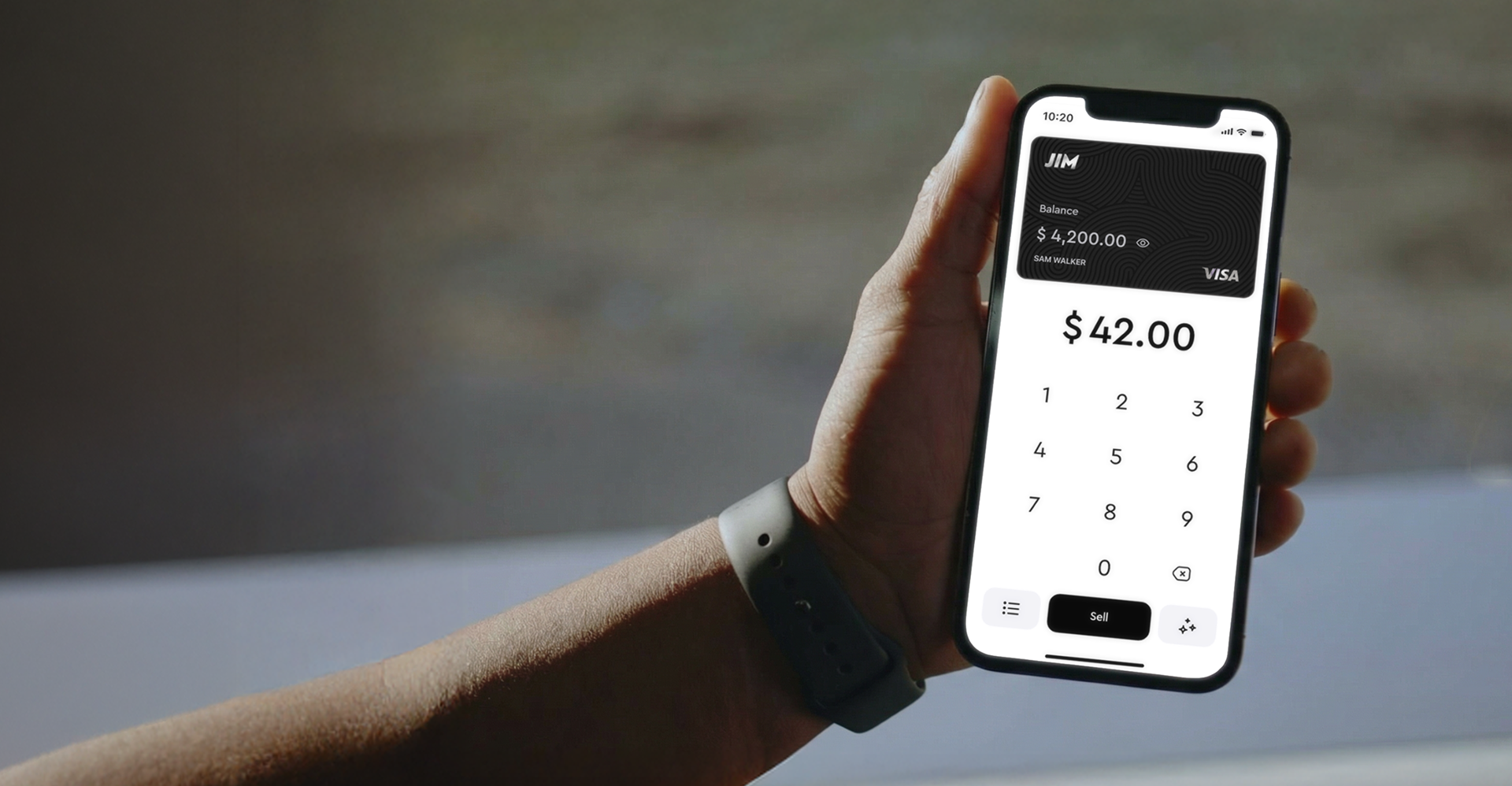
For coffee mug businesses that need to accept payments on-site or on-the-go, JIM offers a streamlined solution. With JIM, you can accept debit, credit and digital wallets directly through your smartphone - just tap and done. Many mobile payment providers charge higher commission rates and require extra hardware.
At just 1.99% per transaction with no hidden costs or extra hardware needed, it's particularly useful for selling at craft fairs. Getting started is simple.
- Get Started: Download the JIM app for iOS.
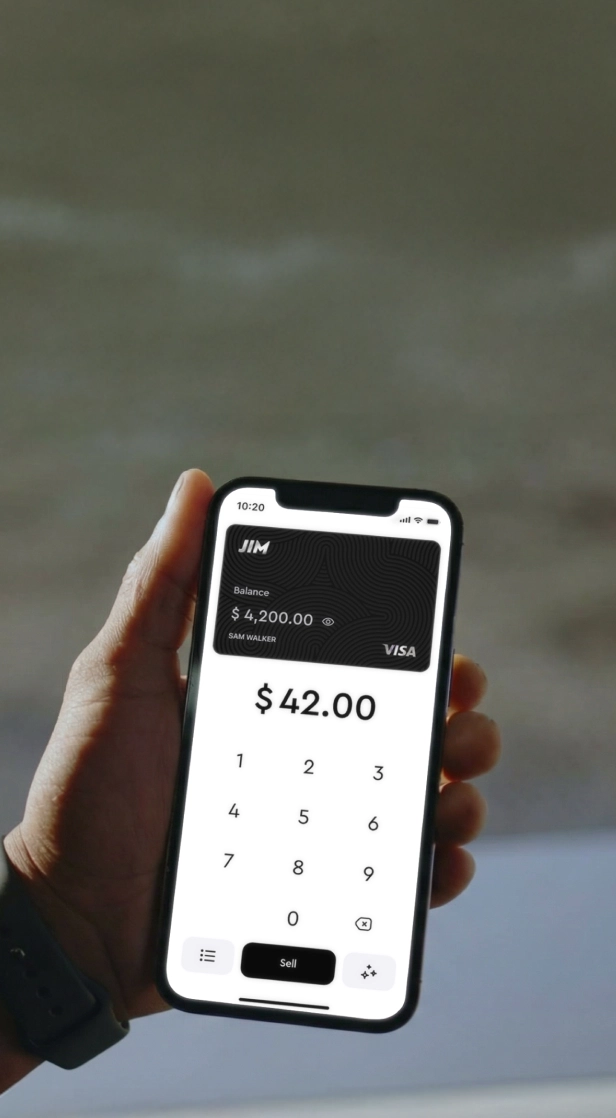
- Make a Sale: Type the sales amount, hit sell, and ask your customer to tap their card or device on your phone.
- Access Funds: Your money is available right on your JIM card as soon as the sale is done - no waiting for bank transfers.
Here are 3 immediate steps to take:
- Activate the built-in payment gateway on your chosen e-commerce platform.
- Compare JIM’s 1.99% rate to other mobile payment options for in-person sales.
- Download the JIM app to have it ready for your first market or pop-up event.
Step 6: Fund your business and manage finances
Find your funding
For a small startup, an SBA Microloan is a great option. These loans range from $500 to $50,000 and are offered through nonprofit lenders. Interest rates are typically between 8% and 13%. They are more accessible for new businesses without a long credit history.
You can also look for grants. The Amber Grant gives $10,000 to a different woman-owned business each month. Also, check with your local arts council. Many offer small grants for creative projects, and your unique mug designs could qualify.
Estimate your working capital
For the first six months with a print-on-demand model, you should budget for about $700 to $1,000 in working capital. This covers platform fees, design software, and a modest marketing budget to get your first sales.
If you choose self-fulfillment, your needs are higher. You will need to add about $800 for equipment and another $150 for your first batch of blank mugs. This brings your initial six-month capital requirement to around $1,650 to $1,950.
Set up your financial tracking
You might want to open a dedicated business bank account right away. Some new owners use their personal account to save time, but this can create a real mess during tax season. It can also put your personal assets at risk if you have an LLC.
To track your income and expenses, you can start with free accounting software like Wave. As you grow, you might move to a plan like QuickBooks Self-Employed, which costs about $15 per month and helps you manage quarterly tax estimates.
Here are 4 immediate steps to take:
- Research SBA Microloan lenders in your area.
- Open a separate business bank account to keep finances clean.
- Calculate your 6-month working capital needs for your chosen fulfillment model.
- Sign up for a free accounting software plan like Wave to track your finances.
Step 7: Hire your team and set up operations
Key roles to consider
You will likely start as a one-person operation. Your first hire is often a freelance graphic designer. You can find talent on platforms like Upwork or Dribbble with rates from $25 to $75 per hour. Look for a portfolio that aligns with your brand's aesthetic.
Once you reach 5-10 hours of customer service emails per week, you might want to hire a virtual assistant (VA). A VA can handle administrative tasks for $15-$30 per hour. This frees you up to focus on design and marketing.
If you self-fulfill orders and packing takes more than 10 hours a week, consider a part-time packer. This role typically pays around $15-$20 per hour. A frequent mistake is to do everything yourself for too long, which can lead to burnout and slow your growth.
Managing your team
To keep projects on track with freelancers, you can use a simple project management app like Trello. Create boards for design ideas, tasks in progress, and completed work. Always use a contract that clearly defines deliverables, timelines, and payment terms to avoid misunderstandings.
Here are 4 immediate steps to take:
- Draft a job description for a freelance graphic designer for your mug business.
- Browse portfolios on Dribbble to find three designers whose style you admire.
- List five administrative tasks you could delegate to a virtual assistant.
- Set a weekly order volume (e.g., 50 orders) that will be your trigger to hire a packer.
Step 8: Market your business and acquire customers
Social media marketing
Focus your efforts on visual platforms like Instagram and Pinterest. Use high-quality mockups that show your mugs in a lifestyle setting. A good strategy is to post 3-5 times per week with a mix of product shots, customer photos, and behind-the-scenes content.
A frequent misstep is to turn your feed into a simple product catalog. Instead, build a community. You can collaborate with micro-influencers who have 5,000-20,000 followers in your niche. Offer them free products in exchange for a post to their audience.
Email and content marketing
Build an email list from day one. You can offer a 10% discount on the first order in exchange for an email address. Send a weekly newsletter that showcases new designs or offers exclusive promotions. This direct line to customers is invaluable for repeat business.
Also, consider a blog. Write posts related to your niche, like "10 Gift Ideas for Book Lovers," to attract customers through search engines. A typical e-commerce conversion rate is 1-2%, so you need consistent traffic to generate sales.
Paid advertising
Once you have some sales, you might reinvest profits into paid ads. Facebook and Instagram ads let you target specific interests, like "coffee lovers" or "cat owners." Start with a small daily budget, like $5-$10, to test which designs and audiences perform best.
Track your Customer Acquisition Cost (CAC). If your mug sells for $20 with a $10 profit, a CAC under $5 is healthy. If your ads cost more than your profit per mug, you need to adjust your targeting or creative.
Here are 4 immediate steps to take:
- Create a content plan for one week of Instagram posts.
- Research five micro-influencers in your niche to contact for collaborations.
- Set up a 10% discount pop-up on your website to capture emails.
- Calculate your target Customer Acquisition Cost based on your mug's price and profit margin.
Step 9: Price your products for profit
Calculate your base cost
First, determine your cost of goods sold (COGS) for one mug. With print-on-demand, this is the supplier’s price plus shipping. For example, if a mug from Printful costs $9 plus $5 shipping, your COGS is $14. For self-fulfillment, add the cost of a blank mug (~$2) and supplies like ink (~$0.50).
Set your retail price
A good starting point is to aim for a 50-60% profit margin. If your COGS is $14, a retail price of $28 gives you a 50% margin. Research top sellers on Etsy to see what the market supports. A frequent mistake is to price too low, which leaves no room for marketing or profit.
Also, consider value-based pricing. A generic mug might sell for $18, but a highly unique or personalized design could command $25 or more. Your brand's perceived value allows you to set prices based on what customers are willing to pay, not just your costs.
Here are 4 immediate steps to take:
- Calculate the final COGS for one of your mug designs, including shipping.
- Research the prices of 10 competing mugs in your niche on Etsy or Amazon.
- Set a target profit margin of at least 50% for your products.
- Determine a premium price for your most unique design to test value-based pricing.
Step 10: Control quality and scale your business
Establish your quality standards
Your mugs must be food-safe, which means they comply with FDA guidelines for lead and cadmium. You should also confirm they are dishwasher and microwave safe. A quality print should withstand at least 50 wash cycles without fading or peeling. Order samples to test these standards yourself.
You can measure quality with a few key metrics. Aim for a customer return rate below 2% and an average review score of 4.5 stars or higher. A defect rate above 1% for printing errors or chips before shipping is a signal to address issues with your supplier.
Know when to grow
Once you consistently sell over 100 mugs a month, you might consider a switch from print-on-demand to self-fulfillment. This move can improve your profit margin from 50% to over 65%. It is a larger commitment but gives you more control over quality and shipping times.
Many owners wait too long to hire help and burn out. If you spend more than 10 hours a week on packing orders, it is time to find part-time help. This frees you to focus on design and marketing. As you scale self-fulfillment, inventory software like Zoho Inventory can help you manage supplies.
Here are 4 immediate steps to take:
- Create a quality checklist for your mugs, including dishwasher safety and print durability.
- Set up a spreadsheet to track your return rate and average customer review score.
- Define the monthly order volume that will trigger your switch to self-fulfillment.
- Research an inventory management software like Zoho Inventory for future growth.
You now have a roadmap for your coffee mug business. The key is consistency, not just in your designs but in your marketing and quality. A great idea only becomes a great business with steady effort. Now, go turn your creative spark into a real venture.
And for that first in-person sale, a solution like JIM lets you accept payments with just your phone. There is no extra hardware, just a flat 1.99% fee per transaction. Download JIM so you are ready from day one.
.avif)