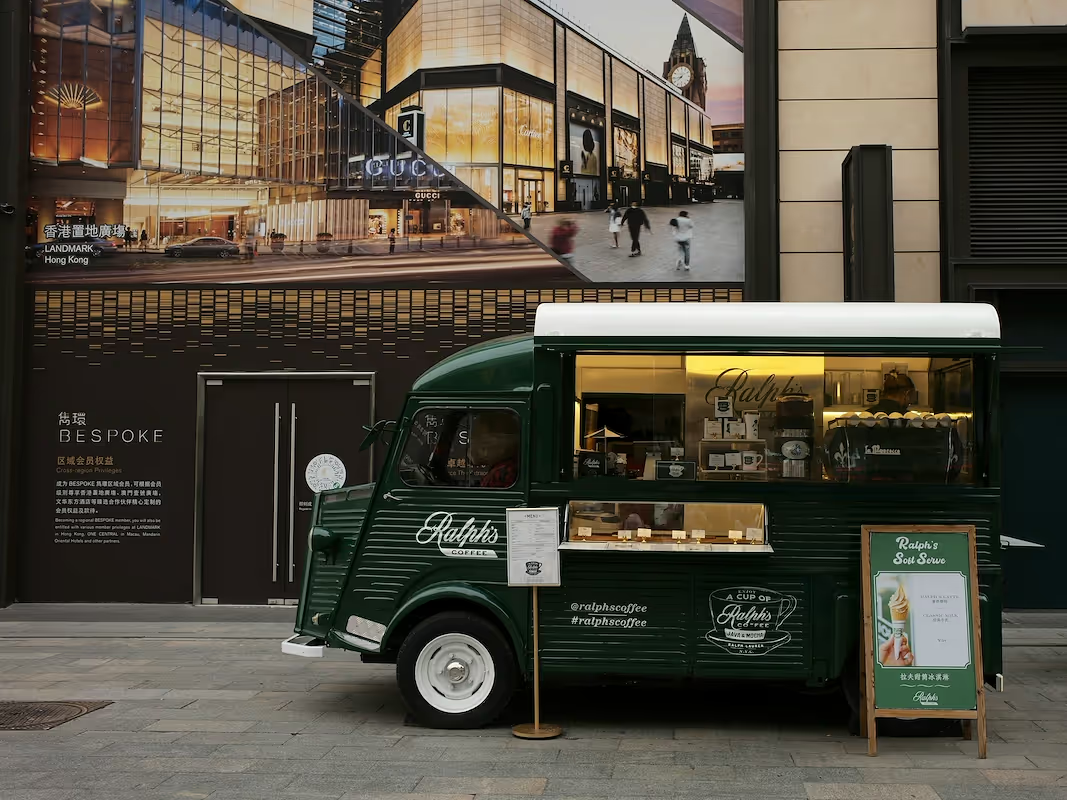
Starting a coffee truck business is a rewarding venture that combines a passion for great coffee with smart business sense. The mobile coffee industry is a multi-billion dollar market, fueled by consistent demand from morning commuters, office parks, and local events.
This guide will take you through the practical steps of validating your concept, securing funding, obtaining permits, and acquiring equipment to help you launch a successful coffee truck business in the U.S.
Step 1: Plan your business and validate your concept
Find your spot and know your competition
Your first move is to research potential locations. Spend a few weeks visiting office parks, farmers' markets, and busy street corners during peak hours. Track foot traffic and note the times people are looking for coffee. A common oversight is only scouting on weekends, completely missing the weekday commuter rush.
While you're out, use Google Maps to identify nearby cafes and other food trucks. Check their social media to understand their menus, prices, and operating hours. This helps you find a gap in the market, whether it's through unique drink offerings or by serving an underserved area.
Calculate your startup costs
With your research in hand, you can build a realistic budget. Your initial investment will likely fall between $30,000 and $130,000. Many new owners forget to budget for a few months of operating cash, so be sure to include that.
- Truck and build-out: $15,000 - $100,000+
- Espresso machine and grinders: $10,000 - $25,000
- Permits and licenses: $500 - $2,000
- Initial inventory and supplies: $1,000 - $3,000
Here are 3 immediate steps to take:
- Scout three potential high-traffic locations at different times of the day.
- Create a spreadsheet to track the menus and prices of five local competitors.
- Draft a startup budget with estimated costs for your truck, equipment, and initial inventory.
Step 2: Set up your legal structure and get licensed
You'll want to register your business as a Limited Liability Company (LLC). This structure protects your personal assets, like your home and car, from business debts. It also offers pass-through taxation, meaning profits are taxed on your personal return, which simplifies paperwork.
Once your LLC is registered with your Secretary of State, get an Employer Identification Number (EIN) from the IRS. It's free and you can apply online. You will need an EIN to open a business bank account, file taxes, and hire any employees.
Navigate health and business permits
Your most important permit is from the local health department. Expect to submit detailed plans of your truck's layout, including plumbing and equipment specs. A mistake many new owners make is buying a truck before getting plan approval, which can lead to expensive required changes.
The health permit process can take 4-8 weeks and cost between $500 and $1,500. In addition, you and your staff will need a Food Handler's Permit. You can get this through a program like ServSafe for about $25 per person.
Finally, you will need a general business license from your city or county clerk's office. Some cities also require a specific mobile food vendor permit, so check their website for the exact forms and fees, which typically range from $100 to $500 annually.
Here are 4 immediate steps to take:
- Register your business as an LLC on your state's Secretary of State website.
- Apply for a free Employer Identification Number (EIN) through the IRS website.
- Download the mobile food unit plan review packet from your local health department.
- Identify the specific business license and mobile vendor permit applications for your city.
Step 3: Insure your business and manage risk
You will need a package of policies to operate safely. This includes general liability for customer accidents, commercial auto for the truck, and property insurance for your espresso machine and grinders. Many new owners overlook the need for a commercial auto policy, but a personal one will not cover you.
A standard general liability policy provides $1 million in coverage. When bundled with your other required policies, expect an annual premium between $3,000 and $8,000. This investment protects your business from a single incident that could otherwise shut you down permanently.
You should work with an agent who specializes in food trucks. Consider providers like the Food Liability Insurance Program (FLIP), Insureon, or Progressive Commercial. They understand specific risks, like equipment theft or burns from hot liquids, and can find appropriate coverage.
If you plan to hire employees, you must also carry workers' compensation insurance. This policy covers medical costs and lost wages for any staff member injured on the job. State laws are very strict about this requirement.
Here are 3 immediate steps to take:
- Request quotes from at least two food truck insurance specialists like FLIP or Insureon.
- Confirm your commercial auto policy covers permanently installed equipment.
- Ask about workers' compensation requirements in your state if you plan to hire employees.
Step 4: Outfit your truck and source equipment
Your truck is your business's foundation. Look for a 14 to 18-foot step van, which provides enough space for two baristas. You can buy a used van and build it out, or purchase a turnkey, pre-outfitted coffee truck. A costly error is to buy a vehicle before the health department approves your layout.
Choose your core equipment
With the truck selected, you can focus on the gear. Your espresso machine is the heart of your operation. A commercial two-group machine is a good starting point to handle morning rushes without long waits for customers.
- Commercial espresso machine: $5,000 - $20,000
- Grinders (espresso and drip): $1,000 - $4,000
- Refrigeration and water system: $2,500 - $7,000
- Generator: $3,000 - $10,000
Many owners miscalculate their power needs. Add up the wattage of all your equipment, then get a generator that exceeds that total. This prevents tripped breakers during a busy service.
For supplies, partner with a local coffee roaster for your beans. They often have lower minimum orders than large distributors and offer a great story for your brand. For paper goods and syrups, check online suppliers like WebstaurantStore or a local restaurant depot.
Here are 4 immediate steps to take:
- Get quotes for a 14-18 foot step van, both new and used.
- Price out a two-group commercial espresso machine from two different suppliers.
- Calculate your total power needs in watts to select the right size generator.
- Contact a local coffee roaster to inquire about wholesale pricing.
Step 5: Set up payment processing
Your payment system needs to be fast. During a morning rush, slow transactions mean lost sales. You need a way to take cards and digital wallets without clunky hardware that takes up valuable counter space.
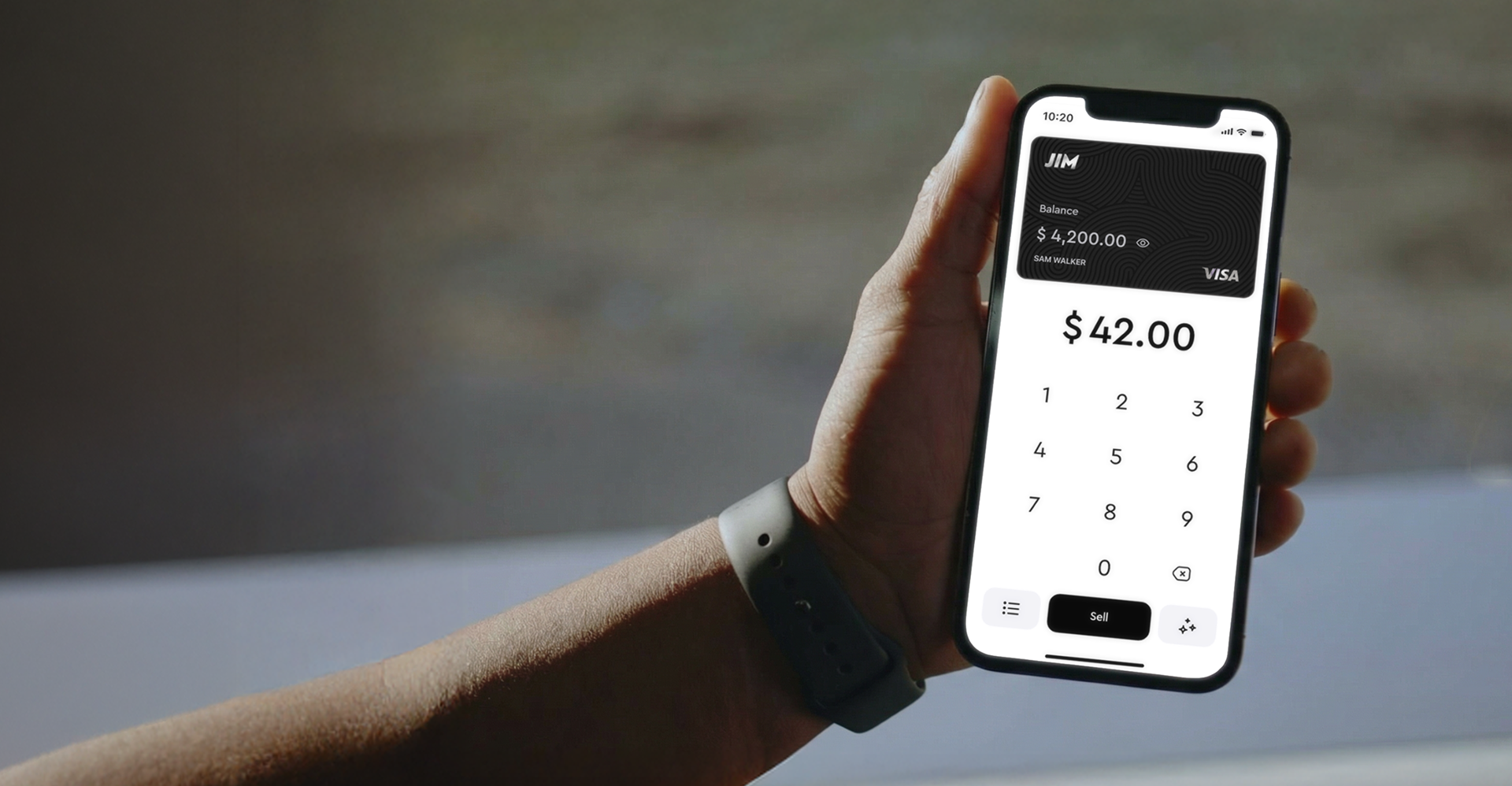
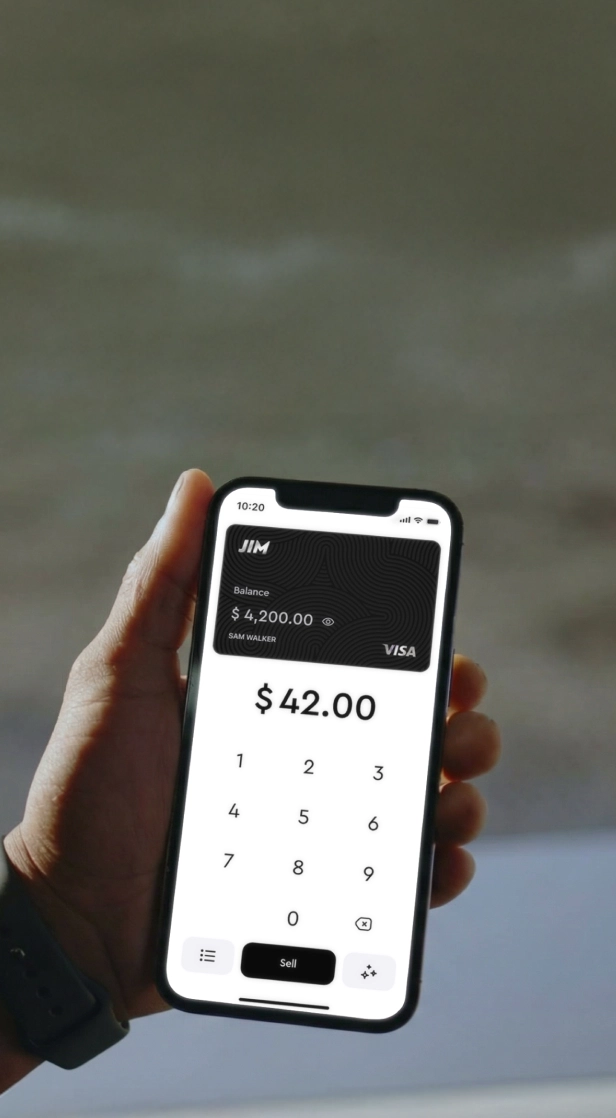
Many new owners get stuck with processors that charge high fees, often over 2.9% plus extra charges. For a coffee truck that needs to accept payments on the go, JIM offers a streamlined solution. You can accept debit, credit, and digital wallets directly through your smartphone.
The process is simple, just tap and done. At just 1.99% per transaction with no hidden costs or extra hardware, it is great for managing long lines at events or farmers' markets. This rate is significantly lower than what many other providers offer.
Getting started is straightforward.
- Get Started: Download the JIM app for iOS.
- Make a Sale: Type the sales amount, hit sell, and ask your customer to tap their card or device on your phone.
- Access Funds: Your money is available right on your JIM card as soon as the sale is done, no waiting for bank transfers.
Here are 3 immediate steps to take:
- Compare JIM's 1.99% rate to other payment processors.
- Download the JIM app to see how the interface works.
- Calculate your projected monthly sales to see how much you would save on transaction fees.
Step 6: Secure funding and manage your finances
Explore your funding options
Most coffee truck owners use a mix of personal savings and loans. An SBA 7(a) loan is a popular choice, offering up to $150,000. Lenders will want to see a credit score over 680 and a strong business plan. Interest rates typically sit between 8% and 13%.
Equipment financing is another route. This loan specifically covers your espresso machine, grinders, and truck build-out. The equipment itself serves as collateral, which can make qualification easier. Also, look into SBA Microloans, which offer smaller amounts up to $50,000 for startups.
Plan for your working capital
A frequent misstep is to underestimate day-to-day costs after you open. You should have enough cash to cover at least three to six months of operating expenses. This buffer pays for inventory, fuel, insurance, and marketing before you turn a consistent profit.
For a typical coffee truck, this means having $15,000 to $30,000 in a business bank account from day one. This fund ensures you can handle slow days or unexpected repairs without stress. It is your safety net while you build a customer base.
Here are 4 immediate steps to take:
- Draft a business plan that details your financial projections for lenders.
- Check your personal credit score to see where you stand.
- Research SBA 7(a) and Microloan requirements on the official SBA website.
- Calculate your first six months of operating expenses to set a working capital goal.
Step 7: Hire your team and manage daily operations
Build your team
Your first hire will likely be a barista. This person handles drink orders and customer service, so look for someone with a great personality who can work quickly. Plan to pay between $15 and $20 per hour plus tips. A friendly barista can build a loyal customer base for you.
As you grow, you might add a shift lead to manage the truck when you are not there. This role involves inventory counts and cash handling, with pay typically from $18 to $25 per hour. This frees you up to work on marketing and booking events.
All staff, including you, must have a Food Handler's Permit. You can get this online through programs like ServSafe. A mistake some owners make is letting staff work before they are certified, which risks health code violations and fines during an inspection.
Streamline your operations
With a team in place, you need to manage schedules. Apps like Homebase or 7shifts help you create schedules and communicate with staff from your phone. This avoids confusion over text messages and last-minute calls about who is working.
Now that you have payroll, watch your labor costs. Aim to keep labor at 25-35% of your revenue. It can be tempting to understaff to save money, but this often leads to long waits and lost customers during your busiest hours.
Here are 4 immediate steps to take:
- Draft a job description for a barista, including pay and required certifications.
- Complete a Food Handler's Permit course yourself to understand the requirements.
- Explore the features of a scheduling app like Homebase or 7shifts.
- Calculate your target labor budget based on your sales projections.
Step 8: Market your business and attract customers
Your marketing starts on social media. Create Instagram and Facebook pages to post your daily location, menu specials, and high-quality photos of your coffee. Use Instagram Stories to show behind-the-scenes content, which helps build a personal connection with followers.
Build local partnerships
Reach out to office parks, co-working spaces, and large retail stores. You can offer to park on their property and provide a 10% discount for their employees. This gives you a consistent customer base on weekdays. A simple, friendly email is all it takes to start the conversation.
Also, look into local events. Farmers' markets, street fairs, and festivals can bring in hundreds of customers in a single day. Event fees might range from $50 to $500, so calculate your potential sales to see if it makes sense for your business.
A mistake many new owners make is posting inconsistently. Create a simple content calendar for your social media. Aim for a 2-3% engagement rate on your posts to know your content is connecting with your audience. Track which posts get the most likes and comments.
Here are 4 immediate steps to take:
- Create business profiles on Instagram and Facebook.
- Draft a sample email to pitch a partnership with a local office building.
- Research the application process and fees for two local farmers' markets.
- Plan your first week of social media posts, including your location and a featured drink.
Step 9: Price your menu for profit
Your goal is a food cost percentage between 20-25%. This means the ingredients for a drink should cost about one-fourth of its menu price. This model ensures you cover labor, fuel, and other overhead while remaining profitable.
For example, if the milk, espresso, and cup for a 12oz latte cost you $1.10, you should price it around $4.50. This gives you a gross profit margin of about 75%, which is a healthy target for a coffee business.
Analyze your local market
Before you finalize prices, check what nearby cafes and trucks charge. Look at their online menus or visit in person. You do not have to match their prices, but you need to know the local price range for a standard latte or drip coffee.
Some new owners price their items too low, hoping to steal customers. This strategy often backfires, as it can signal lower quality and make it difficult to become profitable. It is better to compete on quality and service than on price alone.
Here are some typical price points to consider:
- Drip Coffee (12oz): $3.00 - $4.00
- Latte (12oz): $4.50 - $5.50
- Specialty Latte (12oz): $5.50 - $7.00
Here are 4 immediate steps to take:
- Calculate the ingredient cost for your top three drinks.
- Set a target food cost percentage, aiming for 20-25%.
- Research the menu prices of three local competitors.
- Create a draft menu with prices based on your cost and market research.
Step 10: Maintain quality and scale your business
Establish your quality benchmarks
To maintain quality, create a checklist for every drink. An espresso shot should pull in 25-30 seconds, and milk should be steamed to 150-160°F. A common mistake is not standardizing recipes, which leads to inconsistent drinks and unhappy customers.
Service speed is just as important. Aim to complete each transaction in under three minutes, from order to handoff. You should also track order accuracy, with a goal of over 99%. This keeps the morning rush moving smoothly and builds a reputation for reliability.
Plan your growth milestones
With your quality set, you can plan for growth. Consider hiring a second barista when you consistently serve over 40 customers per hour during your peak times. This prevents staff burnout and protects your service speed.
Look into a second truck only after your first one is consistently profitable for at least 12 months. A good indicator is when you have to turn down more than three profitable event opportunities per month due to being booked.
As you grow, use an inventory system like MarketMan to manage stock and control your food costs. This helps you maintain that 20-25% cost target across multiple locations or a larger team, preventing waste from eating into your profits.
Here are 4 immediate steps to take:
- Create a drink quality checklist with target shot times and milk temperatures.
- Track your average order time during your next peak morning rush.
- Set a customer-per-hour metric that will trigger your first new hire.
- Research the features of an inventory management system like MarketMan.
Your coffee truck journey is about creating a daily ritual for your customers. The key is consistency in your location, your service, and your product. You have a solid plan in front of you. Now it's time to execute.
To keep your line moving, you'll want a fast way to take payments. JIM lets you accept cards right on your smartphone for a simple 1.99% transaction rate, no extra devices needed. Download JIM and you're ready to sell.
.avif)