Starting a convenience store is a rewarding venture that blends customer service skills with sharp business savvy. The industry pulls in hundreds of billions of dollars annually, driven by a steady demand for everyday items from commuters, local families, and late-night shoppers.
This guide will take you through the practical steps of selecting the right location, securing funding, obtaining the right permits, and building supplier relationships to help you launch a successful convenience store business in the U.S.
Step 1: Plan your business and validate your idea
Market and competitor research
Start by analyzing local demographics with the U.S. Census Bureau's data explorer. Look at population density, median income, and household size in potential neighborhoods. This information shows you who your customers might be and what they can afford.
Next, observe foot and vehicle traffic. Spend a full day near a potential location to see who passes by. A common error is to pick a busy street where commuters drive past but never actually stop to shop.
For competitor data, check your local chamber of commerce directory or use a database like Data Axle. Map out existing stores to find gaps in their product offerings or service hours that you can fill.
Budget your startup costs
Your initial investment will vary by location. A frequent misstep is to underestimate how much inventory you need at the start. Plan your budget carefully to avoid cash flow problems later.
Here is a typical cost breakdown to get you started:
- Initial Inventory: $20,000 - $30,000
- Rent & Security Deposit: $5,000 - $15,000
- Licensing & Permits: $1,000 - $5,000
- POS System & Equipment: $10,000 - $25,000
- Store Fixtures & Signage: $10,000 - $20,000
In total, you should plan for an initial investment between $46,000 and $95,000. This does not include major renovations, which could increase costs.
Here are 3 immediate steps to take:
- Download demographic reports for two target zip codes.
- Visit your top competitor to note their product selection and prices.
- Create a spreadsheet to track your estimated startup costs.
Step 2: Form your legal entity and secure permits
You should consider a Limited Liability Company (LLC). It protects your personal assets if the business is sued. For tax purposes, an LLC is simple; profits pass through to your personal tax return. A sole proprietorship is easier but offers no liability protection.
Required licenses and permits
First, get a free Employer Identification Number (EIN) from the IRS website. You need this to hire employees and open a business bank account. If you plan to sell alcohol or tobacco, you also need a federal permit from the Alcohol and Tobacco Tax and Trade Bureau (TTB).
Next, contact your state's department of revenue for a sales tax permit. You will also need specific state licenses for lottery, alcohol, and tobacco sales. A frequent delay comes from these specific licenses, which can take 3-6 months to process, so apply as soon as possible.
Your city or county will require a general business license and a Certificate of Occupancy. A health department permit is also necessary if you sell prepared foods, like hot dogs or coffee. These local permits can cost between $50 and $1,000, depending on your location.
Here are 4 immediate steps to take:
- Decide on a business structure like an LLC.
- Apply for your free EIN on the IRS website.
- Check your state's alcohol and tobacco license processing times.
- Contact your local health department for food permit requirements.
Step 3: Secure insurance and manage risk
Insurance policies you will need
Protecting your business from day one is non-negotiable. You will need several types of insurance. A Business Owner's Policy (BOP) is a good start as it bundles general liability and commercial property insurance, often at a lower cost.
- General Liability: This covers customer injuries, like a slip-and-fall. Plan for at least $1 million in coverage. Annual premiums typically range from $500 to $2,000.
- Commercial Property: This protects your building, equipment, and inventory from events like fire or theft. Coverage amounts should match the total value of your assets.
- Workers' Compensation: If you have employees, most states require this. It covers lost wages and medical costs for work-related injuries.
- Liquor Liability: A standard policy will not cover alcohol-related incidents. If you sell beer or wine, you need this separate coverage.
Many new owners get caught without liquor liability insurance, which exposes them to major financial risk. Always confirm this specific coverage if you plan to sell alcohol.
When you look for providers, consider companies like The Hartford, Hiscox, or Nationwide. They specialize in small business insurance and understand the risks of a retail environment. An experienced agent can help you find the right policies.
Here are 4 immediate steps to take:
- Request quotes for a Business Owner's Policy from three different providers.
- Confirm your state's workers' compensation requirements.
- Calculate the total value of your inventory and equipment for property insurance.
- Ask potential insurers specifically about their liquor liability coverage options.
Step 4: Set up your location and equipment
Find and secure your location
Look for spaces between 2,400 and 3,000 square feet. Your location needs a commercial zoning classification, which you can confirm with your city's planning department. Some new owners sign a lease for a non-compliant property, so it is a good idea to verify this first.
When you negotiate your lease, ask about a tenant improvement (TI) allowance to help cover renovation costs. You might also want to push for a shorter initial term, like three years, with an option to renew. This provides an exit if the location underperforms.
Purchase your equipment and fixtures
Once your location is set, you can outfit the store. Equipment is a significant part of your startup budget. You can often find used fixtures from restaurant supply stores to reduce costs, especially for big-ticket items.
- POS System: $1,500 - $5,000
- Walk-in Coolers: $5,000 - $15,000
- Gondola Shelving: $3,000 - $7,000
- Security System: $1,000 - $3,000
Establish supplier relationships
Next, you will need to partner with distributors for your inventory. National distributors like McLane Company or Core-Mark can supply most of your products. Their minimum orders often range from $500 to $1,500 per delivery, so you should factor this into your cash flow plans.
Here are 4 immediate steps to take:
- Confirm the zoning classification for your top location choice.
- Ask a potential landlord about their tenant improvement allowance.
- Get quotes for a POS system and a walk-in cooler.
- Contact a distributor like Core-Mark to learn their new account requirements.
Step 5: Set up payment processing
Choose your payment solution
Your customers will expect to pay with cash, cards, and digital wallets, so you need a system that handles all three. Many new owners overlook the fine print in payment processor agreements and get stuck with high fees or long-term contracts.
Look for a solution with transparent transaction fees and quick access to your funds. Some providers have slow bank transfer times, which can hurt your cash flow. A little research here prevents major headaches later.
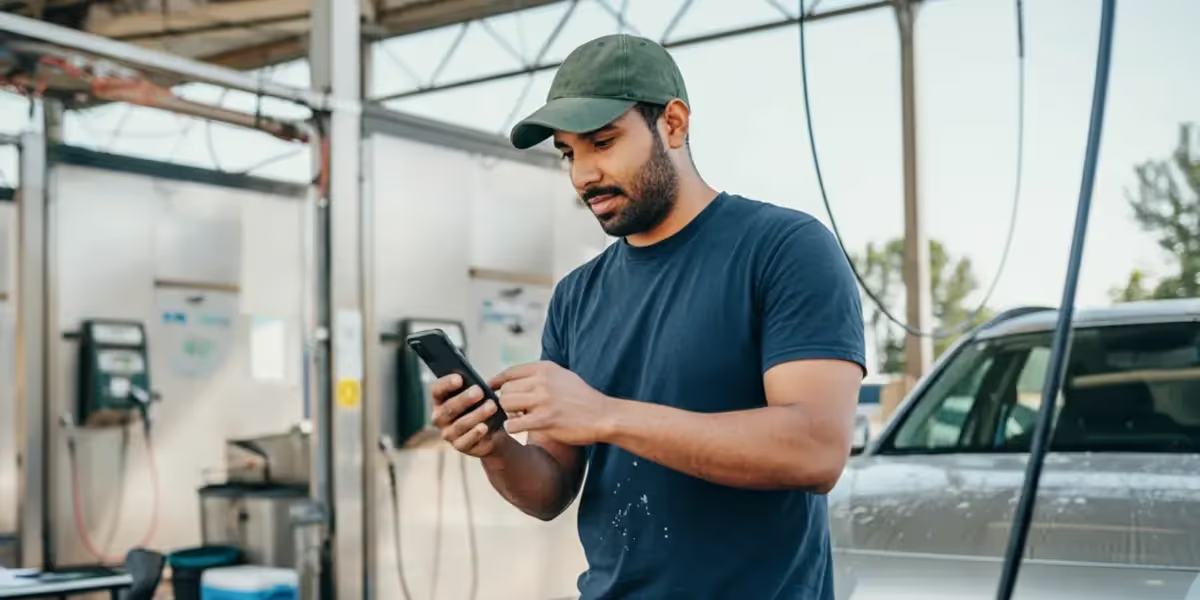
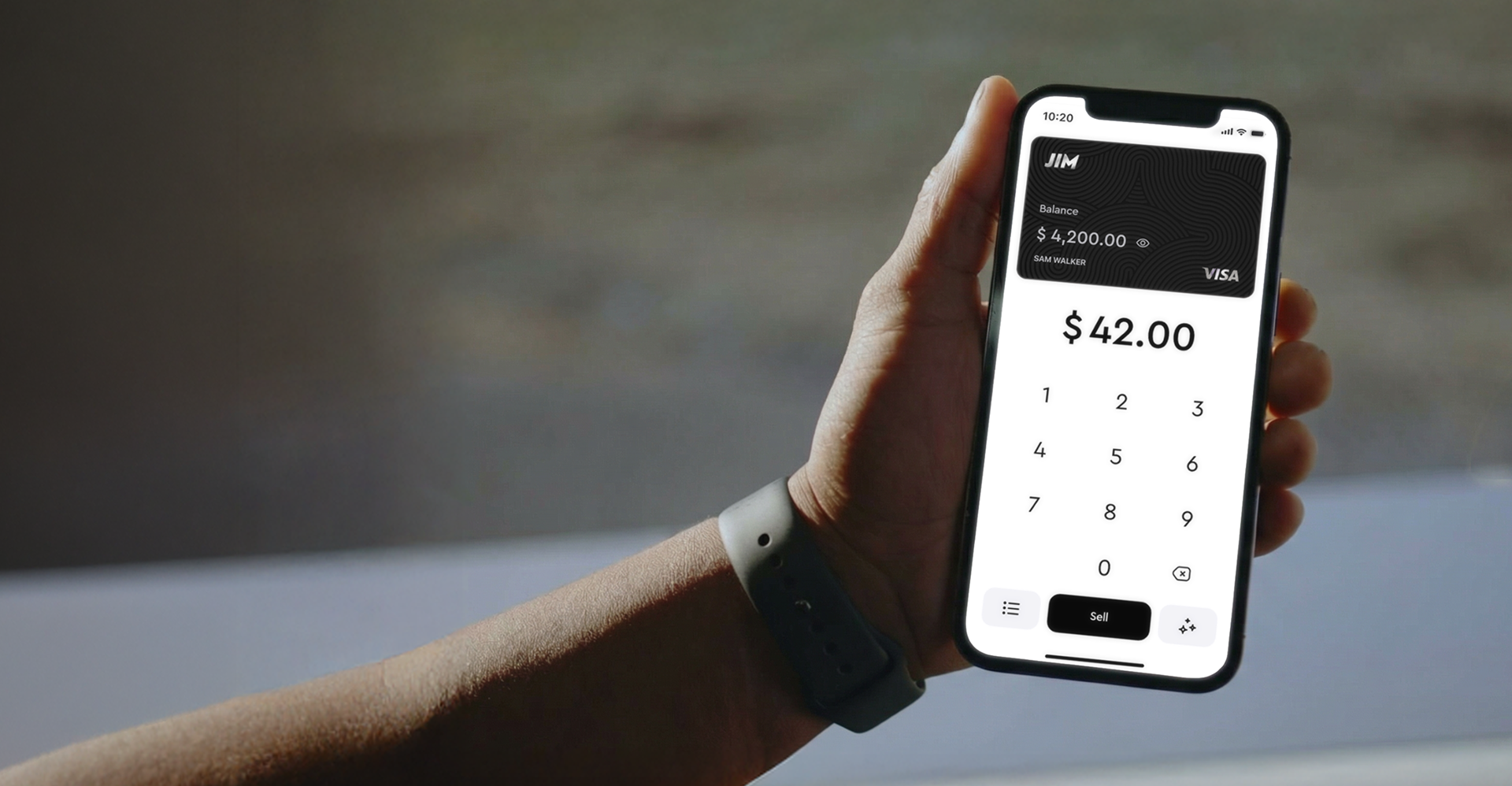
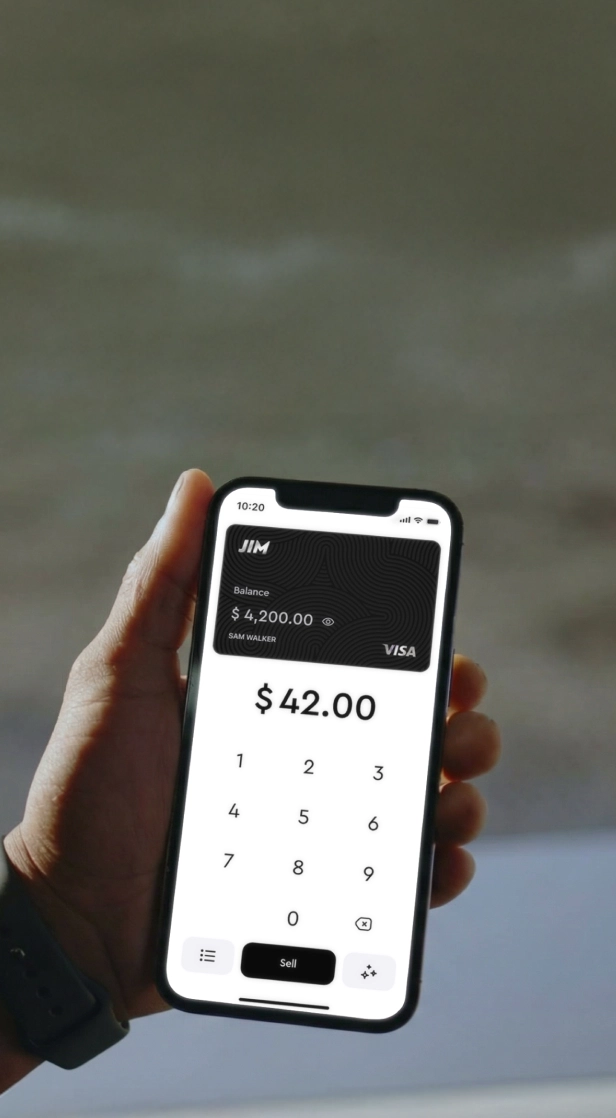
For convenience store businesses that need to accept payments on-site or on-the-go, JIM offers a streamlined solution. With JIM, you can accept debit, credit, and digital wallets directly through your smartphone. Just tap and done.
At just 1.99% per transaction with no hidden costs or extra hardware needed, it's a strong option. This rate is often lower than the average commission other providers offer. It's particularly useful for sidewalk sales or to accept payment for local delivery orders.
- Get Started: Download JIM app for iOS
- Make a Sale: Type the sales amount, hit sell, and ask your customer to tap their card or device on your phone
- Access Funds: Your money is available right on your JIM card as soon as the sale is done - no waiting for bank transfers
Here are 3 immediate steps to take:
- Compare the transaction fees and contract terms of two payment processors.
- Ask potential providers about their fund transfer times.
- Download the JIM app to explore its features on your phone.
Step 6: Fund your business and manage finances
With your startup costs mapped out, the next step is to secure funding. The SBA 7(a) loan is a popular choice for new convenience stores. Lenders typically offer between $50,000 and $250,000 and look for a credit score of 680 or higher.
To qualify, you will need a detailed business plan that shows your market research and financial projections. Interest rates often range from the Prime Rate plus 2.75% to 4.75%. The application process can take 60 to 90 days, so start early.
Manage your working capital
Many new owners focus only on startup costs and run out of cash too soon. You need enough working capital to cover operations for the first six months. This buffer keeps your business running before sales become consistent. Plan for at least $30,000 to $60,000.
This amount should cover:
- Inventory Replenishment: $10,000 - $20,000
- Payroll for 1-2 employees: $9,000 - $18,000
- Rent & Utilities: $6,000 - $15,000
- Marketing & Miscellaneous: $5,000 - $7,000
In addition to SBA loans, you can check with your local Small Business Development Center (SBDC). They offer free guidance and can connect you with regional grants or community development financial institutions (CDFIs) that support local businesses.
Here are 4 immediate steps to take:
- Check your credit score to see if you meet typical loan requirements.
- Refine your business plan with detailed financial projections.
- Calculate your working capital needs for the first six months.
- Contact your local SBDC to ask about regional funding programs.
Step 7: Hire staff and set up operations
You will likely need two main roles to start: a Store Manager and a few Cashiers. The manager handles scheduling, inventory, and daily oversight for a salary between $40,000 and $60,000. Cashiers manage sales and stock shelves, typically earning $12 to $16 per hour.
Once you hire, focus on training. If you sell alcohol, employees need state-approved server training, like a TIPS certification. Many owners face heavy fines because they overlooked this. You will also need food handler's permits for anyone preparing coffee or hot food.
With your team in place, you can streamline daily work. Scheduling software like Homebase or 7shifts helps manage shifts and time tracking. To gauge efficiency, aim to keep your labor cost between 10% and 15% of total sales, a common benchmark for convenience stores.
Here are 4 immediate steps to take:
- Draft job descriptions for a cashier and a store manager.
- Check your state's requirements for alcohol server certification.
- Explore scheduling software like Homebase to see its features.
- Set a target for your labor cost as a percentage of sales.
Step 8: Market your store and attract customers
A grand opening event creates immediate buzz. You could offer a free coffee or hot dog to the first 100 customers. This simple gesture gets people in the door and talking about your new store.
Local marketing strategies
Focus on the immediate neighborhood. Use flyers and door hangers in a one-mile radius to announce your opening date and a special offer. A "buy one, get one free" deal on fountain drinks is a low-cost way to drive foot traffic.
Next, claim your free Google Business Profile. This action puts your store on the map for local searches. Encourage your first few customers to leave reviews, as positive feedback significantly boosts your visibility.
Build customer loyalty
A simple punch card system builds loyalty from day one. Try a "Buy 9 coffees, get the 10th free" offer. It encourages repeat visits without the need for complex software. Many owners wait on this, but it is a powerful opening move.
Many new owners only think about marketing when sales are slow. A better approach is to budget 1-2% of your projected annual revenue for marketing from the start. This proactive spending builds momentum early on.
Here are 4 immediate steps to take:
- Plan a grand opening special, like a free item for the first 100 customers.
- Claim and complete your Google Business Profile listing.
- Design a simple punch card for a popular item like coffee.
- Set a marketing budget of at least 1% of your projected revenue.
Step 9: Set your pricing strategy
Establish your profit margins
Your pricing should balance profit with customer value. For general merchandise like snacks and candy, a 40-50% markup over your cost is standard. Beverages can often support a higher margin, sometimes up to 60%, especially for fountain drinks and coffee.
Some items, like tobacco and lottery tickets, have very low margins, often set by law or suppliers at 10-15%. You offer these products to drive foot traffic, not for direct profit. Many new owners misprice these items and hurt their overall profitability.
Analyze competitor pricing
Next, visit your top three competitors and create a price book. Record the prices for 10-15 of your most common products, like a can of Coke, a bag of Doritos, and a gallon of milk. This gives you a baseline for your local market.
You do not need to have the lowest price on everything. Customers expect to pay a small premium for convenience. Instead, aim to be competitive on key items that shoppers notice most, like popular energy drinks or candy bars at the checkout counter.
Use smart pricing tactics
With your baseline set, you can use proven strategies to boost sales. These simple tactics encourage customers to spend a little more per visit.
- Psychological Pricing: Price items at $1.99 instead of $2.00.
- Bundle Deals: Offer a coffee and a pastry for a single price, like $3.50.
- Multi-Packs: Create deals like "2 for $5" on popular drinks.
Here are 4 immediate steps to take:
- Create a price book with the costs of 15 key items from your competitors.
- Set your target markup percentages for snacks, beverages, and general goods.
- Design one bundle deal for a morning rush item like coffee.
- Price your fountain drinks using a tiered model for small, medium, and large sizes.
Step 10: Control quality and scale your business
Maintain quality standards
Your store's cleanliness and service speed are your most important quality benchmarks. Aim to keep customer wait times under two minutes, even during peak hours. A simple daily cleaning checklist for restrooms, floors, and coffee stations makes a huge difference in customer perception.
Track your inventory performance closely. A key metric is your inventory turnover rate, which shows how quickly you sell and replace stock. For popular items like drinks and snacks, you should aim for 8-12 turns per year. Also, keep your stockout rate below 5% to avoid disappointing customers.
Plan for growth
Growth should be data-driven, not based on gut feelings. When your labor cost stays below 10% of sales but service feels slow, it is a good signal to hire another cashier. This protects the customer experience and prevents burnout among your current staff.
Thinking about a second store? Wait until your first location hits a consistent net profit margin of 5-7% for at least a full year. To manage multiple stores, you might want to consider inventory software like Skupos or CStorePro. They help track sales and automate orders.
Here are 4 immediate steps to take:
- Create a daily cleaning checklist for your staff.
- Calculate the inventory turnover rate for your top 20 products.
- Set a target net profit margin of 5% for your first year.
- Explore inventory management software like Skupos.
Starting your convenience store is about more than just stocking shelves; it's about becoming a reliable part of your neighborhood. Remember that your regulars are your foundation. With this guide, you have a clear path forward to build a business that serves your community well.
As you get started, simple solutions make a big difference. For payments, JIM turns your phone into a card reader for a flat 1.99% fee, with no extra hardware. It keeps things easy so you can focus on your customers. Download JIM to get set up.
.avif)