Starting a dba business is a rewarding venture that combines your unique skills with business savvy, and while it's more accessible than ever to get started, that accessibility doesn't mean success is guaranteed.
This guide will take you through the practical steps of validating your business concept, securing funding, obtaining necessary licenses, and acquiring equipment to help you launch a successful dba business in the U.S.
Step 1: Plan and validate your business idea
Before you spend a dollar, confirm people will actually buy what you sell. You can create a simple survey with a service like SurveyMonkey. More importantly, get out and talk to at least 20-30 potential customers in your target area to get direct feedback.
Analyze your competition
Look at who is already successful. Your local public library often provides free access to powerful databases like ReferenceUSA. Use it to map out competitors, their price points, and what customers say about them in online reviews. This research shows you gaps in the market.
A frequent misstep is to only look at direct competitors. Also consider businesses that solve the same customer problem in a different way. This gives you a fuller picture of the market and your unique place in it.
Estimate your startup costs
With a validated idea, you can map out your finances. Startup costs for a small business can range from $12,000 to over $37,000. Planning for these expenses early helps you build a realistic budget and secure the right amount of funding.
Here is a typical breakdown to get you started:
- DBA & Business Licenses: $50 - $150
- Equipment (e.g., POS system, furniture): $3,000 - $10,000
- Initial Inventory: $5,000 - $15,000
- Rent Deposit & First Month: $4,000 - $12,000
Here are 3 immediate steps to take:
- Draft a one-page summary of your business concept and ideal customer.
- Use a library database like ReferenceUSA to list five local competitors and their offerings.
- Create a detailed spreadsheet of your estimated startup costs using these categories.
Step 2: Set up your legal structure and get licensed
Choose your business structure
Most new business owners choose a Limited Liability Company (LLC). This structure protects your personal assets, like your home and car, if the business faces debt or lawsuits. It is a smart way to create a legal separation from day one.
Filing for an LLC is done through your state's Secretary of State website, with costs from $50 to $500. With an LLC, profits pass through to your personal taxes, so you avoid the double taxation that corporations face.
If you operate under a name different from your legal one, you will need a "Doing Business As" (DBA) registration. This is usually filed with your county clerk for a small fee, often under $50.
Secure federal, state, and local permits
Now that your structure is set, you can get your licenses. Start by getting a free Employer Identification Number (EIN) from the IRS website. You will need this to open a business bank account and hire employees. The process takes minutes online.
You will likely need more than just one permit. Your state's department of revenue will issue a seller's permit for collecting sales tax. In addition, your city or county requires a general business operating license, which can take a few weeks to process.
A frequent oversight is missing industry-specific permits. A food business needs health department clearance, while a salon may need cosmetology board licenses. The U.S. Small Business Administration (SBA) website helps find requirements for your state and business type.
Here are 3 immediate steps to take:
- Decide between an LLC and a sole proprietorship and check your state's filing fees.
- Apply for a free Employer Identification Number (EIN) directly on the IRS website.
- Use the SBA's website to create a list of the specific state and local licenses you need.
Step 3: Secure your insurance and manage risk
Your first policy is typically General Liability Insurance. It protects your business from claims of bodily injury or property damage. For example, it covers legal fees if a customer slips and falls in your store. Most commercial leases require at least $1 million in coverage.
Next, consider Commercial Property Insurance. This covers your physical assets like equipment, inventory, and furniture against events like fire, theft, or storms. Without it, one bad event could wipe out your entire investment.
If you hire employees, most states legally require you to have Workers’ Compensation insurance. This covers medical costs and lost wages for work-related injuries. It is a detail many new owners miss until it is too late.
Find the right coverage and provider
Speaking of costs, a general liability policy might run $400 to $900 annually. You can get quotes from providers that specialize in small businesses, such as The Hartford, Hiscox, or Next Insurance. They can often bundle policies for a better rate.
A frequent misstep is to assume your personal auto or home policy covers business activities. This is rarely the case. If you use your car for deliveries or own your business property, you need separate commercial policies.
Here are 3 immediate steps to take:
- Request quotes for a general liability policy from two of the recommended providers.
- Check your state's website for its workers' compensation laws and requirements.
- Make a list of your business equipment and inventory to get an accurate commercial property insurance quote.
Step 4: Secure your location and equipment
Your physical space sets the stage. For a small retail or service business, look for a location between 500 and 1,500 square feet. Before you sign anything, confirm the property is in a commercial zone by checking your city’s planning department website.
Negotiate your lease
When you find a spot, propose a shorter initial lease term, perhaps one or two years, with an option to renew. This gives you flexibility if the location does not perform as expected. It is a smart way to limit your initial risk.
You can also ask for a Tenant Improvement (TI) allowance. This is money from the landlord to help pay for renovations like new paint or flooring. Also, clarify what is included in Common Area Maintenance (CAM) fees so there are no surprises.
Acquire your equipment
With your location secured, you can outfit the space. Many new owners overspend here. You can find quality used items at significant discounts from business auction sites or local used equipment dealers, which frees up cash for other needs.
Here is a sample budget for key items:
- POS System: $1,200 - $2,500
- Shelving and Displays: $1,000 - $5,000
- Security System: $500 - $1,500
To find suppliers for your inventory, you might explore online directories like Wholesale Central or attend industry trade shows. When you contact them, ask about their minimum order quantity (MOQ). Some suppliers will lower the MOQ for a first-time order if you ask.
Here are 3 immediate steps to take:
- Check your city's zoning map for areas designated for commercial use.
- Draft a list of equipment you need and research prices for both new and used options.
- Ask a potential landlord for a sample lease to review its terms for improvements and maintenance fees.
Step 5: Set up your payment processing
Choose your payment solution
Most customers expect to pay with cards or digital wallets. When you select a payment solution, look at the transaction fees. Many providers charge between 2.5% and 3.5% per sale and may require you to buy or rent card readers.
A frequent mistake is to overlook hidden monthly fees or hardware costs. Read the fine print before you commit. For service businesses, you should also check if the system can handle deposits or recurring billing if you need those features.
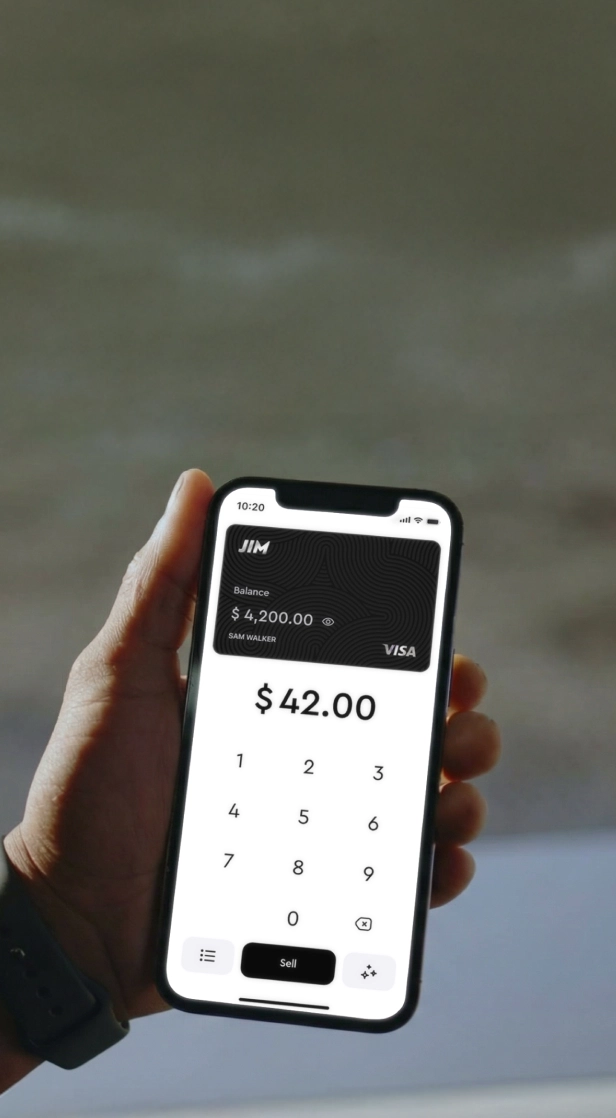
For a dba business that needs to accept payments on-site or on-the-go, JIM offers a streamlined solution. With JIM, you can accept debit, credit, and digital wallets directly through your smartphone. Just tap and done.
At just 1.99% per transaction with no hidden costs or extra hardware needed, it is particularly useful for mobile services or market stalls. This rate is competitive, as many other solutions have higher commission rates.
Getting started is straightforward:
- Get Started: Download JIM app for iOS.
- Make a Sale: Type the sales amount, hit sell, and ask your customer to tap their card or device on your phone.
- Access Funds: Your money is available right on your JIM card as soon as the sale is done. No waiting for bank transfers.
Here are 3 immediate steps to take:
- Compare transaction fees from at least two different payment solutions.
- Review the features of JIM on its website to see if it fits your needs.
- Determine if your business model requires taking deposits or setting up recurring payments.
Step 6: Secure funding and manage your finances
Explore your funding options
SBA Microloans are a great starting point. These loans, up to $50,000, are offered through local nonprofit lenders. They often have more flexible requirements, with interest rates typically between 6% and 9% and credit score expectations starting around 640.
For quicker access to cash, you might look at online lenders. While their approval process is fast, the convenience can come with higher interest rates, sometimes 15% APR or more. It is a trade-off for when you need funds immediately.
A frequent oversight is to ignore local sources. Look into Community Development Financial Institutions (CDFIs). They exist to support local economies and often have programs specifically for new small businesses that traditional banks might overlook.
Plan your first six months of cash flow
You will need working capital to cover costs before sales ramp up. For a small business, a good baseline is $15,000 to $25,000 for your first six months. This covers rent, inventory, and other operating expenses while you build a customer base.
Many new owners focus on one-time startup costs and forget this operating runway. Map out your monthly expenses in a spreadsheet to get a clear picture of your cash needs. This simple step helps you avoid a cash crunch just as your business starts to grow.
Here are 3 immediate steps to take:
- Check the SBA's website to find a local microlender in your area.
- Create a six-month cash flow projection in a spreadsheet.
- Research one Community Development Financial Institution (CDFI) near you.
Step 7: Hire your team and set up operations
Your first hire will likely be a Sales Associate or a similar customer-facing role. Plan for a pay range of $15 to $20 per hour. This person will handle sales, customer service, and daily tasks like restocking and cleaning.
A frequent misstep is to hire friends or family without clear expectations. You should create a formal job description that outlines all responsibilities. This simple document helps prevent future misunderstandings and sets a professional tone from the start.
Streamline your daily tasks
To manage your team, you might use scheduling software like Homebase or When I Work. Many offer free plans for small businesses. These platforms simplify creating schedules, tracking hours, and communicating with your staff, which saves you valuable time.
As you build your team, aim to keep your total payroll costs between 15% and 30% of your gross revenue. This is a common benchmark for retail and service businesses and helps you maintain profitability as you grow.
Here are 3 immediate steps to take:
- Write a one-page job description for your first employee.
- Compare the free plans of two scheduling software providers like Homebase or When I Work.
- Draft a simple checklist for store opening and closing procedures.
Step 8: Market your business and get customers
Start with your digital storefront
Your first move should be to claim your free Google Business Profile. This action puts you on Google Maps and in local search results. Fill out every section with photos, hours, and a clear description of what you do.
Encourage your first few customers to leave reviews. Positive reviews can boost your ranking significantly. Aim to get 5-10 reviews within your first month. This social proof is powerful for attracting new business.
Engage with your local community
You can also try old-school tactics. A budget of $100 can get you 500 professional flyers from a service like Vistaprint. Distribute them in community centers or partner with non-competing local businesses to display them.
A frequent mistake is to try everything at once. Instead, focus your initial efforts. For example, master your Google profile and one local partnership before you even think about paid ads like Google Ads or Facebook Ads.
Track what works. Ask every new customer, "How did you hear about us?" Your goal is to keep your Customer Acquisition Cost (CAC) below $50. If you spend $200 on marketing and get 5 new customers, your CAC is $40.
Here are 3 immediate steps to take:
- Claim and completely fill out your Google Business Profile.
- Design a simple flyer and get a price quote from a printer like Vistaprint.
- List three local businesses you could partner with for cross-promotion.
Step 9: Price your products for profit
A simple starting point for retail is cost-plus pricing. The most common version is keystone pricing, where you double your cost to set the retail price. For example, if a product costs you $25 to acquire, you would sell it for $50.
A frequent error is to only use the wholesale price as your cost. You must calculate the "landed cost," which includes the item's price plus any shipping, taxes, and transaction fees. This gives you the true cost basis for your pricing.
Check what your rivals charge
With your cost figured out, look at your competitors. Visit their stores or websites and note their prices for similar items. Your price does not have to be the lowest, but it should be in the same ballpark unless you offer a clear advantage.
That keystone model gives you a 50% gross profit margin. From that $25 profit in our example, you still need to pay for rent, salaries, and other overhead. Understanding this margin helps you forecast your actual take-home profit and business sustainability.
Here are 3 immediate steps to take:
- Calculate the full "landed cost" for one of your main products.
- List the prices of five direct competitors for that same product.
- Apply a keystone markup to your landed cost to determine a starting price.
Step 10: Maintain quality and scale your operations
As your business finds its footing, you need a system to keep quality high. Don't just rely on gut feelings. A simple way to measure customer happiness is the Net Promoter Score (NPS). Ask customers, "On a scale of 0-10, how likely are you to recommend us?"
Track this score monthly. A score above 50 is good, and above 70 is excellent. Also, monitor your customer return rate. If more than 20-30% of your customers come back within three months, you are building a loyal base.
Know when to grow
Growth should be deliberate. If you consistently work over 60 hours a week and revenue climbs, it is time to hire. This prevents burnout and lets you focus on the bigger picture. Keep your total payroll below 30% of gross revenue.
When should you expand? If your current location operates at 80% capacity for three straight months, start to look for a second spot. For inventory, spreadsheets work at first. Once you manage over 100 SKUs, consider inventory software like Katana or Cin7 to prevent stockouts.
Here are 3 immediate steps to take:
- Set up a simple system to track your Net Promoter Score (NPS) after each sale.
- Define your personal weekly hour limit. If you consistently exceed it for a month, review your hiring plan.
- Review two inventory management systems like Katana or Cin7 to see their features and pricing.
You now have the map to launch your dba business. Remember that your success often comes down to your local community connection, from feedback to partnerships. You have done the research, now it is time to build.
When you make that first sale, keep payments simple. With JIM, your smartphone becomes a card reader to accept payments anywhere for a flat 1.99% fee, no extra hardware needed. Download JIM and you are ready for business.
.avif)