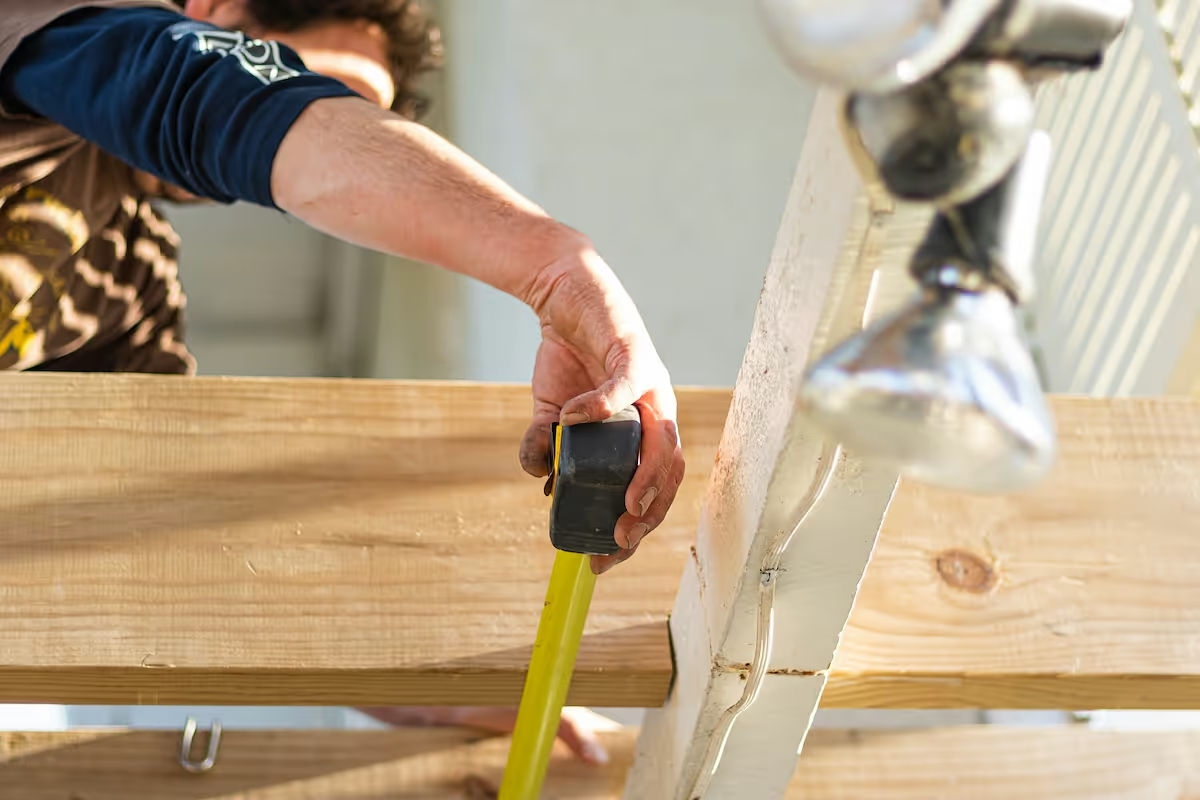
Starting a deck building business is a rewarding venture that combines craftsmanship and design skills with business savvy. The market is worth billions of dollars, with steady demand for new decks and repairs from homeowners, restaurants, and commercial properties.
This guide will take you through the practical steps of obtaining necessary licenses, securing funding, acquiring equipment, and building supplier relationships to help you launch a successful deck building business in the U.S.
Step 1: Plan your business and validate the market
Market and competitor research
First, analyze your local housing market. Use sites like Zillow or Redfin to see recent home sales in your target zip codes. Note the types of decks, materials used, and their apparent impact on home values. This gives you a baseline for popular styles and pricing.
Next, identify your competition. A simple search on Google Maps for "deck builders near me" is a great start. Also, check platforms like Angi and HomeAdvisor to see who is actively advertising. A frequent oversight is to ignore general contractors who also build decks; they are part of your competition.
Estimate your startup costs
Initial investments can feel substantial, so a clear budget is your best friend. Your primary expenses will fall into a few main categories. Planning for these costs upfront helps you secure the right amount of funding without surprises down the road.
- Tools and Equipment: $5,000 - $10,000 for professional-grade saws, drills, and safety gear.
- Vehicle: $15,000 - $30,000 for a reliable used truck or van.
- Licenses and Insurance: $1,500 - $3,000 for initial registration and liability coverage.
- Initial Marketing: $1,000 - $2,500 for a basic website, business cards, and local ads.
Your total startup costs will likely range from $22,500 to $45,500.
Here are three immediate steps to take:
- Research deck styles on 50 recently sold homes in your area.
- Create a list of 10 local competitors from Google Maps and Angi.
- Draft a startup budget based on the cost estimates above.
Step 2: Set up your legal structure and get licensed
Choose your business structure
You should consider forming a Limited Liability Company (LLC). This structure protects your personal assets, like your home and car, if the business faces debt or lawsuits. It offers a vital layer of security that a sole proprietorship does not provide.
An LLC also offers pass-through taxation. This means business profits pass directly to you, and you report them on your personal tax return. This avoids the double taxation that corporations can face and simplifies your accounting. You can form an LLC through your state's Secretary of State website.
Secure licenses and permits
First, get a free Employer Identification Number (EIN) from the IRS website. You need this for tax purposes and to open a business bank account. The process is online and takes minutes.
Next, check your state's contractor licensing board. Requirements vary, but you will likely need a general contractor or a specialty license. For example, some states have specific carpentry or framing licenses. The board's website will list exam details, fees, and insurance minimums.
For each job, you will need a building permit from the local city or county building department. Permit costs range from $200 to over $1,000, and approval can take two to six weeks. A frequent misstep is to begin work without an approved permit, which can result in fines.
Here are 4 immediate steps to take:
- Decide between an LLC and a sole proprietorship for your business structure.
- Apply for a free Employer Identification Number (EIN) on the IRS website.
- Find your state's contractor licensing board to review license requirements.
- Call your local building department to ask about their deck permit process and fees.
Step 3: Secure insurance and manage risk
Key insurance policies
Protecting your business from day one is non-negotiable. You will need several types of insurance. Many new owners underestimate their coverage needs, which can be a costly mistake if an accident happens. Proper insurance protects your assets and your reputation.
Start with these policies to build a strong safety net for your deck building business.
- General Liability: Aim for $1 million to $2 million in coverage. This handles claims of property damage or bodily injury. Annual premiums often range from $1,200 to $2,500.
- Workers' Compensation: If you hire anyone, this is mandatory in most states. It covers employee injuries on the job. Do not misclassify employees as contractors to avoid this expense; the penalties are severe.
- Commercial Auto: Your personal auto policy will not cover your work truck. You need a separate commercial policy.
- Inland Marine: This policy protects your tools and equipment while they are in transit or at a job site.
You might want to contact providers who specialize in contractor insurance, such as Hiscox, The Hartford, or Next Insurance. They understand the specific risks of deck building, like worker falls or structural issues, and can offer policies tailored to your needs.
Here are 3 immediate steps to take:
- Request quotes for a $1 million general liability policy.
- Contact an insurance provider like Hiscox or The Hartford that specializes in contractor insurance.
- Review your state’s requirements for workers' compensation if you plan to hire help.
Step 4: Set up your workspace and buy equipment
Find a base of operations
You do not need a commercial office to start. A home office for administrative work is perfectly fine. Your main concern is secure, dry storage for your equipment and materials. A 10x20 foot storage unit provides 200 square feet, which is a good starting point.
When you look for a storage unit, ask about month-to-month leases. This gives you flexibility as your business grows. Also, check your local zoning ordinances to confirm rules for a home-based business, especially if you plan to park a work truck at your residence.
Purchase your primary equipment
Your equipment budget requires careful thought. You can acquire reliable, professional-grade gear without overspend. Consider both new and high-quality used options to manage your initial investment. Your first purchases should cover the fundamentals for most deck projects.
- 12” Sliding Compound Miter Saw: $600 - $1,200
- Cordless Drill & Impact Driver Kit: $300 - $600
- Circular Saw: $150 - $300
- Jigsaw & Oscillating Multi-Tool: $200 - $400
Establish supplier accounts
Open contractor accounts at local lumberyards and big-box stores like The Home Depot. These accounts often provide discounts and dedicated service. For composite decking, identify the local distributors for brands like Trex or TimberTech, as you will order through them.
A frequent misstep is to tie up cash in excess inventory. Order materials on a per-job basis. Most suppliers do not require a minimum order quantity for standard materials, which helps you protect your cash flow as you get started.
Here are 4 immediate steps to take:
- Call two local storage facilities for quotes on a 10x20 unit.
- Create a detailed equipment list with a budget for new or used gear.
- Apply for a contractor account at your nearest major lumberyard.
- Find the local distributor for a major composite brand like Trex.
Step 5: Set up your finances and payment processing
Establish your payment structure
A standard payment structure is a 50% deposit upfront and 50% upon completion. The deposit covers your initial material costs and secures the project in your schedule. This approach protects your cash flow and shows client commitment before you begin work.
Some new builders only accept checks, which can delay projects and feel inconvenient for clients. You might want to offer multiple payment options, including bank transfers and credit cards. This flexibility makes you appear more professional and makes it easier for clients to pay you.
Choose a payment solution
For a deck building business that needs to accept payments on-site or on-the-go, JIM offers a streamlined solution. With JIM, you can accept debit, credit and digital wallets directly through your smartphone - just tap and done.
At just 1.99% per transaction with no hidden costs or extra hardware needed, it's particularly useful for collecting the deposit right after a client signs the contract. Other payment solutions often have average commission rates between 2.5% and 3.5%.
- Get Started: Download the JIM app for iOS.
- Make a Sale: Type the sales amount, hit sell, and ask your customer to tap their card or device on your phone.
- Access Funds: Your money is available right on your JIM card as soon as the sale is done - no waiting for bank transfers.
Here are 3 immediate steps to take:
- Draft your standard payment terms, such as a 50% deposit.
- Download the JIM app to review its features for on-site payments.
- Compare the 1.99% transaction fee with your bank's credit card processing rates.
Step 6: Secure funding and manage your finances
You might want to explore an SBA 7(a) loan, which is a popular option for new service businesses. Lenders typically look for a credit score above 680. For a deck business, loans between $25,000 and $75,000 are common for initial equipment and operational costs.
Another route is equipment financing. This lets you purchase your truck and saws without a large cash payment. Your local credit union is a great place to start, as they often have favorable rates for small business members. This protects your cash for other expenses.
Plan your working capital
Working capital is the money you need to operate for the first six months before revenue becomes consistent. Many new builders get caught short on cash because they forget that project delays can happen, but bills for insurance and fuel are always due.
You should plan for these initial operating costs:
- Insurance Premiums: $1,000 - $2,500 for the first few months.
- Fuel and Vehicle Maintenance: $1,500 - $3,000.
- Marketing and Admin Costs: $1,000 - $2,000 for your website and local ads.
Aim to have at least $10,000 to $15,000 set aside. This cash cushion allows you to cover expenses without stress while you secure and start your first few jobs.
Here are 3 immediate steps to take:
- Review the requirements for an SBA 7(a) loan on the official SBA website.
- Ask your local credit union about their small business and equipment loan options.
- Calculate your estimated working capital needs for the first six months.
Step 7: Hire your first crew and set up operations
Define roles and pay
Your first hire should be a skilled Lead Carpenter who can run the job site. A good helper or laborer is your next priority. They handle material transport and site cleanup, which frees up your lead to focus on skilled work. This structure makes your operation efficient from day one.
A Lead Carpenter typically earns $25 to $40 per hour, while a helper will likely fall in the $18 to $25 per hour range. A frequent mistake is to classify these workers as 1099 contractors. You should treat them as W-2 employees to stay compliant and avoid significant IRS penalties.
Streamline your operations
You might want to use software like Jobber or Buildertrend to manage projects. These platforms help with scheduling, client communication, and quotes. Also, ensure your crew has basic safety training, like an OSHA 10 certification, before they step on a site.
As a benchmark, a two-person crew can often generate between $200,000 and $300,000 in annual revenue. This figure helps you price jobs correctly and set realistic financial goals for your business.
Here are 4 immediate steps to take:
- Draft job descriptions for a Lead Carpenter and a Carpenter's Helper.
- Look up local providers for OSHA 10 safety certification courses.
- Sign up for a free trial of a management app like Jobber to see its features.
- Calculate your target revenue per project to meet an annual goal.
Step 8: Market your business and win clients
Build your online foundation
Your first step is to claim your digital real estate. Set up a free Google Business Profile. Ask friends or family whose small projects you have worked on to leave your first reviews. A simple, clean website with a photo gallery of your work is also a must.
Use platforms like Facebook and Instagram to post high-quality photos of finished decks. Visuals sell your craftsmanship better than words. This creates a portfolio that potential clients can see before they even call you.
Generate leads and build momentum
You might want to explore paid lead services like Angi or Thumbtack. Leads can cost between $50 and $150, and you should aim to convert 10-20% of them. A frequent misstep is a slow response; you should call a new lead within 15 minutes.
Do not forget offline methods. Place a professional yard sign at every job site, with the client's permission. Also, consider door hangers for the 20 houses nearest to your completed project. This hyper-local approach can be very effective.
Nurture referrals
Word-of-mouth is powerful in this business. You can build a referral network if you connect with other trade professionals, like landscapers and painters. They can send work your way, and you can do the same for them.
Here are 4 immediate steps to take:
- Set up your Google Business Profile and upload photos.
- Create a simple one-page website to showcase your portfolio.
- Research lead costs on Angi or Thumbtack for your service area.
- Order 10 professional yard signs to place at job sites.
Step 9: Price your services and create proposals
Develop your pricing model
Most deck builders use a cost-plus pricing model. You calculate the total cost of materials and labor, then add percentages for overhead and profit. A good starting point is to mark up materials by 1.5x to 2x their cost.
For labor, determine your hourly rate and estimate the hours needed. Add 15-20% to the total job cost to cover overhead like insurance and fuel. Finally, add your desired profit margin, which should be between 20% and 30%.
Many builders get into trouble by underestimating labor. Track your hours meticulously on your first few projects to create a reliable baseline for future quotes. While per-square-foot pricing ($35-$75 for wood) is useful for ballpark figures, avoid it for final proposals.
Create professional proposals
Your proposal is a sales document, not just a price tag. It should detail the scope of work, specify materials by brand and color, and outline a clear project timeline. Also, restate your payment terms, like a 50% deposit and 50% on completion.
A frequent oversight is a vague scope of work. This can lead to scope creep, where clients expect extra work for free. Be explicit about what is included, such as demolition and debris removal, and what is not.
Here are 4 immediate steps to take:
- Calculate your target hourly labor rate, including overhead costs.
- Create a price sheet for common materials with a 1.5x markup.
- Draft a proposal template with a detailed scope of work section.
- Research local per-square-foot deck prices to use for quick estimates.
Step 10: Maintain quality and scale your operations
Establish your quality standards
Your reputation depends on consistent quality. Create a final inspection checklist for every project. It should include items like fastener spacing, deck board gaps, and railing stability. You can reference the International Residential Code (IRC) for specific standards like footing depth and guardrail height.
A good metric to track is your callback rate. Aim for fewer than 5% of jobs that require a return visit for fixes. Many new owners try to save money with cheaper hardware, but this often leads to premature failures and warranty claims that hurt profits and your name.
Know when to grow
Growth should be deliberate. Once your first crew consistently generates over $25,000 in monthly revenue, you might consider hiring a second helper. This is also the point to think about a second work truck or specialized equipment like a post-hole auger.
As you add a second crew, project management software becomes very useful. Platforms like Buildertrend or CoConstruct help you manage multiple schedules and client communications without letting details slip. This prevents the chaos that often comes with rapid expansion.
Here are 4 immediate steps to take:
- Create a 15-point quality control checklist for project finalization.
- Look up the IRC requirements for decks in your state.
- Set a monthly revenue target that will trigger your next hire.
- Explore a free trial for a construction management app like Buildertrend.
Starting your deck business is a big step, but you have a solid plan. Remember that your craftsmanship is your best marketing, as each finished project is a testament to your skill. You have the roadmap, so take that first step with confidence.
To keep your cash flow healthy, simplify how you get paid. JIM turns your phone into a card reader, letting you accept payments on-site for a flat 1.99% fee without extra hardware. Download JIM and you are ready for that first deposit.
.avif)