Starting a dog food business is a rewarding venture that combines a passion for animal nutrition with business savvy. The industry is worth billions, with steady demand for everything from specialized formulas for dogs with allergies to fresh, gourmet meals.
This guide will take you through the practical steps of validating your business concept, obtaining necessary licenses, building supplier relationships, and acquiring equipment to help you launch a successful dog food business in the U.S.
Step 1: Plan your business and validate your idea
Begin by researching your target market. You can survey dog owners at local parks or pet-friendly events to understand their needs. Use Google Trends to check search interest for niches like “fresh dog food” or “hypoallergenic dog food” in your area.
Analyze the competition
Visit local pet stores to see which brands are on the shelves and their price points. For a look at online rivals, you might use a platform like Semrush to analyze their web traffic and marketing strategies. This gives you a clear picture of the competitive landscape.
Estimate your startup costs
Your initial investment will depend on your scale. A small-scale launch can range from $15,000 to $50,000. A frequent oversight is to underestimate packaging and shipping costs, so be sure to include those in your initial financial plan.
- Licenses and registration: $500 - $2,000
- Commercial kitchen equipment: $5,000 - $20,000
- Initial ingredient inventory: $3,000 - $10,000
- Packaging and label design: $1,000 - $5,000
Here are 3 immediate steps to take:
- Survey at least 30 local dog owners to confirm demand for your product concept.
- Identify three direct competitors and document their product offerings and prices.
- Create a detailed startup budget based on the cost ranges for equipment and ingredients.
Step 2: Set up your legal structure and get licensed
You might want to form a Limited Liability Company (LLC). This structure protects your personal assets from business debts and allows profits to pass directly to you without corporate taxes. You can file for an LLC through your state's Secretary of State website for about $100-$500.
Navigate federal and state regulations
The FDA regulates pet food, but enforcement happens at the state level. Your recipes should follow guidelines from the Association of American Feed Control Officials (AAFCO). Your state's Department of Agriculture will issue your commercial feed license, which can cost $100-$500 annually and take 4-8 weeks to process.
A frequent misstep is an incorrect "guaranteed analysis" on your label. This section details nutrient percentages and must be precise. Errors here can trigger product recalls, so double-check your lab results before you print any packaging. Your local health department may also require a kitchen inspection.
Here are 3 immediate steps to take:
- File for your LLC with your state's Secretary of State.
- Contact your state's Department of Agriculture to request the application for a commercial feed license.
- Draft a sample product label that includes a placeholder for the AAFCO-compliant guaranteed analysis.
Step 3: Secure insurance and manage risk
Protecting your business from day one is non-negotiable. The right insurance prevents a single mishap, like a contaminated batch, from shutting you down. Your focus should be on policies that cover the unique risks of producing and selling pet food.
Key insurance policies
Product liability insurance is your top priority. It covers claims if your food harms a pet. A $1 million policy is standard, with annual premiums typically between $500 and $1,500. You will also need general liability insurance for accidents at your facility.
If you hire staff, workers’ compensation is mandatory in most states. Also, a frequent oversight is using a personal vehicle for deliveries. Your personal auto policy will not cover business-related accidents, so you must get commercial auto insurance.
Find a specialized provider
You might want to work with insurers who understand the pet industry. General agents may not grasp the specific risks. Consider getting quotes from providers like Pet Care Insurance, The Hartford, or Hiscox, as they have experience with businesses like yours.
Here are 3 immediate steps to take:
- Request quotes for a $1 million product liability policy from at least two specialized providers.
- Ask your current auto insurer if your policy covers business use and explore commercial auto options.
- Inquire about bundling general and product liability insurance to potentially lower your premium.
Step 4: Find a location and buy equipment
Your production space sets the foundation. Look for a 500 to 1,500 square foot facility zoned for commercial food production or light industrial use. This ensures you meet local health codes from the start.
When you review a lease, confirm the space has adequate ventilation, floor drains, and three-phase power. A frequent oversight is a location that cannot support the electrical load of commercial grinders and mixers, a mistake that can lead to costly upgrades.
Select your production equipment
Your equipment needs depend on your recipes. For a fresh or raw food line, a typical setup includes a few key pieces. Budgeting for these items early helps manage your startup capital effectively.
- Commercial meat grinder: $500 - $2,000
- 20-quart planetary mixer: $2,000 - $5,000
- Walk-in refrigerator or freezer: $4,000 - $15,000
- Industrial vacuum sealer: $300 - $1,000
With equipment in mind, you can approach suppliers. Many meat and vegetable distributors who serve restaurants will also work with you. Be prepared for minimum order quantities, which can be around 500 pounds for popular proteins like chicken or beef.
Here are 3 immediate steps to take:
- Research three local commercial spaces zoned for food production.
- Price out a 20-quart mixer and a commercial grinder from a restaurant supply vendor.
- Contact two local meat suppliers to inquire about their product lists and minimum order sizes.
Step 5: Set up your payment system
Now that your operations are taking shape, let's talk about how you get paid. You will likely offer both one-time purchases and subscription plans. Your payment system needs to manage both smoothly, as most customers expect to pay by card.
A frequent misstep is to ignore the impact of transaction fees. Many processors charge between 2.5% and 3.5% plus monthly costs, which can quickly eat into your margins. You should look for a solution with clear pricing that fits your sales model.
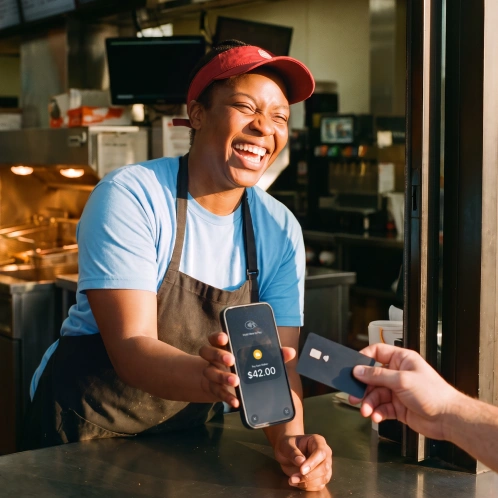
For a dog food business that needs to accept payments on-site or on-the-go, JIM offers a streamlined solution. With JIM, you can accept debit, credit and digital wallets directly through your smartphone - just tap and done. At just 1.99% per transaction with no hidden costs or extra hardware needed, it's particularly useful for selling at farmers' markets or during home deliveries.
- Get Started: Download JIM app for iOS
- Make a Sale: Type the sales amount, hit sell, and ask your customer to tap their card or device on your phone
- Access Funds: Your money is available right on your JIM card as soon as the sale is done - no waiting for bank transfers
Here are 3 immediate steps to take:
- Decide if you will offer a subscription model for recurring orders.
- Compare the transaction fees and monthly costs of two different payment processors.
- Download the JIM app to see how it works on your phone.
Step 6: Secure funding and manage your finances
An SBA 7(a) loan is a popular choice for funding equipment and working capital. Lenders typically want to see a strong business plan and a personal credit score above 680. Loan amounts can range from $25,000 to over $100,000, with interest rates often between 8% and 12%.
You might also look for an SBA Microloan. These offer up to $50,000 and often have more flexible credit requirements. In addition, search for grants like the USDA's Value-Added Producer Grant, which can apply to businesses that process raw agricultural goods into new products.
Plan your working capital
With funding in mind, you need to plan for your cash flow. A frequent oversight is focusing only on one-time equipment costs and not having enough cash for day-to-day operations. You should have enough working capital to cover your first six months of expenses.
To figure this out, add up your estimated monthly costs for ingredients, rent, and marketing, then multiply by six. If your monthly expenses total $8,000, you should aim for at least $48,000 in working capital to give your business a solid runway before sales become consistent.
Here are 3 immediate steps to take:
- Review the requirements for an SBA Microloan on the SBA website.
- Calculate your estimated working capital needed for the first six months of operation.
- Research the USDA Value-Added Producer Grant to see if your business model qualifies.
Step 7: Hire staff and set up operations
Once you consistently serve around 50 customers or approach $5,000 in monthly revenue, it is time to hire help. Your first hire will likely be a Kitchen Production Assistant to free you up for sales and management.
This person handles daily production like mixing ingredients, portioning meals, and packaging orders. Expect to pay $15-$20 per hour. Make sure they obtain a food handler's permit, as most local health departments require it for anyone who touches the food.
Establish your daily workflow
Many new owners run into trouble with product consistency between batches. To avoid this, create detailed Standard Operating Procedures (SOPs) for each recipe. These documents ensure every meal is identical, no matter who makes it, which is key for customer trust.
As your team grows, you can manage schedules with apps like Homebase or When I Work. They help you track hours and communicate shift changes easily. For inventory, a system like Sortly can help you monitor ingredient levels and prevent stockouts.
A frequent misstep is to misclassify an employee as an independent contractor to save on taxes. This can lead to significant fines and legal issues. If you control their schedule and how they work, they are an employee.
Here are 4 immediate steps to take:
- Draft a job description for a Kitchen Production Assistant with clear responsibilities.
- Check your local health department's website for food handler's permit requirements.
- Outline a Standard Operating Procedure (SOP) for one of your main recipes.
- Research the difference between an employee and an independent contractor on the IRS website.
Step 8: Market your business and acquire customers
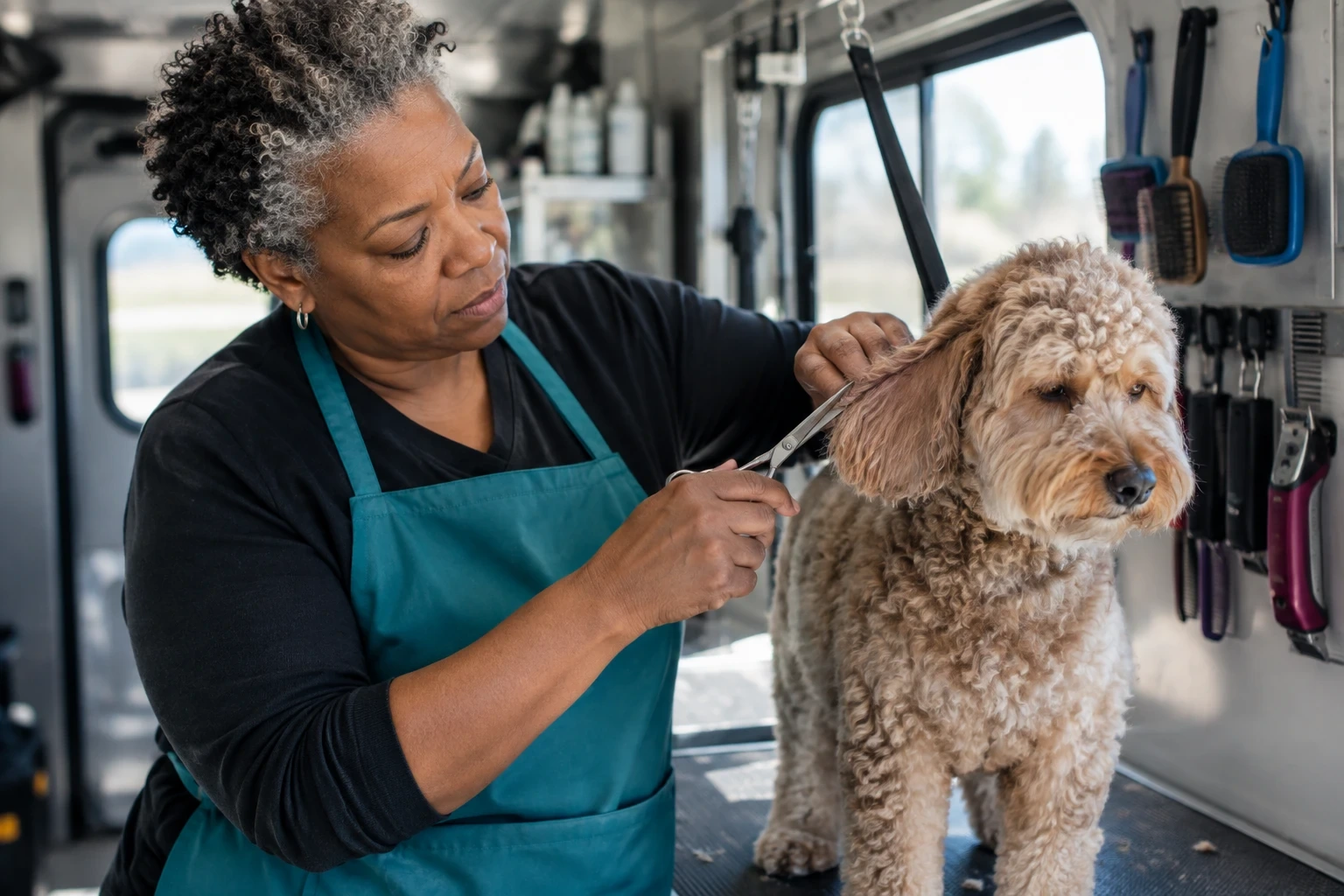
Your first customers will likely come from your local community. Set up a booth at farmers' markets or pet-friendly events. You can also partner with local veterinarians and groomers to offer samples or exclusive discounts to their clients.
Build your online presence
Use Instagram and Facebook to show behind-the-scenes content from your kitchen and share photos of happy canine customers. A Google Business Profile is also a must, as it helps local dog owners find you when they search for fresh pet food.
A frequent mistake is to spend heavily on paid ads before you have a proven product. Instead, focus on organic growth and community building first. This approach helps you build word-of-mouth without a large ad budget and validates your product with real feedback.
As you grow, track your Customer Acquisition Cost (CAC), which is your total marketing spend divided by new customers. Aim for a CAC under $50 initially. A typical online store converts 1-2% of visitors, so a loyal local following is your strongest asset.
Here are 4 immediate steps to take:
- Set up a Google Business Profile for your business.
- Contact one local vet or groomer to propose a partnership.
- Outline a social media content calendar for your first month.
- Calculate your target Customer Acquisition Cost (CAC) based on your product margin.
Step 9: Price your products and manage subscriptions
Your pricing strategy directly impacts your profitability. A common approach is cost-plus pricing. First, calculate your total cost per pound, including ingredients, packaging, and labor. Many new owners forget labor and packaging, which can skew their numbers and hurt margins.
Aim for a gross margin of 40-60%. If your cost to produce one pound of food is $4, a retail price of $7 to $10 would put you in that range. You should not simply copy competitor prices without knowing your own costs, as their scale may allow for lower prices you cannot sustain.
Set up subscription options
Subscriptions create predictable revenue. You can offer a 5-10% discount for customers who sign up for recurring weekly or bi-weekly deliveries. Platforms like Shopify, paired with an app like Recharge, can manage these recurring payments and orders for you automatically.
Here are 3 immediate steps to take:
- Calculate your total cost of goods sold (COGS) for one pound of your main recipe.
- Research the per-pound price of three direct competitors.
- Outline a subscription tier that offers a 10% discount from your one-time purchase price.
Step 10: Maintain quality and scale your operations
Establish your quality standards
Consistency is what builds brand loyalty. You might want to send a sample from each large production batch, perhaps every 500 pounds, to a lab for a guaranteed analysis. This confirms your nutrient levels remain stable over time.
A frequent mistake is to test the initial recipe but then neglect production batches. Nutrient levels can drift, which can damage your reputation. Following Good Manufacturing Practices (GMPs) provides a solid framework for all your kitchen procedures.
Know when to grow
Growth should be deliberate. Once you reach 100-150 active subscribers or clear $10,000 in monthly recurring revenue, it is time to evaluate a larger facility or more automated equipment. This prevents your operations from becoming a bottleneck.
For hiring, a good benchmark is to add a new kitchen team member for every additional $5,000-$7,000 in monthly revenue. As you expand, spreadsheets become difficult. You can look at production and inventory software like Katana or Fishbowl to manage complexity.
Here are 3 immediate steps to take:
- Schedule a recurring lab test for your most popular recipe every quarter.
- Define two revenue milestones that will trigger your next hire and a facility expansion.
- Research one inventory management software like Katana to understand its features for future use.
You now have the blueprint for your dog food business. Remember that your story and connection with pet owners are just as important as the ingredients in the bowl. With a clear plan, you are ready to turn your passion into a real venture.
When you make that first sale, getting paid should be simple. JIM turns your phone into a card reader for a flat 1.99% fee, no extra hardware needed. It helps you manage payments easily so you can focus on growth. Download JIM.