How to start a dtf printing business from scratch

Our guide gives you a clear roadmap to start a DTF printing business. Get practical steps for funding, licensing, and insurance to skip rookie errors.

2 min read time

Copied
How to start a dtf printing business
Main topics

Starting a DTF printing business is an exciting venture that combines creativity and design skills with business savvy. The market for custom apparel is a multi-billion dollar industry, with steady demand for personalized clothing, promotional merchandise, and unique fashion pieces.

This guide will take you through the practical steps of validating your business idea, acquiring the right equipment, securing funding, and building supplier relationships to help you launch a successful dtf printing business in the U.S.

Step 1: Plan and validate your business idea

Before you spend a dime, you need to know your niche. Spend a few hours on Etsy and Instagram searching for terms like "DTF transfers" and "custom apparel". Note the popular designs, pricing, and what customers say in reviews. This is your initial market validation.

Next, look at the competition. Use Google Maps to find local print shops. For online rivals, you can use free SEO resources like Ahrefs' Keyword Generator to see what terms people search for. This shows you where the demand is and who you are up against.

Calculate your startup costs

Speaking of costs, let's map out your initial investment. A common misstep is buying the cheapest printer, which often leads to more repair costs down the line. You might want to consider a reliable mid-range machine instead, even if the upfront cost is higher.

Here is a typical breakdown for a new setup:

  • DTF Printer: $3,000 - $8,000
  • Heat Press: $300 - $1,000
  • Initial Supplies (film, ink, powder): $500 - $1,500
  • Business Formation (LLC): $100 - $500

Your total initial investment will likely fall between $4,000 and $11,000. This range gives you a realistic financial target to aim for as you seek funding or use savings.

Here are 3 immediate steps to take:

  • Analyze 10 competing DTF businesses on Etsy, noting their pricing and best-selling items.
  • Create a detailed spreadsheet to budget for your initial equipment and supply costs.
  • Use Google Trends to check the search volume for "custom t-shirt" in your state.

Step 2: Establish your legal and licensing framework

Choose your business structure

Most new DTF businesses choose a Limited Liability Company (LLC). It protects your personal assets if the business faces debt or lawsuits. An LLC also offers pass-through taxation, meaning profits are taxed on your personal return, which simplifies your accounting.

A frequent misstep is mixing personal and business funds. Open a separate business bank account as soon as your LLC is formed. This keeps your bookkeeping clean and maintains your liability protection, a detail many new owners overlook until tax time.

Secure your licenses and permits

Once your structure is decided, get a free Employer Identification Number (EIN) from the IRS website. You need this for taxes and to open your business bank account. The online application takes about 15 minutes to complete.

Next, visit your state's Secretary of State website to officially register your LLC. Filing fees are typically between $50 and $200. Also, apply for a seller's permit from your state's department of revenue. This permit allows you to buy wholesale supplies tax-free.

Here are 4 immediate steps to take:

  • File for an LLC with your state's Secretary of State.
  • Apply for a free Employer Identification Number (EIN) online with the IRS.
  • Register for a seller's permit from your state's department of revenue.
  • Open a dedicated business bank account to separate your finances.

Step 3: Secure your insurance and manage risk

Key insurance policies to consider

Protecting your investment is the next move. You will need a few types of insurance. General Liability is the baseline, covering accidents or property damage. A $1 million policy is standard and can cost between $400 and $900 annually.

Since you sell physical products, add Product Liability insurance. This protects you if a transfer damages a customer's item. Also, get Commercial Property insurance. A frequent oversight is underinsuring equipment, so ensure your policy covers the full replacement cost of your DTF printer.

You can get quotes from providers that work with small businesses. Consider companies like Hiscox, The Hartford, or Next Insurance. They understand the risks of a print shop, like fire hazards from heat presses, and can bundle policies for a better rate.

If you plan to hire employees, you will also need Workers' Compensation insurance. This is a state requirement and covers medical costs and lost wages if an employee gets hurt on the job. The cost varies by state and payroll size.

Here are 4 immediate steps to take:

  • Request quotes from Hiscox, The Hartford, and Next Insurance.
  • Confirm your Commercial Property policy covers the full value of your equipment.
  • Ask your agent specifically about adding Product Liability coverage.
  • Inquire about bundling General Liability and Property insurance for a discount.

Step 4: Set up your workspace and buy equipment

You need a dedicated space for your operation. A 10x10 foot room, or about 100 square feet, is a good starting point. This provides enough room for your printer, heat press, and a small work table. Check your local residential zoning codes, but a small home setup often requires no special permits.

If you decide to lease a commercial spot, try to negotiate a 1-2 year term instead of the standard 3-5 years. This gives you an exit strategy if you outgrow the space or need to relocate. Landlords are often flexible if you ask upfront.

Choose your equipment and suppliers

With your space planned, it is time to buy your gear. A common mistake is to forget about ventilation. The adhesive powder creates fumes during curing, so a good exhaust fan or an air purifier is a must-have for your workspace. This is a safety detail you cannot skip.

You can find equipment and supply bundles from vendors like DTF Superstore or Kingdom DTF. Many have no minimum order quantity, which lets you purchase just what you need to start. A starter bundle often includes film, ink, and powder, simplifying your first purchase.

Here are 4 immediate steps to take:

  • Measure your workspace to confirm at least 100 square feet of usable area.
  • Research local zoning laws for home-based businesses in your city.
  • Compare starter bundles from two different suppliers, like DTF Superstore and Kingdom DTF.
  • Plan for ventilation by pricing out an exhaust fan or air filtration system.

Step 5: Set up your payment processing

For most custom orders, you should require full payment upfront. On larger B2B jobs, a 50% deposit is standard practice. This policy protects you from covering material costs if a client cancels. It also keeps your cash flow positive from day one.

When you choose a payment processor, look closely at the transaction fees. Many providers charge between 2.5% and 3.5% per sale, which can eat into your profits. Some also have monthly fees or require you to buy specific hardware.

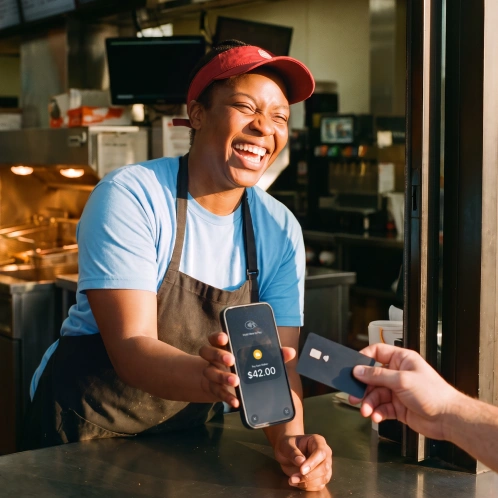
For a DTF business that needs to accept payments on-site or on-the-go, JIM offers a streamlined solution. With JIM, you can accept debit, credit and digital wallets directly through your smartphone - just tap and done. At just 1.99% per transaction with no hidden costs or extra hardware needed, it's particularly useful for taking payments at pop-up shops or local markets.

  • Get Started: Download the JIM app for iOS.
  • Make a Sale: Type the sales amount, hit sell, and ask your customer to tap their card or device on your phone.
  • Access Funds: Your money is available right on your JIM card as soon as the sale is done - no waiting for bank transfers.

Here are 3 immediate steps to take:

  • Decide on your payment terms, like requiring full payment for orders under $100.
  • Compare the transaction fees of at least two different payment processors.
  • Download the JIM app to see how it works on your phone.

Step 6: Fund your business and manage finances

With your startup costs mapped out, you can now pursue funding. An SBA Microloan is a strong option for this business model. These loans range from $500 to $50,000 and are offered through nonprofit lenders like Accion Opportunity Fund.

To qualify, you typically need a credit score above 600 and a simple business plan. Interest rates usually fall between 8% and 13%. Many new owners only budget for equipment, but you also need working capital for your first six months. Aim for an extra $2,000 to $4,000 to cover supplies and marketing before sales ramp up.

You might also look into grants. The Amber Grant, for example, awards $10,000 to a different woman-owned business each month. The application is straightforward and focuses on your business story rather than complex financial projections.

Here are 3 immediate steps to take:

  • Research SBA Microloan lenders that serve your state.
  • Calculate your working capital needs for the first six months of operation.
  • Review the application criteria for the Amber Grant to see if you qualify.

Step 7: Hire your team and streamline operations

You will likely be the sole operator at first. Once your orders consistently reach 15-20 per day, you might consider your first hire to handle production. Hiring too early can strain your cash flow before you have predictable revenue.

Your first hire: Production Assistant

A Production Assistant can take over daily printing, powdering, and curing tasks. The typical pay rate is between $15 and $20 per hour. Formal certifications are not required for this role, as training is almost always done on the job.

A frequent oversight is failing to train new staff on daily machine maintenance. Create a simple checklist for cleaning the printhead and emptying waste ink. This small step prevents clogs and expensive downtime, a common headache for new shops.

To manage your workflow, you can start with a free Trello board to track orders. As you grow, you might look into industry-specific software like Printavo to manage quotes, production schedules, and customer approvals all in one place.

As a general rule, aim to keep your total labor costs at or below 30% of your revenue. This helps ensure your pricing structure remains profitable as you scale your team.

Here are 4 immediate steps to take:

  • Track your daily order volume for one month to find your average.
  • Draft a job description for a Production Assistant that includes maintenance duties.
  • Set up a free Trello board with columns for "New Orders," "In Production," and "Shipped."
  • Calculate your target labor cost per order based on a 30% margin.

Step 8: Market your business and get customers

Your first marketing efforts should focus on visual platforms. Use Instagram and TikTok to post short videos of your printing process. Many new owners only show finished shirts, but customers love to see the craft behind the product. This builds trust and engagement.

A frequent misstep is to use low-quality product photos. Your images are your digital storefront. You can use natural light and your smartphone to get crisp, clear pictures. A simple lightbox, which costs around $30, can also make a huge difference.

Find your first customers

For local sales, reach out to community groups. Youth sports leagues, school clubs, and small businesses often need custom apparel. Prepare a small sample pack with a few high-quality transfers to show them your work in person. This direct approach often leads to bulk orders.

To sell online, Etsy is an effective starting point. The average conversion rate for shops is between 1% and 3%. Use specific keywords like "custom DTF transfer" and "personalized graphic tee" in your listings to attract buyers who are ready to purchase.

If you run paid ads, track your Customer Acquisition Cost (CAC). A reasonable target for a new shop is to keep this cost under $25 per customer. If you spend $100 on ads and gain four new customers, your CAC is $25.

Here are 4 immediate steps to take:

  • Post one behind-the-scenes video of your printing process to Instagram or TikTok.
  • Create a sample pack with 2-3 of your best DTF transfers to show potential local clients.
  • List five products on Etsy using high-quality photos and keyword-rich descriptions.
  • Identify three local organizations that could be your first bulk order customers.

Step 9: Price your products and manage costs

Your pricing strategy directly impacts your profitability. A simple cost-plus model is a great place to start. First, calculate your cost per transfer, which includes film, ink, and powder. A frequent oversight is forgetting to factor in labor and overhead like electricity.

With your true cost identified, apply a markup. A 300-400% markup is standard and should result in a gross profit margin of 60-70%. For example, if your total cost for a transfer is $1.50, a 300% markup would set your price at $6.00.

Set up tiered pricing

To encourage larger purchases, you can offer tiered pricing. For instance, a single transfer might be $6.00, but an order of 20 could drop to $5.50 per transfer. This structure rewards customers for buying in bulk and helps you secure bigger jobs.

Before you finalize your prices, check your competition. Spend an hour on Etsy and Google to see what other shops charge for similar sizes and quantities. This ensures your pricing is competitive and attractive to potential buyers without you leaving money on the table.

Here are 4 immediate steps to take:

  • Calculate your total cost for a single 10x10 inch transfer, including materials and overhead.
  • Apply a 300% markup to your cost to determine your base selling price.
  • Create a simple tiered pricing sheet for orders of 10, 25, and 50+ transfers.
  • Analyze the prices of three direct competitors on Etsy for similar products.

Step 10: Maintain quality and scale your operations

Establish your quality standards

Your reputation depends on consistent quality. Create a simple checklist for every batch. It should include a wash test, where you run a sample through at least five wash cycles to check for peeling. Also, verify color accuracy against the digital file.

A frequent mistake is to assume all supplies from a vendor are identical. Test each new roll of film or batch of ink. This prevents a large run of bad transfers. Aim for a return rate of less than 2% due to quality issues.

Know when to scale

Once you consistently process 15-20 orders per day, it is time to hire help. This frees you to focus on sales and customer service. When you approach 40-50 orders daily, you should plan to invest in a second printer to avoid production bottlenecks.

As your order volume grows, a Trello board will not be enough. You can move your workflow to a shop management software like Printavo. It helps you manage quotes, approvals, and your production schedule in one place, which is vital for a growing team.

Here are 4 immediate steps to take:

  • Create a quality control checklist that includes a 5-cycle wash test.
  • Define your daily order threshold for hiring a production assistant.
  • Research the cost and setup for a second DTF printer and heat press.
  • Review Printavo's features to see if it fits your future growth plans.

You now have a clear path to launch your DTF printing business. Remember, your success will depend on consistent quality and smart customer outreach, not just expensive gear. You have the roadmap, so go ahead and bring your creative ideas to life.

As you make those first sales, you'll need a simple way to get paid. JIM turns your phone into a card reader, so you can accept payments anywhere for a flat 1.99% fee. Download JIM and you are ready to go.

Sell and get paid instantly1 with JIM

Start selling
Hand holding a smartphone with the JIM app interface, showing a $2,100.00 Visa card balance and a keypad to enter a $42.00 transaction. The background features a futuristic rocky landscape and digital wrist overlay.