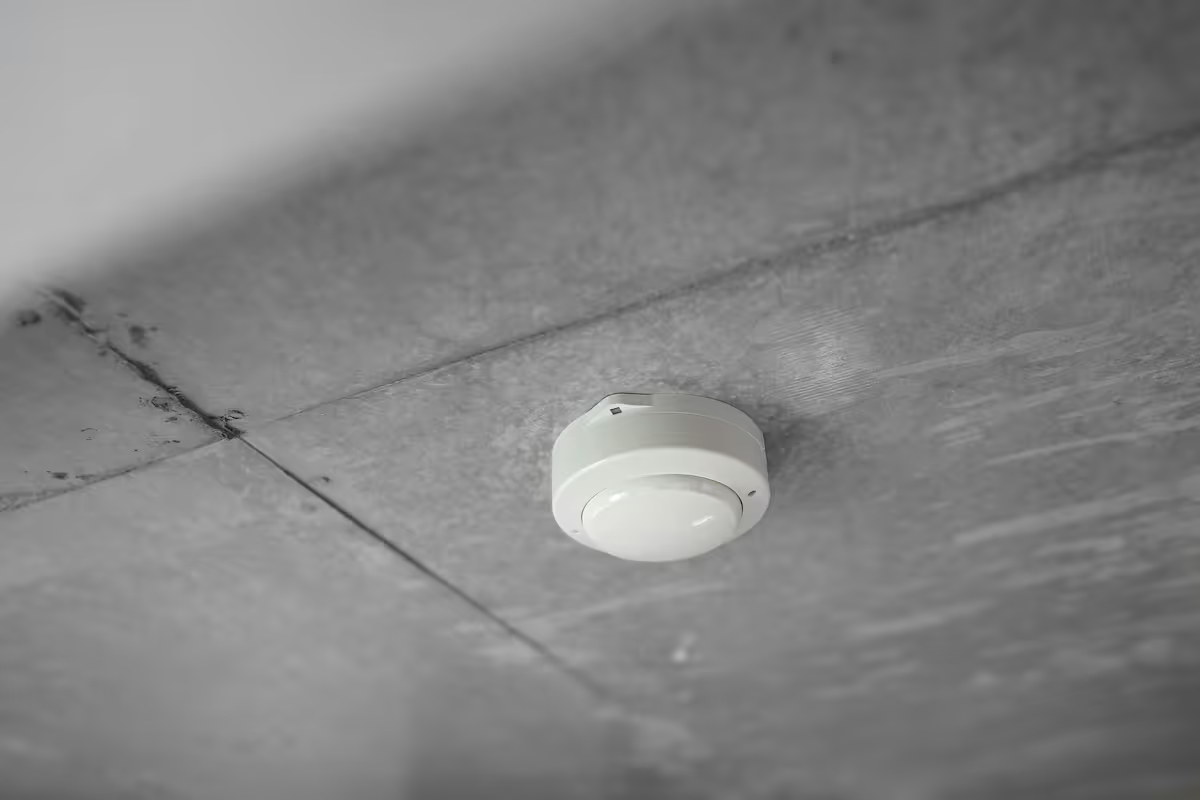
Starting a fire alarm company is a rewarding venture that combines technical expertise in life safety systems with sharp business savvy. The industry represents a multi-billion dollar market, fueled by steady demand for installation and maintenance services in commercial buildings, residential complexes, and industrial facilities.
This guide will take you through the practical steps of obtaining necessary licenses, securing funding, acquiring equipment, and building supplier relationships to help you launch a successful fire alarm company in the U.S.
Step 1: Plan your business and validate your market
Begin by researching your local market. Review public records for building permits issued in the last six months to gauge new construction and renovation activity. Also, connect with local chapters of the Building Owners and Managers Association (BOMA) to understand the needs of commercial property managers.
Next, analyze your competition. Identify the top 3-5 fire alarm companies in your target area. Review their websites to understand their service offerings and customer focus. You can also pose as a potential customer to request a quote and learn about their pricing and sales process.
Estimate your startup costs
Startup capital requirements can be significant, so a detailed budget is vital. Initial costs often range from $50,000 to over $115,000. This accounts for licensing, tools, a vehicle, and initial inventory. A common oversight is to underestimate insurance needs, which can be a costly mistake.
Here is a typical cost breakdown:
- Licensing & Certification (NICET): $500 - $2,000
- Insurance (Liability, E&O): $5,000 - $15,000+ annually
- Tools & Equipment: $10,000 - $25,000
- Work Vehicle: $20,000 - $40,000
- Initial Inventory: $15,000 - $30,000
Here are 3 immediate steps to take:
- Research local building permit applications from the last six months.
- Request quotes from three local fire alarm competitors to analyze their pricing.
- Create a detailed startup budget with line items for licensing, insurance, and equipment.
Step 2: Establish your legal structure and get licensed
You should consider forming a Limited Liability Company (LLC). It protects your personal assets if the business faces a lawsuit. Once your company is profitable, you can elect for S Corp tax status to potentially reduce self-employment taxes. A frequent misstep is to combine personal and business funds.
Navigate licensing and certification
The fire alarm industry is highly regulated. Your main certification will come from the National Institute for Certification in Engineering Technologies (NICET). Most jurisdictions require at least a NICET Level II in Fire Alarm Systems to lead projects.
In addition, your state’s Fire Marshal or contractor board issues the primary business license. The application fee is typically $200-$500, and approval can take 6-12 weeks. You will also need a standard business license from your city or county.
For each installation, you must pull a permit from the local Authority Having Jurisdiction (AHJ), which is usually the city building department. Factor these permit fees and potential approval delays into your project timelines and client quotes.
Here are 4 immediate steps to take:
- Register your business as an LLC with your state's Secretary of State.
- Contact your State Fire Marshal's office for the fire alarm contractor license application.
- Schedule your NICET Level I or II exam for Fire Alarm Systems.
- Open a dedicated business bank account to keep all finances separate.
Step 3: Secure your insurance and manage risk
Understand your coverage needs
You will need several types of insurance. General Liability covers property damage or injury caused by your work. A typical policy provides $1 million per occurrence and $2 million aggregate, with annual premiums from $2,500 to $7,500.
Professional Liability, or Errors & Omissions (E&O), is also necessary. It protects you if a system fails. Many new owners make the mistake of getting a policy that excludes "failure to perform," which is a critical gap in coverage for this industry.
In addition, you will need Commercial Auto insurance for your work vehicle and Workers' Compensation as soon as you hire your first employee. Workers' Comp requirements vary by state, so check your local laws.
Find a specialized insurance broker
You should work with an insurance broker who understands the construction trades. Generalist agents often miss key risks specific to fire alarm work. This can lead to denied claims down the road.
Consider reaching out to providers known for their work with contractors. Companies like The Hartford, Hiscox, and Acuity Insurance have programs tailored for businesses like yours. They can help you bundle policies for a better rate.
Here are 4 immediate steps to take:
- Request quotes for a General Liability policy with at least $1 million in coverage.
- Confirm with brokers that their Professional Liability policy includes "failure to perform" coverage.
- Contact insurers like The Hartford or Hiscox who specialize in contractor insurance.
- Research your state's specific requirements for Workers' Compensation insurance.
Step 4: Set up your location and buy equipment
Find your operational base
You can start with a small 500-1,000 square foot space. Look for properties with light industrial or commercial zoning that permit contractor storage. A garage-style roll-up door is a huge plus for loading and unloading equipment and inventory.
When you review a lease, ask about a tenant improvement (TI) allowance. This could provide a few thousand dollars from the landlord to help you install shelving and organize your workspace. It is a common request for commercial tenants.
Acquire your gear and inventory
Your initial equipment purchase will be a major part of your budget. Some people make the mistake of buying every specialized device upfront. You can rent uncommon diagnostic tools as needed. Focus on the daily-use items first.
- Multimeter & Testers: $300 - $800 for quality meters and smoke detector testers.
- Ladders: $500 - $1,500 for a set of A-frame and extension ladders.
- Hand & Power Tools: $1,000 - $2,500 for drills, wire strippers, and conduit benders.
For inventory, open accounts with national distributors like ADI Global Distribution or local suppliers like Security Equipment Supply. They typically do not require minimum orders once your trade account is active, which helps manage cash flow.
Here are 4 immediate steps to take:
- Search for commercial listings zoned for light industrial or contractor services.
- Ask potential landlords about tenant improvement (TI) allowances in their lease terms.
- Price out a starter equipment package with a multimeter, ladders, and hand tools.
- Apply for trade accounts with two fire alarm equipment distributors like ADI Global.
Step 5: Set up your payment processing
Establish your payment policies
You will want to establish clear payment terms. For large installations, a 50% deposit upfront with the balance due upon completion is standard. For commercial clients, you might offer Net 30 terms. Many owners miss out on steady income by not setting up recurring billing for maintenance contracts.
Choose your payment solution
For fire alarm companies that need to accept payments on-site, JIM offers a streamlined solution. While other providers often charge rates above 2.9% plus monthly fees, JIM lets you accept debit, credit, and digital wallets directly through your smartphone for just 1.99% per transaction with no hidden costs.
It is particularly useful for collecting payment immediately after a service call or for securing a deposit on the spot. There is no extra hardware needed, just tap and done.
- Get Started: Download the JIM app for iOS.
- Make a Sale: Type the sales amount, hit sell, and ask your customer to tap their card or device on your phone.
- Access Funds: Your money is available right on your JIM card as soon as the sale is done, no waiting for bank transfers.
Here are 3 immediate steps to take:
- Establish standard payment terms for installation projects and service calls.
- Choose a system to manage recurring billing for your maintenance contracts.
- Download the JIM app to prepare for on-site card payments.
Step 6: Secure funding and manage your finances
Explore your funding options
You can fund your business through an SBA 7(a) loan, which often covers amounts from $50,000 to $150,000. Expect interest rates around the Prime rate plus 3-5%. You will need a strong business plan and a personal credit score above 680 to qualify.
Another route is equipment financing. This is ideal for your work vehicle and major tools. Lenders use the equipment as collateral, which can make approval easier than an unsecured loan. Rates are typically between 5% and 10% depending on your credit.
Plan your working capital
With your startup costs covered, you need to plan for working capital. This is the cash on hand to pay bills for the first 3-6 months. A frequent misstep is to underestimate this figure, especially with Net 30 payment terms delaying your income.
For a business with $100,000 in startup costs, a safe working capital target is $30,000 to $50,000. This covers payroll, insurance, rent, and marketing before your revenue stream becomes consistent. A business line of credit can also provide a safety net.
Here are 4 immediate steps to take:
- Contact an SBA-preferred lender to discuss a 7(a) loan application.
- Request quotes for equipment financing for your primary work vehicle.
- Calculate six months of operating expenses to set your working capital goal.
- Apply for a business credit card to manage small, day-to-day purchases.
Step 7: Hire your team and set up operations
Build your technical team
Your first hire should be a skilled Fire Alarm Technician. This person will handle installations, inspections, and service calls. Look for candidates with a NICET Level II certification in Fire Alarm Systems, as this is a common requirement for leading projects.
A mistake some new owners make is hiring uncertified technicians to save on payroll. This often backfires with failed inspections and costly rework. A qualified technician, with a typical salary of $55,000 to $75,000, is an investment in your company's reputation and compliance.
Streamline your daily operations
Once you have a technician, you need a system to manage jobs. Spreadsheets and calendars become messy fast. You might consider field service software like Jobber or ServiceTitan to handle scheduling, dispatch, and invoicing from day one.
As you grow, a good revenue target is $150,000 to $200,000 per field technician. When you add a second or third technician, you should plan to hire an Office Manager to handle the administrative workload. This role typically commands a salary of $45,000 to $60,000.
Here are 4 immediate steps to take:
- Draft a job description for a Fire Alarm Technician with NICET certification.
- Research and request demos from field service software providers like Jobber.
- Set a revenue target of $150,000 per technician to guide your growth plan.
- Outline the key responsibilities for a future Office Manager role.
Step 8: Market your services and win customers
Focus on relationship-based sales
Your best source for new installation jobs will be general contractors (GCs) and electricians. You can connect with them by attending local builder association meetings. A single strong relationship with a GC can provide a steady stream of projects for years.
Property managers are another key group. They oversee maintenance and inspection contracts for multiple buildings. You might reach out with a targeted offer for annual fire alarm inspections. A simple, professional email or a cold call can often get your foot in the door.
Build your digital footprint
Your website and Google Business Profile act as your digital storefront. Most potential clients will look you up online before they even consider calling. A frequent misstep is to use generic stock photos. Instead, invest in high-quality images of your own clean work vehicle, branded equipment, and team.
If you decide to run online ads, a customer acquisition cost (CAC) under $300 is a healthy target for this trade. A website that converts 2-4% of visitors into leads (calls or form submissions) is performing well.
Here are 4 immediate steps to take:
- Join your local chapter of a builder's association like the AGC.
- Compile a list of 10 large property management firms in your area to contact.
- Create your Google Business Profile with photos of your actual work and equipment.
- Set a small monthly budget for Google Ads targeting keywords like "fire alarm inspection [your city]".
Step 9: Develop your pricing strategy
Price your services and materials
For service calls and inspections, a Time and Materials (T&M) model is standard. You bill for your technician’s time plus the cost of parts. A competitive hourly rate is between $125 and $175. You should also add a separate trip charge of $75 to $100 to cover fuel and travel time.
For larger installation projects, you will use a fixed-price quote. This requires a detailed estimate of labor hours and material costs. Many new owners lose money here because they underestimate labor or forget to add a 10-15% contingency for unexpected issues.
Set your profit margins
When it comes to materials, a 100% markup (keystone pricing) is common practice in the industry. If a smoke detector costs you $50 from a distributor, you bill the client $100 for the part. This margin covers your overhead and contributes to profit.
For labor, you should aim for a gross profit margin of 40-50%. To calculate this, subtract the technician's direct wage and payroll taxes from your hourly billing rate. If you pay a tech $35/hour, a $150/hour bill rate leaves a healthy margin for business expenses.
Here are 4 immediate steps to take:
- Set your standard hourly rate and trip charge for T&M service calls.
- Create a price list for your 20 most common parts using a 100% markup.
- Build a quote template for fixed-price jobs that includes a 10% contingency line item.
- Calculate the gross profit margin on your labor based on your target bill rate.
Step 10: Implement quality control and scale your operations
Establish your quality standards
Your reputation depends on flawless work. All installations and inspections must follow the NFPA 72 codebook. A key metric to track is your first-pass inspection rate. You should aim for over 95% approval from the Authority Having Jurisdiction (AHJ) on the first visit.
Another important number is your callback rate for service issues. A rate below 5% shows your installations are reliable. Some owners create problems for themselves by not using a standard documentation process. Create a simple photo checklist for every job to prove your work meets code.
Plan for sustainable growth
With quality under control, you can plan your expansion. The benchmark of $150,000 to $200,000 in annual revenue per technician is a good signal for when to hire your next tech. This ensures you have enough work to keep them busy and profitable.
As you add people, your field service software, like ServiceTrade or Jobber, becomes vital for managing schedules and job data. Once your fire alarm work is consistent, you might consider adding related services like fire extinguisher or sprinkler inspections to grow your revenue streams.
Here are 4 immediate steps to take:
- Create a quality control checklist based on NFPA 72 for every job.
- Set up a simple spreadsheet to track your first-pass inspection rate and callbacks.
- Review your revenue per technician to determine when to hire next.
- Explore advanced scheduling features in your field service software.
You now have the blueprint for your fire alarm company. Remember that in this business, your reputation for code compliance is your most valuable asset. Every passed inspection builds trust and brings referrals. The path is clear, go build a business that protects lives.
And when you complete that first job, getting paid should be simple. JIM lets you accept cards right on your smartphone for a flat 1.99% fee, no extra hardware needed. Download JIM so you are ready to collect payment from day one.
.avif)