How to Start a Foreclosure Cleaning Business in 2026

See article summary
- Form an LLC, get a free EIN from the IRS, and buy a $1 million general liability policy before your first job.
- Startup costs run $850 to $2,500 for licensing, insurance, basic equipment, and cleaning supplies.
- Banks and asset managers require field services vendors to carry $1 million in general liability coverage.
- Price cleanouts at $0.25 to $0.75 per square foot, or $40 to $60 per worker per hour.
- Collect a 50% deposit on private jobs and accept the final balance on-site to protect your cash flow.
Foreclosure cleaning, also called property preservation or REO trashout, is a steady field services niche driven by banks and asset managers who need vacant homes cleaned, secured, and made market-ready. REO cleanouts typically pay $800 to $2,500 per property, and a solo operator can build reliable revenue once registered on the right vendor platforms.
The barrier to entry is low, but that accessibility does not guarantee success. You still need the right licenses, insurance, equipment, and client pipeline to land your first REO contract and build repeat business with banks and asset managers.
What does a foreclosure cleaning business actually do?
Foreclosure cleaning covers a range of field services that banks and asset managers need on vacant properties. The work shares equipment and crew overlap with a construction cleaning business, but the client base and job scope differ. Understanding the scope helps you price accurately and avoid taking on jobs you cannot legally or safely perform.
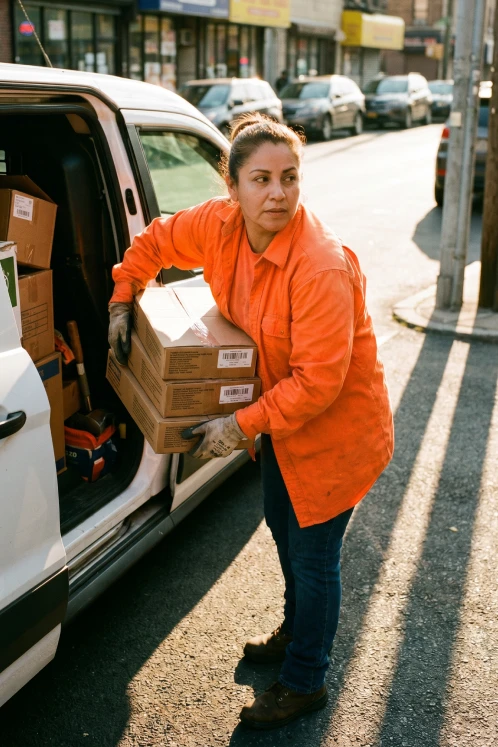
A typical cleanout includes trashout (removing debris and abandoned belongings), initial cleaning (deep cleaning kitchens, bathrooms, and living areas), and securing the property (changing locks and boarding windows). Beyond that, you may handle lawn maintenance, winterization (protecting plumbing in cold climates), and minor repairs. Hazardous cleanup, including mold remediation and biohazard scenes like unattended deaths, requires specialized training, certifications, and insurance endorsements.
The distinction matters. A standard trashout does not require mold certification, but a property preservation contract from a national bank may bundle all of these services into one job. Clarify the scope with every client before you bid, because performing work outside your licensed or insured scope exposes you to fines and denied insurance claims.
How do you validate demand for a foreclosure cleaning business?
Demand validation comes down to counting REO and bank-owned listings in your area and confirming enough volume to support a new operator. Check real estate sites like Zillow or Realtor.com for "REO" or "bank-owned" listings in your area. A high number of these properties indicates a healthy market. You can also call your county clerk's office to ask about recent foreclosure filings.
Search Google Maps for "foreclosure cleanup" or "property preservation" to find local competitors. Note their services and service areas. This research helps you find gaps in the market you can fill, whether that is faster response times, a specific service no one else offers, or a geographic area underserved by existing operators.
Budget for realistic startup costs. Expect to spend $850 to $2,500 as a solo operator, covering business licensing, initial insurance payments, basic equipment, and a starting inventory of commercial-grade cleaning supplies. These are illustrative estimates based on typical small business startup expenses; your actual costs depend on your location and whether you already own a suitable work vehicle.
Take action
- Contact three local real estate agents who specialize in foreclosures to ask about their needs.
- List five local competitors and the specific services they offer.
- Build a startup budget using the cost ranges above, adjusted for your area.
- Draft a simple one-page business plan that outlines your target client and services.
How do you set up your legal structure and get licensed?
Form a Limited Liability Company (LLC) to protect your personal assets if the business faces a lawsuit. The same LLC setup that applies to starting any small business works here: an LLC separates your home, car, and savings from business debts, and it is simpler to set up than a corporation. Registering an LLC with your Secretary of State costs between $50 and $500, depending on your state.
Many new owners operate as a sole proprietorship to save on fees, but this leaves personal finances exposed. The LLC filing fee is a worthwhile protection for a business that works on bank-owned properties and faces regular liability risk.
Once your business is registered, get an Employer Identification Number, or EIN, from the IRS. You can apply online for free and receive your number in minutes. You need this to open a business bank account and hire employees.
Next, secure a general business license from your city or county clerk. Ask about specific permits for waste hauling or disposal, since foreclosure cleanouts often involve junk removal and operating without the right permit can result in fines. The requirements vary by municipality, so check locally.
Take action
- Register your business as an LLC with your state's Secretary of State.
- Apply for a free EIN on the IRS website.
- Call your city clerk to ask about a general business license and waste hauling permits.
- Get quotes for a $1 million general liability insurance policy.
What insurance does a foreclosure cleaning business need?
General liability insurance with at least $1 million in coverage is the foundation, and it is a standard field services vendor requirement. Banks and asset management companies require proof of this coverage before they will assign you work or list you on an REO vendor platform, and the National Association of Mortgage Field Services sets $1 million as its minimum general liability threshold for member contractors. This policy protects you from claims of property damage or injury on site.
Most policies have exclusions for things you will encounter, like mold or unattended death cleanup. Ask for specific endorsements to cover these risks. Expect to pay between $600 and $1,200 annually for a solid base policy.
Coverage beyond general liability
If you use a vehicle for work, you need a commercial auto policy. Your personal auto insurance will not cover business-related accidents. If you hire anyone, workers' compensation is a legal requirement in most states, though requirements and employee-count thresholds vary. Texas is the one state where private employers are not required to carry it, but even there, purchasing coverage protects you from injury claims.
A frequent oversight is failing to insure your equipment. An inland marine policy covers your tools and equipment against theft or damage, whether they are in your truck or at a job site. This is separate from your property insurance.
Get quotes from providers like Hiscox, Next Insurance, or Thimble, which specialize in contractor insurance. A local independent agent who works with contractors can also find competitive rates and appropriate coverage.
Take action
- Get quotes for a $1 million general liability policy with endorsements for mold and biohazard cleanup.
- Contact an insurance agent to discuss commercial auto and workers' compensation policies.
- Ask about adding an inland marine policy to cover your equipment.
- Confirm with a real estate agent that your proposed coverage meets their requirements.
What equipment do you need to start?
Your core equipment is a heavy-duty shop-vac, a pressure washer, basic hand tools, and safety gear, plus a reliable work vehicle. You do not need a formal office. Most foreclosure cleaners start from a home garage or a small storage unit. A 50 to 100-square-foot space is often enough. If you lease a commercial spot, look for properties zoned for light industrial use and negotiate a short 6-month term to start.
Invest in commercial-grade gear from the start. Consumer-grade equipment cannot handle heavy-duty work and will cost you more in replacements and downtime. Your reputation depends on reliable performance on the job site.
Here is a basic equipment list with estimated costs:
- Heavy-Duty Shop-Vac (16+ gallons): $150 to $300
- Pressure Washer (2000+ PSI): $200 to $400
- Basic Hand Tools (pry bar, drill, hammer): $100 to $200
- Safety Gear (N95 respirators, gloves, goggles): $50 to $100
For supplies, find commercial cleaning chemicals at suppliers like Uline or your local janitorial supply house. Buying chemicals in concentrate form and mixing them yourself lowers your costs significantly. Make sure you have the space to store the containers safely.
Take action
- Price a 10x10 storage unit with 24-hour access in your area.
- Research prices for a 16-gallon shop-vac and a 2000 PSI pressure washer.
- Locate a local janitorial supply store and request a price list for bulk chemicals.
- Build a detailed equipment and supply budget based on these numbers.
How do you set up payments and manage cash flow?
Set up two payment tracks from day one: Net-30 invoicing for corporate clients and on-site card collection for private jobs and final balances. Most of your clients, like banks and real estate firms, will pay on Net-30 terms, meaning 30 days after you invoice. The same payment term and invoicing discipline that protects freelancers applies here: send clear invoices with due dates, and for private homeowners or smaller jobs, require a 50% deposit upfront to cover your supply costs. This helps manage your cash flow while you wait for corporate payments to clear.
You need a way to accept payments that is fast, portable, and has low fees. Many new business owners get caught by high transaction rates or hardware costs. Look for a solution that lets you take payments directly on your phone without extra equipment.
For on-site collection of final balances, JIM lets you accept debit, credit, and digital wallets directly through your smartphone at 1.99% per transaction, with no extra hardware. Other providers often charge between 2.5% and 3.5% plus hardware fees. This is useful for collecting the final balance from a client after a walkthrough, when corporate accounting has already approved payment and the agent on site wants to settle immediately.
Take action
- Decide on your payment terms for corporate versus private clients.
- Download the JIM app to see how it works on your phone.
- Draft a simple invoice template that clearly states your payment terms.
How do you fund your foreclosure cleaning business?
You need enough working capital to cover at least 60 days of expenses. Most real estate and bank clients pay on Net-30 terms, so your cash flow will be tight initially. Plan to have $5,000 to $10,000 set aside for fuel, supplies, and insurance before payments arrive.
The SBA Microloan program is a solid starting point. It offers loans of $50,000 or less, with interest rates generally between 8% and 13% depending on the intermediary lender. Individual intermediary lenders set their own credit requirements, but most look for a credit score above 640 alongside a detailed business plan to qualify.
A business line of credit from your bank is another flexible option for managing cash flow gaps. Some new owners use personal savings and reinvest early revenue to fund growth without loans, but a credit line helps keep your business and personal finances separate from day one, which simplifies accounting and protects your assets.
Grants are rare for this type of service business, but check with your local Small Business Development Center (SBDC) for regional programs. Secure your financing before you land your first big job, not after.
Take action
- Calculate your working capital needs for the first 90 days of operation.
- Review the SBA Microloan requirements on the official SBA website.
- Contact your local bank to ask about a business line of credit.
- Locate your nearest Small Business Development Center (SBDC) for funding advice.
How do you hire a team and stay compliant?
Your first hire is a cleanup technician, and plan to pay $18 to $25 per hour for physically demanding field services work. The median hourly wage for janitors and building cleaners was $17.27 in May 2024, according to the Bureau of Labor Statistics, so you need to pay above the median to attract reliable workers for cleanout labor.
Technicians handle debris removal, deep cleaning, and sometimes minor repairs. Many new owners skip formal safety training to save money, which is a risky mistake. At a minimum, have your team complete the OSHA 10-hour construction safety course through the OSHA Outreach Training Program to cover job site hazards.
Manage your daily workflow
With a team, you need a system to manage jobs. Field service software like Jobber or Housecall Pro helps you schedule crews, track job progress, and communicate with clients. This prevents the double-bookings and missed appointments that can damage your reputation early on.
A solo operator can often handle up to roughly $80,000 in annual revenue before needing a first full-time employee. That figure varies based on your local job mix and pricing, but it is a useful planning benchmark for when to start the hiring process. When you do hire, classify your workers correctly. The IRS provides worker classification guidance and lets you file Form SS-8 to request an official determination. Treating an employee as a 1099 contractor to save on payroll taxes can trigger penalties, so classify them as a W-2 employee unless the IRS determines otherwise.
Take action
- Draft a job description for a cleanup technician, including responsibilities and pay rate.
- Research local providers for the OSHA 10-hour construction safety course.
- Sign up for a free trial of scheduling software like Jobber or Housecall Pro.
- Speak with an accountant about setting up payroll for a W-2 employee.
How do you find foreclosure cleaning clients?
Your first clients will likely come from direct outreach. Create a list of local real estate agents who specialize in REO properties. You can find them by searching Zillow for "bank-owned" listings and noting the listing agents. A simple, direct email or phone call works best.
Build your marketing toolkit
A simple website and a Google Business Profile are your foundational marketing assets. Your most powerful tool, however, is a portfolio. Many new owners forget to take high-quality before-and-after photos. This visual proof is what convinces agents to hire you over a competitor.
Create a one-page price sheet that outlines your standard services, including pricing per square foot for cleaning or per cubic yard for trash removal. It shows professionalism and helps agents quickly estimate costs for their clients.
Register on REO vendor platforms
Once you have a few jobs completed, register on REO vendor platforms like Res.net or Equator. National banks and asset management companies use these sites to assign work, and they are the primary channel for high-volume property preservation contracts.
The application process can take 30 to 60 days. You will typically need to submit your business registration, EIN, insurance certificates showing $1 million general liability coverage, W-9, and sometimes background checks. Each platform has its own vendor onboarding checklist, so review the requirements before you apply. Getting registered on two or three platforms gives you a direct line to steady work from national clients.
Take action
- Create a target list of 10 local real estate agents who handle REO properties.
- Set up a free Google Business Profile for your company.
- Draft a simple price sheet for your core services.
- Review the vendor registration requirements for an REO platform like Res.net.
How do you price foreclosure cleaning jobs?
Price foreclosure cleaning by the square foot, by the hour, or as a flat-rate bid, targeting a 40% to 60% gross margin. You can charge per square foot, typically $0.25 to $0.75 for standard cleaning. Another option is an hourly rate of $40 to $60 per worker, which is useful for jobs with unknown variables.
Most corporate clients, however, prefer a flat-rate bid. This requires a thorough on-site inspection to estimate labor and disposal costs accurately. A common mistake is to forget overhead costs like insurance and fuel when you calculate your bid.
Pricing comparison:
| Pricing model | Typical rate | Best for |
|---|---|---|
| Per square foot | $0.25 to $0.75 | Standard cleanouts with measurable floor area |
| Hourly per worker | $40 to $60 | Jobs with unknown scope or variable debris volume |
| Flat-rate bid | $800 to $2,500 per property | Corporate clients who prefer one-line invoicing |
A sample bid for a 1,500 sq ft REO cleanout
To see how pricing works in practice, consider a worked example for a 1,500 square foot bank-owned home needing a standard trashout and initial clean.
| Line item | Detail | Cost |
|---|---|---|
| Labor | 2 workers at $20/hr for 8 hours | $320 |
| Disposal and dump fees | 2 truckloads at $150 each | $300 |
| Cleaning supplies | Chemicals, bags, PPE | $100 |
| Fuel and overhead | Vehicle, insurance allocation | $80 |
| Subtotal costs | $800 | |
| Target margin (50%) | $800 | |
| Bid price | $1,600 |
This example targets a 50% gross margin, which sits in the healthy 40% to 60% range for field services work. Your actual costs will vary based on local labor rates, disposal fees, and debris volume, so adjust the inputs for your market.
Draft a professional proposal
Your proposal sells your service. It should clearly list every task, from trash removal to final wipe-down. Include your price, payment terms, and a copy of your insurance certificate. A professional template from Word or Google Docs helps build trust with agents.
Take action
- Decide on your primary pricing model: per square foot, hourly, or flat rate.
- Calculate your target bid for a hypothetical 1,500 sq ft home using a 50% profit margin.
- Create a proposal template that includes a scope of work and your insurance details.
- Call two local junk removal companies to get their price per truckload for disposal cost research.
How do you maintain quality and scale?
Quality control and scalable systems are what separate a solo side job from a repeatable business. Create a simple photo checklist for every job. This list should detail the final state for each room, from clean baseboards to streak-free windows. It becomes your standard and proof of completion for clients.
Set benchmarks for growth
Once you consistently generate over $7,000 in monthly revenue, it is time to hire your first technician. Many owners wait too long and burn out. This revenue level typically supports an employee's wage and associated costs while protecting your profit margin.
As you add a second or third crew, you will need better systems. This is when field service software like Jobber or Housecall Pro becomes a necessity. It helps you manage multiple schedules and job details without the errors that cost you clients.
For added credibility, look into certifications from the Institute of Inspection, Cleaning and Restoration Certification (IICRC). These credentials are not required, but they can help you win larger corporate contracts as you grow your business.
Take action
- Create a photo-based quality control checklist for a standard three-bedroom house.
- Set a monthly revenue goal that will trigger your first hire.
- Review the features of scheduling software like Jobber for managing a small team.
- Look up the requirements for an IICRC certification like House Cleaning Technician (HCT).
Your reputation with agents and asset managers is your most valuable asset, built on consistent quality and clear communication. Execute the plan, register on vendor platforms, and protect your cash flow from day one. When it is time to collect a final balance on site, JIM lets you accept cards right on your smartphone for a flat 1.99% fee, no hardware needed, with funds available instantly.
Frequently Asked Questions
Is a foreclosure cleaning business profitable?
Do I need a special license to clean foreclosed homes?
How much does it cost to start a foreclosure cleaning business?
What insurance do I need for a foreclosure cleaning business?
How do I get my first foreclosure cleaning client?


Sell and get paid in seconds with Jim