How to start a fried chicken business
See article summary
- Startup costs run $30,000 to $100,000, including equipment, permits, inventory, and a working capital reserve.
- Form an LLC, get a free IRS EIN, and start the health permit early; it can take 30 to 90 days.
- Fund the launch with an SBA 7(a) loan of $50,000 to $150,000, requiring 10% to 20% down and credit above 680.
- Price to a 28% to 35% food cost, track oil and breading yield per piece, and use combos to raise tickets.
- Cook chicken to 165°F, the USDA safe minimum, and scale only after net margin exceeds 15% for two straight quarters.
Starting a fried chicken business means turning a recipe people line up for into a profitable shop. Demand stays strong across the country, from Nashville hot chicken to Korean fried chicken and classic Southern style, and that demand is exactly why the plan has to be tight before you sign a lease.
This guide covers the practical steps of validating your concept, estimating startup costs, getting licensed and insured, selecting equipment, funding the launch, hiring a crew, marketing, pricing the menu, and maintaining quality as you scale.
How much does it cost to start a fried chicken business?
A fried chicken shop in the U.S. typically opens with $30,000 to $100,000 in initial investment, depending on your city, build-out scope, and equipment choices. That range is a planning baseline, not a ceiling: a lean counter-service spot in a secondary market can come in at the low end, while a full build-out with new pressure fryers in a prime location can push past it.
Break down the budget by category before you commit to a number:
- Kitchen equipment (fryers, ventilation, refrigeration): $15,000 to $50,000
- Initial food and paper inventory: $5,000 to $10,000
- Licenses and permits: $500 to $2,000
- Rent deposit and first month's lease: $5,000 to $15,000
- Working capital reserve: $20,000 to $50,000
Working capital is the line item that sinks new shops. It covers rent, payroll, and inventory reorder costs for the first three to six months, before sales stabilize. If you fund only the build-out and skip the reserve, you start every day one slow lunch away from missing payroll.
Source: SBA 7(a) loans and microloans for startup and working capital guidance.
How do you validate a fried chicken concept?
Validate a fried chicken concept by visiting at least three direct competitors during their lunch and dinner rushes, documenting their menu prices, portion sizes, and customer wait times. Firsthand observation gives you data that online searches and review aggregates cannot.
Use Google Maps to list every chicken shop in a five-mile radius, then read their reviews on Yelp in batches of 20 or more. Look for patterns in the complaints. The gap you find is your opening. If nobody offers a genuinely spicy version, better family meals, or a cleaner counter experience, that gap becomes your positioning. Copying a popular spot's menu directly is how you end up competing on price against an established brand.
What legal structure and permits does a chicken shop need?
Form a Limited Liability Company (LLC) to separate your personal assets from business debts and lawsuits. Profits pass through to your personal tax return, which keeps accounting straightforward. An S Corp election is an option after launch that can reduce self-employment taxes, but it adds filing complexity and payroll requirements, so talk to a CPA before electing it. Source: IRS, S corporations.
Permits break down into three layers:
- Federal: Get a free Employer Identification Number (EIN) from the IRS. You need it for taxes, hiring, and opening a business bank account. Source: IRS, Get an employer identification number.
- State: Register your business name and structure with your Secretary of State, and get a seller's permit from your state's department of revenue to collect sales tax.
- Local: The health department permit is the biggest hurdle. It can cost $100 to $1,000 and take 30 to 90 days, because it requires plan reviews and multiple inspections from your county's health and fire departments. Start the application early.
You and every employee who handles food must hold a Food Handler's Permit. Programs like ServSafe offer the required certification, with the ServSafe Food Handler online course and assessment listed at $15 per person. Source: ServSafe Food Handler Program. Check your local health department's specific requirements, since some counties require the more comprehensive ServSafe Manager certification instead.
What insurance does a fried chicken restaurant need?
A fried chicken restaurant needs general liability, commercial property, and workers' compensation insurance at minimum. General liability covers customer slips, falls, and foodborne illness claims. Insureon reports fast food restaurants pay an average of $1,296 per year for general liability, and full-service restaurants average $1,691 per year. Source: Insureon, Restaurant Insurance Costs. Plan for at least a $1 million per-occurrence policy.
Commercial property insurance covers your building, equipment, and inventory against fire, theft, and damage. A deep fryer fire can destroy a $15,000 ventilation hood instantly, so insure your assets for full replacement cost, not depreciated value.
Add product liability coverage, which protects you from claims related to the food you sell, and commercial auto insurance if you use a vehicle for deliveries or supply runs.
Work with an agent who understands restaurants. General agents may not grasp the specific risks of a commercial kitchen, like grease-handling liability and fryer burn claims. Providers like The Hartford, NEXT Insurance, and the Food Liability Insurance Program (FLIP) specialize in food service.
How do you choose a location and buy equipment for a chicken shop?
Choose a location between 1,200 and 2,000 square feet, zoned for commercial restaurant use. High foot traffic is good, but ample parking is better for takeout-heavy chicken shops, where customers pick up orders by car. Confirm the zoning with your city planning department before you sign anything; a zoning fight can delay opening by months.
When you find a spot, negotiate a Tenant Improvement (TI) allowance with the landlord. This is money they contribute toward your kitchen build-out. Also ask for a cap on Common Area Maintenance (CAM) fees so your monthly costs stay predictable.
Your kitchen equipment is your largest investment. A pressure fryer is ideal for juicy, crispy chicken, and you need a powerful Type 1 ventilation hood to handle grease and smoke. Compare at least two suppliers on price, warranty, and delivery time before buying.
Pressure fryers vary widely by brand and capacity. A Henny Penny or Broaster commercial pressure fryer typically runs $8,000 to $20,000 new, depending on oil capacity and heads-per-hour throughput. A Winston or used equivalent can come in lower, but verify parts availability and warranty transfer before buying used. Type 1 ventilation hoods add $10,000 to $25,000, walk-in coolers $5,000 to $15,000, and stainless steel prep tables $300 to $800 each. You can source new equipment from online suppliers like WebstaurantStore or local restaurant supply depots. For prep tables and sinks, used equipment from auctions is a smart way to save without much risk.
How do you set up payments for a fried chicken counter?
A fried chicken counter needs to accept cards and digital wallets with minimal friction, because a slow checkout line costs you repeat customers. Most traditional processors charge between 2.5% and 3.5% per transaction, plus monthly fees and hardware rental, which adds up quickly for a high-volume counter.
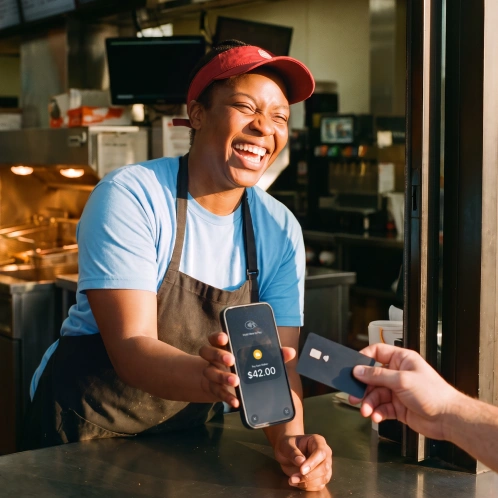
For a chicken shop that takes payments on-site, JIM offers a streamlined solution. With JIM, you accept debit, credit, and digital wallets directly through your smartphone using Tap to Pay, no extra hardware needed. The rate is a flat 1.99% per transaction, with no monthly fees and no hidden costs. Funds land on your JIM Card the moment the sale goes through, so you can reorder inventory or pay suppliers without waiting for a bank settlement.
The process is straightforward:
- Download the JIM app for iOS and complete your seller profile.
- Enter the sale amount, hit sell, and ask your customer to tap their card, phone, or smartwatch on your phone.
- Access funds instantly on your JIM Card, no waiting for next-day deposits.
How do you fund a fried chicken business?
Fund a fried chicken startup with an SBA 7(a) loan of $50,000 to $150,000 for a small shop, backed by a 10% to 20% down payment and a credit profile lenders consider viable. Lenders typically look for a credit score above 680, a detailed business plan, and personal financial statements.
The SBA caps 7(a) variable interest rates by loan size. As of the current SBA schedule, variable 7(a) loans cannot exceed the base rate plus 6.5% for loans of $50,000 or less, plus 6.0% for $50,001 to $250,000, plus 4.5% for $250,001 to $350,000, and plus 3.0% for loans greater than $350,000. Source: SBA lenders, 7(a) interest rates. When the Wall Street Journal Prime Rate sits near 7.5%, a $50,001 to $250,000 loan tops out around Prime plus 6.0%, though most lenders price below the SBA maximum based on your credit and collateral.
Equipment financing is a separate option. It uses your fryers and ventilation hood as collateral, which can make approval easier than a general business loan because the equipment itself secures the debt. The SBA also offers microloans up to $50,000 through intermediary lenders, which work for lean launches that need inventory and permits but not a full build-out.
Calculate your working capital before you apply. A frequent mistake is securing just enough money for the build-out, leaving nothing for rent, payroll, and inventory before sales become consistent. Aim for three to six months of operating expenses in the bank, which for a small shop means a cash reserve of $20,000 to $50,000 after you open your doors.
How do you hire and run a fried chicken shop's operations?
Start with two primary roles: a cook who handles food preparation and frying, and a cashier who manages orders and customer service. For a small shop, one of each per shift, plus you, covers the floor. Plan to pay $15 to $20 per hour depending on your location and the candidate's experience. Every employee who handles food must hold a valid Food Handler's Permit, a non-negotiable health department requirement.
Understaffing to cut costs leads to slow service and lost customers. Always have at least two people working, even during slower periods, so one person cooks while the other handles the counter without delays. Use scheduling software like 7shifts or Homebase to manage availability and communicate with your team. As you grow, keep your total labor cost between 25% and 30% of gross sales.
How do you market a fried chicken business?
Claim and complete your Google Business Profile first. Add your hours, menu, and at least ten high-quality photos of your food. This is how most customers find you. Set up a Yelp page next, and encourage your first visitors to leave reviews.
On Instagram and Facebook, post photos and short videos daily. Dark, unappetizing pictures sink a food brand fast; invest in good lighting or hire a local photographer for one session, and it pays off across every post that follows. Run targeted ads to people within a three-mile radius of your shop. A small budget of $15 per day can reach thousands of potential local customers. Focus your ad creative on a single, irresistible offer to draw them in.
A grand opening special creates immediate buzz. Offer a free side of fries to the first 100 customers, and promote the deal a week in advance on local Facebook community groups and with flyers on nearby bulletin boards. Consider partnerships with nearby office buildings or large employers: a special lunch catering menu or a 10% employee discount can secure a steady stream of weekday customers from the start.
How do you price a fried chicken menu?
Target a food cost percentage between 28% and 35% of your menu price. To find it, divide the total cost of your ingredients by the menu price. If the ingredients for a two-piece combo cost you $2.80, a menu price of $10.00 yields a 28% food cost, which leaves room for rent, labor, and profit.
Fried chicken has specific cost levers worth tracking closely. Bone-in chicken typically runs lower per pound than boneless, but yields fewer sellable pieces per bird. Breading, marinade, and frying oil all add up per piece, and oil turnover, how often you must filter or replace fryer oil, is a cost many shops underestimate. Track oil cost per 100 pieces, breading yield per bag, and chicken cost per pound to derive an accurate plate cost before you set a single price.
Copying competitor prices without knowing your own costs is how you lose money on every sale. Focus on combo meals to increase your average ticket value. A two-piece chicken might sell for $6.00 a la carte, while a combo with a side and drink for $9.50 feels like a better deal and boosts your revenue per customer. Use psychological pricing: $9.99 often outperforms a flat $10.00. Look at competitor menus not to copy them, but to find opportunities to offer a larger side or a unique sauce that justifies a similar price point.
How do you maintain quality and scale a fried chicken business?
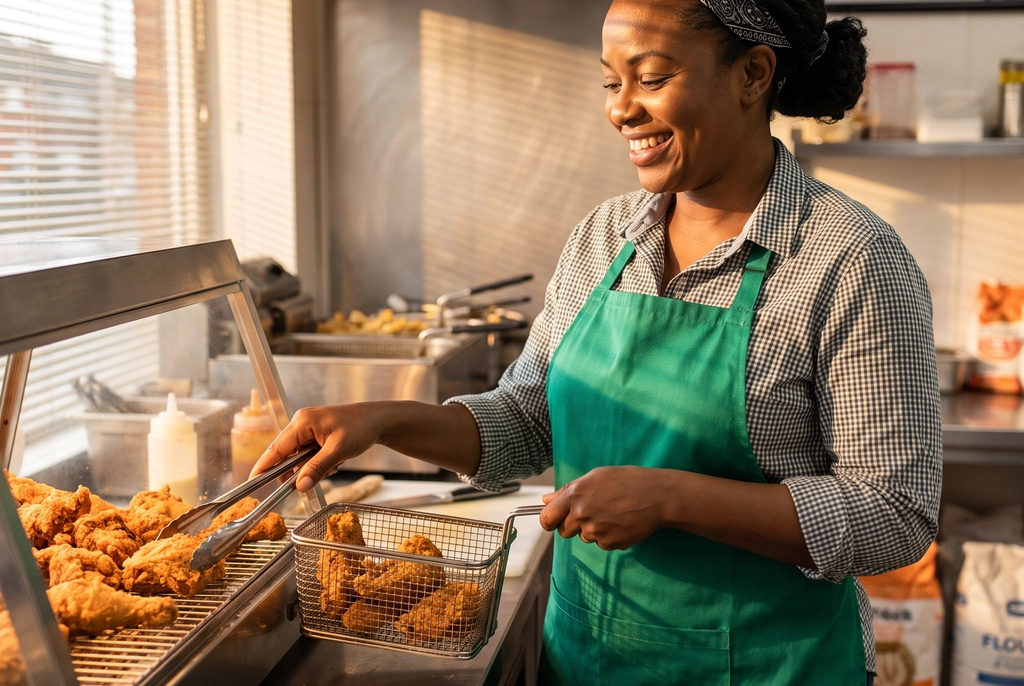
Your chicken must be perfect every time. Use a digital thermometer to confirm each piece reaches an internal temperature of 165°F, the safe minimum for all poultry set by the USDA Food Safety and Inspection Service. Source: USDA FSIS, Safe Minimum Internal Temperature Chart. Set a rule that no piece stays under a heat lamp for more than 60 minutes, because holding chicken too long dries it out and ruins the crust.
Service speed matters as much as food quality. Aim to get orders to customers in under five minutes, and track this metric daily. If wait times creep up, your system has a bottleneck, usually at the fryer or the counter, that needs a fix before it costs you regulars.
Scale only after quality is consistent. You might hire another cook when you sell over 500 pieces per day, or add a cashier when you have a line out the door for more than an hour during peak times. Before you consider a second location, your net profit margin should exceed 15% for at least two consecutive quarters, and you need a manager you trust to run the new spot. For multi-unit operations, software like Restaurant365 helps manage inventory and finances centrally.
Food truck, storefront, or ghost kitchen: which model fits?
Most of this guide assumes a brick-and-mortar storefront, but fried chicken works across three models, each with very different entry costs and trade-offs.
- Storefront ($30,000 to $100,000+): Full menu, highest visibility, longest build-out. Best when you want a neighborhood brand and can commit to a multi-year lease.
- Food truck ($20,000 to $60,000): Lower entry cost, built-in mobility, but you depend on events, weather, and permitting. Best for testing a concept before committing to a lease, and it pairs well with a mobile POS setup that does not tie you to a counter.
- Ghost kitchen ($10,000 to $30,000): Delivery and pickup only, no dine-in, lowest overhead. Best in dense urban markets with strong delivery demand and a clear digital marketing funnel.
A food truck lets you validate your recipe and brand at a fraction of the storefront cost, then graduate to a lease once demand is proven. A ghost kitchen works if you already have an audience, like a social following, that will order delivery directly. The storefront is the right call when you want a permanent neighborhood presence and can fund the full build-out and working capital reserve from day one.
Is a fried chicken franchise better than going independent?
Going independent gives you full control over menu, brand, and margins, but you carry all the startup risk and every operational decision. Franchising with an established fried chicken brand trades upfront cost and royalties for a proven system, training, and brand recognition.
Franchise fees for restaurant chains typically run $25,000 to $50,000 upfront, plus ongoing royalties of 4% to 6% of gross sales and a marketing fund contribution of 2% to 4%. You still fund your own build-out and working capital, so the total investment often exceeds independent startup costs. The trade-off is that you skip the trial-and-error phase of menu development, supplier negotiation, and brand building, because the franchisor hands you a playbook.
Franchising makes sense when you want to open fast, have access to capital, and prefer operational guidance over creative control. Going independent makes sense when you have a distinct recipe or concept, want to keep full margins, and are willing to invest the time to build brand recognition from zero.
What's next after the plan is set
A solid plan is the foundation, but consistency in your recipe and service is what builds a loyal following. Your journey begins with that first perfect batch.
As you prepare to open, keep payments simple. JIM turns your phone into a card reader for a flat 1.99% fee, no extra hardware needed. This keeps your counter clear and your costs low. Download JIM to be ready for your first sale.
Frequently Asked Questions
How much does it cost to open a fried chicken restaurant?
Is a fried chicken business profitable?
What permits do you need to open a chicken shop?
How do you fund a fried chicken startup?
What temperature should fried chicken be cooked to?


Sell and get paid in seconds with Jim