Starting a gift wrapping business is a rewarding venture that combines creative flair and attention to detail with business savvy. The gift wrap industry is worth billions, and there is consistent demand for professionally wrapped gifts for holidays, birthdays, weddings, and corporate events.
This guide will take you through the practical steps of validating your business concept, acquiring equipment and supplies, obtaining necessary permits, and building supplier relationships to help you launch a successful gift wrapping business in the U.S.
Step 1: Plan your business and validate your idea
Begin with focused market research. Visit local boutiques, high-end department stores, and stationery shops, especially during peak seasons. Note the styles and prices of their gift wrapping services. Also, browse Pinterest and Etsy using terms like "luxury gift wrap" to see current trends.
Analyze your local market
Use Google Maps to identify direct competitors. Look at their websites and social media to understand their service offerings, branding, and customer reviews. Some new owners make the mistake of just copying prices, which often leads to undervaluing their own work. Calculate your costs carefully.
Estimate your startup costs
Your initial investment can be modest, typically ranging from $500 to $1,550. A frequent error is buying too much inventory at once. Start with a versatile but limited collection of supplies. You can always expand as you learn what your customers prefer.
- Supplies (paper, ribbons, boxes): $300 - $700
- Tools (scissors, tape dispensers, bone folder): $50 - $150
- Business license and registration: $50 - $200
- Basic marketing (business cards, simple website): $100 - $500
Here are 3 immediate steps to take:
- Use Google Maps to list five local businesses that offer gift wrapping.
- Draft a preliminary startup budget using the cost estimates above.
- Spend 30 minutes on Pinterest to identify three wrapping styles you can offer.
Step 2: Set up your legal structure and get licensed
Choose your business structure
You can start as a sole proprietorship, which is simple but links your personal and business assets. Many owners form a Limited Liability Company (LLC) instead. An LLC separates your finances, offering personal liability protection if your business faces debt or legal issues.
Once you choose a structure, get a free Employer Identification Number (EIN) from the IRS website. You will also need a state seller’s permit, sometimes called a resale certificate. This lets you buy wholesale supplies tax-free and collect sales tax from customers.
Next, contact your city or county clerk’s office for a general business license, which can cost $50 to $150 annually. If you plan to work from home, ask if you need a Home Occupation Permit. Processing times can take a few weeks, so start this early.
Here are 3 immediate steps to take:
- Decide if a sole proprietorship or an LLC is right for you.
- Apply for a free Employer Identification Number (EIN) online with the IRS.
- Research your city’s business license requirements and application process.
Step 3: Secure your insurance and manage risk
Protect your business assets
General liability insurance is your primary shield. It protects you if a client claims injury or property damage, for example, if you accidentally damage a customer’s expensive gift before wrapping it. Expect to pay $300 to $600 annually for a $1 million policy.
Many new owners assume their homeowner's or renter's insurance provides coverage. This is rarely the case. Most personal policies explicitly exclude business-related activities, so you will need a separate business policy even if you work from home.
Additional coverage to consider
Depending on your setup, you might want to look into other policies. These add layers of protection as your business grows.
- Business property insurance: This covers your inventory of paper, ribbons, and tools against theft or damage from events like a fire or flood.
- Professional liability insurance: Also known as E&O, this protects you if a client claims your service was substandard and caused them a financial loss.
- Commercial auto insurance: If you use your vehicle for business tasks like delivering wrapped gifts, your personal auto policy may not cover you.
You can get quotes from providers like Hiscox, The Hartford, or Next Insurance. They specialize in small business coverage and can bundle policies for a better rate. Be sure to compare what each policy covers before you decide.
Here are 3 immediate steps to take:
- Request a general liability insurance quote from two different providers.
- Check your current homeowner's or renter's policy for business activity exclusions.
- Make a list of your business supplies and equipment to estimate their total value for a property insurance quote.
Step 4: Set up your workspace and buy supplies
Find your wrapping station
Your workspace is your command center. A dedicated area of 50-100 square feet in your home is often enough to start. Check with your city clerk about home occupation permit rules to ensure you comply with local zoning.
If you consider a retail spot, you might want to negotiate a short-term lease of 1-2 years. This lets you test a location without a long commitment. Seasonal pop-up spaces in malls are also a great option.
Stock up on supplies
Once your space is sorted, it is time to stock it. A frequent misstep is to buy too many niche patterns at first. You might want to start with versatile solids and simple prints, then expand based on customer requests.
You can find quality wholesale supplies from vendors like Paper Mart and Nashville Wraps. They have low or no minimum order requirements, which is ideal for a new business. Here is a sample shopping list with estimated costs.
- Wrapping Paper Rolls: $100 - $300 for a starter assortment
- Ribbons and Bows: $75 - $150 for various materials like satin and grosgrain
- Quality Scissors & Tape Dispensers: $30 - $60
- Boxes, Bags, and Tissue Paper: $100 - $200
Here are 4 immediate steps to take:
- Measure a 50-100 square foot area in your home for your workspace.
- Browse Paper Mart and Nashville Wraps to compare prices on five types of paper.
- Create a shopping list for initial supplies based on the estimates above.
- Research one local pop-up market for seasonal opportunities.
Step 5: Set up your payment processing
Most customers expect the convenience of card or digital wallet payments. While you can accept cash, being unable to process a credit card payment might cost you a sale, especially with corporate clients or at busy markets.
For large orders, like for a wedding or corporate event, it is standard practice to require a deposit. You might want to ask for 50% upfront to cover your initial supply costs. This secures the booking and protects your time.
When you look at payment solutions, pay close attention to transaction fees and hardware costs. Some new owners get surprised by hidden monthly fees or rates that climb above 3%. These costs can eat into your profits quickly.
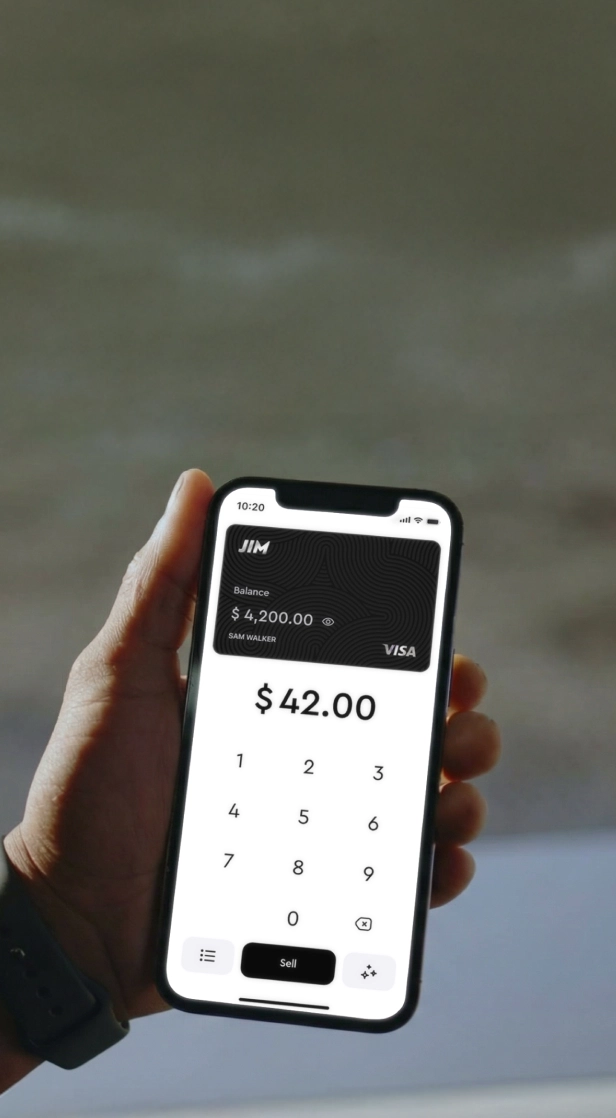
For a gift wrapping business that needs to accept payments on-site or on-the-go, JIM offers a streamlined solution. With JIM, you can accept debit, credit and digital wallets directly through your smartphone. Just tap and done.
At just 1.99% per transaction with no hidden costs or extra hardware needed, it is particularly useful for pop-up shops or mobile services. This rate is competitive, as other providers often charge between 2.5% and 3.5% per transaction.
Here is how it works:
- Get Started: Download JIM app for iOS
- Make a Sale: Type the sales amount, hit sell, and ask your customer to tap their card or device on your phone
- Access Funds: Your money is available right on your JIM card as soon as the sale is done - no waiting for bank transfers
Here are 3 immediate steps to take:
- Draft your payment terms, including a 50% deposit policy for large orders.
- Download the JIM app to explore its interface.
- Compare JIM's 1.99% transaction fee to the rates of one other payment provider.
Step 6: Fund your business and manage finances
Secure your initial funding
Most gift wrapping businesses start with personal savings. This is the simplest route. If you need more, you might want to look into an SBA Microloan. These loans range from $500 to $50,000 and are designed for new, small businesses.
Lenders like Accion Opportunity Fund offer these loans with interest rates typically between 8% and 13%. To qualify, you will likely need a credit score above 620 and a clear business plan that details your startup costs and projected revenue.
Set up your financial systems
Once you have funding, open a dedicated business checking account. Some new owners mix personal and business funds, which creates tax headaches and makes it difficult to track profitability. A separate account keeps your records clean from day one.
You should also plan for your first six months of operation. Estimate you will need $1,000 to $2,500 in working capital. This covers replenishing popular supplies, ongoing marketing, and any unexpected costs before you build a steady client base.
Here are 4 immediate steps to take:
- Open a separate business checking account.
- Research one SBA-approved microlender in your area.
- Create a simple spreadsheet to track all your income and expenses.
- Calculate your estimated working capital needs for the first six months.
Step 7: Build your team and manage operations
When you find yourself turning down orders, it is time to hire. This often happens once you reach $2,000 to $3,000 in monthly sales. Your first hire allows you to take on more clients, especially during peak holiday seasons.
Hiring your first wrapper
You will likely hire a “Gift Wrap Associate.” This person handles wrapping, customer service, and restocking supplies. Depending on your location, pay typically ranges from $15 to $20 per hour. Formal certifications are not needed for this role.
Instead of a resume, you might want to focus on practical skill. Ask candidates to wrap a few sample gifts during the interview. This is the best way to see their speed, neatness, and ability to match your brand’s style.
Streamlining your workflow
Some owners get overwhelmed by inconsistent quality from different wrappers. To avoid this, create a simple photo guide showing your standard techniques for bows and corners. This ensures every gift has your signature look, no matter who wraps it.
Once you have a helper, you can use scheduling apps like Homebase or When I Work to manage shifts. Their free plans are often sufficient for a small team and make it easy to communicate schedule changes, which is great for seasonal work.
Here are 4 immediate steps to take:
- Draft a job description for a Gift Wrap Associate.
- Create a test-wrap challenge for interviews using three differently shaped items.
- Explore the free plans for Homebase or When I Work.
- Take photos of your signature wrapping style to start a training guide.
Step 8: Market your business and find customers
Start by building local partnerships. You can approach boutiques, jewelers, and wedding planners. Offer them a 10-15% referral fee for any client they send your way. This strategy builds a customer base with no upfront marketing spend.
Your portfolio is your most powerful sales asset. Create an Instagram account to showcase your work. Some new owners make the mistake of using dark, blurry photos. Use bright, natural light to make your wrapping look professional and appealing. Use local hashtags like #[YourCity]Gifts.
Target corporate clients
Corporate accounts can provide larger, recurring orders, especially during the holidays. You might want to create a simple one-page PDF that outlines your services and pricing for businesses. Reach out to real estate agents, law firms, and corporate event planners.
Once you have a collection of great photos, consider a small social media ad campaign. A $100 budget on Facebook or Instagram in November can reach thousands of local users. Aim for a customer acquisition cost (CAC) below $25 per new client.
Here are 4 immediate steps to take:
- Identify three local boutiques or florists to contact for a partnership.
- Set up a business Instagram account and post five high-quality photos of your work.
- Draft a one-page PDF service menu specifically for corporate clients.
- Research five local hashtags to use for your social media posts.
Step 9: Price your services and create packages
Your pricing strategy directly impacts your profitability. A common approach is per-item pricing, which can range from $5 for a small, simple box to $25 or more for large or awkwardly shaped items. This method is straightforward for customers to understand.
Calculate your costs accurately
To set your prices, first calculate your cost of goods. Add up the cost of paper, ribbon, and tape for a standard gift, which might be $2 to $4. A frequent mistake is to forget to include labor. Pay yourself an hourly rate, even if it is just you.
If a gift takes 15 minutes to wrap and your desired hourly rate is $20, your labor cost for that gift is $5. Add this to your material cost. You might want to apply a 200-300% markup on materials to determine your final price and ensure a healthy profit.
Create tiered packages
Once you have your base costs, you can create service tiers. This simplifies choices for customers and encourages upselling. Aim for a gross profit margin of 60-70% on each sale. Here is an example structure:
- Simple Wrap: $8 for standard paper and a pre-made bow.
- Signature Wrap: $15 for premium paper, quality fabric ribbon, and a gift tag.
- Luxe Wrap: $25+ for luxury paper, layered ribbons, and custom embellishments.
Here are 3 immediate steps to take:
- Calculate your total cost to wrap a standard shirt box, including materials and 15 minutes of your labor.
- Draft three service packages with names, descriptions, and prices.
- Research the gift wrapping prices at one local department store and one boutique.
Step 10: Maintain quality and scale your operations
Establish your quality standards
Your reputation depends on consistency. Create a simple quality checklist. It should include standards like perfectly crisp corners, no visible tape, and taut ribbons. A good benchmark is the "three-foot rule"—the wrapped gift should look flawless from three feet away.
You can track quality with customer feedback. Use a free tool like Google Forms to send a one-question survey after each service. Aim for a 95% or higher satisfaction rate. This data helps you spot issues before they become bigger problems.
Know when to grow
Once your quality is consistent, you can plan for growth. If you turn away more than 15% of inquiries during a non-peak month, it is a strong signal to expand. This could mean hiring another wrapper or finding a larger workspace.
Many owners delay equipment upgrades. Investing in an electric tape dispenser or a professional ribbon shredder can reduce wrapping time by up to 30% per gift. This efficiency boost directly increases your hourly earnings and capacity for more orders.
Here are 4 immediate steps to take:
- Create a one-page quality checklist with photos of your ideal wrap.
- Set up a simple customer satisfaction survey using Google Forms.
- Track the number of orders you turn down for one month.
- Research the cost of one piece of upgraded equipment, like an electric tape dispenser.
Starting your gift wrapping business is about more than just paper and ribbon. Your unique style and consistent quality are what will build a loyal customer base. You have the roadmap, now it is time to start your journey.
And as you make your first sales, a simple payment process helps. JIM turns your phone into a card reader, so you can accept payments anywhere with a flat 1.99% fee and no extra hardware. Download JIM to get started.
.avif)