Starting a giveaway business can be a rewarding venture, blending marketing creativity and strategic planning with solid business sense. The demand from brands for audience growth makes this field attractive, and you can often start with low overhead. However, this accessibility means the market is competitive, so a sharp strategy is what sets successful businesses apart.
This guide will take you through the practical steps of validating your business concept, securing funding, obtaining the right licenses, and building supplier relationships to help you launch a successful giveaway business in the U.S.
Step 1: Validate your idea and plan your launch
Begin with market research on social platforms. Search hashtags like #giveaway on Instagram to see which prizes generate real excitement. This data-driven approach is far more effective than a simple guess about what people might want.
Many new owners make the mistake of choosing prizes they personally find appealing. If the prize does not resonate with your target audience, your campaign will likely see low engagement. Let your research guide every prize selection.
Analyze competitors and map out costs
Now, examine your competitors. Use a platform like Semrush to review their marketing strategies and web traffic. You should also study their websites to understand their prize structures, brand partners, and official rules. This helps you find your unique market position.
With this in mind, you can map out your startup costs. Expect an initial outlay between $850 and $3,300. This covers LLC formation ($50-$500), a website ($100-$300), your first prizes ($500-$2,000), and some marketing funds ($200-$500).
Here are 3 immediate steps to take:
- Identify five successful giveaways on social media and note the prize type.
- Analyze two competitors using Semrush to understand their marketing.
- Create a startup budget that lists your expected launch expenses.
Step 2: Set up your legal structure and get licensed
You should consider forming a Limited Liability Company (LLC). It protects your personal assets if the business faces legal issues. For taxes, an LLC offers pass-through taxation, meaning profits are taxed on your personal return, which simplifies things.
This structure is a significant step up from a sole proprietorship, which offers no liability protection. Filing for an LLC costs between $50 and $500, depending on your state. You can complete the process online through your Secretary of State's website.
Navigate giveaway laws
Your biggest legal risk is accidentally running an illegal lottery. A giveaway, or sweepstakes, must not require a purchase to enter. This "no purchase necessary" clause is non-negotiable and must be clear in your official rules. Many new owners stumble on this point.
The Federal Trade Commission (FTC) oversees sweepstakes at the federal level. However, state laws are also important. Some states, like Florida and New York, require you to register your giveaway and post a surety bond if the total prize value exceeds $5,000.
A surety bond guarantees you will award the prize, and its cost is typically 1-3% of the prize value. Always check the Attorney General's website for your state and any states where you expect many participants, as regulations can differ significantly.
Here are 4 immediate steps to take:
- Decide on an LLC for your business and file the Articles of Organization with your state.
- Draft a template for your "Official Rules" that includes a clear "no purchase necessary" entry method.
- Check the sweepstakes registration requirements for New York and Florida if you plan large prizes.
- Bookmark your state's Attorney General website to stay updated on local regulations.
Step 3: Secure insurance and manage risk
You will need General Liability insurance. This policy protects you if someone claims property damage or injury related to your business. A $1 million coverage limit is standard. Expect annual premiums to range from $400 to $900 for a new business.
Also, consider Professional Liability insurance, often called Errors and Omissions (E&O). It covers claims of negligence, like a mistake in your official rules or a failure to award a prize correctly. This is a frequent issue for new giveaway companies.
With these policies in mind, you can get quotes. Look at providers like Hiscox, The Hartford, or Next Insurance. An online broker like CoverWallet can also compare options for you from multiple carriers that understand marketing and promotion agencies.
If you hire employees, you must have Workers' Compensation. If you use a vehicle for business, like for prize delivery, you will need a Commercial Auto policy. These costs depend on your specific operations and state laws.
Here are 4 immediate steps to take:
- Get a quote for a $1 million General Liability policy.
- Research Errors and Omissions (E&O) insurance for protection against rule violations.
- Contact a provider like Hiscox or The Hartford to discuss your business needs.
- If you plan to hire, check your state's Workers' Compensation requirements.
Step 4: Set up your workspace and source prizes
A physical office is rarely necessary at the start. You can run this business from a home office of about 100-200 square feet. Check your city’s rules on home-based businesses if you plan to store significant prize inventory, as some restrictions may apply.
Secure your equipment
Your primary needs are a reliable computer ($800-$1,500) and a good smartphone ($700-$1,200) for managing social media. You should also budget for basic photo equipment like a ring light and backdrop ($100-$300) to make your prize announcements look professional.
With your setup addressed, you can focus on prizes. The most cost-effective way to acquire prizes is through brand partnerships. Approach small to mid-sized brands and offer them marketing exposure to your audience in exchange for their products. This gives you prizes with zero upfront cost.
Alternatively, you can purchase prizes yourself. Many new owners look to wholesale sites like Alibaba, but this often requires large minimum orders. A frequent misstep is to buy inventory in bulk before you confirm it resonates with your audience. You might consider first buying single items from retailers like Amazon to test their popularity.
Here are 4 immediate steps to take:
- Check your local city ordinances for rules on storing prize inventory at home.
- Create a budget for your office equipment, including a computer and basic photo lighting.
- Identify three small brands on Instagram that could be good partners for a giveaway.
- Compare the cost of a single popular prize on Amazon versus its bulk price on Alibaba.
Step 5: Set up payment processing
When you partner with brands, establish clear payment terms in your contract. A standard approach is to require 50% of your fee upfront and the remaining 50% upon the giveaway's conclusion. This protects your cash flow and is a common practice in the industry.
For these business-to-business payments, you will typically use bank transfers or checks. You can manage this through invoicing software like QuickBooks or FreshBooks. These platforms help you create professional invoices and track payments from your brand partners, which many new owners overlook.
Accepting on-the-go payments
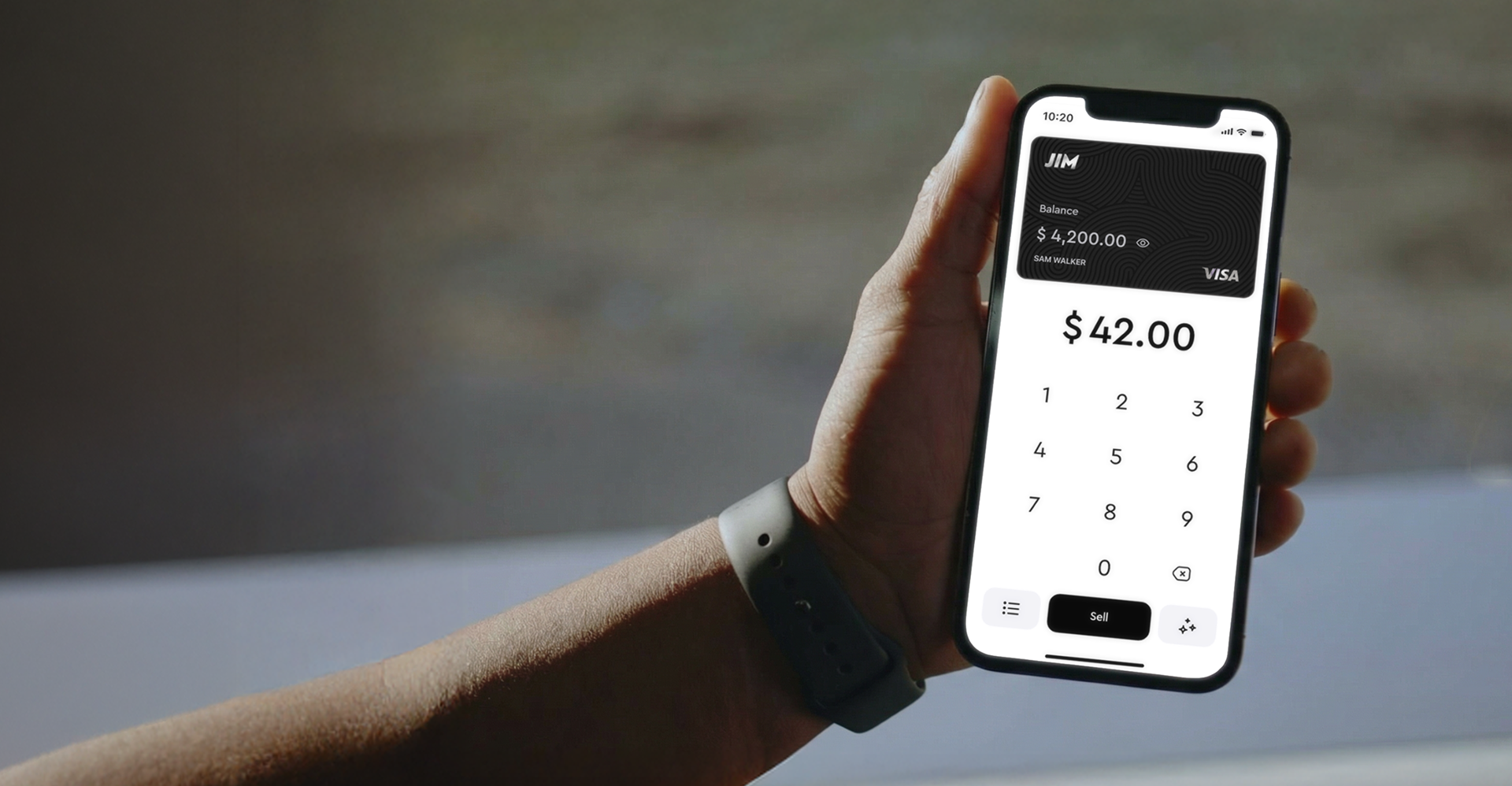
You might also need to accept payments in person, perhaps at a trade show to sign new clients or at a pop-up event. For these situations, JIM offers a streamlined solution. With JIM, you can accept debit, credit, and digital wallets directly through your smartphone.
At just 1.99% per transaction with no hidden costs or extra hardware, it is a cost-effective option. This is competitive, as many other providers charge rates closer to 2.5% or 3%. For a giveaway business, this is useful for collecting deposits from new partners on the spot.
- Get Started: Download JIM app for iOS
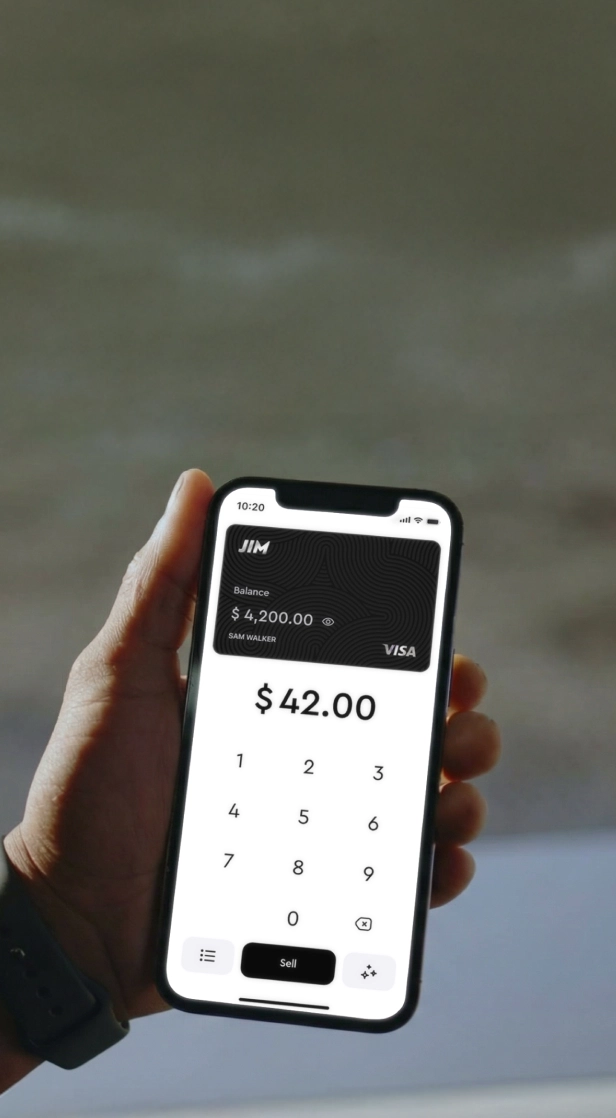
- Make a Sale: Type the sales amount, hit sell, and ask your customer to tap their card or device on your phone
- Access Funds: Your money is available right on your JIM card as soon as the sale is done - no waiting for bank transfers
Here are 4 immediate steps to take:
- Draft a standard contract template that specifies your payment terms, like 50% upfront.
- Research invoicing software such as QuickBooks or FreshBooks for managing brand payments.
- Download the JIM app to explore its features for potential in-person transactions.
- Compare JIM's 1.99% rate against two other mobile payment providers.
Step 6: Fund your business and manage finances
Explore your funding options
Most giveaway businesses start with personal savings. If you need external funds, an SBA Microloan is a strong option. These loans go up to $50,000 with interest rates between 8% and 13%. You will likely need a credit score over 640 and a detailed business plan.
You might also look into grants. While less common for this business type, programs like The Amber Grant award funds to women entrepreneurs. Also check your local city's economic development website for small business grants.
Calculate working capital and manage cash flow
You need enough cash to operate for the first six months. A budget of $5,000 to $15,000 is a realistic target. This covers multiple prize cycles, marketing ads, and software. A frequent mistake is to spend the entire budget on one prize, which leaves no money for promotion.
A smarter approach is to plan for three to four smaller campaigns to build momentum. From day one, track every dollar in software like Wave or QuickBooks. Open a separate business bank account to keep your finances clean and make tax season much simpler.
Here are 4 immediate steps to take:
- Research the requirements for an SBA Microloan through a local lender.
- Open a dedicated business bank account to separate your funds.
- Create a six-month budget that includes costs for at least three giveaways.
- Sign up for a free accounting software like Wave to track expenses.
Step 7: Hire your team and set up operations
You will likely start as a solo operator. Your first hire will probably be a freelance Virtual Assistant (VA) to handle emails and admin tasks. You can find qualified VAs on a platform like Upwork for $15-$30 per hour.
A Social Media Manager is more strategic, creating content and engaging your audience. Expect to pay a freelancer $500-$2,000 monthly. A frequent mistake is to hire too early, so wait until you spend over 15 hours weekly on tasks you could delegate.
Streamline your operations
Use software to stay organized. For social media, platforms like Buffer or Later let you schedule posts. For managing campaigns, a free Trello or Asana board helps track tasks and deadlines with brand partners.
When you do hire, vet freelancers carefully. Ask for a portfolio or assign a small, paid trial project. This helps you assess their skills before you commit to a long-term contract and protects your brand's image.
Here are 4 immediate steps to take:
- List the administrative tasks you could delegate to a Virtual Assistant.
- Research Social Media Manager rates on a freelance platform like Upwork.
- Create a free account on Trello to map out your next campaign's tasks.
- Explore a social media scheduler like Buffer or Later to see how it works.
Step 8: Market your business and find clients
Focus your marketing on Instagram and TikTok, where giveaways perform best. You can run targeted ads with a small budget, perhaps $10-$20 per day, to reach users who are likely to enter and brands looking for partners.
Many new owners chase high follower counts. Instead, concentrate on engagement. A smaller, active audience is far more valuable to a brand partner than a large, uninterested one. This focus on quality will lead to better partnerships.
Build your client pipeline
Create a target list of 50-100 brands that align with your audience. Send them personalized cold emails. A 1-2% positive response rate is a realistic start, so persistence is key. This is a numbers game.
You can also write content for your website. A blog post like "5 Ways a Giveaway Can Boost Q4 Sales" shows your expertise. This helps attract inbound leads from brands that search for marketing solutions online.
As you work, track your Customer Acquisition Cost (CAC). If you spend $200 on marketing to land a $1,000 client, your CAC is $200. This simple metric helps you measure your marketing return on investment.
Here are 4 immediate steps to take:
- Set up a business profile on Instagram and create three initial posts.
- Draft a cold email template to pitch your services to brand partners.
- Create a list of 20 potential brands that fit your target audience.
- Allocate a small test budget, like $50, for a targeted Facebook ad campaign.
Step 9: Price your giveaway services
Choose your pricing model
Your pricing communicates your value. Many new owners feel pressured to price low to get their first client, but this can devalue your service and attract the wrong partners. A cost-plus model is a simple way to start. You charge the client for the prize cost plus a management fee.
For that fee, a 50-100% markup on the prize value is a good starting point. For a $500 prize, your fee would be $250-$500. This brings us to the flat-fee package, which clients often prefer for its predictability. You could offer a $2,000 package for a complete campaign.
With either model, aim for a net profit margin of 30-50% after all expenses like ads and software. To see what the market will bear, research competitors. You can often find pricing in their media kits or by sending an inquiry as a potential client to request their rate card.
Here are 4 immediate steps to take:
- Research the pricing of three direct competitors by checking their websites.
- Create two sample packages: one flat-fee and one cost-plus.
- Calculate your target profit margin for a sample $500 prize giveaway.
- Draft a simple rate card that lists your services and prices.
Step 10: Control quality and scale your business
Focus on metrics that matter to clients. Your success is not just about follower growth. Track the engagement rate of your giveaway posts, aiming for 3-5% on platforms like Instagram. Also, measure the cost per entry to show clients their return on investment.
Many new owners chase high entry numbers. However, brands want qualified leads, not just volume. After a campaign, survey your client. Ask them to rate the lead quality on a scale of 1-10. This feedback is more valuable than any public-facing metric.
Know when to grow
Growth should be data-driven. Consider hiring a freelance virtual assistant when you spend over 10 hours a week on administrative tasks. When you consistently manage three to four campaigns at once, it might be time to bring on a dedicated social media manager.
As your client list expands, simple spreadsheets become messy. You can move your client pipeline management into a CRM. A system like HubSpot offers a free version to track leads and communications, which helps you stay organized as you scale your outreach.
Here are 4 immediate steps to take:
- Define three key metrics for your campaigns, like engagement rate and cost per entry.
- Create a simple client feedback survey using Google Forms.
- Set a hiring trigger, such as "I will hire a VA when admin work exceeds 10 hours per week."
- Sign up for a free CRM like HubSpot to organize your brand contacts.
You have the complete guide to launch your giveaway business. Remember, your success hinges on creating genuine excitement for your audience, not just collecting entries. With this plan, you are ready to get started.
And when you meet new brand partners, a simple payment solution helps. JIM lets you accept cards on your phone for a flat 1.99% fee, no hardware needed. Download JIM and be ready for your first client.
.avif)