How to Start a Golf Driving Range Business in 2026
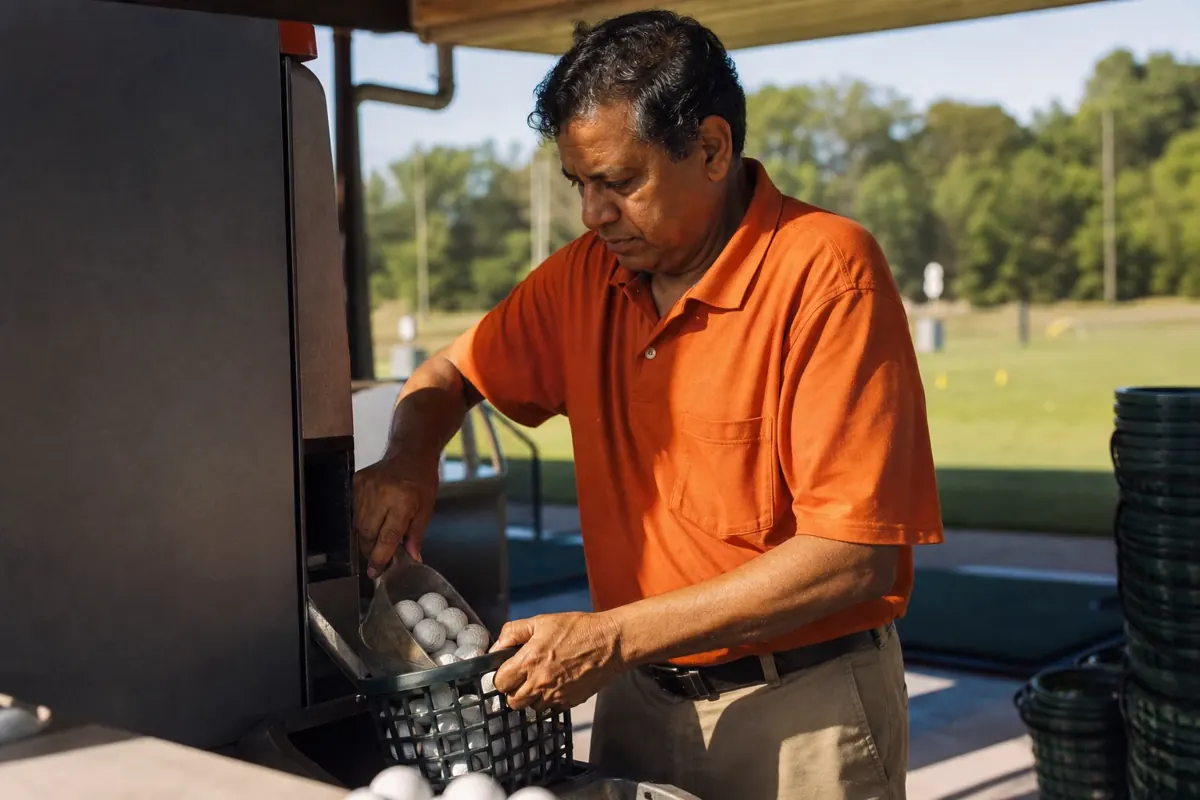
Starting a golf driving range business means building a practice facility where golfers pay to hit balls, take lessons, and often eat and drink. It is capital-heavy but rides real demand.
Golf is booming, and ranges are the on-ramp. A record 48.1 million Americans played golf on- or off-course in 2025, according to the National Golf Foundation. Off-course participation at driving ranges and entertainment venues nearly doubled, climbing from 14.3 million to 29.1 million over the past five years and bringing millions of new players into the game.
The hardest part is not swing mechanics. It is zoning, which alone can eat six months or more before you pour a single footing.
What do you need to start a golf driving range business?
You need at least 15 acres, zoning approval, construction, equipment, and financing. Plan for $425,000 to $2 million to launch, as an operator-planning estimate built from the land, construction, and equipment line items below. No industry benchmark study publishes a single cost figure, so build your budget from local quotes for each category.
Land and construction dominate the budget. Here is a realistic breakdown:
| Item | Estimated cost |
|---|---|
| Land (acquisition or lease) | $100,000 to $1 million+ |
| Construction (netting, lighting, building) | $250,000 to $750,000 |
| Equipment (dispenser, balls, mats, picker) | $50,000 to $100,000 |
| Permits and initial marketing | $25,000 to $75,000 |
| Total to launch | $425,000 to $2 million |
Validate the market first with a 3-radius demand check: pull population, median household income, and golf course density at 5, 10, and 20-mile drive-time rings around your site, then cross-reference NGF participation data. Drive by nearby ranges during peak hours to note their pricing and condition. A detailed business plan is your strongest asset with lenders.
Because the costs are large, most owners use SBA financing. An SBA 504 loan funds fixed assets like land and buildings up to $5 million, with a standard 10% down payment that rises to 15% for special-use properties like a driving range and 20% if the business is also a startup. An SBA 7(a) loan is more flexible for mixed startup costs.
How do you write a golf driving range business plan?
A golf driving range business plan covers five areas that lenders scrutinize. Pull local market demand using National Golf Foundation participation data and your 3-radius demographic check, then map your site and zoning path, including the special use permit timeline if the land is not already zoned for commercial recreation. Lay out a startup budget in the $425,000 to $2 million range with line-item quotes, your revenue streams (buckets, memberships, lessons, rentals, food and drink), and three-year financial projections built from realistic local pricing and expected traffic. Lenders read projections closely, so ground every number in local data, not industry averages.
1. How do you choose land and equipment?
You need a parcel of at least 15 acres to allow a 300-yard hitting distance plus a safety buffer, zoned for commercial recreation.
Negotiate a long lease of 10 years or more with renewal options to protect your site investment, and spell out who is liable for damage from errant balls. If the land is zoned agricultural, expect to pursue a special use permit.
Decide early whether you are building a traditional standalone range or a tech-enabled, entertainment-style venue with ball-tracking screens. A traditional range keeps construction and equipment costs lower and targets serious practice players. An entertainment-style venue draws a broader, social crowd and can charge a premium per bay, but the ball-tracking hardware, climate-controlled bays, and food and beverage build-out add $500,000 or more to your budget. Match the format to your local demographic and the 3-radius demand check.
Invest in durable equipment, since cheap mats wear out fast and hurt the experience. The prices below reflect typical quotes from established suppliers such as Range Servant and Wittek:
| Equipment | Cost |
|---|---|
| Automated ball dispenser | $5,000 to $15,000 |
| Range balls (10,000 to 20,000) | $8 to $12 per dozen |
| Hitting mats | $200 to $500 each |
| Ball picker machine | $4,000 to $10,000 |
Buy from reputable range suppliers, because reliable gear lowers labor and downtime.
2. What licenses, zoning, and permits do you need?
You need an LLC, an EIN, a business license, and, above all, zoning approval. Zoning is the step that decides whether the project happens at all.
Form an LLC through your Secretary of State ($50 to $500), get a free EIN from the IRS, and add a seller's permit if you sell merchandise.
The real hurdle is local. You need a zoning permit for commercial recreation plus building permits, and approval can take 6 to 12 months when a special use permit is required. Book a pre-application meeting with your city or county planning department before you commit to a site.
If you serve food or drinks, add a health permit, and a liquor license means a separate, lengthy application with your state's Alcoholic Beverage Control board. Start those conversations early.
3. What insurance does a driving range need?
You need general liability, property, and workers' compensation coverage. Errant golf balls make liability non-negotiable.
General liability is your top priority, covering customer injuries and stray-ball damage. A $1 million per occurrence policy for a driving range typically runs $400 to $1,100 a year, based on industry insurance cost data. Property insurance protects your building, netting, and equipment from fire or storms, which general liability does not cover.
Once you hire even one employee, workers' compensation is a state requirement. A broker who specializes in sports and recreation understands range-specific risks and can bundle policies for a better rate.
4. How do you price and make money?
Use a tiered bucket model, then layer on memberships, lessons, and rentals. Multiple revenue streams are what make a range profitable.
A common structure at standalone ranges is a small bucket (40 to 50 balls) for $9, a medium (70 to 80) for $13, and a large (100 to 120) for $16, which nudges customers to the better value. Add recurring income with a monthly membership, for example $99 for unlimited balls, plus packages like 10 buckets for the price of 8.
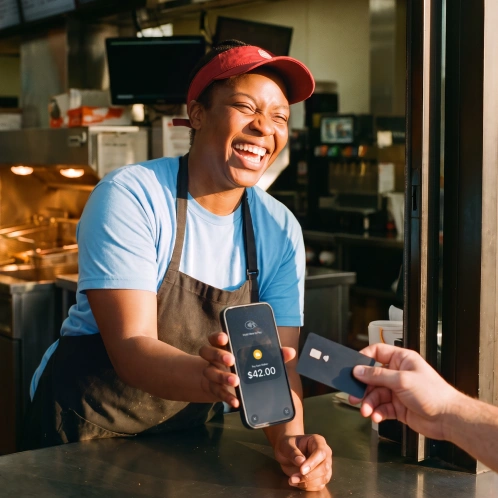
Layer in more streams: club rentals around $15 a set, and lessons with a teaching pro on a revenue split. When a pro gives a lesson on the tee line or your beverage cart rolls the range, Tap to Pay lets you take a card, Apple Pay, Google Pay, or Samsung Pay on your phone, with the money on your JIM Card in seconds.
Price for value, not the lowest number. Your mats, balls, and facility quality justify your rate.
5. How do you attract customers?
Start hyper-local. Your first customers live within a short drive.
Set up a free Google Business Profile with strong photos so you show up on Google Maps, then run targeted ads to golf fans within a 10-mile radius. Aim for a customer acquisition cost under $50.
A grand opening with a "first bucket free" offer draws a crowd, and partnerships with high school teams and corporate leagues create recurring play. Collect emails at the counter from day one, since a weekly update drives repeat visits better than social media alone.
6. How do you get paid?
Use a point-of-sale system at the counter for bucket sales, and take mobile payments wherever customers are not at the register.
For lessons on the tee, a beverage cart, or a pop-up event, Tap to Pay charges 1.99% per sale with no monthly fee and no hidden costs, and no extra hardware to carry. For event or league bookings made ahead, you can send a Payment Link the customer pays online at 4.99% + $0.30 per sale to lock in a deposit.
Instant funds keep operations smooth. On a $60 lesson, the 1.99% fee is about $1.19, so you keep roughly $59, on your JIM Card in seconds.
Scale on data, not guesswork. In operator experience, when peak-hour wait times top 15 minutes for a full month, or you hit 80% of weekend capacity for two months straight, it is time to add hitting bays or equipment. Keep payroll between 30% and 40% of revenue as you grow, a standard hospitality-industry benchmark for full-service recreation operations.
Staff for the hours that drive revenue. A typical standalone range runs a small team: a counter attendant for bucket sales and check-in, a ball picker operator for the range, and a teaching pro on a revenue split. Most ranges open by 8 or 9 AM and close at sunset, with peak demand on weekday evenings and weekends. Plan one counter staffer per 20 hitting bays during peak hours, and add a second picker operator once daily ball volume tops 10,000.
Turn your phone into a card reader and start accepting payments with Tap to Pay. You are ready for opening day.
The JIM Card is issued by Lead Bank, Member FDIC, pursuant to license from Visa U.S.A. Inc. Instant settlements subject to terms. Fees and T&C apply. See jim.com for more details.
Frequently Asked Questions
How much does it cost to start a golf driving range?
How much land do you need for a driving range?
Is a golf driving range profitable?
How do you write a golf driving range business plan?
How long does it take to open a driving range?
Do you need a license to open a driving range?


Sell and get paid in seconds with Jim