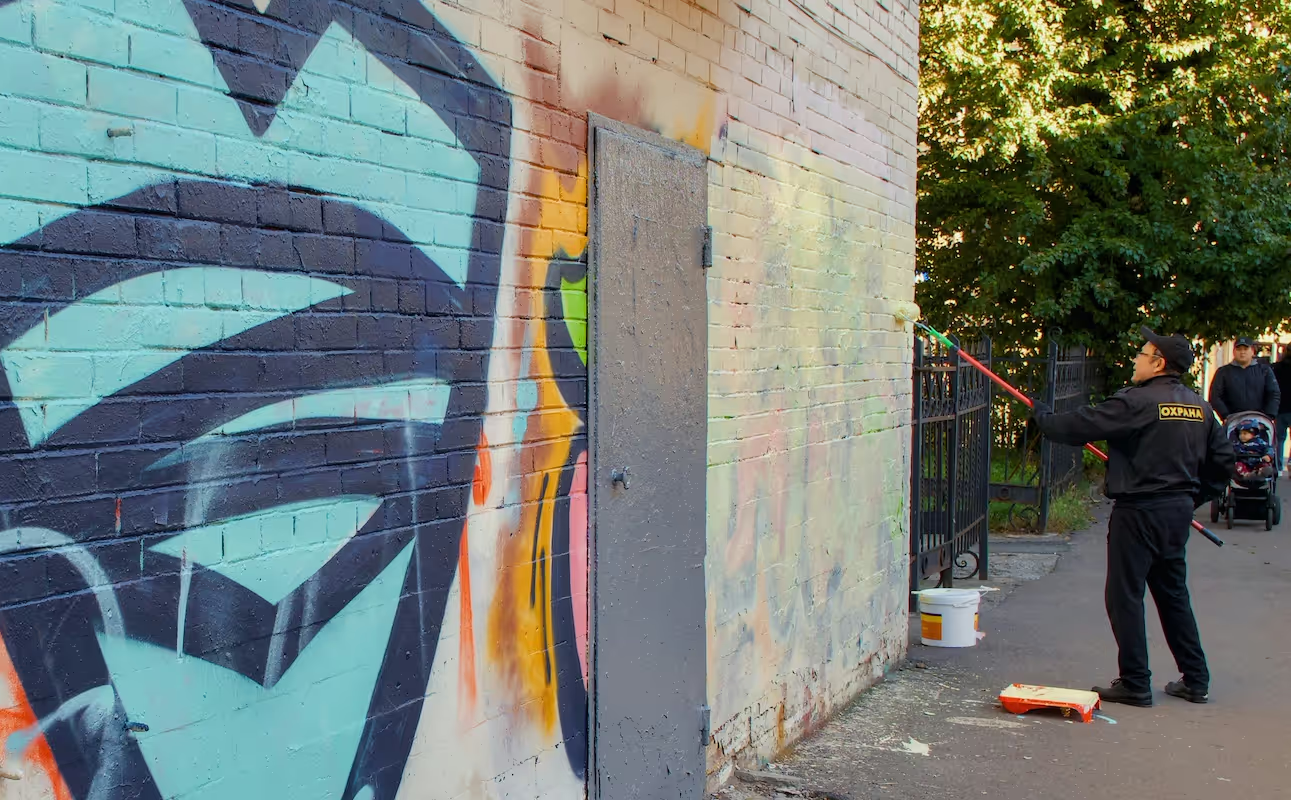
Starting a graffiti removal business is a rewarding venture that combines technical skill and an eye for detail with business savvy. The exterior cleaning industry is a multi-billion dollar market, and there is steady demand for graffiti removal from city governments, commercial property managers, and homeowners.
This guide will take you through the practical steps of acquiring the right equipment, obtaining necessary permits, securing funding, and marketing your services to help you launch a successful graffiti removal business in the U.S.
Step 1: Plan your business and validate your market
Market and competitor research
Start with a drive through your target service area, especially industrial parks and commercial zones. Document every piece of graffiti with a photo and location. This physical audit creates your initial list of potential clients and shows you where demand is highest.
Once you have that data, search on Google Maps and Yelp for "graffiti removal" in your city. Analyze the top 3-5 competitors. Note their services, service areas, and customer reviews to spot gaps in the market you can fill.
Calculate your startup costs
Your initial investment will largely go toward equipment. A mistake many newcomers make is to purchase underpowered gear. You need a commercial-grade pressure washer (around $2,500) and might consider a media blaster ($3,000+). Expect to spend another $700 on chemicals and PPE.
Then, you have administrative costs. Business formation (LLC fees are $100-$500) and general liability insurance, which can run $600-$1,200 per year, are typical. A reliable used work van or truck is another large part of the budget, often between $10,000 and $20,000.
Here are three immediate steps to take:
- Scout your target neighborhoods to map out existing graffiti.
- Create a spreadsheet of local competitors, noting their services and online presence.
- Draft a startup budget with specific line items for equipment, insurance, and a vehicle.
Step 2: Set up your legal and licensing framework
Choose your business structure
You should consider forming a Limited Liability Company (LLC). It protects your personal assets if the business is sued and offers simpler pass-through taxation. A corporation is more complex and usually unnecessary for a new one-person operation.
Once you register your LLC with your state's Secretary of State, get an Employer Identification Number (EIN) from the IRS. You will need this for taxes and to open a business bank account. The application via Form SS-4 is free online.
Secure licenses and permits
Next, apply for a general business license from your city or county clerk's office. These typically cost between $50 and $150 and can take one to three weeks to process. This license allows you to operate legally within that jurisdiction.
A frequent oversight is ignoring environmental rules. Check with your state's environmental protection agency about wastewater disposal. Some areas require a specific permit for water runoff from pressure washing to avoid fines, which can be substantial.
Here are four immediate steps to take:
- File your LLC formation documents with your Secretary of State.
- Apply for a free EIN on the official IRS website using Form SS-4.
- Contact your city clerk to get your local business license application.
- Research your state's EPA rules for wastewater reclamation and runoff.
Step 3: Secure your insurance and manage risk
Key insurance policies
Your LLC protects your personal assets, but business insurance covers operational risks. You will need a General Liability policy with at least $1 million in coverage. This typically costs between $700 and $1,500 annually. A personal auto policy will not cover your work truck, so you need Commercial Auto insurance.
If you plan to hire help, Workers' Compensation is legally required in most states. Also, consider Inland Marine insurance. This policy protects your expensive pressure washer and other gear while in transit or at a job site, which your general liability policy does not cover.
A mistake some owners make is to assume a basic policy is enough. They later discover it excludes damage from chemical sprays or high-pressure water. Always confirm your policy explicitly covers "care, custody, and control" and damage from your specific removal methods before you sign.
When you shop for quotes, consider specialists in contractor insurance like Hiscox, Next Insurance, or The Hartford. They understand the risks of property damage and can write a policy that provides proper protection, unlike a general agent who may miss these details.
Here are four immediate steps to take:
- Request quotes for a General Liability policy with a minimum of $1 million in coverage.
- Add a Commercial Auto policy for your work vehicle.
- Ask insurers if their policies cover accidental property damage from chemicals and pressure washing.
- Look into an Inland Marine policy to protect your equipment against theft or damage.
Step 4: Secure your location and buy equipment
Find a base of operations
You do not need a storefront. A 200-400 square foot storage unit or garage space in an area zoned for commercial or light industrial use is perfect. This gives you enough room for your vehicle and equipment without the high overhead of a retail location.
When you look at leases, try to negotiate a 6-month or 1-year term instead of a longer commitment. This provides flexibility as your business finds its footing. Landlords are often open to shorter terms for small industrial spaces.
Purchase your core equipment
With your space secured, it is time to buy your gear. Your main purchase is a hot-water pressure washer with at least 4000 PSI. Expect to pay between $2,500 and $5,000 for a reliable unit from brands like Mi-T-M or BE Pressure.
Many new owners try to cut costs with a residential machine, but these often fail on commercial jobs. You also need a starter set of graffiti removers for different surfaces. Suppliers like World's Best Graffiti Removers offer kits for around $500.
Here are four immediate steps to take:
- Research storage units or garage spaces between 200-400 sq ft.
- Get quotes for a hot-water pressure washer with a minimum of 4000 PSI.
- Order a multi-surface chemical starter kit from an industry supplier.
- Purchase safety gear, including chemical-resistant gloves and respirators.
Step 5: Set up your payment and invoicing systems
Payment processing
For most jobs, you should require a 50% deposit to book the service and collect the rest upon completion. For regular commercial clients, you can offer Net 30 terms. A frequent misstep is to do the work without a deposit, which leaves you vulnerable to payment delays.
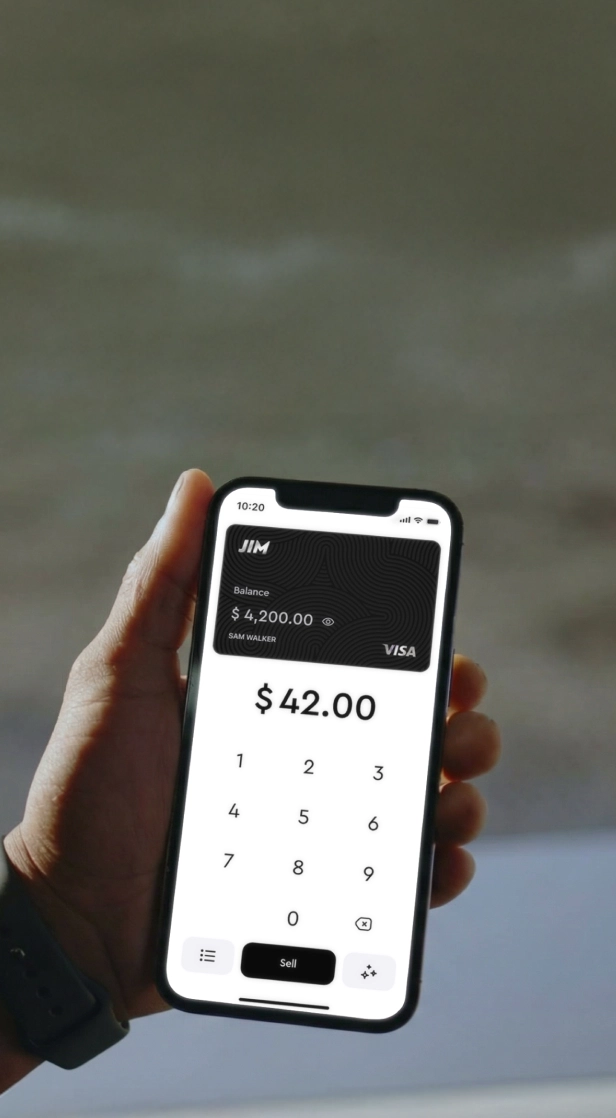
Now that you have a plan for terms, you need a way to get paid on-site. For a graffiti removal business that needs to accept payments on-the-go, JIM offers a streamlined solution. With JIM, you can accept debit, credit, and digital wallets directly through your smartphone—just tap and done.
At just 1.99% per transaction with no hidden costs or extra hardware, it is particularly useful for collecting final payments immediately after a client approves your work. Other payment solutions often charge 2.5% to 3.5% plus monthly fees, so the savings are clear.
Getting started is simple:
- Get Started: Download the JIM app for iOS.
- Make a Sale: Type the sales amount, hit sell, and ask your customer to tap their card or device on your phone.
- Access Funds: Your money is available on your JIM card as soon as the sale is done, with no waiting for bank transfers.
Here are three immediate steps to take:
- Decide on your payment terms, such as a 50% deposit for new clients.
- Download the JIM app to set up on-site payment acceptance.
- Create a simple service contract template for jobs over a certain amount, like $500.
Step 6: Fund your business and manage finances
Secure your startup capital
For equipment, look into an SBA Microloan. You can often get between $5,000 and $50,000 with interest rates around 8-13%. These are great for new businesses without a long credit history. Another path is direct equipment financing, where the loan is secured by the gear itself.
With funding for your equipment handled, you need to think about operating cash. Plan for at least $5,000 to $10,000 in working capital. This covers your first six months of fuel, insurance, and chemical refills before revenue becomes steady.
A mistake many new owners make is to focus only on the big equipment purchase. They forget about daily costs and find themselves in a cash crunch just as they are getting started. Do not let that be you.
Manage your money from day one
As soon as your funds arrive, open a dedicated business checking account. Mixing personal and business finances creates a massive headache at tax time and can put your personal assets at risk, even with an LLC. Then, sign up for an accounting platform like Wave or QuickBooks Self-Employed.
Here are four immediate steps to take:
- Research SBA Microloan lenders and equipment financing options.
- Calculate a 6-month operating budget for fuel, insurance, and supplies.
- Open a separate business checking account for all your transactions.
- Set up an accounting software to track income and expenses from the start.
Step 7: Hire your team and set up operations
Hire your first technician
Your first hire will likely be a Graffiti Removal Technician. This person will operate the equipment, handle chemicals, and represent your business on-site. To attract a reliable candidate, plan to offer a competitive wage, typically between $20 and $28 per hour, based on their experience.
A mistake some owners make is to focus only on pressure washing skills. You should also run a background check and review their driving record. This person will be responsible for your expensive work vehicle and equipment, so trustworthiness is paramount.
Streamline your daily operations
Once you have a technician, you need a system to manage jobs. Field service software like Jobber or Housecall Pro helps you schedule work, dispatch your team, and track job progress from your phone. This avoids confusion and missed appointments as you get busier.
In terms of productivity, a single full-time technician can typically support between $70,000 and $120,000 in annual revenue. For training, have them complete an OSHA 10-hour safety course and any equipment-specific training offered by the manufacturer of your pressure washer.
Here are four immediate steps to take:
- Draft a job description for a Graffiti Removal Technician, including responsibilities and pay range.
- Identify a local provider for OSHA 10-hour safety certification.
- Sign up for a free trial of a field service software like Jobber to test its features.
- Set a clear revenue target for your first employee to track their performance.
Step 8: Market your business and get customers
Direct outreach to commercial clients
Your first customers will likely come from direct outreach. Use the list of graffiti-tagged properties you made in Step 1. Contact the property managers or business owners directly. You might want to offer a free demo on a small spot to show your effectiveness.
A mistake many new owners make is to send a generic email. Instead, include a photo of the graffiti on their property. This personalized approach shows you have done your homework and increases your response rate. Expect to contact 20-30 businesses to land your first few jobs.
Build a simple online footprint
Set up a free Google Business Profile. Fill it out completely with your service area, hours, and photos of your work. This is how local customers will find you through search. Ask every satisfied client to leave a review to build your credibility.
You can also run targeted Google Ads. A budget of $15-$25 per day can start to generate leads. Aim for a cost-per-acquisition (CAC) under $100 for profitable jobs. Track which keywords, like "graffiti removal near me," convert best.
Here are four immediate steps to take:
- Create a Google Business Profile and upload before-and-after photos.
- Draft a personalized email template for property managers.
- Identify 20 local businesses from your initial research to contact this week.
- Set a small daily budget for a test campaign on Google Ads.
Step 9: Set your pricing and create proposals
Choose your pricing model
Most graffiti removal jobs are priced by the square foot, typically from $2.50 to $7.00. The rate depends on the surface type and the paint used. For tricky jobs on delicate surfaces, you might want to charge an hourly rate of $75 to $150 to cover unforeseen issues.
A trap many fall into is pricing only the removal itself. Remember to factor in your travel, setup, and cleanup time. A good rule is to aim for a 50-70% gross profit margin on every job after you account for chemicals, fuel, and any labor costs.
Create professional proposals
Once you have a price, present it in a clean proposal. This document should clearly outline the scope of work, the total cost, and your payment terms. You can create a simple template using Google Docs or Canva. It makes your business look more professional than a text message quote.
To figure out what competitors charge, you can call them for a quote on a fictional property. This gives you real-world data on local market rates. It helps you avoid underbidding just to win work, which is a quick way to hurt your profitability from the start.
Here are four immediate steps to take:
- Call three local competitors to get a "ghost quote" for a standard job.
- Calculate your break-even hourly rate, including all overhead costs.
- Establish a minimum service fee, such as $250, for any job.
- Create a professional proposal template with your business name and contact info.
Step 10: Implement quality control and scale your operations
Establish your quality standards
Your reputation is built on results. You might want to create a photo checklist for every job, showing zero "ghosting" and no damage to the underlying surface. This becomes your proof of quality for the client and a training guide for new hires.
Many owners fail to standardize their work, which leads to inconsistent quality between technicians. Having a clear, visual standard prevents this. For added credibility, you could look into Power Washers of North America (PWNA) certification for your team.
Know when to grow
Once you consistently hit $8,000-$10,000 in monthly revenue, it is a good signal to hire a second technician. Do not buy a second truck until you have enough work to keep two teams busy for at least three weeks out. Expanding too fast is a cash flow trap.
With a second technician on board, your scheduling system becomes more important. Field service software like Jobber or ServiceTitan helps manage multiple crews, optimize routes, and prevent missed appointments. This is how you scale without the chaos.
Here are four immediate steps to take:
- Create a photo checklist defining a "completed job" for client sign-off.
- Set a monthly revenue target that will trigger hiring your next technician.
- Research the requirements for PWNA certification to boost credibility.
- Review field service software features needed for managing a multi-person team.
You now have a solid plan to launch your business. Remember that every clean wall is your best advertisement, so focus on quality from day one. With this roadmap, you are well-equipped to start building a strong reputation and a steady list of clients.
As you complete those jobs, getting paid should be simple. JIM turns your smartphone into a card reader, letting you accept payments on the spot for a flat 1.99% fee with no extra hardware. Download JIM to handle your transactions effortlessly.
.avif)