Starting a grocery delivery business can be an exciting venture, blending logistical skills with smart business planning. It's a market worth billions, fueled by consistent demand from busy families, working professionals, and older adults who appreciate the convenience.
This guide will walk you through the practical steps, from validating your idea and securing permits to acquiring equipment and building supplier relationships, to help you launch a successful grocery delivery business in the U.S.
Step 1: Create a business plan and validate your idea
Define your market and competition
Start by surveying potential customers in your target neighborhoods. You can use online forms or post on local community boards like Nextdoor to ask about grocery habits and what they would pay for delivery. Aim for 50-100 responses to get a clear picture of demand.
Once you have that data, analyze your local competitors. Use Google Maps to find them, then study their websites. Note their delivery fees, service areas, and any subscription models they offer. This research helps you find a market gap you can fill, like serving an area others ignore.
A common mistake is to just copy a larger service's model. This often fails because local needs can be very different. Your research might reveal a strong demand for late-night deliveries or a focus on specific organic stores, which gives you a unique advantage.
Calculate your startup costs
Speaking of costs, let's get specific. Initial expenses are usually manageable. Expect to spend $100-$500 on business registration and permits. Basic equipment like commercial-grade insulated bags and a folding cart will run you another $200-$500.
You should also set aside $300-$600 for initial marketing, such as printing flyers and running targeted social media ads. This brings your estimated startup total to between $600 and $1,600. It is wise to have a small contingency fund for unexpected costs.
Here are 3 immediate steps to take:
- Survey at least 50 potential customers in your target zip code.
- List the delivery fees and service areas of three local competitors.
- Draft a startup budget that includes equipment, legal fees, and marketing.
Step 2: Form your business and get the right permits
Choose your business structure
You should consider forming a Limited Liability Company (LLC). It protects your personal assets if the business faces a lawsuit. For taxes, an LLC is a "pass-through" entity, so you report business profits on your personal tax return, which is simpler than a corporation.
Filing for an LLC typically costs between $50 and $500, depending on your state, and the process usually takes one to three weeks. Many people overlook this step, but it provides a key layer of legal protection from the start.
Secure your licenses and permits
First, get a free Employer Identification Number (EIN) from the IRS website. You need this to open a business bank account. Next, register your business with your state's Secretary of State. This makes your operation official and costs between $50 and $150.
You will also need a local business license from your city or county clerk, which can cost $25 to $100. A frequent misstep is to ignore food safety rules. Check with your local health department, as you may need a food handler's permit even for sealed goods.
Here are 4 immediate steps to take:
- File for an LLC with your state's Secretary of State.
- Apply for a free EIN on the IRS website.
- Check your local health department's website for food handling rules.
- Contact your city or county clerk about a local business license.
Step 3: Secure your insurance and manage risk
Key insurance policies to consider
Your first move should be to get commercial auto insurance. A frequent oversight is to rely on a personal auto policy, but it will not cover accidents during business use. Expect annual premiums of $1,200 to $2,400 for a policy that covers liability and vehicle damage.
You will also want general liability insurance. This protects you if a customer claims you caused property damage or injury. For example, if you accidentally knock over an expensive vase. This coverage typically costs between $400 and $900 per year.
If you plan to hire employees, even part-time, you must have workers' compensation insurance. This covers medical costs and lost wages if an employee gets hurt on the job. The cost varies based on your state and payroll size.
When you shop for policies, consider providers like Next Insurance, The Hartford, or Progressive Commercial. They understand the risks of a delivery business, from traffic accidents to food spoilage, and can offer tailored coverage. Always compare quotes from at least two providers.
Here are 3 immediate steps to take:
- Get a quote for a commercial auto insurance policy.
- Ask an agent about a general liability policy with at least $1 million in coverage.
- Compare quotes from two providers that specialize in small business insurance.
Step 4: Set up your space and get equipment
Designate your workspace
You can run this business from home to keep initial costs down. Designate a clean, 50-100 square foot area exclusively for staging orders. This space should be separate from your personal groceries. Check your city’s zoning ordinances for rules on home-based businesses, especially regarding food handling.
Some people make the mistake of mixing business and personal space. This can lead to cross-contamination or lost items. A dedicated shelf or corner in a cool, dry room is enough to start. It shows professionalism and helps you stay organized during busy periods.
Acquire your delivery gear
For equipment, invest in quality gear that lasts. You will need two or three commercial-grade insulated bags, which cost $40-$80 each. Look at brands like Cambro or Sterno. They maintain food-safe temperatures far better than cheaper consumer-grade bags, a frequent startup oversight.
A sturdy folding cart, like a Magna Cart, will cost $70-$150 and is invaluable for large orders or apartment deliveries. Also, consider a large hard-sided cooler, like an Igloo or Coleman, for bulk frozen items. You can find this equipment at WebstaurantStore or local restaurant suppliers.
Here are 4 immediate steps to take:
- Review your city’s zoning rules for home-based food businesses.
- Price out two commercial insulated bags and one folding cart online.
- Designate and clear a 50-square-foot staging area in your home.
- Locate one local or online restaurant supply store for future purchases.
Step 5: Set up your payment processing
You need a simple way to get paid. Most grocery delivery services require customers to pay online when they place an order. This secures the funds before you shop. Some owners, however, offer payment upon delivery to build trust with new clients.
A frequent misstep is to sign up for a payment system with high fees or one that requires clunky hardware. While many processors charge 2.5% to 3.5% plus monthly fees, this can quickly reduce your profit on each order.
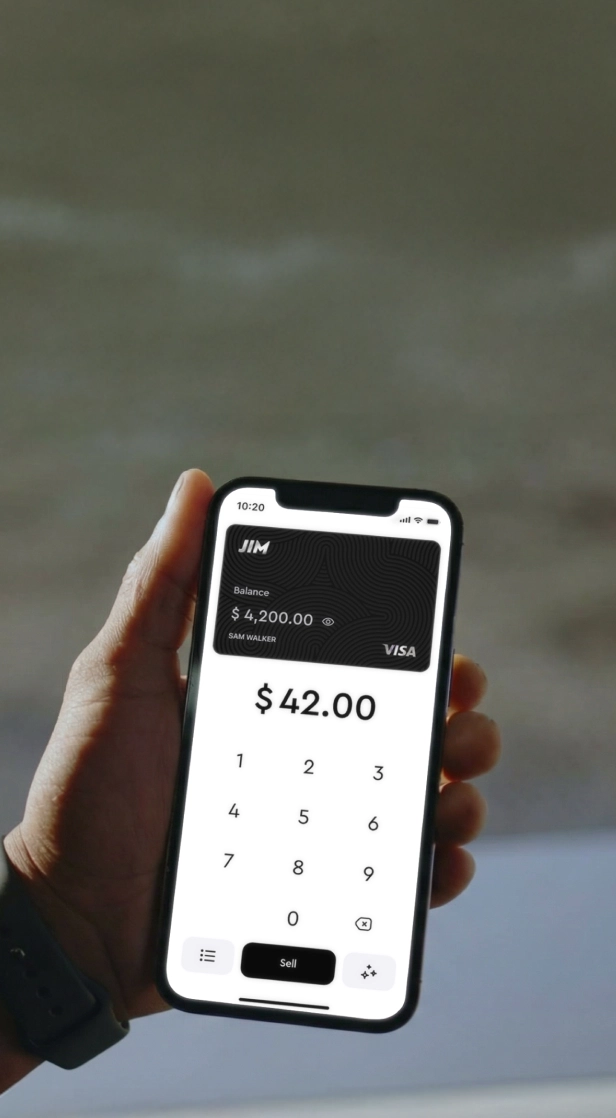
For a business that needs to accept payments on-site, JIM offers a streamlined solution. With JIM, you can accept debit, credit, and digital wallets directly through your smartphone. Just tap and you are done. It is a great fit for collecting payment at the customer's door.
At just 1.99% per transaction with no hidden costs or extra hardware needed, it is a cost-effective option. Getting started is straightforward.
- Get Started: Download the JIM app for iOS.
- Make a Sale: Type the sales amount, hit sell, and ask your customer to tap their card or device on your phone.
- Access Funds: Your money is available right on your JIM card as soon as the sale is done, no waiting for bank transfers.
Here are 3 immediate steps to take:
- Decide if you will take payments online or upon delivery.
- Download the JIM app to see its features for on-the-go payments.
- Compare JIM's 1.99% rate to other payment solutions you find.
Step 6: Secure your funding and manage finances
Find your startup capital
Since startup costs are low, you have flexible options. An SBA Microloan is a solid choice, offering $500 to $50,000 for new businesses. Expect interest rates between 8% and 13%. These are great for covering equipment and initial marketing expenses.
Another route is a business credit card with a 0% introductory APR. This can cover your first few months of expenses without interest. You might also look into local grants. Check your city's economic development website for small business programs.
Handle your business finances
You should plan for working capital. Aim to have $2,000 to $4,000 set aside. This buffer covers fuel, marketing, and unexpected costs for the first six months while you build your client base. It prevents cash flow problems before you turn a steady profit.
Many new owners make the mistake of using their personal bank account. This complicates taxes and puts your personal funds at risk. Open a separate business checking account the moment your business is legally formed to keep everything clean from day one.
Here are 4 immediate steps to take:
- Research SBA Microloan lenders in your state.
- Look for business credit cards with 0% intro APR offers.
- Check your city's website for small business grants.
- Open a dedicated business checking account.
Step 7: Hire your team and set up operations
Hiring your first employees
When you are ready to expand, your first hire will likely be a Personal Shopper. This person handles everything from picking quality produce to communicating with customers about substitutions. Expect to pay an hourly wage of $15 to $22, plus tips, depending on your market.
A mistake some owners make is to hire someone without a formal process. Instead, create a clear job description and check references. Also, ensure your new hire obtains a food handler's permit, which is often required by local health departments even for pre-packaged goods.
It is also important to correctly classify your workers. Many new businesses incorrectly label employees as independent contractors to avoid payroll taxes, but this can result in steep fines. Consult your state's labor laws to understand the difference and stay compliant.
Managing your daily workflow
To manage schedules, you can use an app like Homebase or When I Work. Their free plans are often sufficient for a small team. These platforms help you organize shifts and communicate with your staff without confusion.
As you grow, aim for one shopper to complete two to three orders per hour. This metric helps you balance staffing with order volume. A good financial target is to keep your total labor costs under 40% of your revenue to maintain profitability.
Here are 4 immediate steps to take:
- Draft a job description for a Personal Shopper role.
- Research local pay rates for delivery drivers on job boards.
- Review your state's guidelines on employee vs. contractor classification.
- Explore the free plans for scheduling apps like Homebase.
Step 8: Market your business and get customers
Start with local, low-cost marketing
Begin with hyper-local efforts. Print 500 flyers for about $50 and distribute them in community centers and apartment building lobbies. A simple offer like "$10 off the first order" can boost your response rate. A 1-2% conversion rate from flyers is a realistic target.
Many new owners spread their budget too thin. Instead, focus on one or two channels. Once you have flyers out, you can explore digital options. Join local Facebook or Nextdoor groups and share your service. Make sure you follow group rules on business promotion.
Use targeted ads and partnerships
Run targeted ads on social media with a small budget, like $5 per day, aimed at specific zip codes. Track your Customer Acquisition Cost (CAC). If you spend $100 on ads and get 10 new customers, your CAC is $10. Aim for a CAC between $15 and $25.
You can also form partnerships. Approach property managers of large apartment complexes or real estate agents who work with new residents. Offer them a referral fee or a special discount for their clients. This provides a steady stream of new customers with minimal marketing spend.
Here are 4 immediate steps to take:
- Design and print 250 flyers with an introductory offer.
- Join two local community Facebook groups to post about your service.
- Calculate a target Customer Acquisition Cost for your business.
- Identify one local property manager to approach for a partnership.
Step 9: Set your pricing strategy
Choose your pricing model
You have a few solid options. You could add a 10-20% markup to each item's store price. This is transparent but can make you seem more expensive. Another popular route is a flat delivery fee, typically $5 to $15 per order.
A subscription model, like $15 a month for unlimited deliveries, can build a loyal customer base. Some owners get tempted to underprice their service to win early customers. This often leads to an unsustainable business model that is hard to correct later.
Analyze competitors and set margins
Look at what others charge. Check the websites of three to five local competitors and note their fees. You might even place a small test order to understand the full cost. A simple spreadsheet helps you compare their delivery fees, markups, and subscription prices side-by-side.
With this data, you can set your own prices. Aim for a gross profit margin of 15-25% on each order after you account for the cost of goods and delivery expenses. This margin ensures you cover your costs and build a healthy business.
Here are 4 immediate steps to take:
- Decide between a markup, flat fee, or subscription model.
- Create a spreadsheet to compare the pricing of three local competitors.
- Calculate a target profit margin of at least 15% for your orders.
- Set an introductory offer, like a $10 flat fee on the first order.
Step 10: Maintain quality and scale your operations
Set your quality standards
To keep customers happy, you need to track your performance. Aim for an order accuracy rate of 98% or higher. You should also target an on-time delivery rate above 95%. These numbers show reliability and build trust with your clients.
You can measure satisfaction with a simple one-question survey sent via text after delivery. For example, ask "How was your order today? Reply 1-5 (5 is best)." This gives you instant feedback without bothering the customer with a long form.
Know when to scale
Many owners burn out because they wait too long to hire help. A good rule of thumb is to hire your first shopper when you consistently handle 10-15 orders per day. This frees you up to focus on growing the business instead of just fulfilling orders.
Once you have a shopper, you can think about expansion. Before you add a new zip code, make sure your current service area is profitable. When you do expand, use a route optimization app like Circuit for Teams to manage multiple drivers efficiently.
Here are 4 immediate steps to take:
- Track your order accuracy and on-time delivery rates for one week.
- Create a simple one-question customer feedback survey.
- Set a benchmark for hiring your first shopper, like 12 daily orders.
- Research a route optimization app for when you hire your first driver.
Conclusion
You now have the roadmap for your grocery delivery business. Success here comes from consistent, personal service. Customers remember an accurate order and a friendly face more than a few minutes saved. You have a solid plan, now it is time to execute.
And when it comes to getting paid, keep it simple. With a payment solution like JIM, your phone becomes your card reader. You can accept payments at the door for a flat 1.99% fee, no hardware needed. Download JIM and you are ready to go.
.avif)