Starting a hospitality business is a rewarding venture that combines a passion for service with sharp business acumen. The industry generates hundreds of billions of dollars annually, fueled by a steady demand for dining and lodging from tourists, business travelers, and local communities.
This guide will take you through the practical steps of validating your business concept, securing funding, obtaining necessary permits, and selecting the right location to help you launch a successful hospitality business in the U.S.
Step 1: Plan and validate your business idea
Begin by researching your local market. You might want to visit at least five potential competitors at different times, including peak hours and weekdays. Observe their customer flow, pricing, and service quality. This on-the-ground intelligence is invaluable.
Many new owners make the mistake of only looking at online data. While reports from databases like IBISWorld or Statista offer great market insights, they do not replace firsthand observation of your neighborhood's unique character.
Startup cost breakdown
Initial investment can range from $100,000 for a small cafe to over $1 million for a fine-dining restaurant. Your budget should account for several key areas. Here is a typical breakdown for a mid-size establishment.
- Lease & Renovations: $75,000 - $300,000
- Kitchen & Bar Equipment: $50,000 - $175,000
- Licenses & Permits: $2,000 - $10,000
- Initial Inventory: $10,000 - $30,000
- Working Capital (6 months): $50,000 - $150,000
A frequent misstep is underestimating the need for working capital. This fund covers payroll and operating expenses for the first six months before your business turns a profit. Plan for it carefully.
Here are 4 immediate steps to take:
- Visit five local competitors and take detailed notes on their operations.
- Search Statista for recent hospitality industry consumer trends.
- Create a detailed budget spreadsheet using the cost categories above.
- Identify the specific business licenses required by your city and state.
Step 2: Secure your legal structure and licenses
Most new hospitality owners choose a Limited Liability Company (LLC). This structure protects your personal assets from business debts. A C Corporation offers similar protection but involves more complex tax filings, which might be unnecessary when you are just starting out.
Once your LLC is registered with your Secretary of State, apply for an Employer Identification Number (EIN) from the IRS. It is free and you can get it online instantly. You will need this number for taxes, banking, and hiring employees.
State and local permits
With your federal ID in hand, you can tackle state and local permits. The specific requirements depend on your location, but most hospitality businesses need a standard set. Navigating this can take time, so it is wise to start the process early.
A liquor license from your state's Alcoholic Beverage Control (ABC) board can take 4-6 months and cost $300 to over $14,000. Also, expect to apply for a Food Service License from your county health department, which typically costs $100-$1,000.
Many owners underestimate how long it takes to get licensed. A delay with one permit, like the Certificate of Occupancy from the building department, can stall your entire opening. Build at least a two-month buffer into your project timeline for these approvals.
Here are 4 immediate steps to take:
- Register your business as an LLC with your Secretary of State.
- Apply for a free Employer Identification Number (EIN) on the IRS website.
- Contact your local health department for food service permit applications.
- Research liquor license timelines on your state's ABC board website.
Step 3: Arrange insurance and manage risk
Key insurance policies
Your next move is to secure insurance. General Liability is a must, with coverage of $1 million to $2 million. Property Insurance protects your building and equipment. Expect annual premiums for a combined policy to start around $3,000 to $7,000 for a small to mid-size business.
If you have employees, Workers' Compensation is legally required. Liquor Liability is another non-negotiable policy if you serve alcohol, protecting you from claims related to intoxicated patrons. These policies can add another $2,000 to $10,000 annually depending on your payroll and sales.
A frequent oversight is skipping Business Interruption insurance. This policy covers lost income if a fire or other disaster forces you to close. It is usually an affordable rider on your property insurance policy and can be a business-saver during unexpected downtime.
You might want to get quotes from providers who specialize in hospitality, such as The Hartford, Nationwide, or AmTrust Financial. A general agent might not grasp the unique risks, like foodborne illness claims or customer slip-and-falls, which these specialists understand well.
Here are 4 immediate steps to take:
- Get a quote for a $1 million General Liability policy.
- Ask about adding Business Interruption coverage to your Property Insurance.
- Confirm your state's Workers' Compensation requirements.
- Contact an insurance provider specializing in hospitality, like The Hartford.
Step 4: Select your location and equipment
Look for a space between 1,500 and 4,000 square feet. Ensure any potential location is in a commercially zoned area. You can confirm this with your local city planning department before you sign a lease.
When you negotiate your lease, you might want to ask for a Tenant Improvement (TI) allowance. This is a sum the landlord provides to help you build out the space. It can significantly reduce your upfront cash outlay.
Essential equipment and suppliers
Kitchen equipment represents a large part of your startup budget. Many new owners make the mistake of buying everything new. You can find reliable used equipment from local restaurant auction houses or certified dealers to save money.
- Commercial Oven: $5,000 - $20,000
- Walk-in Cooler: $8,000 - $25,000
- Ice Machine: $2,000 - $5,000
- Three-Compartment Sink: $500 - $2,000
For new items and smallwares, suppliers like WebstaurantStore or Restaurant Depot are good starting points. Restaurant Depot requires a membership, which is free if you have your business license and EIN.
Here are 4 immediate steps to take:
- Contact your city's planning department to confirm zoning for potential locations.
- Ask landlords about a Tenant Improvement (TI) allowance during lease discussions.
- Draft a list of required equipment with new versus used price estimates.
- Research suppliers like WebstaurantStore for equipment and supply costs.
Step 5: Set up your payment processing
You will need a reliable way to accept payments. Many new owners get caught by processors with complex fee structures. Look for transparent pricing and avoid solutions that require expensive, proprietary hardware or long-term contracts.
Most payment processors charge between 2.5% and 3.5% per transaction, often with added monthly fees. These costs can add up, so you might want to compare your options carefully before you commit.
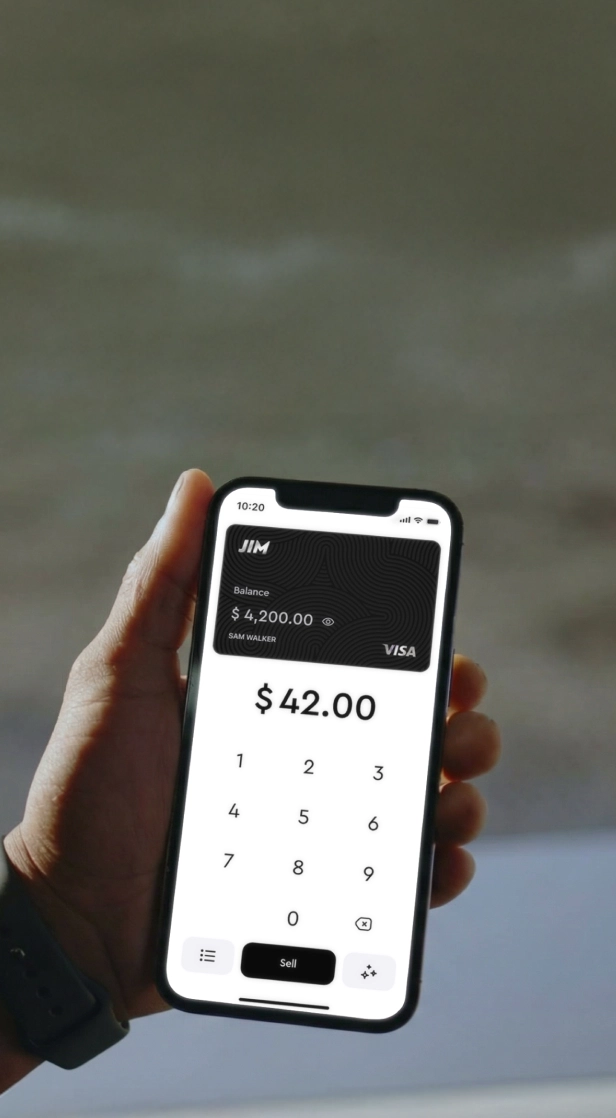
For hospitality businesses that need to accept payments on-site or on-the-go, JIM offers a streamlined solution. With it, you can accept debit, credit, and digital wallets directly through your smartphone - just tap and done.
At just 1.99% per transaction with no hidden costs or extra hardware needed, it is particularly useful for tableside payments, food trucks, or pop-up events. This rate is significantly lower than the industry average.
You can get started with JIM in three simple steps.
- Get Started: Download the JIM app for iOS.
- Make a Sale: Type the sales amount, hit sell, and ask your customer to tap their card or device on your phone.
- Access Funds: Your money is available right on your JIM card as soon as the sale is done - no waiting for bank transfers.
Here are 3 immediate steps to take:
- Compare transaction fees from at least three payment processors.
- Calculate your estimated monthly processing costs based on your sales forecast.
- Download the JIM app to see if it fits your business model.
Step 6: Fund your business and manage finances
The SBA 7(a) loan is a popular starting point for hospitality funding. You can often secure up to $500,000 with interest rates typically between Prime + 2.25% and 4.75%. Lenders will want to see a detailed business plan and a personal credit score above 680.
You might also consider equipment financing, which lets you lease kitchen hardware instead of buying it outright. This frees up cash for other expenses. Also, look for grants from organizations like the National Restaurant Association Educational Foundation, though these are quite competitive.
Many new owners get tripped up by underestimating their cash needs. Your focus should not just be on startup costs. You need enough working capital to cover at least six months of payroll, rent, and inventory before your business becomes profitable.
For a mid-size establishment, this means having $50,000 to $150,000 in reserve. This buffer is what keeps the lights on while you build a steady customer base. A lack of working capital is a primary reason new restaurants fail within their first year.
Here are 4 immediate steps to take:
- Research SBA 7(a) loan requirements on the official SBA website.
- Calculate your six-month working capital needs using your budget spreadsheet.
- Explore equipment financing quotes for your major kitchen purchases.
- Check the National Restaurant Association Educational Foundation website for grant deadlines.
Step 7: Hire your team and manage operations
Your team is the heart of your business. For a mid-size restaurant, you will likely need a General Manager ($50k-$75k/year), a Head Chef ($60k-$90k/year), and several Line Cooks ($18-$25/hour). Servers and bartenders often earn minimum wage plus tips.
A frequent misstep is offering low wages to save money. This approach often leads to high turnover and inconsistent service. You might want to offer competitive pay to attract and retain talent from the start.
Training and daily management
Before opening, ensure your staff has the right certifications. Most states require a Food Handler's Card from a program like ServSafe. If you serve alcohol, they will also need an Alcohol Server Certification, such as TIPS.
With your team trained, you can focus on daily operations. Your labor costs should stay between 25-35% of total revenue. You can use scheduling software like 7shifts or Homebase to build schedules that align with sales forecasts and control overtime.
Here are 4 immediate steps to take:
- Draft job descriptions for a General Manager and a Line Cook.
- Check your state's website for Food Handler's Card requirements.
- Compare pricing for scheduling software like 7shifts and Homebase.
- Calculate your target weekly labor budget based on projected sales.
Step 8: Market your business and acquire customers
Your marketing should start before you open. Claim your Google Business Profile immediately. Aim to gather 10-15 positive reviews from friends and family during a soft launch. Many owners ignore negative reviews, but you should respond to every one professionally within 24 hours.
For visual platforms like Instagram, focus on high-quality photos of your food and atmosphere. You can also run a contest for user-generated content. A simple giveaway can build early excitement and provide you with authentic photos to share. Engagement is more important than just posting.
You might want to partner with nearby hotels or offices to offer exclusive discounts. Also, consider a soft opening for local food bloggers and media. This can generate valuable press. A frequent mistake is to print flyers without a clear offer or distribution plan, which often wastes money.
Here are 4 immediate steps to take:
- Claim and complete your Google Business Profile listing.
- Draft response templates for both positive and negative online reviews.
- Identify three local food bloggers to invite to a pre-opening event.
- Contact a nearby hotel to discuss a potential guest discount partnership.
Step 9: Develop your pricing strategy
Cost-plus pricing
Most restaurants use cost-plus pricing. First, calculate the exact cost of ingredients for a dish. Then, divide that by your target food cost percentage. For example, if a burger costs $4 to make and your target is 33%, the menu price is $12 ($4 / 0.33).
Your food cost should generally fall between 28-35% of the menu price. For beverages, aim for a 20-25% cost for beer and 35-45% for wine. These margins help cover labor and overhead while ensuring a profit on each sale.
Competitive analysis
Once you have your cost-based prices, analyze your competitors. Collect menus from at least three direct rivals and note their prices for similar items. This research shows what your local market is willing to pay for a meal.
Some owners make the mistake of pricing their menu in a vacuum, based only on costs. This can lead to prices that are too high for the neighborhood or too low to signal quality. Your price must reflect both your costs and the perceived value in your market.
Here are 4 immediate steps to take:
- Calculate the plate cost for three of your signature menu items.
- Set a target food cost percentage for your menu, aiming for the 28-35% range.
- Create a spreadsheet to compare your prices with three local competitors.
- Use the cost-plus formula to set a preliminary price for one of your dishes.
Step 10: Maintain quality and scale your operations
Key performance metrics
With your business running, the focus shifts to consistency. You can track a few key numbers to monitor quality. Aim to keep your Google or Yelp rating above 4.5 stars and respond to all reviews. Also, watch your table turn time to ensure service efficiency.
Your food cost variance is another important metric. It should stay within 2% of your target. A higher variance suggests issues with portion control or waste. High employee turnover is also a red flag, so you might want to aim for a rate below 50% annually.
When to grow your business
Many owners expand too quickly at the first sign of success. Before you consider a second location, make sure your current one runs smoothly without you. You should see consistent profitability for at least 6-12 months and operate at 80% capacity on peak nights.
When manual inventory counts become overwhelming, it is a good time to look at software. Systems like MarketMan or xtraCHEF can automate purchasing and cost control. This frees you up to focus on growth instead of spreadsheets.
Here are 4 immediate steps to take:
- Track your average Google review score for one month.
- Calculate your food cost variance from last week's sales.
- Set a revenue target that would trigger expansion planning.
- Review the features of an inventory system like MarketMan.
Your journey in hospitality is about more than just business; it is about creating experiences. Remember, a unique atmosphere and consistent service are what turn first-time visitors into regulars. You have the roadmap, now go build a place people love.
As you prepare to open, keep your payments simple. JIM turns your smartphone into a card reader for a flat 1.99% transaction fee, with no extra hardware. It helps you accept payments from day one. Download JIM.
.avif)