Starting a kettle corn business is an exciting venture that blends the art of making a beloved snack with sharp business savvy. The market is fairly accessible thanks to consistent demand at local events and festivals, but that low barrier to entry doesn't mean success is guaranteed.
This guide will take you through the practical steps of acquiring equipment, obtaining the necessary permits, and selecting profitable locations to help you launch a successful kettle corn business in the U.S.
Step 1: Plan your business and validate the idea
Start by visiting local farmers' markets, street fairs, and festivals. Observe the foot traffic around food vendors. Note what they sell, their prices, and how they present their booths. This direct observation gives you the best feel for customer demand in your area.
Analyze your local competition
Use Google Maps and social media platforms like Facebook to find other kettle corn vendors nearby. See what events they attend and read their customer reviews. This helps you spot gaps in the market or areas that are already saturated.
A frequent misstep is to ignore indirect competitors. Bakeries or ice cream trucks also compete for the same snack dollars. Pay attention to all food vendors, not just other kettle corn businesses.
Estimate your startup costs
Map out your startup costs to set a realistic budget. A basic setup can range from $3,000 to $7,000. Your biggest expense will be the kettle corn machine itself, which typically costs between $2,000 and $5,000.
Other expenses will likely include the following items.
- Kettle and popper: $2,000 - $5,000
- Tent and signage: $300 - $800
- Initial ingredients and bags: $400 - $600
- Permits and licenses: $100 - $500
Here are 4 immediate steps to take:
- Visit two local events to scout food vendor competition and pricing.
- Create a spreadsheet listing all potential startup expenses.
- Search Facebook for kettle corn businesses operating within a 50-mile radius.
- Contact one local event organizer to ask about vendor application processes.
Step 2: Form your legal entity and get licensed
You might want to consider forming a Limited Liability Company (LLC). This structure protects your personal assets from business debts. A sole proprietorship is simpler but offers no liability protection, putting your personal finances at risk. Corporations are generally too complex for a small startup.
Once you choose a structure, get an Employer Identification Number (EIN) from the IRS. It is free and you will need it for taxes and banking. The application on the IRS website takes just a few minutes to complete.
Navigate state and local permits
Your main hurdle will be local health department permits. These can cost between $100 and $400 and take several weeks to process. You will also need a state-level Food Handler's Permit, which typically involves a short course and a fee of around $15 to $100.
A frequent mistake is assuming one permit covers all locations. Many cities and event organizers require their own temporary vendor permits. Always confirm permit requirements with each event organizer well in advance to avoid being turned away on the day of the event.
Here are 4 immediate steps to take:
- Register your business as an LLC with your state's Secretary of State office.
- Apply for a free EIN directly on the IRS website.
- Contact your county health department about their food vendor application process.
- Find an approved Food Handler's Permit course online for your state.
Step 3: Secure your insurance and manage risk
Your next move is to get insurance. General liability is non-negotiable. Most event organizers require a policy with at least $1 million in coverage. This typically costs between $400 and $700 per year and protects you if a customer gets hurt or sick.
A frequent oversight is forgetting to add event organizers as an "additional insured" on your policy. They will ask for this, so confirm your insurance provider can do it quickly. Without it, you may not be allowed to operate at their venue.
Find the right provider
You should also get commercial property insurance to cover your kettle, tent, and other equipment against theft or damage. If you use a vehicle exclusively for the business, a commercial auto policy is necessary as personal insurance will not cover it.
Look for insurers that specialize in food businesses, like the Food Liability Insurance Program (FLIP), InsureMyFoodTruck, or NEXT Insurance. They understand the specific risks of working with hot kettles and propane, unlike general agents who may miss important coverage details.
Here are 4 immediate steps to take:
- Request a quote for a $1 million general liability policy from a food vendor specialist.
- Ask an agent about the process for adding an "additional insured" to a policy.
- Review your personal auto policy to see if it covers any business use.
- Inquire about bundling general liability and commercial property insurance for a better rate.
Step 4: Find a location and buy equipment
Your setup will likely be a 10x10 or 10x20 foot pop-up tent, the standard for most outdoor events. You do not need a commercial lease. Your focus will be on securing spots at festivals and markets, where fees can sometimes be negotiated if you book multiple dates.
Choose your core equipment
Your kettle is the heart of the operation. An 80-quart kettle is a great starting point and will cost between $2,500 and $4,000. Many new vendors buy a smaller kettle to save money, but this can slow you down during peak hours and limit sales.
With your main purchase decided, you will also need a few other items to operate efficiently.
- Sifting table: $300 - $700
- 10x10 foot pop-up tent: $200 - $500
- Propane tanks and burner: $150 - $300
- Banners and signage: $100 - $300
Source your ingredients
Now that you have your equipment list, look for suppliers like Gold Medal Products or a local restaurant supply store. Buying in bulk is the best way to manage costs. You should purchase mushroom-style popcorn kernels, sugar, and oil in 50-pound bags or gallon jugs.
Here are 4 immediate steps to take:
- Price out an 80-quart kettle from two different equipment suppliers.
- Contact a restaurant supply store for quotes on 50-pound bags of corn and sugar.
- Research vendor booth fees for three local festivals happening in the next six months.
- Sketch a layout for your equipment inside a 10x10 foot tent space.
Step 5: Set up your payment processing
You need a way to take money, and cash alone will not cut it. Most customers expect to pay with a card or digital wallet. Your payment system must be fast and mobile, since you will operate in busy, temporary locations with potentially spotty internet.
Choose your payment solution
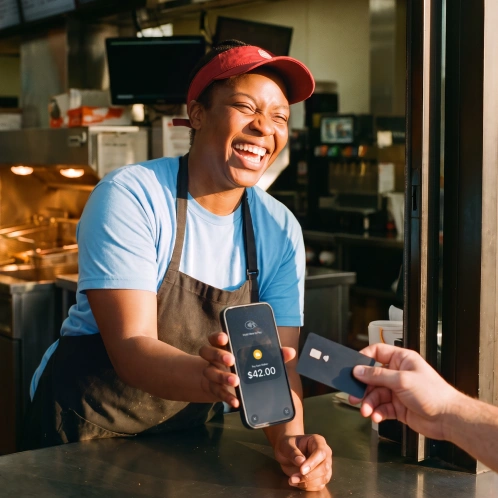
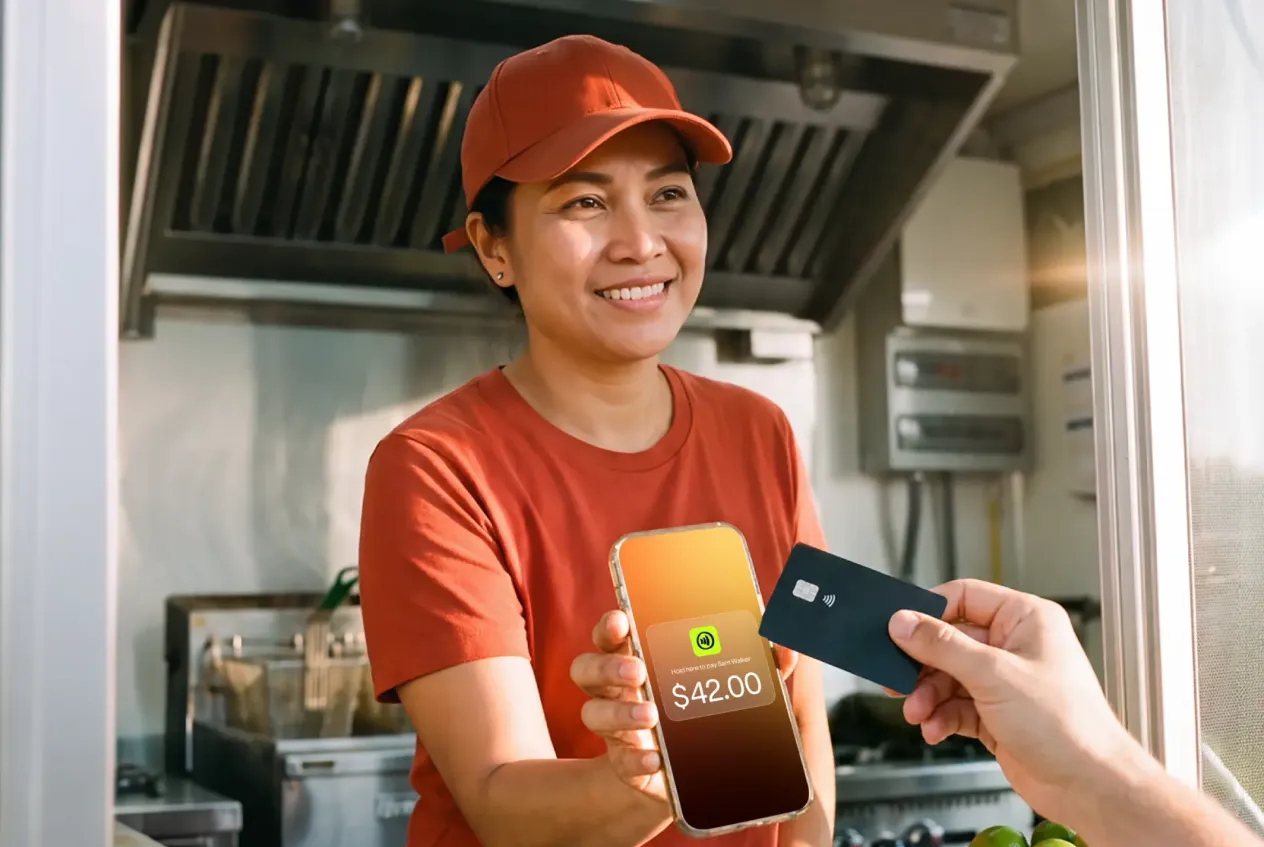
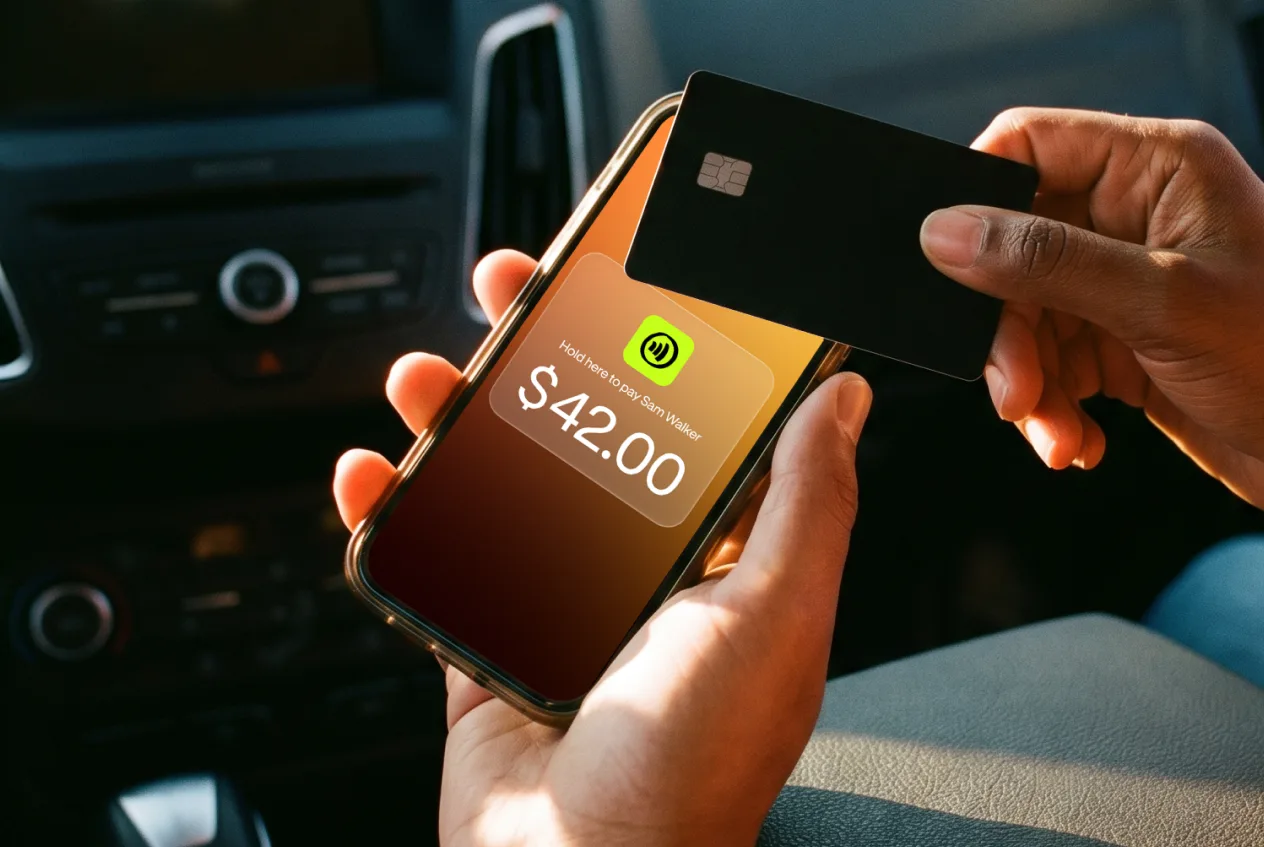
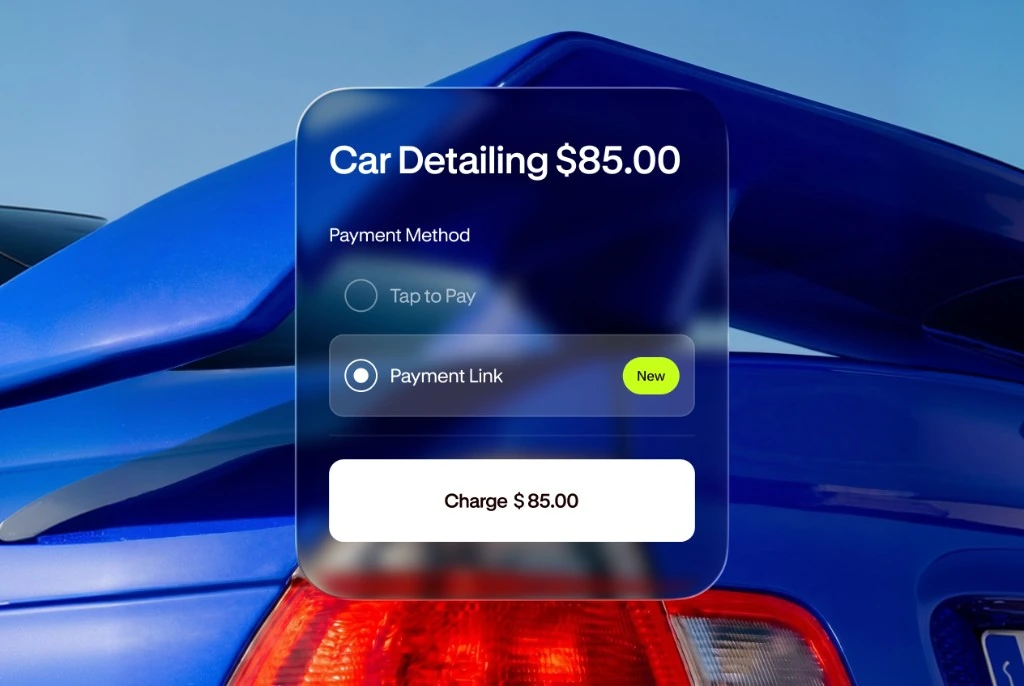
For a kettle corn business that needs to accept payments on-the-go, JIM offers a streamlined solution. With JIM, you can accept debit, credit, and digital wallets directly through your smartphone. Just tap and done.
The rate is just 1.99% per transaction with no hidden costs or extra hardware. This is lower than the 2.5% to 3.5% many other providers charge. It is particularly useful to manage long lines at festivals quickly.
Getting started is straightforward.
- Get Started: Download the JIM app for iOS.
- Make a Sale: Type the sales amount, hit sell, and ask your customer to tap their card or device on your phone.
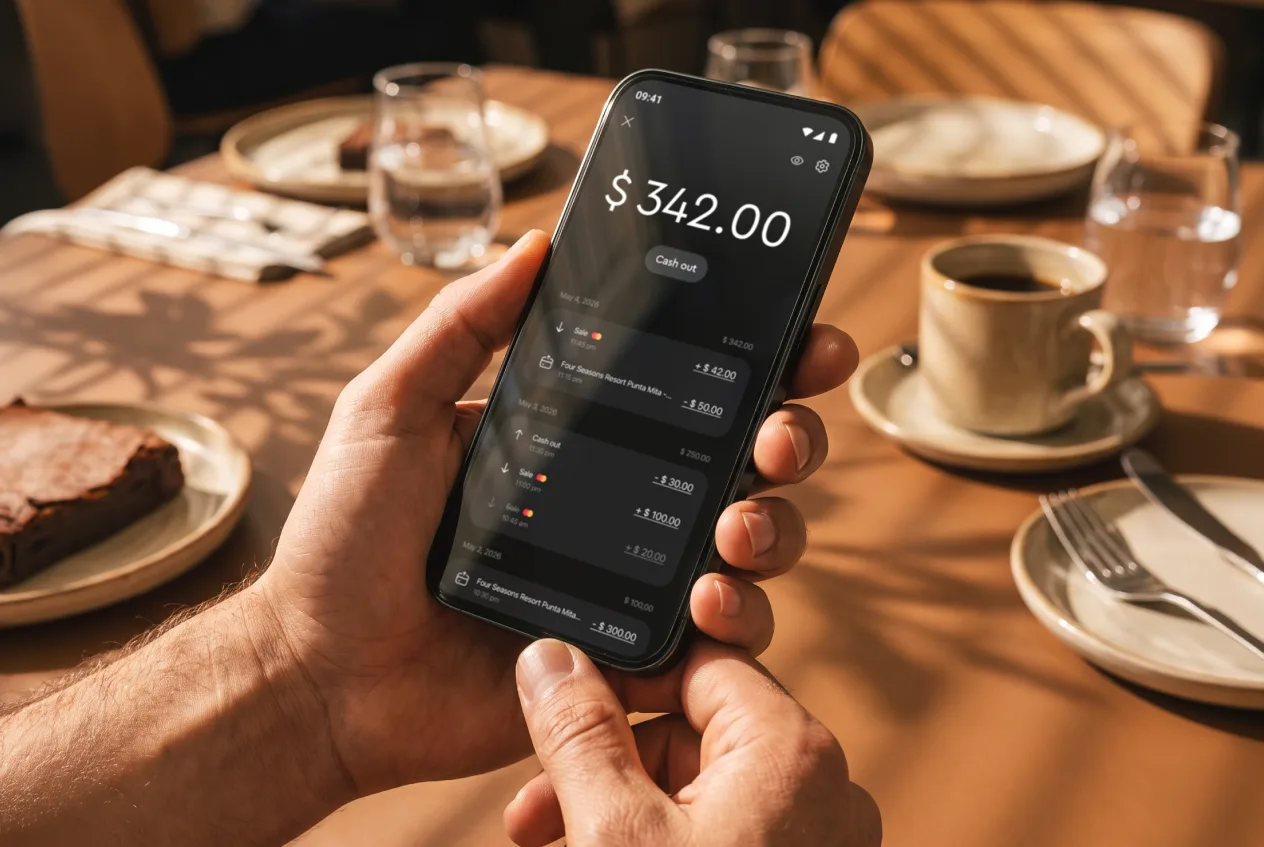
- Access Funds: Your money is available right on your JIM card as soon as the sale is done. There is no wait for bank transfers.
Here are 4 immediate steps to take:
- Compare the transaction fees of two mobile payment solutions.
- Download the JIM app to explore its interface.
- Calculate your potential payment fees for a $500 sales day using a 1.99% rate.
- Confirm your top payment choice has an offline mode for spotty internet.
Step 6: Fund your business and manage finances
Most new kettle corn vendors self-fund with personal savings. If you need outside capital, look beyond traditional bank loans, which are often difficult for new food startups to secure. Your best bet will be smaller, more accessible loan programs.
Explore small business loans
The SBA Microloan program is a strong fit. It offers loans up to $50,000 through nonprofit lenders. Expect interest rates between 8% and 13%. You will need a good business plan and a fair credit score to qualify for these funds.
A business line of credit is another option for short-term needs. You can use it to purchase ingredients in bulk or cover unexpected booth fees. This gives you flexibility without the commitment of a fixed loan.
Calculate your working capital
You need cash for your first six months of operation. Budget at least $3,000 to $5,000 for ongoing costs like booth fees, ingredient restocks, and fuel. Many new owners focus only on equipment costs and find themselves short on cash for day-to-day operations.
You can also look for grants, though they are competitive. Check for local programs through your city’s chamber of commerce or national ones like the Amber Grant for Women.
Here are 4 immediate steps to take:
- Research the SBA Microloan program requirements on the official SBA website.
- Create a 6-month budget that projects all your operational expenses.
- Contact your bank to ask about qualifying for a business line of credit.
- Search for small business grants offered by your city or state.
Step 7: Hire your team and run operations
You can likely run the booth yourself at first. But as you get busier, you will need help to keep lines short and customers happy. Long lines often mean lost sales, so having a plan for staffing is a smart move from the start.
Define roles and responsibilities
Your first hire will likely be a Booth Assistant. This person handles payments, bags popcorn, and interacts with customers while you manage the kettle. Plan to pay a competitive hourly wage, typically between $15 and $20, based on your local market.
Some owners make the mistake of hiring friends without clear expectations. It is better to outline duties and pay upfront, even with someone you know well. This prevents misunderstandings later. Also, ensure any employee has their own Food Handler's Permit.
Streamline your daily operations
Once you consistently generate over $150 in sales per hour, it is time to hire. A single operator can get overwhelmed above that level. For scheduling one or two people, a shared Google Calendar is enough. If your team grows, you might consider a service like When I Work.
Here are 4 immediate steps to take:
- Write a one-page job description for a Booth Assistant.
- Check your state's requirements for employee Food Handler's Permits.
- Determine the hourly sales volume that would require you to hire a helper.
- Set up a shared Google Calendar for future staff scheduling.
Step 8: Market your business and attract customers
Your booth is your most powerful marketing asset. The smell of fresh kettle corn does half the work, but your branding closes the deal. Use a large, easy-to-read banner with your business name and a simple menu. Make it memorable.
Build an online presence
Create a Facebook and Instagram page to show off your product. Post high-quality photos of your setup and announce your weekly schedule. Many vendors forget this simple step and lose out on repeat customers who do not know where to find them.
Engage with your local community online. You can follow event pages and other food vendors. A simple comment or share on their posts can significantly increase your visibility to potential customers in the area.
Create loyalty and partnerships
Encourage repeat business with a simple punch card, like "buy five bags, get one free." You might also partner with other local businesses. For example, you could set up your booth outside a brewery on a Saturday afternoon for mutual benefit.
Here are 4 immediate steps to take:
- Design a banner with your logo in a readable font.
- Create a Facebook page and post your next event location.
- Print 100 simple "buy 5, get 1 free" punch cards.
- Email a local brewery or coffee shop to propose a pop-up event.
Step 9: Price your product and maximize profit
Calculate your cost per bag
First, figure out your cost of goods sold (COGS). A 50-pound bag of kernels, which costs about $40, yields roughly 150 small bags of popcorn. Add the cost of sugar, oil, and the physical bag. Your total cost per small bag should land between $0.60 and $0.85.
Set your prices and profit margin
Kettle corn has an excellent profit margin, often over 800%. A bag that costs you $0.75 to make can easily sell for $6 to $8. This high markup is standard in the industry. It is what you need to cover booth fees, insurance, fuel, and your own time.
Some new owners make the mistake of underpricing. They only look at ingredient costs and forget about the $200 event fee or the hours spent on their feet. Price with confidence to ensure your business is profitable from day one and not just an expensive hobby.
Use a three-tier pricing model to encourage larger sales. You might offer a small bag for $6, a medium for $8, and a large for $10. The small extra cost for you to make a larger bag is minimal, but the price jump significantly boosts your profit per transaction.
Here are 4 immediate steps to take:
- Calculate the exact cost to produce one small bag of your kettle corn.
- Visit a local market and note the prices of at least two other snack vendors.
- Create a three-tier price list (Small, Medium, Large) for your menu.
- Add up your daily overhead, like booth fees and fuel, to set a minimum sales target.
Step 10: Maintain quality and scale your operations
Consistency is your best marketing asset. Create a precise recipe card with exact measurements for sugar, salt, and oil, and follow it for every batch. Many new owners start to eyeball ingredients during a rush, which leads to inconsistent flavor and disappoints repeat customers.
Your main quality metric is the ratio of popped to unpopped kernels. Aim for less than 5% unpopped kernels in each bag. Also, do a quick visual check for an even coating of sugar and salt before you bag the popcorn. This small step maintains a premium product.
Know when to grow
Once you consistently generate over $150 in sales per hour, it is time to hire a helper. At that volume, one person cannot manage the kettle, take payments, and bag popcorn efficiently. You will start to lose sales because of long lines.
When you regularly sell out hours before an event ends, consider buying a second 80-quart kettle or upgrading to a 160-quart model. For managing a growing team, a scheduling app like When I Work is more effective than a simple shared calendar.
Here are 4 immediate steps to take:
- Create a laminated recipe card with exact measurements for your booth.
- Track your unpopped kernels for one event to calculate your waste percentage.
- Set a revenue goal, like $2,000 per weekend, to trigger your research into a larger kettle.
- Explore a scheduling app like When I Work to understand its features for future team growth.
Your kettle corn journey starts now
Starting a kettle corn business is more than just a recipe. Your success depends on location and speed. Remember, the smell draws people in, but a fast, friendly experience makes them return. You have the steps, now go make it happen.
To keep that experience fast, a simple payment process helps. JIM turns your phone into a card reader, so you can accept payments for a flat 1.99% fee without extra hardware. It keeps your line moving and customers happy. Download JIM to get set up.