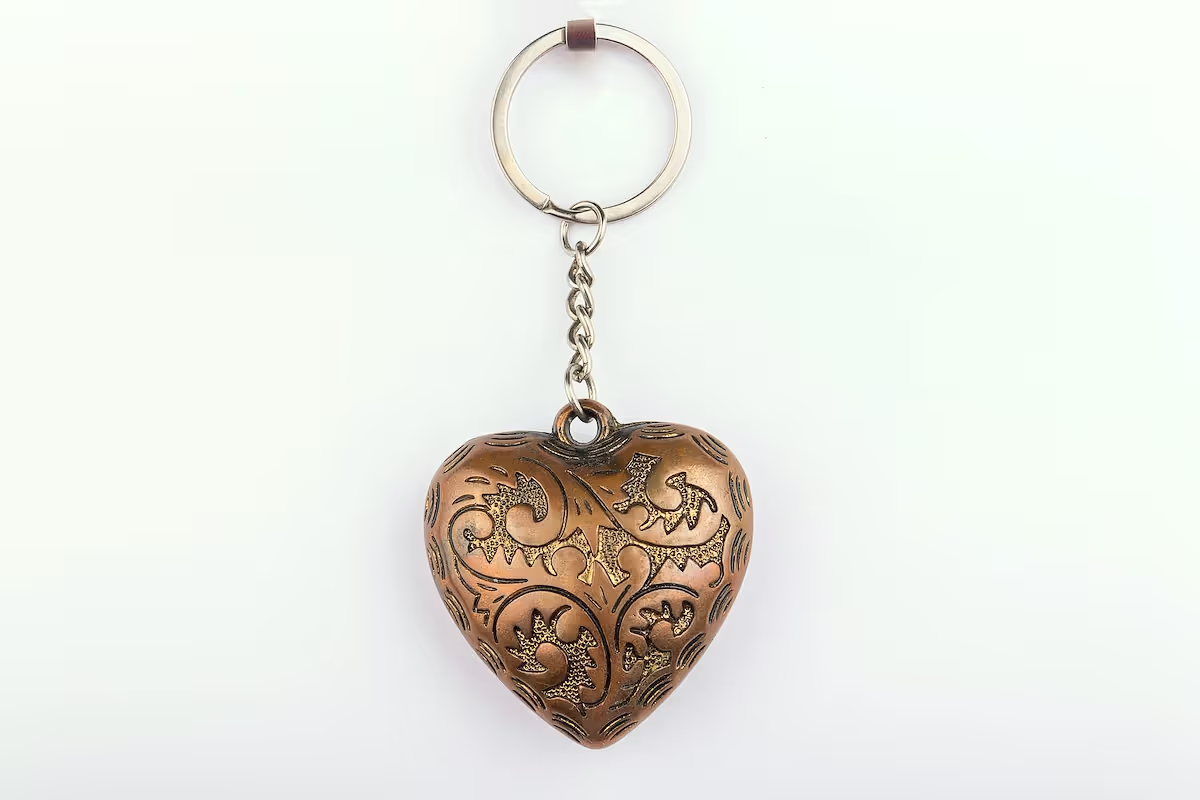
Starting a keychain business is a rewarding venture that blends creative skill with business acumen. The low startup costs and consistent demand from personal buyers to corporate clients make it an accessible market, though this doesn't mean success comes easy.
This guide will take you through the practical steps to validate your business concept, acquire equipment and inventory, build supplier relationships, and obtain necessary licenses to help you launch a successful keychain business in the U.S.
Step 1: Plan your business and validate your idea
Start by exploring what is already selling. Spend a few hours on platforms like Etsy, Amazon Handmade, and Pinterest. Search for terms like "custom keychain" or "acrylic keychain" to see current trends, popular aesthetics, and pricing standards.
A frequent misstep for new sellers is to only copy top-selling designs. Instead, look for underserved niches. You could focus on keychains for specific hobbies, professions, or fandoms. This is where you can stand out and build a loyal customer base.
To dig deeper into competitors, you can use a platform-specific resource. For Etsy sellers, a service like eRank provides data on popular listings, keyword search volume, and competitor sales estimates. This information helps you find gaps in the market.
Estimate your startup costs
With your research done, it is time to budget. Your initial investment will vary based on the type of keychains you make. For example, a quality hobby laser cutter like an xTool M1 can range from $1,000 to $1,500.
Speaking of costs, here is a typical breakdown for a small-scale launch:
- Equipment (laser/vinyl cutter, resin tools): $500 - $2,000
- Initial Materials (acrylic, wood, blanks, hardware): $200 - $500
- Business Registration & Licenses: $50 - $500 (varies by state)
Your total startup fund should realistically be between $750 and $3,000. A plan for these initial investments helps set a solid foundation for your business without early financial surprises.
Here are 3 immediate steps to take:
- Research 20 keychain listings on Etsy to identify popular styles and materials.
- Use a resource like eRank to analyze three direct competitors' pricing and keywords.
- Create a startup budget spreadsheet with estimated costs for equipment, supplies, and legal fees.
Step 2: Establish your legal structure and get licensed
First, decide on a business structure. A Sole Proprietorship is the simplest, but an LLC (Limited Liability Company) offers protection by separating your personal assets from business debts. Many new owners find this separation provides peace of mind as they grow.
To form an LLC, you file Articles of Organization with your state's Secretary of State. Costs range from $50 to $500. An LLC also allows for pass-through taxation, so business profits are taxed on your personal return, which simplifies tax season.
Federal, state, and local requirements
With your business structure in mind, get your federal tax ID. You will need an Employer Identification Number (EIN) from the IRS if you form an LLC. You can apply for an EIN online for free, and it only takes a few minutes to receive.
Next, handle state and local permits. You will need a Seller's Permit from your state's Department of Revenue to collect sales tax. Also, check with your city or county clerk for a general business license, which can cost between $50 and $150 annually.
Here are 4 immediate steps to take:
- Decide if a Sole Proprietorship or an LLC is right for your business.
- Apply for a free Employer Identification Number (EIN) on the IRS website.
- Research your state's requirements for a Seller's Permit.
- Contact your local city clerk's office to ask about a home-based business license.
Step 3: Protect your business with insurance
Start with General Liability Insurance. This policy protects you from third-party claims like property damage or injury. A standard policy provides $1 million in coverage, which is a solid baseline for a new business.
For a keychain business, Product Liability coverage is a non-negotiable part of your policy. It covers you if a keychain breaks and a small part becomes a choking hazard, which is a specific risk with this type of product.
Annual premiums for general liability often range from $300 to $700. Your final cost will depend on your sales volume and the materials you use. Some sellers make the mistake of assuming their homeowner's policy covers their business, but it almost never does.
You will likely need a separate home-based business policy or a rider on your existing homeowner's insurance. As you expand, you might need other coverage. Workers' Compensation is mandatory if you hire employees, and Commercial Auto is for any vehicle used for business.
When you search for quotes, look at providers that work with crafters and small businesses. Companies like Hiscox, Next Insurance, and The Hartford are good places to begin your search.
Here are 4 immediate steps to take:
- Request a quote for a $1 million General Liability policy.
- Confirm that any policy you consider includes Product Liability coverage.
- Ask your current homeowner's insurance agent about a home-based business rider.
- Compare quotes from two providers that specialize in small business insurance.
Step 4: Set up your workspace and buy equipment
Most keychain businesses begin at home. You can use a spare room or a corner of the garage. A space of 50-100 square feet is usually sufficient. Check your local zoning ordinances for any restrictions on home-based businesses, which you can find on your city's website.
Gather your equipment and supplies
Your equipment choice depends on your keychain type. A laser cutter like a Glowforge Aura ($1,200) or an xTool M1 ($1,000) is great for acrylic and wood. For vinyl decals on blanks, a Cricut Maker 3 ($400) is a popular option.
Many new makers overspend on equipment at the start. A mid-range machine is more than capable for your first year. You can upgrade later as your sales grow. This approach protects your initial capital for materials and marketing.
With your main machine selected, you can source materials. Look for suppliers like Craft Chameleon or Cerulean Tides for acrylic blanks and hardware. Some have minimum orders around $50, but many allow you to purchase single items to test quality before you commit to a bulk order.
Here are 4 immediate steps to take:
- Measure a 50-100 sq. ft. area in your home for your workspace.
- Compare the specs of two entry-level laser cutters or vinyl cutters.
- Browse two acrylic blank suppliers to check their product selection.
- Create a supply list with costs for 100 units to calculate your cost per item.
Step 5: Set up your finances and payment processing
Choose your payment processor
If you sell on a platform like Etsy, payment processing is already integrated. For in-person events like craft fairs, you will need a way to accept card payments. This is where a mobile payment solution becomes valuable.
For custom orders, it is standard practice to require a 50% non-refundable deposit. This protects you by covering the cost of materials before you begin work. The final payment is then due upon completion.
A frequent misstep is to overlook transaction fees, which can add up. Look for a payment solution with a low, flat rate per transaction and no monthly fees. This keeps your costs predictable as you grow.
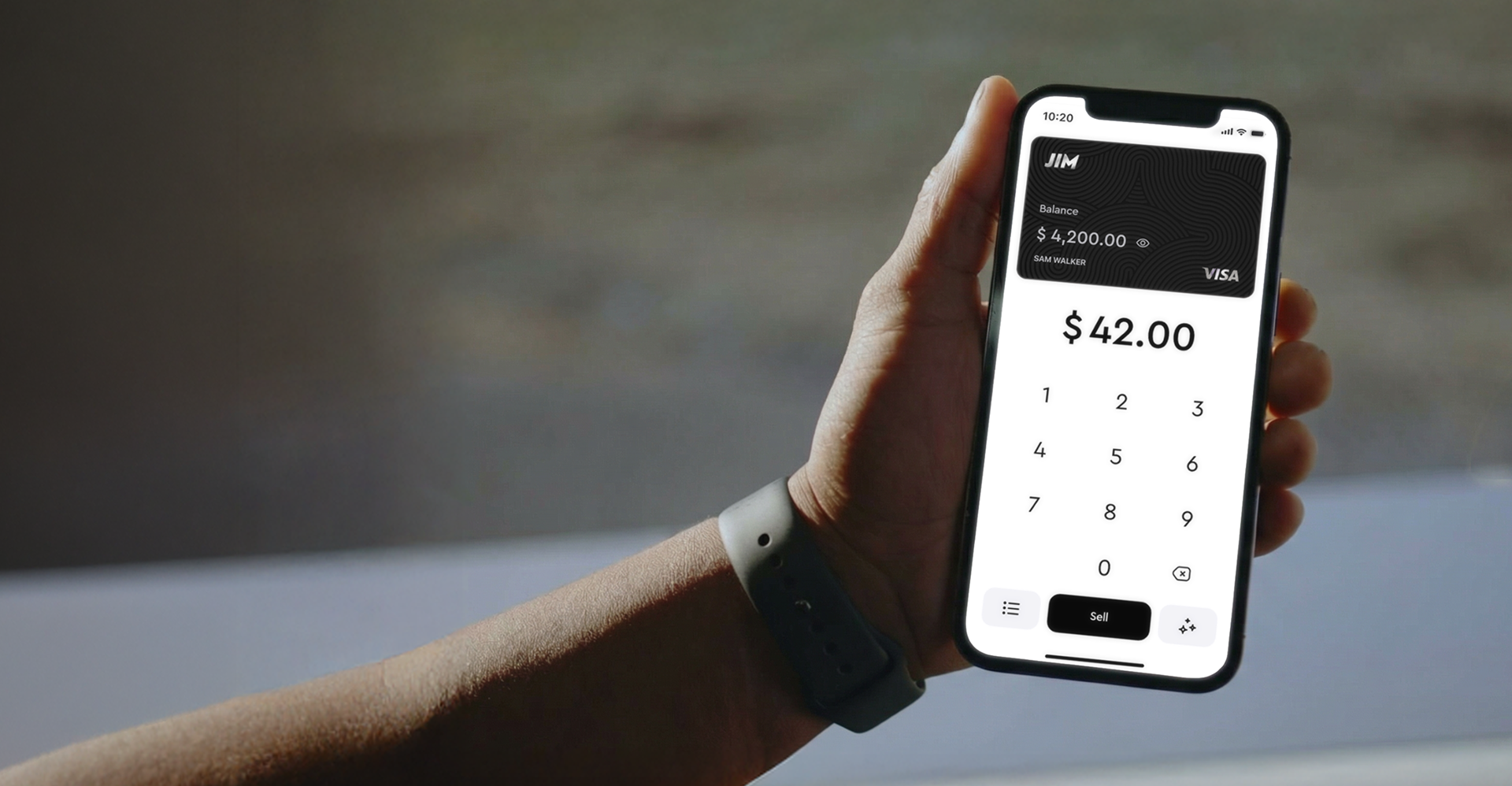
For keychain businesses that need to accept payments on-site or on-the-go, JIM offers a streamlined solution. With JIM, you can accept debit, credit and digital wallets directly through your smartphone - just tap and done.
At just 1.99% per transaction with no hidden costs or extra hardware needed, it's particularly useful for quick sales at a busy market stall. Other payment solutions often have rates between 2.6% and 3.5%, so the savings are significant.
- Get Started: Download the JIM app for iOS.
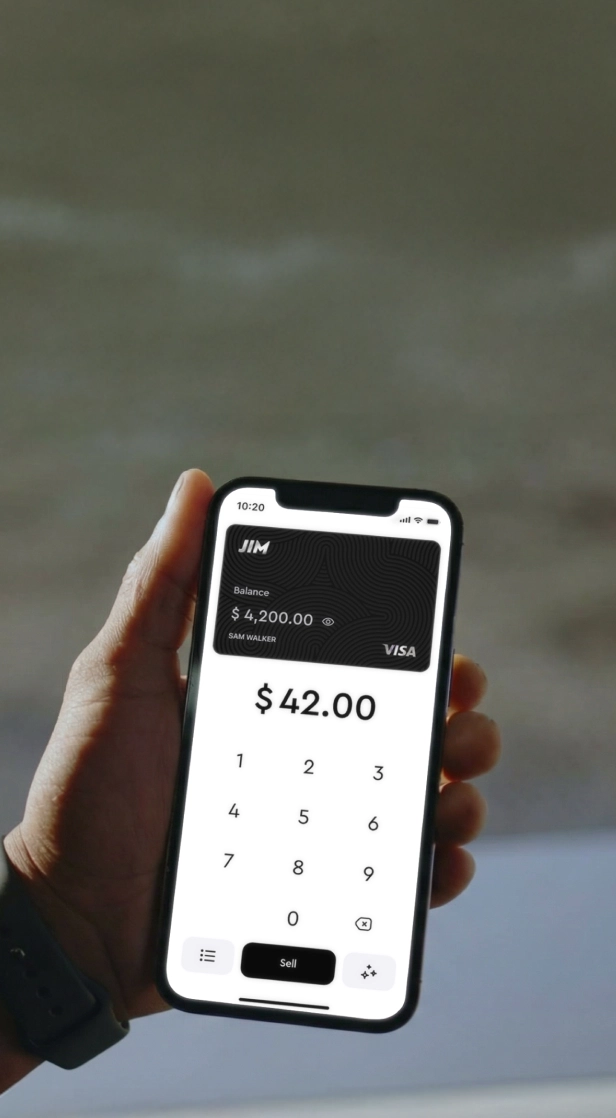
- Make a Sale: Type the sales amount, hit sell, and ask your customer to tap their card or device on your phone.
- Access Funds: Your money is available right on your JIM card as soon as the sale is done - no waiting for bank transfers.
Here are 3 immediate steps to take:
- Decide on your deposit policy for custom keychain orders.
- Compare the transaction fees for your primary online sales platform.
- Download the JIM app to prepare for in-person sales.
Step 6: Fund your business and manage finances
Secure your funding
Most keychain businesses are self-funded, but you have options if you need capital. The SBA Microloan program offers loans from $500 to $50,000 through nonprofit lenders. These loans are designed for new businesses and often have interest rates between 6% and 9%.
You might also look into grants. The Amber Grant for Women awards $10,000 monthly to a female entrepreneur. Also, check with your local arts council, as many offer small grants to crafters and artisans. These do not require repayment, which is a huge plus.
Calculate your working capital
Your working capital is the cash you need for daily operations. For the first six months, plan for $1,500 to $3,000. This covers ongoing material orders, shipping supplies, platform fees, and a small marketing budget to get your first sales.
A frequent oversight is forgetting costs beyond the keychains themselves. Budget for shipping mailers, label printing, and even the cost of failed designs or material tests. It is a good idea to add a 15-20% buffer to your initial material budget for these unexpected expenses.
Here are 3 immediate steps to take:
- Research one SBA microloan lender in your state.
- Search the Amber Grant website to see if you qualify.
- Create a 6-month budget that includes materials, fees, and shipping supplies.
Step 7: Staff your business and set up operations
Hiring your first team member
In the beginning, you will likely handle everything yourself. You might consider your first hire once you consistently process over 50 orders a week or spend more than 15 hours weekly on packing and shipping alone. This frees you up for design and marketing.
Your first hire is often a part-time Production Assistant. Their duties could include keychain assembly, order packing, and supply management. Expect to pay between $12 and $18 per hour, based on your state's minimum wage and the applicant's experience.
A mistake some new owners make is to misclassify a helper as an independent contractor to avoid payroll taxes. This can create legal issues down the road. It is often better to classify them as a part-time W-2 employee from the start.
Training and management
No specific certifications are needed for this role. You will want to provide thorough training on your quality standards, however. A poorly made keychain can damage your brand, so it helps to document your process with photos and checklists for consistency.
Once you have help, you can use a free project management app like Trello to assign tasks. For scheduling, a simple shared calendar works well initially. You do not need complex software for a small team of one or two people.
Here are 4 immediate steps to take:
- Draft a job description for a part-time Production Assistant.
- Research the difference between a 1099 contractor and a W-2 employee in your state.
- Create a simple training checklist for assembling and packing one of your products.
- Set up a free Trello board to outline your production workflow.
Step 8: Market your business and acquire customers
Optimize your online presence
Start with the platform where you sell. On Etsy, this means strong Search Engine Optimization (SEO). Use specific keywords like "personalized acrylic keychain" or "leather photo keychain" in your titles and tags. Good SEO is your most powerful free marketing strategy.
A frequent misstep is to use broad tags like "gift" or "keychain," which gets you lost in search results. Instead, think like your customer. What specific phrase would they search for to find your exact product? That is your keyword.
Use social media to build a brand
Visual platforms are your best friend. Focus your efforts on Instagram, TikTok, and Pinterest. Post high-quality photos of your keychains in good lighting. Short videos that show your creation process or how you pack an order perform very well on Reels and TikTok.
A good goal is to post 3-5 times per week. A typical conversion rate from social media traffic is around 1%. This means for every 100 visitors you send to your shop, you can expect about one sale. Consistency is more important than frequency.
Explore in-person sales
Do not underestimate local craft fairs and markets. These events put your products directly into customers' hands. A well-designed booth with clear pricing and good lighting can lead to dozens of sales in a single day. It is also a great way to get direct feedback.
Here are 4 immediate steps to take:
- Research 15 long-tail keywords for one of your keychain listings.
- Outline three video ideas for TikTok or Instagram Reels.
- Find one local craft fair and review its vendor application requirements.
- Set up a Pinterest board dedicated to your keychain aesthetic and pin 10 inspirational images.
Step 9: Price your products for profit
Start with a cost-plus pricing model. Calculate your cost of goods sold (COGS) for each keychain, which includes the blank, hardware, and any vinyl or resin. This gives you a baseline number to work from before you add your time and profit.
A solid markup for handmade goods is between 3x and 4x your COGS. If your materials cost $2.50 per keychain, your retail price should be between $7.50 and $10. This ensures you achieve a healthy profit margin of 65-75% after costs.
Set your price against the market
With your cost-based price in mind, look at what your competitors charge on Etsy or Amazon Handmade. You do not need to be the cheapest. A frequent misstep is to underprice your work to attract initial sales, which can signal lower quality and make your business unsustainable.
You might also consider a tiered pricing strategy. This allows you to capture different customer budgets. For example, you could offer a simple engraved keychain for $12, a more detailed one with multiple colors for $18, and a fully custom photo keychain for $25.
Here are 4 immediate steps to take:
- Calculate the cost of materials for one of your top-selling keychain designs.
- Apply a 3x markup to that cost to find your initial retail price.
- Analyze the prices of 10 similar keychains on your main sales platform.
- Outline a simple tiered pricing model for a basic, mid-range, and complex design.
Step 10: Maintain quality and scale your operations
Establish your quality standards
As orders increase, a formal quality check is your best defense against negative reviews. Create a simple checklist. For example, every keychain must have a perfectly centered design, no scratches on the surface, and hardware that is securely attached. This keeps your standards high.
You should track your defect rate. Aim for less than 2%, which means no more than two flawed items for every 100 you make. Many new sellers see their quality dip during busy periods because they rush. A checklist helps you stay consistent under pressure.
Know when to scale
Growth should be deliberate. A good signal to scale is when you consistently hit a revenue target, like $2,000 per month, or when production consumes over 20 hours of your week. At that point, you can reinvest profits into the business.
A good practice is to reinvest 20-30% of your profits into bulk materials or a machine upgrade. Once you manage over 50 different product variations (SKUs), a spreadsheet can become cumbersome. You might consider inventory software like Craftybase to track materials and costs accurately.
Here are 4 immediate steps to take:
- Create a quality control checklist with at least five specific criteria for your keychains.
- Track your defect rate for one week to establish a baseline.
- Set a monthly revenue goal that will trigger your first major equipment upgrade.
- Compare the features of an inventory management tool like Craftybase with your current spreadsheet.
You now have a clear path from a creative spark to a finished product. Remember that success in the keychain world often hinges on finding your specific niche. With a solid plan in place, you are ready to begin your venture.
And when you make that first sale, getting paid should be simple. JIM turns your smartphone into a card reader, so you can accept payments anywhere with a flat 1.99% fee and no extra hardware. Download JIM to be ready from day one.
.avif)