How to start a lounge business: from idea to opening night
See article summary
- A lounge is a seating-focused venue between a bar and a nightclub, built on ambiance and table service.
- Expect to spend $100,000 to over $500,000 and 9 to 18 months to open.
- Form an LLC, get a free EIN from the IRS, and apply early for a state liquor license.
- Carry general liability, liquor liability, property, and workers' compensation insurance.
- An SBA 7(a) loan can cover up to $5 million, plus six months of working capital.
A lounge is a seating-focused drinking and socializing venue that sits between a neighborhood bar and a nightclub. Unlike a bar, which prioritizes drink volume and quick table turnover, a lounge trades on ambiance, reservations, and table service. Unlike a nightclub, it rarely builds its night around a dance floor or a DJ headliner. That distinction drives every decision in this guide, from your floor plan to your pour cost.
Opening one in the U.S. typically takes 9 to 18 months and costs between $100,000 and over $500,000, with the liquor license and build-out as the two largest variables. The steps below cover concept validation, legal structure, insurance, location, payments, funding, staffing, marketing, pricing, and quality control.
How do you validate a lounge concept?
Market and competitor research
Start with on-the-ground reconnaissance. Visit at least five potential competitors on different nights of the week. Observe their crowd, pricing, music, and overall vibe. This direct experience gives you insights that data alone cannot.
For broader market analysis, review reports from the National Restaurant Association. Use local business databases and social media to identify every establishment that could pull your target customer. One common error is to define competition too narrowly.
Your competition is not just other lounges. It includes any place people go for a drink and conversation, from upscale hotel bars to craft breweries. Understand what makes each one successful or where they fall short. If you are also weighing a higher-volume venue model, the nightclub business guide covers how that concept differs in staffing, sound, and licensing.
Estimate your startup costs
You need a clear financial picture before you sign a lease. Startup costs for a lounge typically run from $100,000 to over $500,000, depending on your city and the scale of your vision. A detailed budget helps you build a solid funding strategy.
Here is a sample breakdown of initial expenses:
- Lease & Renovation: $50,000 - $250,000+
- Licenses & Permits: $5,000 - $50,000 (liquor licenses are a major factor, and can run far higher in quota states)
- Initial Inventory: $10,000 - $25,000
- Furniture & Decor: $20,000 - $75,000
- POS & Kitchen Equipment: $15,000 - $50,000
Take the liquor license line item seriously. In California, a non-quota beer and wine license application starts at $1,135, while a quota-limited Type 47 full liquor license carries a $19,840 non-refundable application fee, and secondary-market purchases in Los Angeles or San Francisco run from $300,000 to over $500,000. Source: California ABC License Fees. Your state's ABC board publishes its own fee schedule.
Before you move on:
- Visit three direct competitors and document their pricing, peak hours, and customer type.
- Draft a preliminary budget with estimated costs for your specific concept and location.
- Pull your state's liquor license fee schedule from its ABC board website.
What licenses and legal structure does a lounge need?
Form a Limited Liability Company (LLC). This structure protects your personal assets from business debts. Profits pass through to your personal taxes, which avoids the double taxation you would find with a C Corporation. Operating as a sole proprietorship offers no liability protection and is the wrong choice for a business that serves alcohol.
Federal, state, and local requirements
First, get your Employer Identification Number (EIN) from the IRS. It is free, the online application takes minutes, and you need it to hire staff and file taxes. Source: IRS Employer Identification Number.
The main hurdle is the liquor license, which is handled by your state's Alcohol Beverage Control (ABC) board. The process can take 6 to 12 months, and costs range from a few thousand dollars for a beer-and-wine license to over $400,000 for a quota-based full liquor license bought on the secondary market in a major metro. Start this application as soon as you have a potential address.
You will also need several local permits:
- Business License: Issued by your city or county clerk's office.
- Certificate of Occupancy: Confirms your building is safe and up to code.
- Health Permit: Required by the local health department if you serve food, even small bites.
Your next moves:
- File LLC formation documents with your Secretary of State.
- Apply for a free EIN on the IRS website.
- Pull your state's specific liquor license types and fees from its ABC board website.
- Contact your city planning department about the Certificate of Occupancy process.
How much insurance does a lounge need?
With your legal structure in place, manage risk next. Insurance is your financial backstop against accidents and lawsuits. You will need several policies to operate safely and meet legal requirements.
Key insurance policies
Here are the main types of coverage you should secure for your lounge. Premium ranges below reflect broker averages for bars and hospitality venues, not official rate filings, so treat them as a planning baseline and get quotes from at least two specialists.
- General Liability: This covers common accidents like a customer slip and fall. A standard policy provides $1 million per occurrence. Insureon reports bars pay an average of about $2,621 per year for general liability, though your cost rises with capacity and service hours.
- Liquor Liability: This protects you from claims arising from actions of intoxicated patrons. Carry at least $1 million in coverage. Insureon's bar average runs about $115 per month, but high-volume lounges often pay well above that.
- Property Insurance: This covers damage to your building, equipment, and inventory from events like fire or theft.
- Workers' Compensation: If you have employees, this coverage is required in nearly every state. Texas is the one exception, where private employers can opt out, though opting out exposes you to civil liability. Source: U.S. Department of Labor Workers' Compensation.
Underestimating liquor liability is the most common gap in a lounge policy. The potential for claims is high in this business, so full coverage is a must. Get quotes from providers who know the hospitality space, such as The Hartford, Insureon, or the Food Liability Insurance Program (FLIP).
- Contact an insurance broker who specializes in bars and restaurants.
- Request quotes for a $1 million liquor liability policy.
- Review your lease agreement for its specific insurance requirements.
How do you choose a location and outfit the space?
Find the right space
Look for a space between 1,500 and 4,000 square feet. It needs commercial zoning, but many cities also require a special permit for bars and lounges. Confirm this with your local planning department before you sign anything. Signing a lease without that approval is a costly and avoidable error.
When you negotiate the lease, push for a Tenant Improvement (TI) allowance to help fund your build-out. You can also try to limit any personal guarantee to the first few years. This protects your personal assets down the line.
Outfit your lounge
Once you have a location, it is time to get your equipment. The costs add up, so budget for each major category. You can find both new and used items from suppliers like WebstaurantStore or at local restaurant auctions.
POS System: $1,200 - $7,500
Commercial Ice Machine: $2,000 - $5,000
Glassware & Barware: $3,000 - $10,000
Sound System: $5,000 - $20,000
Verify the zoning requirements for a potential address with your city's planning department.
Ask a landlord for a sample lease to review with a lawyer.
Create a full equipment list and price it out on WebstaurantStore.
Research upcoming local restaurant equipment auctions.
How should a lounge handle payments and operations?
Your lounge will need to accept credit, debit, and digital wallets. When you select a payment processor, look closely at the transaction fees and contract terms. Getting locked into expensive, long-term contracts with hidden fees is a common trap that eats into profits.
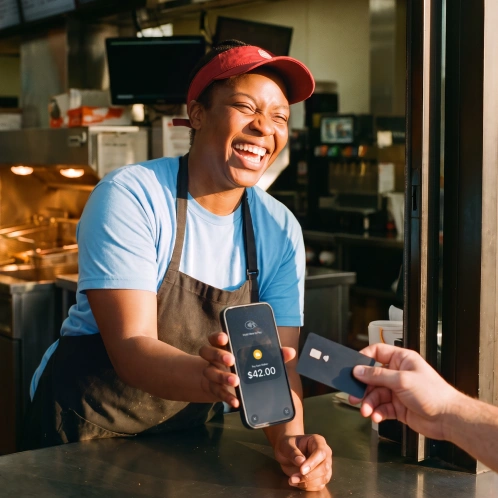
For lounges that need to accept payments on-site or on-the-go, JIM offers a streamlined solution. With JIM, you can accept debit, credit, and digital wallets directly through your smartphone, with no extra hardware. The rate is 1.99% per Tap to Pay transaction with no hidden costs. For comparison, many traditional processors charge 2.5% to 3.5% plus monthly fees, so JIM is particularly useful for taking deposits for private events or letting servers close out tabs right at the table. Your money is available instantly on your JIM Card.
If you want a broader look at the options, this breakdown of in-person payment options compares Tap to Pay, terminals, and mobile readers. For a fuller view of how flat-rate processing stacks up against other models, see the guide to payment methods for small businesses.
Getting started is simple:
Get Started: Download the JIM app for iOS.
Make a Sale: Type the sales amount, hit sell, and ask your customer to tap their card or device on your phone.
Access Funds: Your money is available right on your JIM card as soon as the sale is done, with no waiting for bank transfers.
Compare the transaction fees of at least two payment processors.
Download the JIM app to see how it works on your phone.
Decide if you need mobile payment options for table-side service or event deposits.
How much funding does a lounge need?
Find the right funding source
The Small Business Administration (SBA) 7(a) loan is a popular choice for lounges. Lenders favor these because the SBA guarantees a portion of the loan. The maximum 7(a) loan amount is $5 million, and the SBA caps variable interest rates at the base rate (Prime) plus 3.0% for loans over $350,000, plus 4.5% for loans between $250,001 and $350,000, and plus 6.0% for loans between $50,001 and $250,000. Source: SBA 7(a) loan terms.
To qualify, you need a strong business plan and solid personal credit. The SBA does not publish a universal minimum credit score, but lenders that use credit scoring models generally look for a personal score in the upper-600s. A frequent misstep is to approach lenders without a detailed financial forecast. They want to see you have thought through every cost, from rent to payroll.
Plan for your working capital
Your loan should cover more than just startup costs. You need enough working capital to operate for the first six months before revenue stabilizes. This buffer covers rent, utilities, payroll, and inventory replenishment. A safe figure is often between $60,000 and $150,000.
- Research the SBA 7(a) loan requirements on the official SBA website.
- Calculate your estimated operating expenses for the first six months to determine your working capital needs.
- Contact a loan officer at a bank that specializes in SBA-backed loans.
- Open a dedicated business bank account to keep your finances separate.
How do you hire and train a lounge team?
Assemble your core staff
Your team defines the guest experience. Key roles include bartenders, servers, and barbacks. Bartenders can expect around $15 per hour plus tips, while a salaried manager typically earns between $50,000 and $70,000 annually. Servers and barbacks often start near minimum wage but rely on tips.
Understaffing to cut costs leads to slow service and lost customers. Staffing ratios depend on your concept. A seated cocktail lounge tends to run one bartender and one server for every 25 to 30 guests during peak hours. A higher-volume nightclub-style floor may need closer to one bartender per 15 guests and dedicated cocktail servers. Match the ratio to your service model, not a single universal number.
Train for service and safety
With your team hired, training is next. Every employee serving alcohol should complete a responsible beverage service program like TIPS (Training for Intervention Procedures). This training is vital for liability and may even help lower your insurance costs. If you serve food, they will also need a food handler's permit.
Manage schedules and labor costs
Efficient operations depend on smart scheduling. Use software like 7shifts or Homebase to build schedules and let staff manage their availability. As you plan, aim to keep your total labor costs between 25% and 35% of your gross revenue to maintain healthy profit margins.
- Draft job descriptions for each role with clear responsibilities and pay ranges.
- Research your state's specific requirements for alcohol server certifications.
- Create a sample weekly schedule to estimate your initial payroll expenses.
- Calculate your target labor cost percentage based on your revenue projections.
How do you market a lounge before and after launch?
Build your pre-launch buzz
Your marketing should begin 2 to 3 months before you open. Use Instagram to establish a visual identity. Post high-quality photos of your decor, signature cocktails, and the build-out process. This helps you build a following before day one.
Collaborate with local businesses or influencers for a "soft opening" event. This generates early reviews and social media content. Focusing only on the final product is a missed opportunity. Show the journey. People connect with the story of how your lounge came to be.
Grand opening and ongoing promotion
For your grand opening, create an event that generates press. Offer a drink special or partner with a local DJ. After you launch, the work continues. Use an email list to announce weekly events and specials. A good open rate in this industry is 20 to 25%.
You can also run themed nights like live jazz or trivia to draw crowds on slower weekdays. A simple loyalty program, like a punch card for regulars, can also improve repeat visits. Keep your initial customer acquisition cost (CAC) low with organic social media.
- Create a three-month content calendar for your Instagram account.
- List five local influencers or businesses to invite to a soft opening.
- Set up an email capture form on your website or social media page.
- Draft a schedule for your first month of themed nights.
How do you price a lounge menu for profit?
Set your drink prices
Your drink prices directly drive revenue. Pour cost, or liquor cost percentage, is the share of a drink's menu price that its ingredients represent. A healthy pour cost for a lounge runs between 18% and 22%. That means the ingredients in a drink should represent about one-fifth of its menu price, a standard industry benchmark.
To calculate a price, divide the ingredient cost by your target pour cost. If a cocktail's ingredients cost $2.50 and you aim for a 20% pour cost, the menu price would be $12.50. This simple formula ensures profitability on every drink you serve.
Factor in food and competition
If you offer food, your target food cost percentage will be higher, typically between 28% and 35%. Apply the same cost-plus formula. Many new owners just copy competitor prices, but this is a mistake if their costs are lower. Always know your numbers first.
Once you have your cost-based prices, compare them to your competitors. If your $14 signature cocktail is up against their $11 version, make sure your quality, ambiance, and service justify the difference. You might also use psychological pricing, like prices that end in .95.
- Calculate the pour cost for your top five signature cocktails.
- Analyze the menus of three direct competitors to benchmark your prices.
- Set a target food cost percentage for your small bites menu.
- Decide if you will use whole-dollar pricing or prices that end in .95.
How do you maintain quality and scale a lounge?
Establish your quality standards
Once you are open, consistency becomes your main job. Create a detailed recipe book for every cocktail. This ensures a customer gets the same great drink no matter who is behind the bar. Also, define service standards, like greeting guests within 60 seconds.
Track your pour cost variance weekly. If your target is 20% but you hit 24%, you are losing money to over-pouring or theft. Monitor online reviews and aim for an average rating of 4.5 stars or higher on platforms like Yelp or Google.
Know when to scale
Growth should be data-driven. A good benchmark for expansion is when you operate at over 85% capacity on your peak nights for three consecutive months. This is a sign you might need a larger space. Many owners fail to scale because they do not delegate.
If you spend all your time managing shifts instead of planning growth, you have become a bottleneck. This is your signal to hire a dedicated manager. To support this growth, you can use inventory software like BevSpot or Craftable to manage stock efficiently.
- Create a recipe book with exact measurements for every drink.
- Track your weekly pour cost variance against your 18-22% target.
- Define the revenue or capacity trigger for hiring a full-time manager.
- Research inventory management systems like BevSpot or Craftable.
You now have the blueprint to launch your lounge. Beyond the numbers and licenses, remember that your success hinges on the vibe you curate. That unique atmosphere is what builds loyalty. With a solid plan in hand, you are ready to begin.
As you get ready to serve customers, keep your payments simple. JIM lets you accept cards right on your smartphone for a flat 1.99% fee, with no extra hardware needed. Download JIM and you are set.
Frequently Asked Questions
How much does it cost to start a lounge business?
How long does it take to open a lounge?
How profitable is a lounge business?
Do I need a business plan to open a lounge?
How much does a liquor license cost for a lounge?



Sell and get paid in seconds with Jim