Starting a merch business is an exciting venture that combines creativity and design with smart business savvy. The global custom apparel market is worth billions, fueled by consistent demand from bands, businesses, online creators, and schools.
This guide will take you through the practical steps of validating your business concept, building supplier relationships, acquiring the right inventory, and setting up your shop to help you launch a successful merch business in the U.S.
Step 1 Plan your business and validate your idea
Find your niche and check demand
First, identify your target audience. Use Google Trends to compare the search interest for different niches, like "retro gaming shirts" versus "anime hoodies". This data shows you what people actively look for.
You can also browse the "bestsellers" sections on marketplaces like Etsy and Redbubble. Note the common themes, color palettes, and product types that consistently sell well. This is direct insight into current market demand.
Analyze competitors and budget your startup
Once you have a niche, look at the top players. You could use a platform like SEMrush to see the keywords that drive traffic to their online stores. This helps you understand their marketing strategy.
Speaking of strategy, a frequent misstep is to order too much inventory upfront. You might want to resist the urge to buy hundreds of shirts before you confirm a design sells. A small test run of 25-50 units is a better approach to validate your idea.
Initial startup costs can range from $300 to over $1,000. A basic budget includes an LLC formation ($50-$500), a Shopify plan (~$30/month), and a small inventory batch ($200-$400). This does not include printing equipment if you choose to do it yourself.
Here are 3 immediate steps to take
- Research three potential niches using Google Trends and Etsy.
- Analyze two competitors to identify their most popular products.
- Create a startup budget for a small, 50-unit test run.
These actions will give you a clear, data-backed direction for your new merch business before you move to the next step.
Step 2: Establish your legal structure and licensing
Choose your business structure
You might want to consider forming a Limited Liability Company (LLC). This structure separates your personal assets from business debts. State filing fees range from $50 to $500. It offers a good balance of protection and simplicity for a new business.
A frequent oversight is operating as a sole proprietorship to save on fees. This route offers no liability protection, putting your personal finances at risk if the business faces legal issues. The upfront LLC cost is a worthwhile investment for peace of mind.
Secure your licenses and permits
First, get a free Employer Identification Number (EIN) from the IRS website. You will need this number to open a business bank account and to file taxes, even if you do not plan to hire employees immediately. The online application takes about 15 minutes.
Next, apply for a seller's permit, also called a resale certificate, from your state's Department of Revenue. This permit allows you to collect sales tax. Most states do not charge for this, but processing can take from a few days to two weeks.
Finally, check with your city or county clerk's office for a general business operating license. Costs and requirements vary by location, but you can expect to pay between $50 and $400 annually. This is a standard requirement for most local businesses.
Here are 4 immediate steps to take
- Decide on a business structure, leaning toward an LLC for protection.
- Apply for a free EIN directly on the IRS website.
- Research your state's seller's permit application process.
- Contact your local city hall to inquire about business license fees.
Step 3: Protect your business with insurance
You will want to get general liability insurance. This policy protects your business from third-party claims like property damage or injury. A typical $1 million policy costs between $400 and $700 per year.
Many new owners overlook product liability insurance. This covers you if a product, like a shirt with a faulty zipper, causes harm. It is often bundled with general liability, so ask your agent to include it.
Additional coverage to consider
If you store significant inventory or own printing equipment, you should look into commercial property insurance. This protects your physical assets from theft, fire, or damage. It is a separate policy from general liability.
Also, once you hire your first employee, you must have workers' compensation insurance. This is a legal requirement in nearly every state. It covers medical costs and lost wages if an employee gets hurt on the job.
When you are ready to get quotes, consider providers like Hiscox, The Hartford, and Next Insurance. They have experience with e-commerce and small businesses.
Here are 4 immediate steps to take
- Request quotes for a $1 million general liability policy.
- Confirm that product liability coverage is included in your quotes.
- Assess if your inventory value justifies commercial property insurance.
- Research your state's specific workers' compensation laws.
Step 4: Set up your workspace and source equipment
When you start, a dedicated 100-200 square foot area in your home is often sufficient. Before you begin, check your city’s website for home-based business zoning ordinances. This simple check can prevent compliance issues later on.
Source your printing gear
A 15"x15" clamshell heat press is a good first purchase, typically costing $200-$500. Many new owners buy the cheapest option, only to find it has inconsistent heat that ruins garments. It pays to read reviews and invest in a reliable model from the start.
You will also want a vinyl cutter, like a Cricut or Silhouette, which costs around $300-$400. This allows you to create custom designs with heat transfer vinyl. This combination of a heat press and cutter is a flexible setup for small batches.
Find your blank apparel suppliers
You can open free wholesale accounts with major apparel distributors like SanMar, S&S Activewear, and AlphaBroder. They carry popular brands like Bella+Canvas, Gildan, and Next Level. These accounts give you access to wholesale pricing.
While these suppliers have no minimum order quantity, shipping costs on small orders can be high. To protect your margins, try to bundle your blank apparel purchases. This reduces the per-item shipping cost and increases your profit.
Here are 4 immediate steps to take
- Check your city's website for home-based business regulations.
- Compare prices for a 15"x15" heat press from two different suppliers.
- Create wholesale accounts with SanMar and S&S Activewear.
- Calculate the shipping cost for a test batch of 25 shirts from one supplier.
Step 5: Set up payment processing
Your online store platform will have built-in payment processing. A frequent misstep is to ignore the fee structure. Look beyond the percentage. A small fixed fee per transaction, often around $0.30, can eat into profits on lower-priced items like stickers or pins.
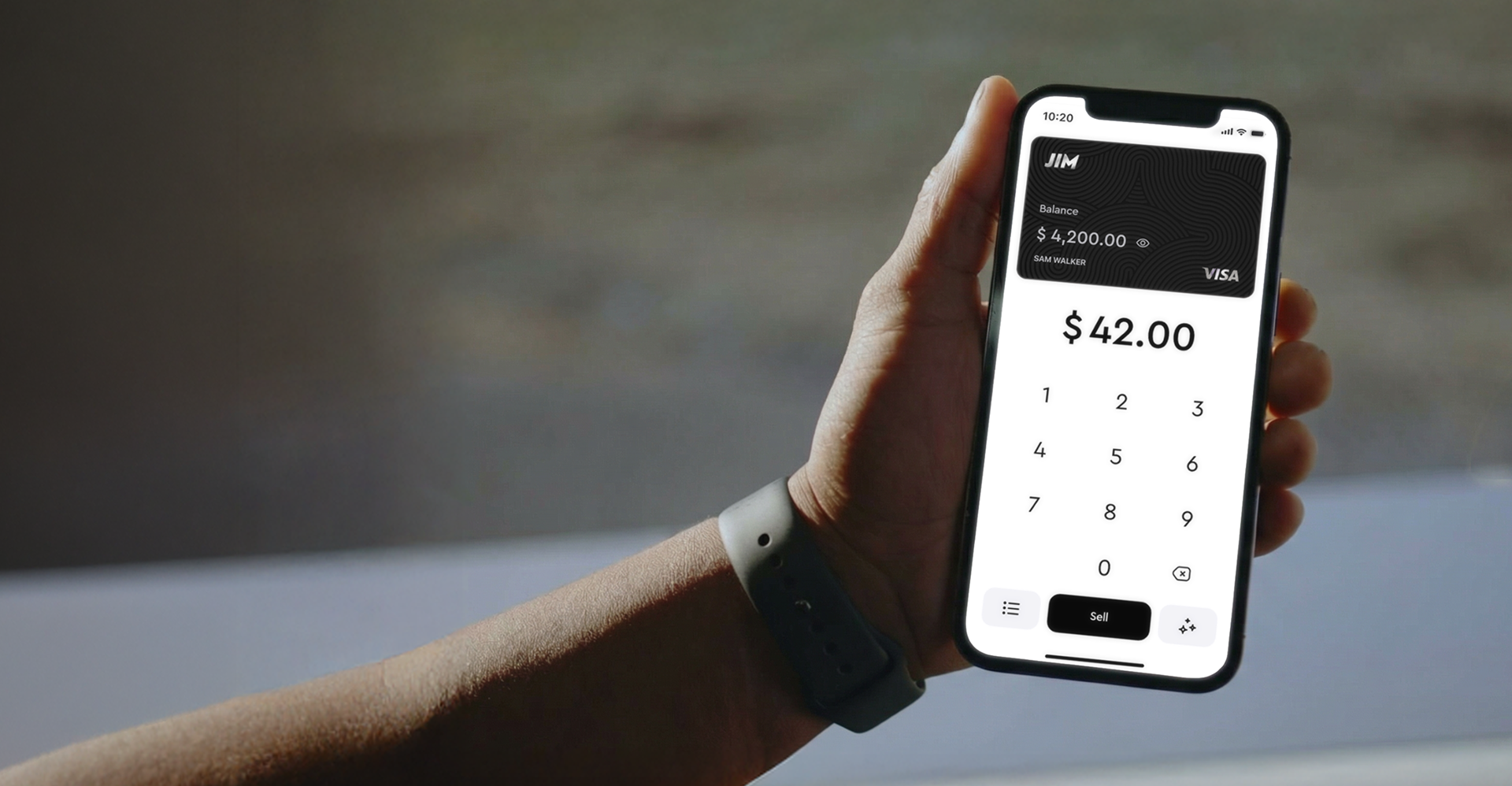
For in-person sales at markets or pop-ups, you need a different approach. For merch businesses that need to accept payments on-site or on-the-go, JIM offers a streamlined solution. With JIM, you can accept debit, credit, and digital wallets directly through your smartphone.
The process is simple, just tap and done. At just 1.99% per transaction with no hidden costs or extra hardware, it is a strong offer. Many other mobile payment solutions charge between 2.5% and 3.5% per transaction, so the savings add up over time.
- Get Started: Download the JIM app for iOS.
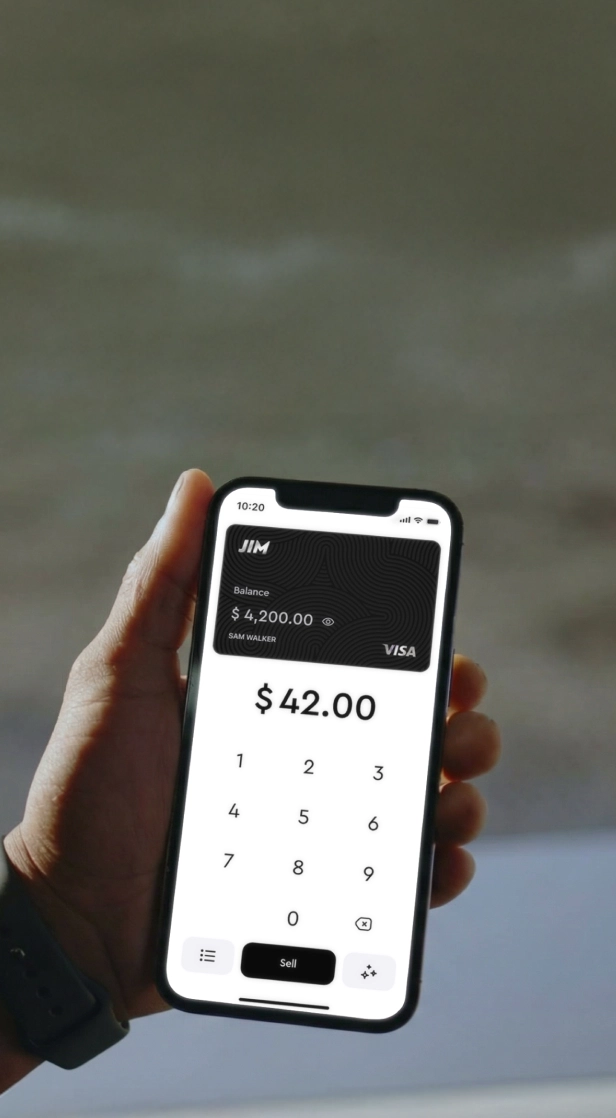
- Make a Sale: Type the sales amount, hit sell, and ask your customer to tap their card or device on your phone.
- Access Funds: Your money is available right on your JIM card as soon as the sale is done, no waiting for bank transfers.
Here are 3 immediate steps to take
- Review the full transaction fee structure for your e-commerce platform.
- Download the JIM app to explore its interface for in-person sales.
- Calculate the potential savings on 50 in-person sales using JIM versus a provider charging 2.9%.
Step 6: Fund your business and manage finances
You can fund your initial inventory and setup costs with an SBA Microloan. These loans go up to $50,000, with interest rates typically between 8% and 13%. Lenders look for a solid business plan and a decent personal credit score.
For a smaller, interest-free option, you might look into Kiva. It is a crowdfunding platform that offers 0% interest loans up to $15,000 for U.S. entrepreneurs. This can be a great way to fund your first large batch of inventory without debt pressure.
Manage your day-to-day finances
A frequent oversight is to mix personal and business funds. Open a dedicated business checking account as soon as your LLC is formed. This simplifies bookkeeping and makes tax time much easier. It also reinforces the legal separation your LLC provides.
You will need about $2,000 to $3,000 in working capital for the first six months. This covers inventory, platform fees, marketing, and shipping supplies. Track every expense, especially your Cost of Goods Sold (COGS), in a simple spreadsheet to monitor your profitability accurately.
Here are 4 immediate steps to take
- Research two SBA Microloan lenders in your state.
- Create a six-month budget to estimate your working capital needs.
- Open a free business checking account.
- Set up a spreadsheet to track all income and expenses from day one.
Step 7: Hire your team and manage operations
Hiring your first team members
Once you consistently process 50-75 orders per week, you might consider hiring help. Your first hire will likely be a part-time Production Assistant to handle printing, quality checks, and packing. An hourly rate between $15 and $20 is a competitive starting point for this role.
For design work, you probably do not need a full-time employee yet. Instead, you can find a freelance Graphic Designer on a platform like Upwork or Fiverr for specific projects. Expect to pay $25 to $50 per hour, or a flat fee per design.
A frequent misstep is to hire someone full-time too soon, which strains cash flow. A part-time assistant or freelancer gives you the help you need without the commitment of a full-time salary and benefits. This approach provides more flexibility as your business grows.
Managing daily operations
With a new team member, you need a way to coordinate tasks. To schedule a part-time employee, an app like Homebase or When I Work can manage hours and availability. To keep design projects organized, a simple project board on Trello or Asana works well.
As a general guide, aim to keep your total payroll costs below 20% of your gross revenue. This helps you maintain healthy profit margins while you scale. Monitor this ratio as your sales increase to decide when it makes sense to add more hours or staff.
Here are 4 immediate steps to take
- Determine the weekly order volume that would justify your first hire.
- Write a job description for a part-time Production Assistant.
- Compare freelance graphic designer rates on Upwork and Fiverr.
- Explore the free plans for Homebase and Trello to see how they work.
Step 8: Market your business and acquire customers
Focus your efforts on visual platforms like TikTok and Instagram. Create short videos that show your design process or lifestyle shots of people who wear your apparel. This content builds a direct connection with potential customers.
You might also consider collaborations. Reach out to micro-influencers in your niche, those with 10,000 to 50,000 followers. A single sponsored post could cost between $100 and $500 and puts your product in front of an engaged audience.
A frequent mistake is to spend on ads without a clear audience. Use platform analytics to see who engages with your posts, then target ads to that demographic. A typical e-commerce conversion rate is 1-2%, so you need about 100 targeted visitors for one or two sales.
In addition, you should build an email list by offering a 10% discount for sign-ups on your site. Email marketing often has a high return. It is not uncommon to see a return of over $30 for every $1 spent.
Here are 4 immediate steps to take
- Identify three micro-influencers in your niche to contact.
- Set up a website pop-up that offers a discount for email sign-ups.
- Run a small $50 test ad campaign on Instagram to a targeted audience.
- Calculate your Customer Acquisition Cost from the test campaign.
Step 9: Price your products for profit
First, calculate your Cost of Goods Sold (COGS). This includes the blank apparel, printing materials, and any inbound shipping fees. For example, a $7 shirt plus $3 in vinyl and supplies gives you a $10 COGS. This number is your starting point for any pricing decision.
A frequent miscalculation is to simply double your COGS. This leaves little room for marketing, fees, or profit. Instead, you should aim for a 3x to 4x markup. That $10 COGS shirt should have a retail price between $30 and $40 to build a sustainable business.
Set your market position
With a target price in mind, research your competitors. Look at what similar quality shirts sell for on Etsy or other independent stores. If the market average is $28, your $35 price needs to be justified by a superior design or garment quality.
You can also use value-based pricing. If you use a premium blank like a Bella+Canvas tee, you can charge more than someone who uses a basic Gildan. Make sure you mention the brand in your product description to signal this higher value to your customers.
Here are 4 immediate steps to take
- Calculate the full COGS for your main t-shirt design.
- Apply a 3x markup to determine your initial target price.
- Find three direct competitors and record their prices for similar items.
- Decide if you will position your product as a budget or premium option.
Step 10: Implement quality control and scale your operations
Establish your quality standards
Create a simple quality checklist. It should cover print alignment, color accuracy, and garment defects like loose threads. Check every item against this list before you pack it. This ensures every customer gets your best work.
A frequent mistake is to let standards slip as order volume grows. You should aim for a defect rate below 2%. This means fewer than two flawed items for every 100 you ship. Tracking this metric keeps your brand reputation strong.
Know when to scale
Once your quality is consistent, you can plan for growth. When you regularly hit over 100 orders per week, your current setup will likely become a bottleneck. This is a signal to expand your production capacity or hire more help.
This might mean an upgrade from a clamshell heat press to an auto-open model. As your inventory grows, a spreadsheet will not be enough. You could look into an inventory management system like Katana to track your stock automatically.
Here are 4 immediate steps to take
- Create a quality checklist with at least five inspection points.
- Calculate your defect rate based on your last 50 orders.
- Identify the weekly order volume that would make your current setup inefficient.
- Look at the features of an inventory management system like Katana.
Conclusion
You now have a roadmap to launch your merch business. The key is to connect a great design with a quality garment. That combination is what turns a one-time buyer into a repeat customer. Go ahead and make your first move.
And when you make your first in-person sale, you will need a simple way to get paid. JIM turns your phone into a card reader for a flat 1.99% fee, with no extra hardware. Download JIM to be ready from day one.
.avif)