Starting a mosquito spraying business is a rewarding venture that combines practical field skills with sharp business acumen. The pest control industry is a multi-billion dollar market, with steady demand for mosquito management from homeowners, restaurants with outdoor patios, and public park districts.
This guide will walk you through the practical steps to obtain the necessary licenses, acquire the right equipment, and secure funding to help you launch a successful mosquito spraying business in the U.S.
Step 1: Plan your business and validate your market
First, define your service area. Use Google Maps to identify neighborhoods with dense housing, pools, and green spaces. Check local community forums and social media groups to gauge demand. You can also contact homeowner associations or property managers to ask about their current pest control solutions.
Next, analyze your direct competitors. Search for "mosquito control" in your target zip codes. Review their websites to understand their service offerings and pricing structures. A common misstep is to compete only on price; instead, find a way to offer more value or specialize in a niche.
Estimate your startup costs
Your initial investment will likely range from $2,000 to $7,000. Planning for these startup expenses helps ensure a smoother launch. A typical budget includes several key categories.
- Licensing and insurance: $700 - $1,700
- Professional equipment (sprayer, PPE): $500 - $1,500
- Vehicle setup and branding: $500 - $3,000+
- Initial chemical inventory: $300 - $800
Here are 3 immediate steps to take:
- Draft a one-page business plan that outlines your target service area and ideal customer.
- Research three local competitors, and note their services, prices, and customer reviews.
- Create a detailed startup budget based on the cost estimates above.
Step 2: Set up your legal structure and get licensed
Choose your business structure
You might want to form a Limited Liability Company (LLC). This structure protects your personal assets, like your home and car, from business debts or lawsuits. It is a straightforward setup through your state's Secretary of State website.
An LLC offers pass-through taxation, meaning business profits pass to your personal tax return. Once your business grows, you can elect to have your LLC taxed as an S-Corporation, which can sometimes reduce your self-employment tax burden.
Navigate licensing and regulations
The U.S. Environmental Protection Agency (EPA) governs pesticide use, but your primary focus will be state-level licensing. You will need a Commercial Pesticide Applicator License, typically issued by your state’s Department of Agriculture.
Look for the specific certification category for mosquito control, often labeled "Public Health Pest Control" or similar. A frequent misstep is getting a general pest license that does not cover public health applications, which can lead to significant fines.
Expect to pay between $150 and $400 for exam fees and your initial license. The process from studying for the exam to receiving your license in the mail can take 6 to 10 weeks, so it is wise to start early.
Here are 4 immediate steps to take:
- Register your business name and form an LLC with your state's Secretary of State.
- Apply for a free Employer Identification Number (EIN) on the IRS website.
- Find your state's Department of Agriculture website to identify the specific pesticide applicator license you need.
- Purchase the official study materials and schedule your certification exam.
Step 3: Secure insurance and manage risk
Understand your insurance needs
The right insurance protects your business from day one. You will need a few specific policies. General liability covers property damage and injuries. Professional liability, often called pollution liability in this field, covers claims related to chemical application errors.
If you have a dedicated work vehicle, you need a commercial auto policy. Once you hire employees, workers’ compensation is legally required in most states to cover on-the-job injuries.
Some new owners assume a general liability policy covers chemical drift. Always confirm your policy includes specific pollution liability coverage. Without it, you are exposed if your spray damages a neighbor’s organic garden or harms non-target wildlife.
Budget for your premiums
Expect to pay between $900 and $2,500 annually for a $1 million general liability policy that includes pollution coverage. You might want to get quotes from providers like the Pest Control Insurance Program (PCIP), Lipca, or Next Insurance, as they specialize in this industry.
Here are 4 immediate steps to take:
- Contact an insurance broker who specializes in pest control.
- Request quotes for a $1 million general liability policy with pollution coverage.
- Obtain a quote for a commercial auto policy for your work vehicle.
- Check your state's laws regarding workers' compensation requirements.
Step 4: Acquire your equipment and set up operations
Most new mosquito businesses operate from home, so you likely will not need a commercial space. Your main requirement is a secure, locked, and well-ventilated area in a garage or shed for chemical storage. Check your state’s pesticide storage regulations to ensure you comply.
Choose your core equipment
Your most important purchase is a backpack mister or fogger. A quality gas-powered model from a brand like Stihl or Solo will run you $700 to $1,200. Some new owners try to save money with a cheaper unit, but this often backfires when it breaks down mid-season with no available parts.
You will also need Personal Protective Equipment (PPE). This includes nitrile gloves, safety glasses, and a respirator with organic vapor cartridges. A complete PPE setup costs about $100 to $200. For your vehicle, a magnetic sign is a good start for about $150.
Source your initial supplies
You will need an adulticide to control flying mosquitoes and a larvicide for standing water. Professional suppliers like Veseris, SiteOne Landscape Supply, or Target Specialty Products are your best sources. Plan to spend $300 to $800 for an initial inventory to service your first 10-15 customers.
Here are 4 immediate steps to take:
- Get quotes for a Stihl SR 450 or Solo 451 backpack mister.
- Purchase a full set of PPE, including a 3M respirator with 60921 or 60923 cartridges.
- Open accounts with two different chemical suppliers to compare pricing.
- Designate and prepare a secure storage area that meets state requirements.
Step 5: Set up your payment and invoicing system
Most mosquito jobs are paid upon completion. For seasonal contracts, which might cover 5-7 treatments, you should require the first month's payment upfront. This secures the client's spot and helps your cash flow. Some new owners only accept cash to avoid fees, but this can turn away customers.
Accepting credit cards and digital wallets is standard. The challenge is finding a payment solution that is simple, affordable, and works in the field without extra hardware. After payment, some clients will also require an invoice. You can create a simple template using Google Docs or Word.
Choose your payment solution
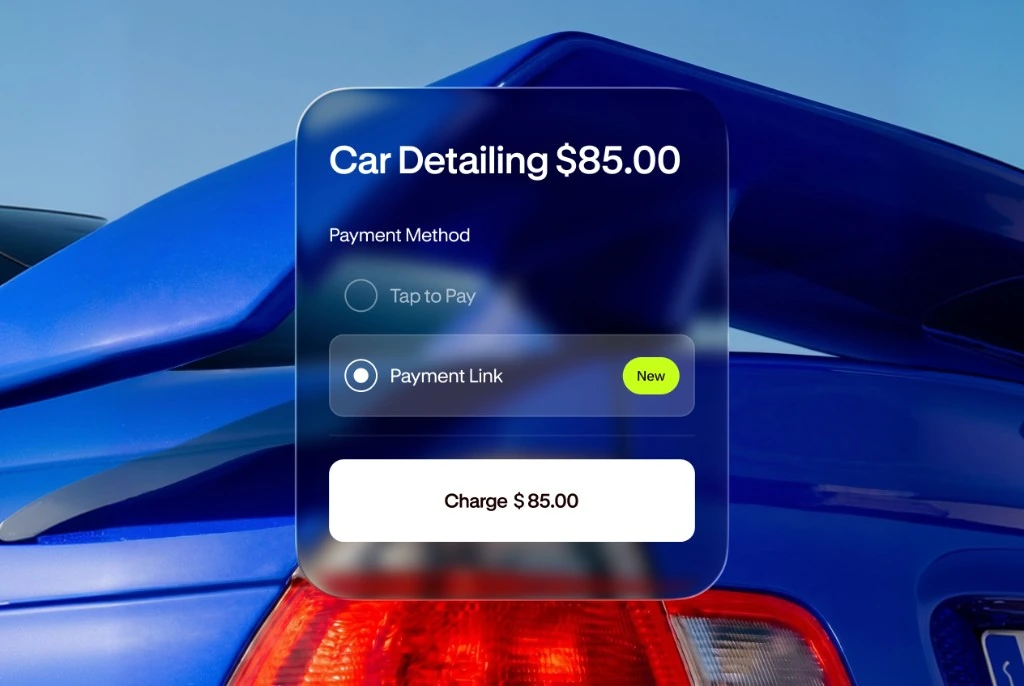
For a business that needs to accept payments on-site, JIM offers a streamlined solution. With JIM, you can accept debit, credit, and digital wallets directly through your smartphone. Just tap and you are done. Other processors often charge 2.5% to 3.5% plus monthly fees.
At just 1.99% per transaction with no hidden costs or extra hardware needed, it is particularly useful for collecting payment immediately after a one-time treatment. Here is how it works:
- Get Started: Download the JIM app for iOS.
- Make a Sale: Type the sales amount, hit sell, and ask your customer to tap their card or device on your phone.
- Access Funds: Your money is available right on your JIM card as soon as the sale is done. There is no waiting for bank transfers.
Here are 3 immediate steps to take:
- Decide on your payment terms for single treatments versus seasonal contracts.
- Download the JIM app to review its features and setup process.
- Create a simple invoice template using Google Docs for clients who need one.
Step 6: Fund your business and manage finances
Your startup budget covers initial purchases, but you also need working capital. This is the cash reserve to cover daily operations for the first three to six months. A good target is $3,000 to $6,000 to pay for fuel, chemical refills, and marketing before client payments become consistent.
Secure your initial funding
For amounts under $15,000, an SBA Microloan is a strong option. These loans have interest rates between 8-13% and are designed for new businesses. You can also look into a business credit card with a 0% introductory APR to finance your initial equipment and supply purchases without immediate interest.
Some new owners drain their personal savings completely. You might want to avoid this, as it leaves no cushion for unexpected personal expenses. A small loan or credit line provides a buffer and helps build your business credit history from the start.
Set up your financial systems
Open a dedicated business checking account as soon as your LLC is formed. Mixing business and personal funds is a common error that can cause tax headaches and even void the liability protection your LLC offers. Keep your finances separate from day one.
You do not need complex accounting software at first. A simple spreadsheet is enough to track every dollar in and out. Record your income from each job and categorize all expenses, like "Fuel," "Chemicals," and "Insurance." This simple habit makes tax filing much easier.
Here are 4 immediate steps to take:
- Open a dedicated business checking account at a local bank or credit union.
- Research SBA Microloan lenders in your state.
- Apply for a business credit card that offers a 0% introductory APR.
- Create a simple spreadsheet to track all your income and expenses.
Step 7: Hire your first technician and scale operations
Hire your first technician
Once you have 30-40 regular clients, you might want to hire your first technician. This person will be the face of your business, so look for reliability and good communication skills. Their main duties will include driving the route, applying treatments, and talking with customers.
Your new hire will need their own state-issued Pesticide Applicator License. Some business owners assume their license covers their employees, but this is a risky misunderstanding. Check with your state's Department of Agriculture for the exact requirements for technicians or apprentices.
Plan to offer a competitive wage, typically between $18 and $25 per hour, depending on your location and their experience. You can research local rates on job boards to stay competitive.
Scale your operations
A full-time technician should be able to service 8-12 properties per day. In this industry, a single productive technician can often generate between $80,000 and $120,000 in annual revenue for the business. This is a good benchmark to keep in mind as you grow.
With an employee in the field, manual scheduling becomes difficult. You might want to look into field service software like Jobber or GorillaDesk. These platforms help you manage routes, schedule jobs, and handle customer communication from one place, which saves a lot of administrative time.
Here are 4 immediate steps to take:
- Check your state's rules for technician-level pesticide applicator licenses.
- Draft a job description for a Mosquito Control Technician.
- Research local pay rates for pest control technicians on sites like Indeed.
- Explore a free trial for a scheduling software like Jobber or GorillaDesk.
Step 8: Market your business and get customers
Start with local outreach
Begin with door hangers and lawn signs in your target neighborhoods. For about $200, you can print 1,000 professional door hangers. A 1% response rate is a realistic goal, which translates to 10 new leads. Also, ask satisfied customers if you can place a small sign in their yard.
Build your online presence
Set up your free Google Business Profile right away. This is how local customers will find you online. Encourage your first clients to leave reviews, as this builds trust. You might also want to run Google Local Services Ads, which appear at the top of search results for high-intent customers.
Many new owners find that broad Facebook ads are not effective. You might have better luck with Nextdoor ads or by participating in local online groups. Answering questions about pest control can establish you as a local expert and generate leads without any ad spend.
Your Customer Acquisition Cost (CAC) for a seasonal client should be between $100 and $200. If you spend $500 on marketing to acquire five new clients, your CAC is $100. Track this number to understand which marketing channels give you the best return.
Here are 4 immediate steps to take:
- Design and order 500 door hangers for your primary service area.
- Create and fully complete your Google Business Profile.
- Join two local community groups on Facebook or Nextdoor.
- Calculate your target Customer Acquisition Cost for a seasonal client.
Step 9: Price your services and create packages
Choose your pricing model
Most clients prefer simple pricing. You can offer a one-time treatment, typically from $79 to $119 for a standard yard. Your main goal, however, should be to sell seasonal packages. These secure recurring revenue and offer clients better results and value.
A seasonal package might include 5-7 treatments from spring through fall. You could price this by offering a 10-15% discount off the single-treatment rate. For example, a $99 single spray becomes a $495 five-treatment package, paid upfront or in installments.
A frequent oversight for new owners is to only calculate the cost of chemicals. To hit a healthy 60-75% gross profit margin, you must factor in fuel, insurance, drive time, and equipment wear. Your price needs to cover more than just the liquid in the tank.
Set your final price
With a baseline cost in mind, it is time to see what the market will bear. The most direct way to do this is to call a few local competitors. Ask for a quote for your own address to get an accurate price for a property in your target area.
Also, look at their websites for any advertised specials or package deals. Your goal is not to be the cheapest option. Instead, aim to price yourself in the middle-to-high end of the market, justifying it with superior service and reliability.
Here are 4 immediate steps to take:
- Calculate your total cost per treatment, including all overhead.
- Set a price for a single treatment and a discounted seasonal package.
- Call three local competitors to get quotes for a standard property.
- Create a simple price sheet that outlines your service options.
Step 10: Maintain quality and scale your business
Your reputation is built on results. You can measure service quality by tracking your callback rate, which is the percentage of clients who request a re-treatment. A rate below 5% shows your methods are effective. Also, aim to retain over 80% of your seasonal clients year after year.
Some owners focus only on new sales and neglect existing customers. This can hurt your reputation. A simple customer satisfaction survey sent after the season can provide valuable feedback and show clients you care about their experience.
Know when to grow
Once you have a solid customer base of 30-40 clients, you can think about scaling. A good benchmark for adding a second technician is when your first one consistently services 8-12 properties per day and you have a waitlist for new customers.
As you add staff, manual scheduling becomes a major time sink. This is when field service software like Jobber or GorillaDesk becomes very useful. These platforms help you optimize routes, manage client communication, and automate invoicing for multiple technicians.
Here are 4 immediate steps to take:
- Start tracking your callback rate with a goal of keeping it under 5%.
- Set a customer retention goal of 80% for your seasonal contracts.
- Review a demo of field service software to understand its benefits for a growing team.
- Define the client number that will trigger your first hire.
Conclusion
You now have a clear path to launch your mosquito control business. Remember that your reputation is built on reliability and results, not just the spray you use. With this plan, you are well-equipped to start your journey and build a service your neighbors will trust.
And when it comes to getting paid, keep it simple. JIM lets you accept cards right on your phone, with no extra hardware and a flat 1.99% fee. Your money is available instantly. Download JIM and get ready for your first customer.