Starting a packaging business is a rewarding venture that combines creativity and logistical skill with sharp business savvy. With a market valued in the hundreds of billions, there is consistent demand for packaging solutions across e-commerce, food and beverage, and consumer goods.
This guide will take you through the practical steps of validating your business concept, securing funding, building supplier relationships, and obtaining the right permits to help you launch a successful packaging business in the U.S.
Step 1: Create your business plan and validate your concept
Begin by researching a specific market niche. Many new owners try to serve everyone, which dilutes their resources. Focus on an area like sustainable food packaging or custom e-commerce boxes. Use industry reports from IBISWorld to understand demand and growth projections for your chosen segment.
Next, analyze your competition. Use databases like Thomasnet to identify other packaging companies. You should also perform local searches to see who operates in your area. Review their websites to understand their product offerings, target customers, and pricing structures.
Understanding startup costs
A frequent misstep is underestimating initial expenses. A realistic budget is your roadmap. You might want to consider these typical cost ranges. A note on equipment, high-quality used machinery can often cut initial costs by 40-60%.
- Equipment (die cutters, printers): $50,000 - $250,000+
- Initial Materials Inventory: $10,000 - $50,000
- Warehouse Lease (annual): $25,000 - $75,000
- Permits & Insurance: $1,000 - $5,000
Your initial investment could range from $85,000 to over $350,000. Anticipating these numbers allows for much better financial planning and helps you secure the right amount of funding without surprises down the road.
Here are 4 immediate steps to take:
- Identify two or three promising packaging niches to research further.
- Analyze three local competitors, noting their strengths and weaknesses.
- Create a preliminary startup budget based on the cost categories above.
- Browse Thomasnet for potential equipment and material suppliers.
Step 2: Establish your legal entity and secure permits
Choosing your business structure is a foundational step. Most new packaging businesses start as a Limited Liability Company (LLC). This structure protects your personal assets from business debts and allows profits to pass directly to your personal tax return, which simplifies filing.
You can file for an LLC through your state's Secretary of State website. The cost is typically $50 to $500. As your business grows, you might consider an S Corp election for potential tax savings, but an LLC is a solid, flexible starting point.
Navigating permits and regulations
Once your LLC is formed, get a free Employer Identification Number (EIN) from the IRS website. You will need this for taxes and banking. Also, secure a general business license from your city or county clerk’s office. This can cost up to $400.
If you handle food packaging, you must comply with Food and Drug Administration (FDA) regulations for food-contact materials. This involves following Good Manufacturing Practices (GMP). No specific FDA license is issued, but compliance is mandatory and heavily audited.
A frequent oversight is ignoring local zoning. Before you sign a lease, confirm with your local planning department that your chosen location is zoned for light industrial use. A mismatch here can halt your operations before they even begin.
Here are 4 immediate steps to take:
- File for your LLC with your state's Secretary of State.
- Apply for a free Employer Identification Number (EIN) online with the IRS.
- Contact your city clerk to inquire about the cost and application for a general business license.
- Review FDA guidelines on Good Manufacturing Practices if you plan to produce food packaging.
Step 3: Secure your insurance and manage risk
You will want to secure general liability insurance, which typically runs $600 to $2,000 annually for $1 million in coverage. In addition, get commercial property insurance to protect your warehouse and machinery. A frequent mistake is to underinsure equipment, so get a proper appraisal first.
Workers’ compensation is mandatory in most states if you have employees. Premiums vary based on payroll but expect to pay several thousand dollars per year. If you own delivery vehicles, you will also need commercial auto insurance, which can cost $1,500 to $3,000 per vehicle.
Specialized coverage and providers
Consider professional liability insurance to cover you if a design flaw leads to client losses. Product liability is another smart addition, especially for food packaging, as it protects against contamination claims or other damages caused by your product after it leaves your facility.
When you look for quotes, contact insurers who understand manufacturing, such as The Hartford, Chubb, or Travelers. A general agent might not grasp the specific risks of your operation, like machinery breakdown, which can lead to expensive coverage gaps you only discover after a claim.
Here are 4 immediate steps to take:
- Get a formal appraisal for all major equipment to ensure accurate property coverage.
- Request quotes for a $1 million general liability policy from at least two providers.
- Ask potential insurers about adding professional and product liability coverage.
- Contact an insurance provider specializing in manufacturing, like The Hartford or Chubb.
Step 4: Secure your location and equipment
Look for a warehouse space between 2,000 and 5,000 square feet. It must be in an area zoned for light industrial use. Before you sign a lease, double-check this with your local planning department. A zoning mismatch is a frequent error that can halt operations entirely.
When you negotiate the lease, ask about the floor’s load-bearing capacity and the building's electrical service. Upgrades for heavy machinery are expensive. You might persuade the landlord to cover these costs as part of the agreement, which saves you significant capital upfront.
Find the right machinery
Your equipment is a major investment. Buying high-quality used machinery can reduce your initial outlay by 40-60%. Here are some typical price ranges for used equipment.
- Automatic Die Cutter: $40,000 - $100,000
- Folder-Gluer Machine: $30,000 - $80,000
- Flexographic Printer: $50,000 - $150,000+
For raw materials like corrugated board, you can contact suppliers such as Uline or Paper Mart. Expect Minimum Order Quantities (MOQs) of 1,000 to 5,000 sheets. This will influence your initial inventory budget and storage needs.
Here are 4 immediate steps to take:
- Confirm light industrial zoning for two potential properties.
- Request lease terms and ask about floor load capacity and electrical specs.
- Research used prices for a die cutter and a folder-gluer machine.
- Contact a paper supplier like Uline to inquire about their MOQs.
Step 5: Set up your payment systems
Establish your payment terms and methods
For large corporate accounts, Net 30 terms are common. For new or smaller clients, you might want to start with payment upon receipt. Always require a 50% non-refundable deposit for custom orders to cover your initial material and design costs. This is standard industry practice.
A frequent misstep is failing to formalize these terms in a contract. A simple one-page agreement that outlines the scope, timeline, and payment schedule protects both you and your client. It prevents misunderstandings about when payments are due, especially for recurring orders.
Now, let's talk about how you will collect that money. While some clients still use ACH transfers or checks, you need a modern system to accept credit and debit cards. Look for a solution with clear, flat-rate pricing and no lengthy contracts.
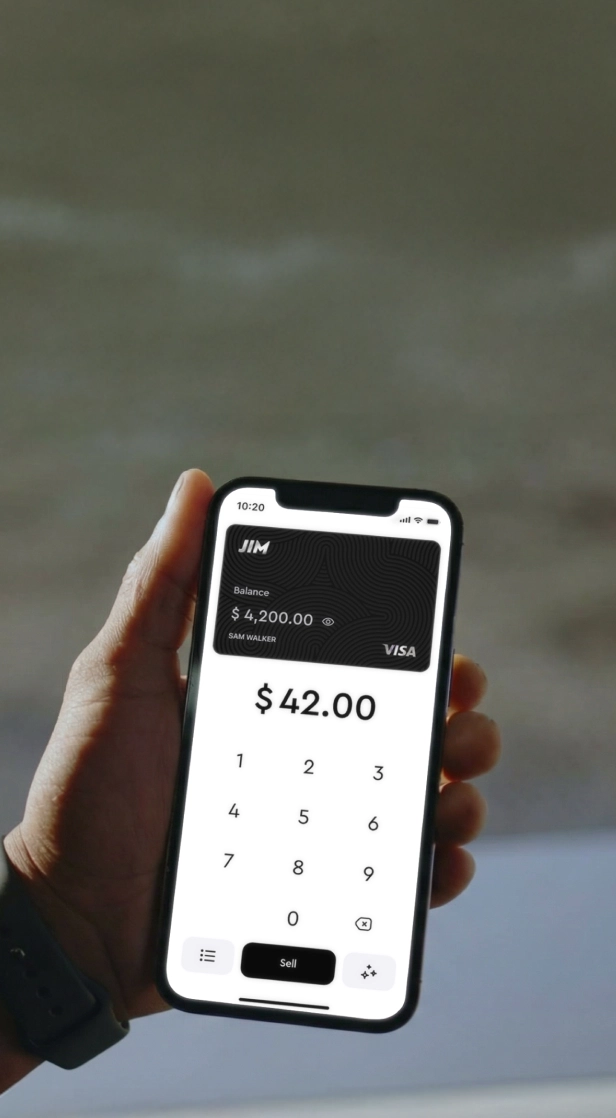
For packaging businesses that need to accept payments on-site or on-the-go, JIM offers a streamlined solution. With JIM, you can accept debit, credit and digital wallets directly through your smartphone - just tap and done. It is particularly useful for taking deposits on custom design jobs.
At just 1.99% per transaction with no hidden costs or extra hardware needed, its rate is very competitive. Other payment solutions often charge commissions between 2.5% and 3.5%. This difference can save you hundreds or thousands of dollars annually. Here is how it works:
- Get Started: Download JIM app for iOS
- Make a Sale: Type the sales amount, hit sell, and ask your customer to tap their card or device on your phone
- Access Funds: Your money is available right on your JIM card as soon as the sale is done - no waiting for bank transfers
Here are 4 immediate steps to take:
- Draft your standard payment terms, including a 50% deposit for custom work.
- Create a simple contract template that outlines payment schedules and project scope.
- Compare two payment processors, focusing on their transaction fees and contract terms.
- Explore the JIM website to see if it fits your mobile payment needs.
Step 6: Fund your business and manage finances
The Small Business Administration (SBA) is often your best first stop. An SBA 7(a) loan can provide up to $5 million, and these loans are favorable for new manufacturing ventures. You will likely need a 10% down payment, with interest rates typically near the Prime rate plus 2-3%.
You might also consider equipment financing. This type of loan uses the machinery itself as collateral, which can make it easier to secure. Lenders like these loans because their risk is tied to a physical asset, which can speed up the approval process to get your production line running.
A frequent oversight is to focus only on equipment costs and forget day-to-day expenses. You need cash for operations. Plan for at least six months of working capital to cover rent, payroll, and initial material orders. For most startups, this means you need $50,000 to $100,000 in the bank.
Once you secure funding, open a dedicated business bank account immediately. This keeps your finances clean for tax purposes. You should also use accounting software like QuickBooks Online from day one. It helps you track every dollar and simplifies financial reporting down the line.
Here are 4 immediate steps to take:
- Review the requirements for an SBA 7(a) loan on the official SBA website.
- Ask your bank about their equipment financing programs and rates.
- Calculate your six-month working capital needs based on your budget.
- Open a separate business bank account to manage your funds.
Step 7: Hire your team and set up operations
Key roles and compensation
Start with two key hires. You will need a Machine Operator to run your die cutter and folder-gluer. Look for someone with mechanical aptitude. Expect to pay between $40,000 and $60,000 annually. Experience is a plus, but you can train the right person.
Your second hire might be a hybrid Designer and Salesperson. This person will create mockups in Adobe Illustrator and find your first clients. A typical structure is a $45,000 base salary plus a 5-10% commission on sales they generate. This incentivizes growth.
A frequent oversight is hiring too many people too soon. Start lean. As a benchmark, aim for $150,000 to $250,000 in annual revenue per employee. This ratio helps you keep payroll manageable as you scale your operations and build your client base.
Training and management
For machine operators, prioritize safety. You must follow OSHA guidelines for machine guarding and operation. If you produce food packaging, all staff must complete Good Manufacturing Practices (GMP) training to ensure compliance and safety.
To manage your workflow, you can start with a simple system. Use a free project management app like Trello to track custom orders from design to delivery. A shared spreadsheet works well for initial production scheduling before you need a dedicated ERP system.
Here are 4 immediate steps to take:
- Draft job descriptions for a Machine Operator and a Designer/Salesperson.
- Research local salary ranges for a Machine Operator on sites like Glassdoor.
- Review OSHA's machine guarding standards on their website.
- Create a sample project board in Trello to map out your order workflow.
Step 8: Market your business and acquire customers
Build your online presence
Start by creating a professional profile on Thomasnet, a platform where industrial buyers look for suppliers. You should also build a simple website that showcases your work. Use high-quality photos of your best projects to create a compelling portfolio, as this is your digital storefront.
Many new owners focus too much on broad digital ads. A better approach is local outreach. Identify 20 to 30 local businesses that need packaging, such as craft breweries or e-commerce startups. A personalized email or a direct visit can land your first anchor clients.
Use targeted outreach strategies
Direct mail is powerful in this industry. Send a well-designed sample box to a curated list of high-value prospects. This puts your product directly in their hands. The cost is higher than email, but the conversion rate can be 5-10% for a well-targeted campaign.
Your Customer Acquisition Cost (CAC) in B2B manufacturing might range from $200 to $500. Do not let that number scare you. One long-term client with recurring orders will provide a return on that investment for years. Focus on the value you provide, not just the price.
Here are 4 immediate steps to take:
- Create a supplier profile on Thomasnet.
- Build a simple portfolio website with high-quality images of your work.
- Identify 20 local businesses that could become your first customers.
- Design a sample box to mail to your top five prospects.
Step 9: Set your pricing strategy
Implement a cost-plus model
A cost-plus model is the most direct way to price your products. Calculate your total cost per unit, which includes materials, labor, and overhead. Then, add your desired profit margin. A typical markup in packaging is 50% to 100% over your costs.
A frequent miscalculation is to forget overhead. Your price must cover a portion of your rent, utilities, and administrative salaries. If your total cost for a box is $1, a 75% markup would price it at $1.75. This ensures you cover all expenses and turn a profit.
Consider value-based pricing for custom work
For unique designs or complex projects, you might use value-based pricing. This approach sets the price based on the value your packaging provides to the client, not just your production cost. If your design helps a client increase sales by 10%, your work is worth more than its material cost.
Gross profit margins in the packaging industry often land between 25% and 40%. To understand your market, pose as a potential buyer and request quotes from two or three competitors for a standard-sized order. This gives you real pricing data to benchmark against.
Here are 4 immediate steps to take:
- Calculate your total cost-per-unit for one standard product, including overhead.
- Request a quote from two local competitors for a similar product.
- Decide on a starting markup percentage for your cost-plus model.
- Draft a simple price sheet for your top three product offerings.
Step 10: Implement quality control and scale operations
Establish your quality standards
Adopt principles from the ISO 9001 quality management standard. You do not need full certification at first. Focus on tracking key metrics. Aim for a defect rate below 2% and an on-time delivery rate above 98%. These numbers build trust with clients.
Many new owners wait for complaints to address quality. A better approach is to send a simple satisfaction survey after each completed order. A consistent customer satisfaction score of 8 out of 10 or higher shows you are on the right track.
Scale your operations strategically
Once your quality is consistent, you can plan for growth. When your primary machines operate at 80% capacity for a full quarter, it is time to invest in new equipment. This prevents production bottlenecks as you take on more orders.
As a benchmark, consider hiring a new production employee for every $150,000 to $200,000 in new annual revenue. This ratio helps keep your labor costs aligned with your income. It prevents you from over-hiring before the revenue is there to support it.
When you grow past five employees, spreadsheets are no longer enough. You might want to explore an entry-level manufacturing ERP system like Katana MRP or Fishbowl. They help manage inventory, orders, and production schedules in one place.
Here are 4 immediate steps to take:
- Create a final inspection checklist based on ISO 9001 principles.
- Set up a spreadsheet to track your defect rate and on-time delivery percentage.
- Calculate your current machine capacity to create a growth baseline.
- Research the features and pricing for an ERP like Katana MRP.
You now have the blueprint for your packaging business. Your reputation will be built on reliability and the quality of your final product. The market has room for operators who get the details right. Go make your mark.
To keep things running smoothly, you will also need an easy way to handle payments. JIM lets you accept cards on your phone for a flat 1.99% fee, no extra hardware required. It's a simple solution for a new business. Download JIM to get started.
.avif)