Starting a personal shopper business is an exciting venture that combines a great eye for style and strong people skills with smart business savvy. The market for personal shopping is expanding, with steady demand from busy professionals, clients preparing for special events, and anyone needing a wardrobe refresh.
This guide will take you through the practical steps of validating your business concept, securing funding, obtaining the necessary licenses, and building supplier relationships to help you launch a successful personal shopper business in the U.S.
Step 1: Plan your business and validate your idea
First, define your ideal client. Will you serve busy professionals, new parents, or those seeking sustainable fashion? Trying to cater to everyone is a frequent misstep that dilutes your marketing message and brand identity.
You can validate your niche by creating short surveys on platforms like SurveyMonkey and sharing them in local Facebook or community groups. Ask about style challenges and what they would pay for help, aiming for 30-50 responses to gauge real interest.
Analyze the competition
With your niche in mind, look at other personal shoppers in your area. Use Google Maps and Yelp to find them. Study their websites and social media, especially Instagram, to understand their branding, service packages, and pricing structures.
Estimate your startup costs
Understanding the initial investment is a key part of your plan. While you can start lean, some upfront costs help you operate professionally. Budgeting for these now prevents surprises later.
- Business Formation (LLC): $100 - $500
- Website & Domain: $200 - $600 per year
- Liability Insurance: $400 - $700 per year
- Initial Marketing: $100 - $300
Your total startup fund should realistically be between $800 and $2,100. This range covers your foundational needs to launch with confidence.
Here are 3 immediate steps to take:
- Define your target client and survey at least 30 people in that demographic.
- Identify and analyze the service packages of three local competitors.
- Draft a startup budget based on the estimated cost range of $800-$2,100.
Step 2: Establish your legal structure and obtain licenses
Choose your business structure
You should consider forming a Limited Liability Company (LLC). This structure separates your personal assets from business debts, which offers you protection. It is a popular choice for new service-based entrepreneurs and registration costs range from $50 to $500 depending on your state.
Operating as a sole proprietor is simpler but leaves your personal assets exposed. An S Corporation is an option for later, as it can offer tax advantages once your income becomes more substantial. For now, the LLC provides the best balance of protection and simplicity.
Secure the right licenses and permits
Most personal shoppers do not need federal licenses, but you may need an Employer Identification Number (EIN) from the IRS. It is free and required if you plan to hire employees. You can apply for one directly on the IRS website in about 15 minutes.
At the state level, you will likely need a seller's permit or resale certificate if you buy clothes to resell to clients. This allows you to purchase items wholesale without paying sales tax. A common mistake is to neglect this, which creates sales tax compliance issues later.
Finally, check with your city or county clerk’s office for a general business license. This is a standard requirement for operating legally in your area. The cost is typically between $50 and $100 annually. Processing times are usually a few weeks.
Here are 4 immediate steps to take:
- Decide between an LLC and a sole proprietorship for your business structure.
- Apply for a free Employer Identification Number (EIN) on the IRS website.
- Research your state’s requirements for a seller’s permit.
- Visit your local city hall’s website to find the business license application.
Step 3: Secure your business insurance
You should start with General Liability Insurance. This covers third-party claims like property damage or injury, for instance, if you accidentally damage an item in a client’s home. A $1 million policy is a standard starting point and provides solid protection.
Next, consider Professional Liability Insurance, also known as Errors & Omissions (E&O). Many new shoppers skip this, but it protects you if a client claims your styling advice caused them financial or reputational harm. This coverage is a key safeguard for your work.
Find the right provider and policy
Expect annual premiums to range from $400 to $700 for general liability. Professional liability can add another $500 to $1,000. You can get quotes from providers like Hiscox, The Hartford, and Next Insurance, which specialize in policies for small service businesses.
When you contact them, ask about bundling policies. You can often save 10-15% by combining general and professional liability. If you plan to hire help, you will also need a workers' compensation policy, which is a separate requirement.
Here are 3 immediate steps to take:
- Request quotes for a $1 million General Liability policy.
- Compare bundled policy options from providers like Hiscox and Next Insurance.
- Decide on a Professional Liability coverage amount that fits your budget.
Step 4: Set up your workspace and get your gear
Your professional workspace
You can run this business from home. A dedicated space of 100-150 square feet is plenty. Before you set up, check your city’s website for home-based business zoning ordinances. Some residential areas have rules you need to follow.
Many new shoppers think they need a retail studio, but this adds high overhead. It is better to start lean from a home office. This frees up funds for marketing and client acquisition, which are more important early on.
Core equipment for client sessions
With your space defined, you will need some items to deliver a professional service. A flimsy clothing rack or a cheap mirror can undermine your credibility. You should invest in quality from the start. Here are some typical costs.
- Full-length mirror: $100 - $250
- Rolling clothing rack: $50 - $150
- Garment steamer: $60 - $120
- Professional tailor’s tape: $10 - $20
Your initial equipment investment will likely fall between $220 and $540. These items help you create a polished and efficient experience for your clients, whether in their home or yours.
Here are 3 immediate steps to take:
- Review your city’s zoning regulations for home-based businesses online.
- Budget for your core equipment, using the $220-$540 range as a guide.
- Purchase a high-quality rolling clothing rack and a garment steamer.
Step 5: Set up your payment processing
You should require a 50% deposit upfront to secure a booking. The remaining balance is typically due upon service completion. A contract that outlines these terms, including your refund policy, is a must. Many new shoppers forget this and face payment disputes later.
Choose your payment solution
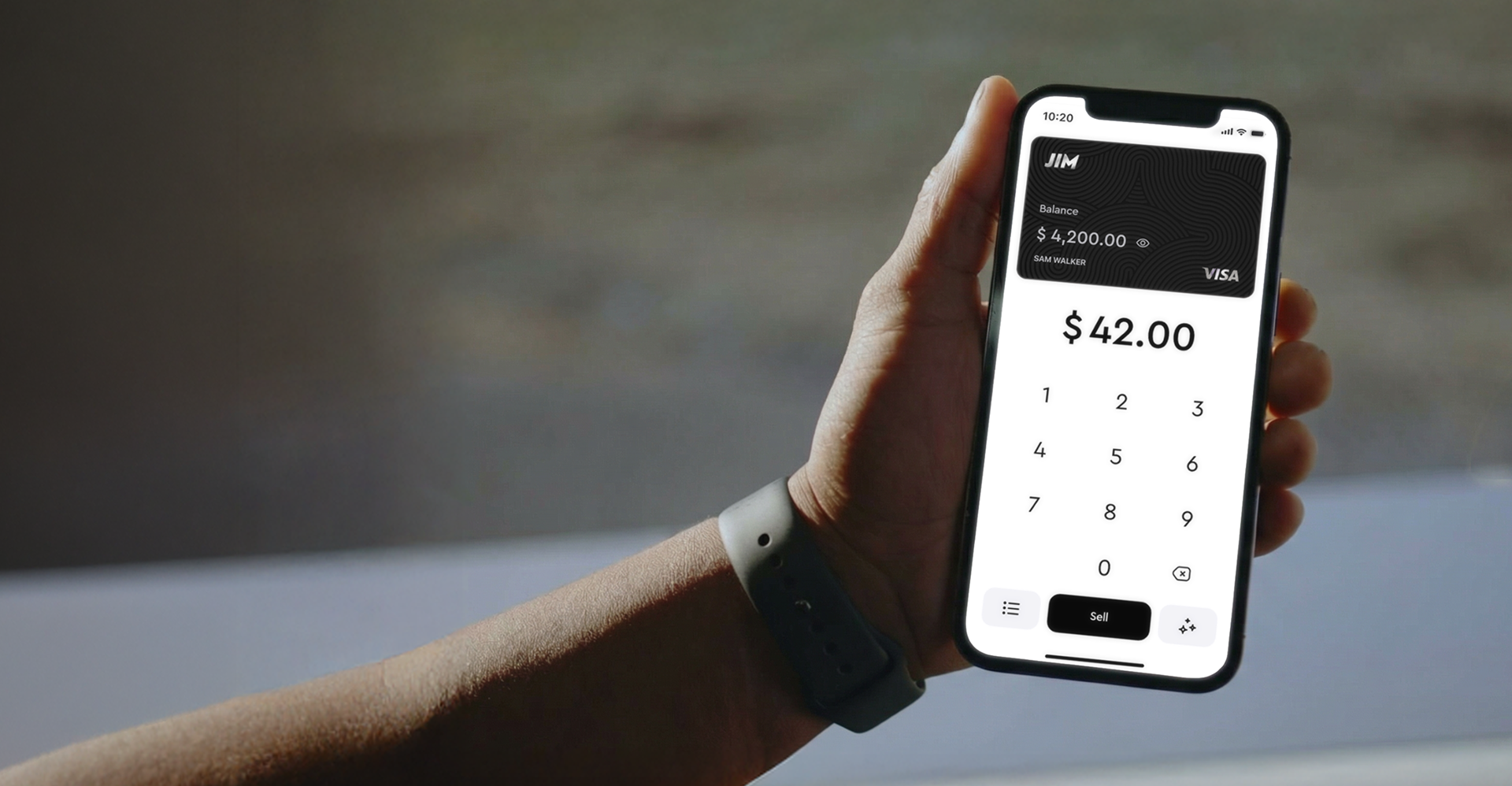
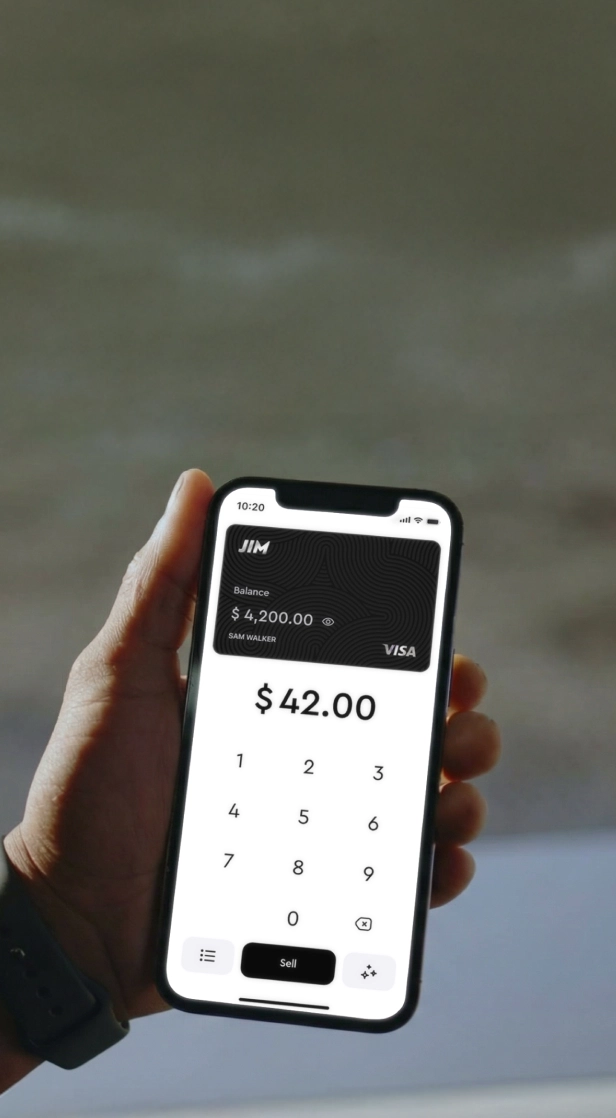
For personal shoppers who need to accept payments on-site, JIM offers a streamlined solution. With JIM, you can accept debit, credit, and digital wallets directly through your smartphone. Just tap and done. The rate is just 1.99% per transaction with no hidden costs or extra hardware.
This is a great rate, as other providers often charge between 2.5% and 3.5%. It's particularly useful for collecting the final payment immediately after a styling session. Getting started is simple.
- Get Started: Download the JIM app for iOS.
- Make a Sale: Type the sales amount, hit sell, and ask your customer to tap their card or device on your phone.
- Access Funds: Your money is available right on your JIM card as soon as the sale is done, with no waiting for bank transfers.
Here are 3 immediate steps to take:
- Draft a client contract that specifies your 50% deposit and final payment terms.
- Compare payment solutions that allow for easy on-the-go transactions.
- Download the JIM app to see if its features fit your business model.
Step 6: Fund your business and manage your finances
Explore your funding options
Most personal shoppers self-fund with personal savings. This is the simplest route. If you need capital, a business credit card with a 0% introductory APR can cover initial costs up to $5,000. Just be sure to pay it off before the promotional period ends.
For a more formal loan, look into the SBA Microloan program. These loans range from $500 to $50,000 and are offered through nonprofit lenders. Interest rates are typically between 8% and 13%. You will need a good credit score and a clear business plan to qualify.
You can also search for grants, though they are competitive. The Amber Grant for Women is a popular option. Also, check your local Chamber of Commerce website for small business grants specific to your city or state. These opportunities can provide a helpful financial boost without debt.
Set up your financial systems
You should plan for six months of working capital. This includes your startup costs ($800-$2,100) plus operating expenses like insurance and marketing. A safe budget is between $2,000 and $4,000 to ensure you can operate smoothly before you have consistent client income.
A frequent misstep is mixing personal and business funds. Open a dedicated business checking account as soon as you form your LLC. This simplifies expense tracking and makes tax preparation much easier. It also reinforces your business's professional standing from day one.
Here are 4 immediate steps to take:
- Open a dedicated business checking account.
- Research SBA Microloan lenders in your state.
- Create a detailed 6-month operating budget.
- Look up the application requirements for the Amber Grant.
Step 7: Hire your team and manage operations
You will likely start as a one-person operation to keep costs down. Once you consistently serve 5-7 clients per week, it might be time to bring on help. A mistake many new shoppers make is hiring too soon, which can strain cash flow before you have steady income.
Your first hire
Your first team member is often a part-time Wardrobe Assistant. They can handle returns, organize client wardrobes, and manage appointment scheduling. In most cities, an hourly rate of $20-$30 is a competitive starting point for this role.
Formal certifications are not required for an assistant. Instead, look for someone with strong retail experience and a genuine passion for style. This practical background is often more valuable for day-to-day tasks.
Operational software
To streamline your booking process, consider an online scheduler. Platforms like Acuity Scheduling or Calendly allow clients to book directly from your website. This reduces administrative work and prevents double-bookings, a frequent headache when you get busy.
For client management, an app like Stylebook helps you track client sizes, preferences, and past purchases. It keeps all your client information organized in one place, which makes you look professional and prepared for every session.
Here are 4 immediate steps to take:
- Determine the weekly client load that would justify hiring an assistant.
- Draft a job description for a part-time Wardrobe Assistant role.
- Compare the free and paid plans for Acuity Scheduling and Calendly.
- Download Stylebook to explore its client management features.
Step 8: Market your business and find your first clients
Create local partnerships
Connect with local clothing boutiques, hair salons, or spas. You can offer to host a free 30-minute style workshop for their customers. This strategy puts you directly in front of your ideal audience with minimal upfront cost.
You might also create a referral partnership. Offer a 10% commission to a boutique owner for every client they send your way. This gives them a reason to promote your services for you, creating a steady stream of leads.
Build your digital footprint
Use Instagram as your visual portfolio. Post daily looks that fit your niche and use local hashtags like #[YourCity]Fashion. A good goal for the first month is to get 50 engaged, local followers who could become future clients.
Many new stylists overspend on paid ads early on. A client referral program is often a better use of your budget. Give a 15% discount to a current client and their referred friend. This can help keep your Customer Acquisition Cost (CAC) under $100 per client.
Here are 4 immediate steps to take:
- Identify three local boutiques or salons to approach for a partnership.
- Create a 30-day content plan for your Instagram account.
- Design a client referral program with a specific discount offer.
- Set up a spreadsheet to track your monthly marketing spend and new clients.
Step 9: Set your prices and create service packages
Select your pricing model
A straightforward way to start is with an hourly rate. Many new shoppers charge between $75 and $200 per hour, depending on their location. A frequent mistake is to set your rate too low, which can signal a lack of confidence and attract the wrong clients.
Another option is package pricing. You could offer a "Seasonal Wardrobe Refresh" for a flat fee of $600. This gives clients a clear outcome for a fixed price and provides you with predictable income. It removes the uncertainty of hourly billing for both parties.
You might also work on a commission basis, taking 15-25% of the total clothing budget. This model works well for large shopping assignments where the client has a significant amount to spend. It directly ties your earnings to the scale of the project.
Define your service packages
With your pricing model chosen, you can build out your service menu. Create tiered packages to appeal to different needs. For example, you could offer a 3-hour "Closet Edit" for $350 and a comprehensive "Full Style Overhaul" for $1,200 that includes shopping and a digital lookbook.
If you purchase items for clients, a 20-30% markup on the retail price is standard. Many new stylists forget to factor this in, which directly cuts into their profit. Be transparent about this fee in your client contract from the start.
Here are 4 immediate steps to take:
- Choose a primary pricing model: hourly, package, or commission.
- Outline two service packages with distinct features and fixed prices.
- Set your standard hourly rate based on local competitor research.
- Decide on a markup percentage for items you purchase for clients.
Step 10: Control quality and scale your business
Measure your service quality
After each service, send a short feedback survey using Google Forms. Ask clients to rate their experience on a scale of 1-10. This provides direct, actionable data to refine your process.
You should also track your client rebooking rate. A rate of 40% or higher within six months is a strong indicator of satisfaction. Many new shoppers focus only on new clients and miss the value of repeat business.
Know when to grow
Once you consistently serve 8-10 clients per week, it is time to consider expansion. This is a solid benchmark to hire your first part-time assistant without putting a strain on your finances.
You can also scale by adding new services. When your schedule is 75% full for two consecutive months, you might introduce corporate styling workshops or a subscription-based style box to increase revenue streams.
For managing a larger client base, a CRM like HoneyBook helps automate contracts and invoices. This frees you from administrative tasks so you can focus on client work and business growth.
Here are 4 immediate steps to take:
- Create a 3-question client feedback survey using Google Forms.
- Calculate your current client rebooking rate.
- Set a weekly client number that will trigger your first hire.
- Explore the features of a CRM like HoneyBook for future use.
You now have the steps to launch your personal shopper business. Your success depends on the trust you build, not just the clothes you pick. With this plan, you are ready to start your venture with confidence.
And when you secure those first clients, getting paid should be just as polished as your service. JIM turns your phone into a card reader for a flat 1.99% fee, no hardware needed. Download JIM to be ready for your first sale.
.avif)