Starting a pop-up food business is an exciting venture that combines your culinary skills with business savvy. The lower startup costs and flexibility make it an attractive market to enter, but that accessibility also means you'll need a solid plan to stand out.
This guide will take you through the practical steps of validating your concept, securing the right permits, choosing a location, and acquiring equipment to help you launch a successful pop up food business in the U.S.
Step 1: Plan your business and validate your concept
Conduct market research
Start with on-the-ground research. Visit at least three local farmers' markets or food festivals. Observe what cuisines are popular, note the price points, and see which stalls have the longest lines. This gives you real-world data on what your community wants.
Analyze your local competition
Use social media platforms like Instagram and Facebook to find other pop-ups in your area. Search hashtags like #[YourCity]Foodie. Also, Google Trends can show you search interest for your specific food concept over time, which helps gauge demand.
A frequent misstep is to copy a popular concept without a unique twist. If five pop-ups sell tacos, your taco pop-up needs a special angle. You might offer unique regional recipes or a focus on vegan options to differentiate yourself.
Estimate your startup costs
Your initial investment will likely fall between $2,500 and $8,500. This range covers essentials but can vary based on your specific needs. This part of your budget requires careful planning for a smooth start. Here is a typical breakdown:
- Permits and Licenses: $200 - $800
- Basic Equipment (tent, tables, warmers): $1,500 - $5,000
- Initial Food Inventory: $500 - $1,500
- Branding (logo, menus, banner): $300 - $1,000
Here are 3 immediate steps to take:
- Draft a one-page business concept that defines your unique menu and target customer.
- Create a spreadsheet to track the menus and prices of at least five local competitors.
- Build a detailed startup budget based on the cost categories listed above.
Step 2: Register your business and secure licenses
First, choose a business structure. A Limited Liability Company (LLC) is a popular choice because it separates your personal assets from business debts, offering more protection than a sole proprietorship. Both structures allow for pass-through taxation, which simplifies your filings.
With your business structure in place, you can tackle federal paperwork. Get your Employer Identification Number (EIN) from the IRS website. It is free and you will need it for taxes and banking. State requirements usually include a business license and a seller's permit.
Navigating permits and regulations
Your most important documents will come from the local health department. You will need a Temporary Food Facility Permit, which can cost between $100 and $500. The process can take several weeks, so it is smart to apply well before your first event.
Each person handling food also needs a Food Handler's Card. This certification typically costs $10-$20 and can be completed online in a few hours. A frequent mistake is assuming one permit covers all locations. You often need a new permit for each county or large event series.
Here are 4 immediate steps to take:
- Decide between an LLC and a sole proprietorship and register your business with your state.
- Apply for a free Employer Identification Number (EIN) on the IRS website.
- Contact your local health department for their pop-up vendor application and requirements list.
- Complete an online food handler certification course.
Step 3: Secure your insurance and manage risk
Protect your business with the right coverage
With your business registered, the next step is to protect it. Insurance is non-negotiable for food pop-ups. Most event organizers will not let you operate without it, and it shields you from accidents that could otherwise end your business before it starts.
You will need a few types of coverage. General Liability insurance is the main one, often bundled with Product Liability. This protects you if someone gets sick from your food or trips over your equipment. A $1 million per-occurrence policy is standard.
If you use a vehicle exclusively for your business, you will need Commercial Auto Insurance. Also, if you hire even one part-time employee, you must have Workers' Compensation. This covers their medical costs and lost wages if they get hurt on the job.
Annual premiums for a basic liability policy typically range from $300 to $900. You can find specialized policies from providers like the Food Liability Insurance Program (FLIP), Next Insurance, or Insureon. They understand the specific risks of mobile food vendors.
A frequent oversight is thinking the event's insurance covers your stall. It does not. You are an independent operator and must carry your own policy. Always have your certificate of insurance ready to show organizers, as they will ask for it.
Here are 3 immediate steps to take:
- Request quotes from at least two specialized providers like FLIP or Next Insurance.
- Review applications for your target events to confirm their minimum insurance requirements.
- Purchase a General and Product Liability policy before your first day of sales.
Step 4: Choose a location and buy equipment
Find your spot
Most pop-ups operate within a 10x10 foot space, the standard size for a canopy tent at farmers' markets and festivals. Your location is dictated by the event organizer, not traditional zoning laws. You should carefully review the vendor contract for details on your specific placement.
When you get the contract, look for rules on electricity access and proximity to water sources. Some events charge extra for premium spots with more foot traffic. You might be able to negotiate a lower fee if you commit to multiple dates upfront.
Get your gear
With a location in mind, you can assemble your setup. Your equipment needs to be portable, durable, and compliant with health codes. A frequent misstep is buying the cheapest gear available, only to have it fail during a busy service.
Here is a look at some foundational items and their typical costs:
- Commercial-Grade Canopy Tent (10x10 ft): $150 - $400
- Portable Handwashing Station: $100 - $300
- Folding Tables (6-8 ft): $50 - $100 each
- Electric Food Warmers: $100 - $300 per unit
You can find new equipment from online suppliers like WebstaurantStore. For food and paper goods, bulk stores such as Restaurant Depot offer wholesale pricing, but you may need a business membership to shop there. Check their requirements before you go.
Here are 4 immediate steps to take:
- Research three local events and request their vendor applications to compare fees and rules.
- Price out a 10x10 commercial-grade canopy tent from two different suppliers.
- Create an equipment shopping list with a high and low budget estimate for each item.
- Check your local health code for specific requirements on portable handwashing stations.
Step 5: Set up payment processing
Choose your payment solution
To maximize sales, you need to accept cards and digital wallets. Many customers do not carry cash. Look for a payment processor with low, transparent transaction fees and no monthly charges. Avoid solutions that require bulky, expensive card readers.
Many payment providers charge average commission rates between 2.5% and 3% plus a fixed fee per transaction. These costs can add up quickly, especially for a new business. You want a system that is simple and cost-effective.
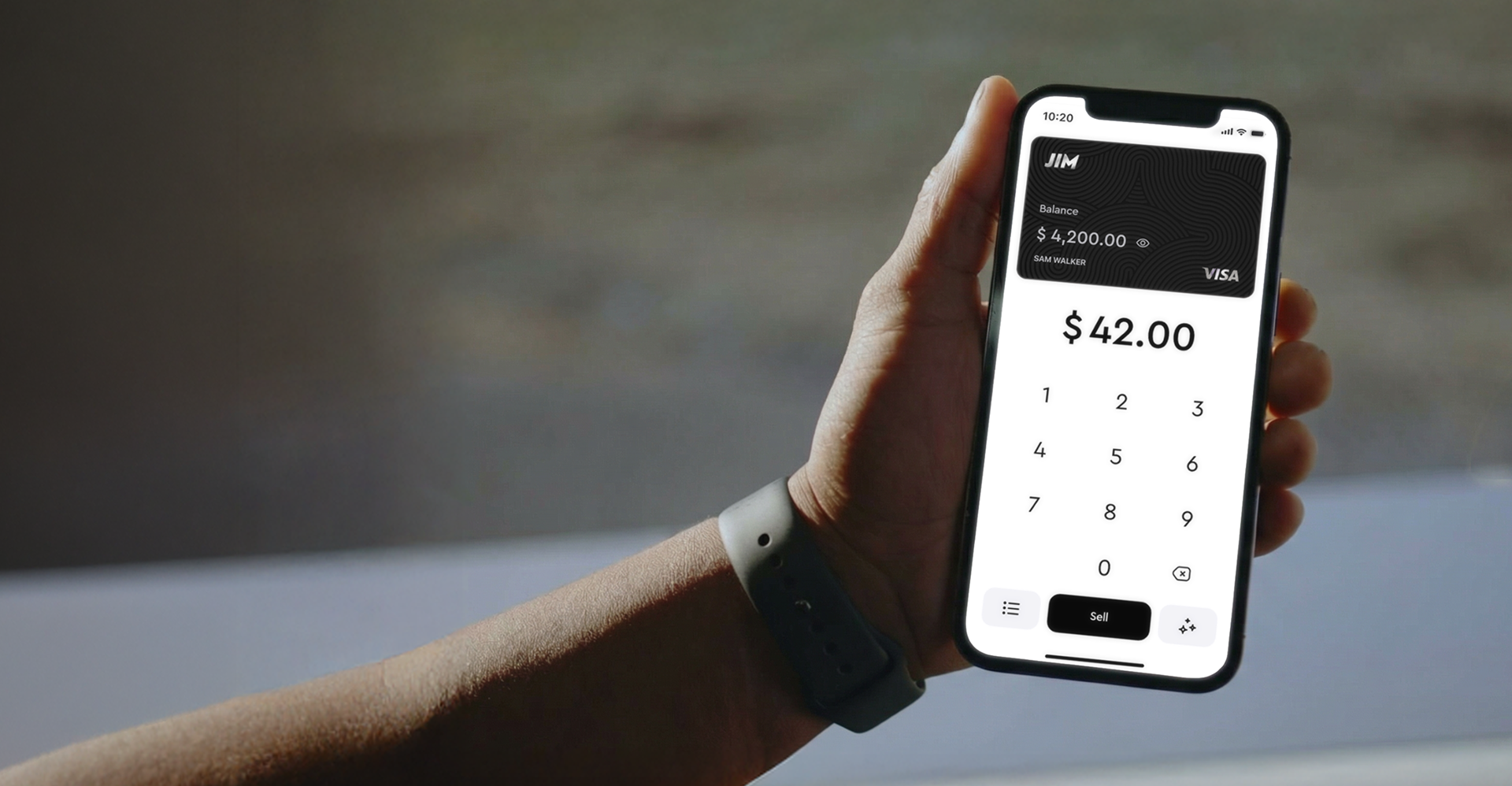
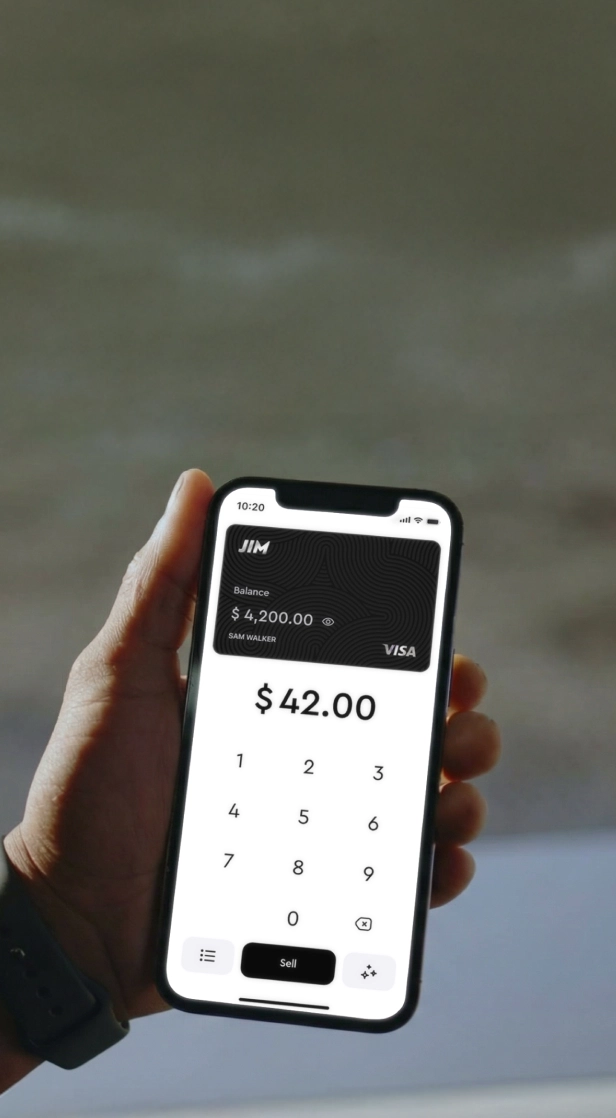
For pop-up food businesses that need to accept payments on-site or on-the-go, JIM offers a streamlined solution. With JIM, you can accept debit, credit and digital wallets directly through your smartphone - just tap and done. At just 1.99% per transaction with no hidden costs or extra hardware needed, it's particularly useful for busy markets where speed is key.
- Get Started: Download the JIM app for iOS.
- Make a Sale: Type the sales amount, hit sell, and ask your customer to tap their card or device on your phone.
- Access Funds: Your money is available right on your JIM card as soon as the sale is done - no waiting for bank transfers.
Here are 3 immediate steps to take:
- Compare the transaction fees of at least two payment processors.
- Download the JIM app to explore its features.
- Decide if you will accept cash in addition to card and digital payments.
Step 6: Fund your launch and manage your finances
Secure your startup capital
Many pop-ups start with personal savings, but you have other options. Consider an SBA Microloan, which provides up to $50,000. The average loan is closer to $13,000 with interest rates between 8% and 13%. You will generally need a credit score above 640 and a solid business plan.
Microlenders like Kiva offer another path, with 0% interest loans funded by crowdsourcing. These loans are often under $15,000 and focus more on your story and community support than just your credit history. They are a great fit for new food entrepreneurs.
Plan for ongoing costs
With funding in mind, you need to budget for your first six months. This working capital covers inventory, event fees, insurance, and marketing. A safe estimate is between $5,000 and $15,000, depending on how often you operate and your menu costs.
Some new owners focus only on initial equipment and underestimate these recurring expenses. You can avoid this by tracking every dollar from day one. A simple spreadsheet or free accounting software like Wave will help you stay on top of your cash flow.
Grants are also worth a look, though they are competitive. Search for local small business grants through your city’s economic development office. Also, keep an eye on national programs like the James Beard Foundation grants, which occasionally open applications for businesses like yours.
Here are 4 immediate steps to take:
- Check your credit score to see if you meet the typical requirements for an SBA Microloan.
- Create a six-month operating budget to calculate your working capital needs.
- Research the application process for a microlender like Kiva.
- Search your city’s economic development website for local small business grants.
Step 7: Hire your team and run your operations
Build your pop-up crew
You will likely need a two-person team to start. One person acts as the cashier, taking orders and payments. The other is the cook, focused on preparing and plating the food. This division of labor keeps the line moving and the food consistent.
Plan to pay an hourly wage between $15 and $25, plus tips, based on your area and the person's experience. Remember, every person who handles food, including you and any staff, must have a valid Food Handler's Card before their first shift.
Streamline your daily operations
For scheduling, you might start with a simple text thread. As you book more events, consider a free app like Homebase. It helps you publish shifts, track hours, and communicate with your team in one place, which avoids confusion.
A two-person team can generally handle $500 to $800 in sales over a four-hour event. Many new owners try to run the stall alone to save money, but this often leads to long waits and lost sales. A dedicated helper is a smart investment.
Here are 4 immediate steps to take:
- Write simple job descriptions for a cashier and a cook.
- Research local food service wages to set a competitive pay rate.
- Confirm that any potential hire has or can get a Food Handler's Card.
- Download an app like Homebase to see how it organizes schedules.
Step 8: Market your business and attract customers
Create a visual brand on social media
Your primary marketing channel will be Instagram. Post high-quality photos of your food daily or every other day. Announce your next pop-up location and hours at least 3-5 days in advance. Use a mix of local hashtags like #[YourCity]Eats and niche ones like #[VeganTacos].
Many new owners post inconsistently, which kills momentum. To avoid this, engage with every comment and follow other local food businesses. This simple activity signals to the algorithm that you are an active part of the community, which can boost your visibility.
Leverage on-site marketing
Your physical setup is a marketing tool. A clear, professional banner with your logo and Instagram handle is a must. You can also use a simple clipboard to collect email addresses. Offer a small incentive, like 10% off their next purchase, for customers who sign up for your newsletter.
At a busy event, you might convert 5-10% of your customers into new social media followers. These followers are your direct line for announcing future locations. Also, ask the event organizer for a social media mention. They want their vendors to succeed and are often happy to help.
Here are 4 immediate steps to take:
- Set up an Instagram business account and post your menu.
- Design a simple, readable banner with your business name and Instagram handle.
- Create an email sign-up sheet to use at your stall.
- Identify three other local vendors you could potentially cross-promote with.
Step 9: Price your menu for profit
Determine your food cost percentage
First, calculate the cost per serving for each menu item. Add up the price of every ingredient in a recipe, then divide by the number of servings it makes. For example, if a batch of pulled pork costs $60 and yields 25 servings, your cost per serving is $2.40.
A good target for your food cost percentage is between 25% and 35%. To find your menu price, divide the cost per serving by your target percentage. With a $2.40 cost and a 30% target, your price would be $8.00 ($2.40 / 0.30).
Analyze the market and set your final price
Your costs are just the starting point. You also need to see what the market will bear. Visit local festivals and check competitors' menus on Instagram to see what they charge for similar items. Your price should be in the same ballpark unless you offer something unique.
Some new owners price their food too low, thinking it will attract more customers. This can hurt your brand and make it impossible to turn a profit. If your ingredients are premium or organic, you can justify a higher price than competitors who use standard supplies.
Here are 4 immediate steps to take:
- Create a spreadsheet to calculate the cost per serving for each menu item.
- Set a target food cost percentage for your business, aiming for 25-35%.
- Visit a local event to document the prices of at least three competitors.
- Decide on a final menu price for your signature dish using both cost and market data.
Step 10: Maintain quality and scale your business
Consistent quality is what turns first-time buyers into regulars. Start by creating a recipe book with exact measurements for every item. This ensures your food tastes the same every time, no matter who is cooking. Also, keep temperature logs for hot and cold foods to meet health standards.
Measure what matters
Track your performance with a few key numbers. Aim for an average order time of under five minutes. You can also monitor customer satisfaction by reading online reviews. A rating of 4.5 stars or higher is a great target. These metrics show you where your operations are strong.
Know when to grow
Once your quality is locked in, you can think about expansion. If your two-person team consistently brings in over $1,000 per event, it might be time to hire a third person. This frees you up to manage the business instead of just working in it.
When you start turning down events because you are already booked, consider launching a second pop-up team or upgrading to a food truck. Some owners jump at expansion too soon, and their quality drops. Make sure your processes are solid before you replicate them.
Here are 4 immediate steps to take:
- Document your signature recipes with exact measurements in a binder.
- Start tracking your average order fulfillment time at each event.
- Set a revenue-per-event goal that will trigger hiring a third team member.
- Research the startup costs for a second pop-up kit versus a down payment on a food truck.
You now have the steps to launch your pop-up food business. Remember that consistency is your secret ingredient, from your recipes to your service. It's what builds a loyal following. You have a solid plan, so go build your business one event at a time.
And as you make those sales, a simple payment solution helps. JIM lets you accept cards right on your smartphone, with no extra hardware and a flat 1.99% fee per transaction. This keeps your checkout fast and your costs predictable. Download JIM to get started.
.avif)