How to start a pottery business in 2026: a 10-step guide wit
A home pottery studio can be launched in the U.S. for $5,000 to $15,000 in equipment plus $50 to $500 in state LLC fees, and a solo potter can reach a 50% to 75% gross margin by pricing with a 2x to 4x markup over materials, labor, and overhead. This 10-step plan walks through validating your idea, setting up legal and insurance protection, buying a kiln and wheel, funding the studio, and pricing your work so the business stays solvent. Whether you start a business from scratch to sell at craft fairs or run a full ceramics business plan online, the same fundamentals apply.
How do you plan and validate a pottery business idea?
Your first task is to confirm real demand before you buy a kiln. A validated niche, a clear competitor map, and a realistic startup budget are the three outputs you need before moving to legal setup.
Start with your local market. Visit boutiques, galleries, and farmers' markets to see what ceramic styles sell and what prices they command. Note any gaps, such as a lack of custom dinnerware or unique decorative vases. Use your phone to take notes on popular booths and pricing, because direct observation beats any generic report for understanding your local market.
Then analyze online competitors. Search Etsy for pottery, filter by top sellers, and study their product photos, descriptions, and reviews. This gives you a clear picture of what successful online ceramic shops do well and where you can differentiate.
Estimate your startup costs
Your equipment will be the largest part of your initial budget. A new electric kiln can range from $2,000 to $10,000, while a quality potter's wheel typically costs between $800 and $2,000. Budget an extra $200 to $600 for smaller items like bats, tools, and shelves, which are easy to overlook when you focus on the big two.
Initial materials add up. Plan for at least $500 to $1,500 for your first batch of clay and a variety of glazes. To manage these initial figures, you might consider buying a used kiln or renting time at a community studio before you purchase your own.
Here are 3 immediate steps to take:
Research five online competitors on Etsy and document their price points.
Create a spreadsheet to budget for a kiln, wheel, and initial supplies.
Visit a local craft fair to observe customer buying habits firsthand.
How do you set up your legal structure and licensing?
Forming a Limited Liability Company (LLC) separates your personal assets from business debts and gives you pass-through taxation, meaning profits are taxed on your personal return. A common misstep is to start as a sole proprietorship to save on fees, but this leaves your personal savings exposed if the business faces a lawsuit. State filing fees vary widely, so check your Secretary of State page before you file.
To form an LLC, expect to pay between $50 and $500, depending on your state. You can file the paperwork yourself through your state's Secretary of State website. Processing times vary from a few days to several weeks.
| State | LLC filing fee | Processing time |
|---|---|---|
| California | $70 | 5 to 7 business days |
| Florida | $125 | 2 to 4 business days |
| New York | $200 | 5 to 7 business days |
| Texas | $300 | 3 to 5 business days |
Source: State Secretary of State offices, accessed August 2026. Fees are for the initial formation filing and exclude annual franchise taxes or publication requirements.
Secure the necessary permits and licenses
With your legal structure decided, get your permits in order. First, apply for a free Employer Identification Number (EIN) from the IRS; you will need it for taxes and banking. You will also need a state seller's permit to collect sales tax.
This permit is usually free from your state's department of revenue. In addition, check with your city or county clerk for a local business license, which can cost $50 to $400 annually.
If you plan to work from home, you may also need a Home Occupation Permit. This is a one-time fee around $25 to $100 and ensures you comply with local zoning laws.
Here are 3 immediate steps to take:
Apply for a free EIN on the IRS website.
Research your state's LLC filing fees on its Secretary of State website.
Contact your city clerk's office about Home Occupation Permit requirements.
How much business insurance does a pottery studio need?
Start with General Liability insurance, which protects you if a customer gets hurt in your studio. For a $1 million policy, annual premiums typically run $300 to $700 for a small, low-risk craft business, though costs vary by state and coverage. Confirm your policy includes Product Liability coverage in case a finished piece causes harm.
Then get Business Property insurance to cover your kiln, wheel, and inventory from fire or theft. Create a detailed asset list with replacement costs to get an accurate quote, because underinsuring your equipment is a frequent oversight. Your homeowner's policy will not cover these items.
If you hire help, you will need Workers' Compensation. If you use a vehicle for deliveries or markets, you must have a Commercial Auto policy.
Find a provider
Seek out insurers that specialize in craft businesses. Providers like The Hartford, Hiscox, or ACT Insurance understand the unique risks of a pottery studio, such as kiln fires. A general agent might not grasp these specific needs or find the best rates.
Here are 4 immediate steps to take:
Request a quote for a $1 million General Liability policy that includes Product Liability.
Inventory your equipment and supplies to determine your Business Property coverage needs.
Review your homeowner's policy for any business activity exclusions.
Ask an agent if you need Workers' Comp or Commercial Auto insurance for your plan.
How do you set up your studio and buy equipment?
Find your workspace
Look for a space between 200 and 500 square feet with good ventilation. Check with your local planning department for zoning requirements. A commercial space will likely need to be in a zone that permits light industrial or artistic work.
When you review a lease, confirm the electrical system can support a kiln, which often needs a 240-volt outlet. Overlooking this leads to unexpected electrician costs. You might also negotiate a utility allowance to offset kiln power usage.
Purchase your equipment and supplies
Your kiln and wheel are the main investments. Within the $2,000 to $10,000 kiln range, a mid-size electric model like the Skutt KM-1027 sits around $3,500 to $4,500 new, while a Brent CXC potter's wheel runs about $1,400 to $1,700 and is a common workhorse choice. You can often find reliable used equipment for 40% to 60% less on forums like the Ceramic Arts Network.
For supplies, look at national distributors like Sheffield Pottery or Laguna Clay. To get wholesale prices on clay, you typically need to order at least 50 to 100 pounds. This offers much better value than small batches from a local art store.
Here are 4 immediate steps to take:
Contact your local planning department about zoning for an artist studio.
Ask a potential landlord about the building's 240-volt electrical capacity.
Compare prices for a new wheel and a used kiln online.
Check the minimum order quantity for bulk clay from a national supplier.
How do you set up payment processing?
For custom orders, it is standard to require a 50% non-refundable deposit upfront. This covers your material costs and secures the commission. The remaining balance should be due upon completion, before you ship or deliver the final pieces.
When you choose a payment solution, compare transaction fees, payout speed, and hardware needs. Traditional processors and card readers often charge 2.5% to 3.5% per sale, and some add monthly fees or equipment rental. These costs can eat into your profit margins, especially on smaller items.
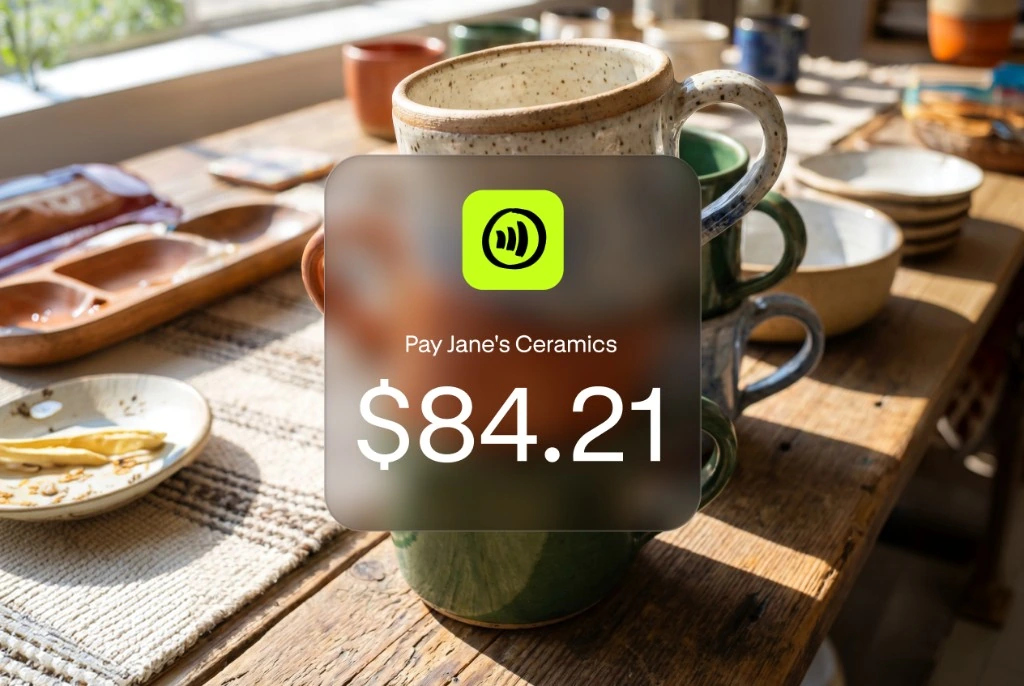
For in-person sales at craft fairs or in the studio, a tap-to-pay app turns your phone into a card reader with no extra hardware. JIM charges a flat 1.99% per Tap to Pay sale with no monthly fees, and your money lands in your JIM account instantly. That rate sits below the 2.5% to 3.5% many traditional processors charge, so it suits potters whose average sale is small. It is simple to get started:
Get Started: Download the JIM app for iOS and complete your seller registration.
Make a Sale: Type the sales amount, hit sell, and ask your customer to tap their card or device on your phone.
Access Funds: Your money is available on your JIM card as soon as the sale is done, with no waiting for bank transfers.
Here are 3 immediate steps to take:
Decide on your deposit policy for custom orders.
Compare the transaction fees of two different payment solutions.
Download the JIM app to see how it works on your phone.
How do you fund your pottery business and manage finances?
Find your funding
The SBA Microloan program offers loans up to $50,000 for equipment and inventory through nonprofit intermediary lenders, with repayment terms of up to six years. Interest rates generally range from 8% to 13%, per the SBA, because intermediary lenders set the rate within SBA limits. You apply through local nonprofit lenders, who are often more flexible than large banks.
You might also explore Kiva, a platform for 0% interest crowdfunded loans up to $15,000. Look for grants from your local arts council too. These funds do not require repayment, but the application process can be competitive.
Manage your working capital
Plan to have $3,000 to $6,000 in working capital for your first six months. This amount covers daily costs like clay, glaze refills, and kiln electricity before your sales become consistent. Underestimating these ongoing expenses is a frequent reason new studios run short on cash.
Once you have funds, open a dedicated business checking account. Mixing business and personal finances creates headaches at tax time and obscures your actual profit, and it can weaken the liability protection your LLC provides.
Here are 4 immediate steps to take:
Research the SBA Microloan program through a local intermediary lender.
Create a six-month budget to estimate your working capital needs.
Search for your city or state's arts council to find grant opportunities.
Open a separate business checking account to manage your funds.
How do you hire a team and set up operations?
Decide when and who to hire
Hiring help too soon can hurt cash flow. A good signal to hire is when you spend over 10 hours a week on tasks that are not making pots, like packing boxes or reclaiming clay. This is time you could use for more profitable work.
Your first hire will likely be a part-time Studio Assistant. Responsibilities include preparing clay, loading kilns, and managing inventory. Expect to pay between $15 and $20 per hour. Formal certifications are not needed; look for reliability and a genuine interest in ceramics instead.
Streamline your studio workflow
Once you have an assistant, you need a clear system. Create simple checklists for routine tasks like glazing or packing shipments. This ensures consistency, especially if you are not there. It also reduces errors and waste.
For scheduling, you can use an app like Homebase or When I Work. Both offer free plans for single-location businesses with a few employees. This helps you manage shifts and communicate with your team without constant back-and-forth texts.
Here are 4 immediate steps to take:
Calculate the weekly hours you spend on non-pottery tasks.
Draft a job description for a Studio Assistant with specific duties.
Research local pay rates for part-time studio help on job sites.
Compare the free plans of scheduling apps like Homebase and When I Work.
How do you market your pottery business?
Start with visual platforms like Instagram and Pinterest. A common misstep is to post only photos of finished products. A better approach is to show your process, because videos of you at the wheel or photos of a kiln opening create a stronger connection with followers.
Post 3 to 5 times per week using hashtags like #pottery, #ceramics, and #handmade. Across industries, Instagram's average engagement rate is about 3.5%, per Hootsuite's 2026 benchmark data, with a 2% to 5% rate considered solid for creators. This consistency builds an audience before you even launch a product, giving you a ready customer base from day one.
Build your email list
An email list gives you a direct line to customers that you own. You can offer a 10% discount on a first purchase in exchange for an email signup on your website. Services like Mailchimp offer free plans for up to 500 subscribers.
Once you have subscribers, send a monthly newsletter with studio updates or new collection previews. For e-commerce and retail campaigns, Mailchimp reports an average open rate near 30%, so expect your handmade-goods emails to perform in that range. This direct channel is often more effective for driving sales than a social media post alone.
Then sell at local craft fairs and farmers' markets. Your goal here is not just sales. Aim to get 20 to 30 new email signups per event. This direct feedback and list-building is invaluable for long-term growth.
Here are 4 immediate steps to take:
Create an Instagram account and plan your first five posts.
Set up a free Mailchimp account and create a website signup form.
Research three local craft markets and their application deadlines.
Decide on a first-purchase discount to offer new email subscribers.
How do you price your pottery for profit?
Calculate your base price
A reliable formula is (Materials + Labor + Overhead) x Markup. This is your Pottery Pricing Matrix, and it works the same way whether you sell a mug, a bowl, or a sculpture.
For a mug, suppose your material cost is $5. If it takes one hour to make and you pay yourself $25 per hour, your labor is $25. Add a few dollars for overhead like electricity and your base cost is around $30.
With this base cost in hand, apply a markup of 2x to 4x to set your retail price between $60 and $120 for that mug. This keeps a profit margin of 50% to 75%, which you can reinvest into the business. Many new potters forget to pay themselves a fair wage, a mistake that makes the business unsustainable.
| Piece | Materials | Labor (1 hour) | Overhead | Base cost | Retail price (2x to 4x) |
|---|---|---|---|---|---|
| Mug | $5 | $25 | $2 | $32 | $64 to $128 |
| Cereal bowl | $4 | $20 | $2 | $26 | $52 to $104 |
| Decorative sculpture | $15 | $50 | $5 | $70 | $140 to $280 |
Material and labor figures are illustrative examples for a solo studio. Adjust them to match your actual clay cost, hourly rate, and kiln electricity.
Analyze the market
Once you have your prices, see how they compare to others. Look at 5 to 10 potters on Etsy or in local shops who make similar work. If your $60 mug is next to a similar one for $40, you need a clear reason for the difference.
You might also consider a tiered pricing strategy. This involves offering items at various price points. For example, you could sell small ring dishes for $25, mugs for $60, and large serving bowls for $150. This approach makes your brand accessible to a wider range of customers.
Here are 4 immediate steps to take:
Calculate the base cost for three of your signature pieces using the Pottery Pricing Matrix.
Set an hourly rate for your labor, aiming for at least $25 per hour.
Research the prices of five similar potters on Etsy.
Create a tiered price list for small, medium, and large items.
How do you maintain quality and scale your operations?
Establish your quality standards
Your reputation depends on consistency. Create a checklist for every piece. It should include a smooth, sanded bottom, even glaze coverage, and no visible cracks. For tableware, a wobble of more than 1mm is a defect. This ensures customers get a reliable product.
Then track your defect rate. Aim for fewer than 5% of pieces from each kiln load to be seconds or discards. A higher rate suggests a problem with your process. Failing to track this metric means you lose profit on wasted materials and time without knowing why.
Know when to grow
Once you consistently sell out within two weeks of a restock, it is time to scale. This could mean buying a larger kiln or hiring another part-time assistant. Avoid expansion if your defect rate is above 5%, as more volume will only amplify quality issues.
As you grow, manual tracking becomes difficult. You might want to use inventory software like Craftybase. It helps you track materials, project costs, and stock levels. This prevents you from selling items you do not have and clarifies your real profit margins.
Here are 4 immediate steps to take:
Create a written quality control checklist for your products.
Calculate your defect rate after your next three kiln firings.
Determine your sell-through rate two weeks after a restock.
Sign up for a free trial of an inventory app like Craftybase.
Starting a pottery business comes down to disciplined pricing and consistent quality, not just clay and kilns. Customers buy a piece of your story, so let your unique style show in every piece while your pricing matrix and defect tracking keep the studio profitable. When you are ready to take your first in-person sale, the JIM app lets you accept cards on your phone with a flat 1.99% fee and no extra hardware.




Sell and get paid in seconds with Jim