Starting a private label business is a rewarding venture that combines product creation and branding with sharp business savvy. The market is more accessible than ever, offering higher profit margins and direct control over your brand, but this accessibility doesn't guarantee an easy path to success.
This guide will take you through the practical steps of validating your business concept, building supplier relationships, acquiring inventory, and obtaining necessary permits to help you launch a successful private label business in the U.S.
Step 1: Plan and validate your business concept
Research your market and competitors
Begin by exploring product niches on platforms like Amazon Best Sellers or by reviewing Etsy's trend reports. Use Google Trends to check search volume for your product ideas. A steady or rising trend indicates sustained interest, which is a positive signal for your potential product.
For competitor analysis, you can use platforms like Jungle Scout or Helium 10 to gauge sales volume and pricing. A frequent misstep is focusing only on top sellers. You should also look at new entrants to spot market gaps they might be missing.
Map out your startup costs
With a product idea in mind, it is time to outline your initial investment. This exercise helps you understand your funding needs from the start. Expect to allocate funds for several key areas, from samples to your first big inventory order.
Product samples can range from $100 to $300. Your first inventory order will likely be the largest expense, often between $2,000 and $5,000. Also, set aside funds for business permits ($300-$700) and basic branding like a logo, which could cost $500 to $2,500.
Here are 4 immediate steps to take:
- Identify five potential product niches using Amazon's Best Sellers list.
- Use Google Trends to compare the search interest of your top two product ideas.
- Analyze two direct competitors for one niche to understand their pricing and sales.
- Create a preliminary budget spreadsheet with estimated costs for samples, inventory, and permits.
Step 2: Establish your legal framework and obtain licenses
Your next decision is the business structure. An LLC is a popular choice because it separates your personal assets from business debts. Many beginners operate as sole proprietors, but this structure leaves your personal finances exposed if the business faces legal issues.
You can form an LLC through your state's Secretary of State website, with filing fees typically between $50 and $500. This upfront cost is a worthwhile investment for liability protection.
Secure federal, state, and local permits
First, get a federal Employer Identification Number (EIN) from the IRS website; it is free. You need an EIN to file taxes and open a business bank account, which helps keep your finances organized from day one.
Next, obtain a seller's permit from your state's Department of Revenue to collect sales tax. Also, check with your city or county clerk for a general business license, which can cost between $50 and $400 and take a few weeks to process.
Depending on your product, you may need to follow rules from the Consumer Product Safety Commission (CPSC). This is common for children's products, electronics, and cosmetics, so check the CPSC website for specific requirements.
Here are 4 immediate steps to take:
- Decide on a business structure, giving strong consideration to an LLC.
- Apply for a free Employer Identification Number (EIN) directly from the IRS.
- Research your state's seller's permit application process.
- Contact your local city clerk to confirm business license fees and timelines.
Step 3: Secure your business insurance
Your top priority is product liability insurance. This protects you if a customer claims your product caused injury or damage. For most private label sellers, a policy with at least $1 million in coverage is standard, especially if you plan to sell on Amazon.
Annual premiums for a $1 million policy typically range from $500 to $2,000, depending on your product's risk category. A frequent misstep is to underinsure. Always confirm your policy meets the minimum requirements of any marketplace you sell on before you commit.
You should also consider general liability insurance, which covers non-product-related claims like copyright infringement. For providers, look into specialists like The Hartford, Hiscox, or Next Insurance. They understand the risks specific to e-commerce and can offer tailored policies.
Here are 3 immediate steps to take:
- Request quotes for a $1 million product liability policy.
- Review the insurance requirements for your primary sales channel, such as Amazon Seller Central.
- Compare policies from two insurers that specialize in e-commerce.
Step 4: Find suppliers and set up your workspace
Find and vet your suppliers
Begin your search on platforms like Alibaba for overseas manufacturing or Thomasnet for U.S.-based options. Create a shortlist of at least five potential suppliers for your product to compare quotes and communication styles. This gives you a solid base for negotiation.
Before committing, ask for their business license and any product-specific certifications. A frequent misstep is skipping samples to save money. Always order a physical sample, which typically costs $100 to $300, to verify quality firsthand before placing a large order.
With a good sample in hand, you can discuss the Minimum Order Quantity (MOQ). Many suppliers list MOQs of 500-1,000 units, but this is often negotiable. You might propose a smaller trial order of 100-250 units to test the market.
Prepare your workspace
You can start from home if you have 50-100 square feet of dedicated space. Just confirm your local zoning laws allow for a home-based business with inventory. If space is tight, a 10'x10' climate-controlled storage unit is a solid alternative.
For equipment, you will want a thermal label printer like a Rollo or Dymo 4XL, which costs around $200-$400. You also need a digital shipping scale ($30-$50) and a starting supply of boxes, poly mailers, and packing tape.
Here are 4 immediate steps to take:
- Contact at least three suppliers on Alibaba or Thomasnet for quotes.
- Request product samples from your top two supplier choices.
- Check your city's website for home-based business zoning rules.
- Create a budget for a thermal printer, shipping scale, and initial packing materials.
Step 5: Set up your payment processing
When paying suppliers, expect to make a 30-50% deposit before production begins. The remaining balance is typically due upon completion or before shipment. Most overseas manufacturers prefer wire transfers, so factor in bank fees of $25-$50 per transaction.
A frequent oversight is ignoring currency conversion rates, which can shift your costs unexpectedly. Confirm the total amount in both currencies before you send funds. This simple check protects your budget from surprises.
For your own sales, you need a payment processor. Platforms like Shopify Payments or Stripe are common for e-commerce. Their fees usually range from 2.5% to 3.5% plus a small fixed fee per transaction. Look for a solution that integrates smoothly with your online store.
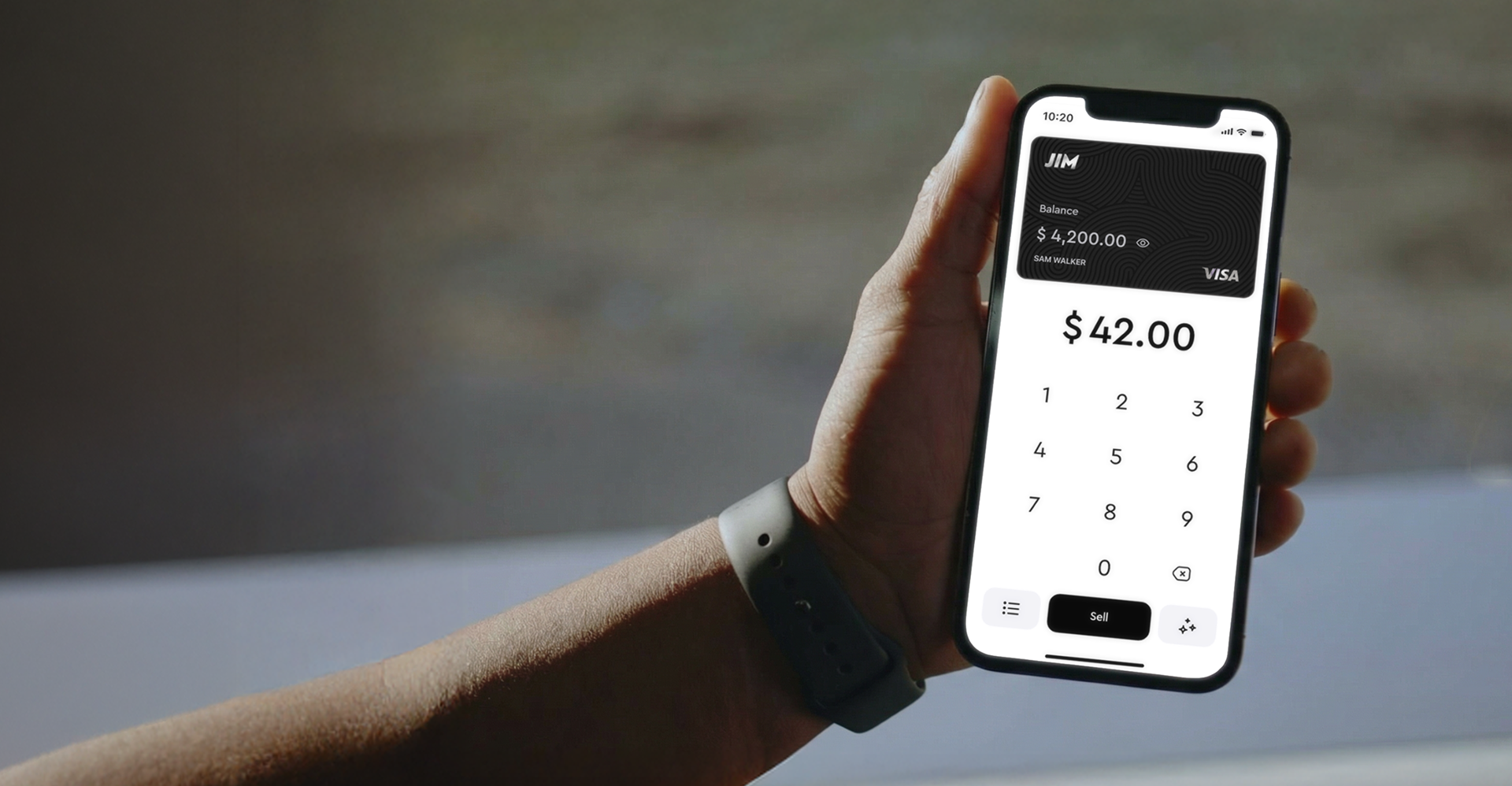
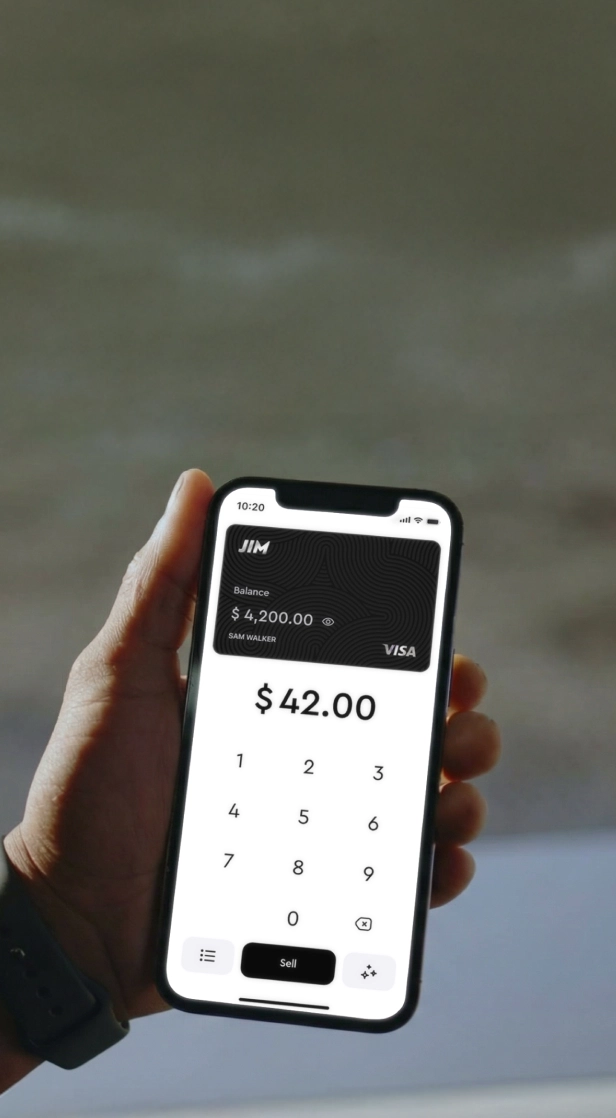
If you sell at markets or pop-ups, you need a way to accept payments on the go. For this, JIM offers a streamlined solution. With JIM, you can accept debit, credit, and digital wallets directly through your smartphone. Just tap and you are done.
At just 1.99% per transaction with no hidden costs or extra hardware, it is a strong choice for in-person sales. This rate is quite competitive, as many other providers charge more.
- Get Started: Download JIM app for iOS
- Make a Sale: Type the sales amount, hit sell, and ask your customer to tap their card or device on your phone
- Access Funds: Your money is available right on your JIM card as soon as the sale is done - no waiting for bank transfers
Here are 4 immediate steps to take:
- Confirm payment terms (deposit and final balance) with your supplier in writing.
- Calculate the full cost of an international wire transfer, including your bank's fees.
- Compare the transaction fees of two online payment processors for your e-commerce store.
- If you plan to sell in person, explore a mobile payment option like JIM.
Step 6: Fund your business and manage finances
Secure your startup capital
The SBA Microloan program is a strong starting point, offering up to $50,000 for new businesses. Interest rates typically range from 8% to 13%. To qualify, you will need a detailed business plan and a good personal credit score.
Online lenders can provide funds more quickly than traditional banks, but this convenience may come with higher interest rates. You might also consider a Rollover for Business Start-ups (ROBS), which lets you use retirement funds without tax penalties, though it requires careful planning.
Plan your working capital
For your first six months, aim to have $10,000 to $20,000 in working capital. This covers more than just inventory. It is your buffer for marketing campaigns, reorders, and unexpected costs like shipping delays. A common misstep is to focus only on inventory costs.
Many new sellers underfund their marketing budget, which can stall early growth. You should allocate at least 10-15% of your total startup funds specifically for advertising. This ensures you have the resources to attract your first customers from day one.
Here are 4 immediate steps to take:
- Review the SBA Microloan program requirements on the official SBA website.
- Research if a ROBS plan is a suitable option for your financial situation.
- Create a six-month budget that includes at least 10% for marketing.
- Compare the interest rates from an online lender against the SBA's typical rates.
Step 7: Hire your team and manage operations
In the beginning, you will likely handle all operations yourself. Your first hire is often a part-time Virtual Assistant (VA) to manage customer service, social media, and order tracking. You can find experienced VAs for $15-$30 per hour on platforms like Upwork.
Many new owners try to do everything for too long, which slows growth. Once you find yourself spending more than 10 hours a week on administrative work, it is time to delegate. This frees you to focus on sourcing new products and marketing.
Streamline your daily tasks
For managing projects, you can use a free platform like Trello to organize tasks for product launches or marketing campaigns. As you grow, an inventory management system like Sellbrite becomes useful to sync stock levels if you sell on multiple channels like Amazon and your own website.
As a benchmark, consider hiring a VA for 5-10 hours per week once you reach $8,000-$10,000 in consistent monthly revenue. This approach keeps your payroll lean while you scale. There are no specific certifications required for these initial roles.
Here are 4 immediate steps to take:
- List five administrative tasks you could delegate to a virtual assistant.
- Research hourly rates for e-commerce VAs on a platform like Upwork.
- Set up a free Trello board to track your product launch tasks.
- Establish a monthly revenue target that will trigger your first hire.
Step 8: Market your product and acquire customers
Your first marketing push should be on the platform where you sell. If that is Amazon, start with Pay-Per-Click (PPC) ads. Aim for an initial Advertising Cost of Sale (ACoS) between 25% and 40% to gain visibility and sales velocity.
Many new sellers spread their budget too thin. It is better to master one channel before you add another. Once your Amazon ads are stable, you might explore Instagram or TikTok with a small daily ad budget of $20-$50 to test performance.
You also need to build an audience you own. Add an email capture form to your website or use a post-purchase insert to collect customer emails. This lets you market directly to them for future product launches, which lowers your acquisition costs over time.
Keep a close eye on your Customer Acquisition Cost (CAC). Divide your monthly ad spend by the number of new customers you gained. For most private label products, a CAC under $50 is a good starting benchmark, but this depends on your product's price and margin.
Here are 4 immediate steps to take:
- Launch an Amazon PPC "Automatic" campaign with a $25 daily budget.
- Create a simple email capture pop-up for your website.
- Plan three content ideas for one social media platform.
- Calculate your target CAC based on your product's profit margin.
Step 9: Set your pricing strategy
Choose your pricing model
First, calculate your landed cost per unit. This is the total expense to get one unit into your inventory, including manufacturing, shipping, and duties. A simple approach is the keystone model, where you double your landed cost. For example, a $15 landed cost results in a $30 retail price.
This 2x markup gives you a 50% gross margin. Many private label sellers aim for a margin between 30% and 60%. You might also consider a 3x markup if your branding and product quality support a higher price point.
Analyze competitor pricing
Look at your top competitors' pricing, but do not just copy them. Some sellers make the mistake of racing to the bottom on price. Instead, use a tool like Keepa to view their price history. This shows if they rely on frequent sales, which can indicate a price-sensitive niche.
Position your product based on its value. If your packaging is better or you offer a unique feature, you can justify a price 10-15% higher than the average competitor. Test a slightly higher price first. You can always run a promotion later.
Here are 4 immediate steps to take:
- Calculate the full landed cost for a single unit of your product.
- Set a target retail price using a 2.5x markup from your landed cost.
- Use Keepa to track the price history of two direct competitors for 30 days.
- Decide on a launch promotion, such as a 15% off coupon for the first week.
Step 10: Control quality and scale your operations
Set a clear quality standard with your supplier using an Acceptable Quality Limit (AQL). A common target is a 2.5% defect rate for minor issues. For orders over $5,000, you might hire a third-party inspection service in the factory's country to verify quality before shipment.
Some sellers assume quality will remain consistent after the first order, but standards can slip. It is a good practice to perform spot checks or full inspections on every large production run, not just the initial one. This protects your brand reputation and reduces negative reviews.
Plan your growth milestones
Once you consistently ship 15-20 orders per day, the time spent packing boxes starts to limit your growth. This is your cue to research a Third-Party Logistics (3PL) provider to handle your fulfillment. This frees you up to focus on marketing and product development.
As you expand to new sales channels, an inventory management system like Sellbrite or Skubana helps prevent overselling. When you reach $15,000 in steady monthly revenue, consider hiring a part-time marketing assistant to manage your ad campaigns and social media presence.
Here are 4 immediate steps to take:
- Define an Acceptable Quality Limit (AQL) for your product with your supplier.
- Research two third-party inspection services for your next large order.
- Set a daily order volume, like 15 orders, as your trigger to contact a 3PL.
- Compare the features of two inventory management systems like Sellbrite and Skubana.
Starting a private label business is about more than just a product; it's about building a brand you own. Remember that your first product is a test. Use it to learn, adapt, and refine your process. You have the roadmap, now go build your business.
And as you grow and start selling in person, getting paid should be simple. JIM turns your phone into a card reader for a flat 1.99% fee, with no extra hardware. Download JIM to get started.
.avif)