Launching a purse business can be a rewarding venture, blending your creative flair with sharp business acumen. It's a market worth billions, with consistent demand for purses across various styles for daily wear, work, and evening events.
This guide will take you through the practical steps of validating your business concept, building supplier relationships, securing funding, and obtaining necessary licenses to help you launch a successful purse business in the U.S.
Step 1: Validate your concept and plan your launch
First, define your niche. Use Pinterest Trends and search Instagram hashtags like #handbag or #purseaddict to see what styles, materials, and colors are popular right now. This helps you gauge real-time customer demand before you commit to a design.
Next, analyze your potential competitors. You can use a platform like Ahrefs to see what brands appear for your target keywords. Create a simple spreadsheet to track the pricing, materials, and marketing angles of at least five other purse brands.
Map out your startup costs
Your initial investment will likely fall between $3,000 and $8,000. A frequent misstep is to overlook shipping and import duties from overseas suppliers, which can add 20-30% to your costs. Factor these into your budget from day one.
Here is a sample breakdown: initial inventory of 50-100 units ($1,500-$5,000), a basic e-commerce site using Shopify ($300-$500 for setup), and professional product photography ($500-$1,500). High-quality photos are non-negotiable for online sales.
Here are 3 immediate steps to take:
- Draft a one-page business plan that defines your target customer and unique style.
- Create a competitor analysis spreadsheet to track 5-10 brands.
- Build a detailed startup budget with line items for inventory, web design, and marketing.
Step 2: Establish your legal structure and get licensed
You might want to consider forming a Limited Liability Company (LLC). It protects your personal assets if the business faces debt or lawsuits. An LLC also offers pass-through taxation, meaning profits are taxed on your personal return, which simplifies paperwork. Filing costs range from $50 to $500.
Once your business is registered, get an Employer Identification Number (EIN) from the IRS. This is your federal tax ID number. You can apply for an EIN for free on the IRS website, and the process takes just a few minutes.
Secure state and local permits
You will need a seller’s permit from your state’s department of revenue. This permit allows you to collect sales tax from customers. Many wholesale suppliers will not sell to you without one, so get this document before you order inventory. Expect a processing time of 2-4 weeks.
Also, check with your city or county clerk for a general business license, which can cost between $50 and $100 annually. If you import purses, you must comply with U.S. Customs and Border Protection rules. Be aware that certain materials may require additional permits.
Here are 3 immediate steps to take:
- File for an LLC with your Secretary of State.
- Apply for a free EIN on the IRS website.
- Research your state’s seller’s permit requirements.
Step 3: Secure your business with the right insurance
Protect against product-related claims
Product liability insurance is your top priority. It protects you if a defective purse, like a broken strap that causes property damage, leads to a customer claim. A frequent oversight is assuming a general policy covers this. Always confirm product liability is explicitly included.
Next, you will need general liability insurance. This covers broader operational risks, such as advertising injury. For a small online purse business, you can often bundle these two coverages into a Business Owner's Policy (BOP) for $500 to $1,200 annually for $1 million in coverage.
When you get quotes, consider providers like Hiscox, The Hartford, and Next Insurance, as they specialize in e-commerce. Also, think about your inventory. Your homeowner’s policy probably will not cover business stock, so you may need commercial property insurance to protect your purses from theft or damage.
Here are 3 immediate steps to take:
- Request quotes for a Business Owner's Policy that includes both general and product liability.
- Verify if your homeowner's or renter's insurance covers business inventory stored at home.
- Compare policies from e-commerce insurance specialists like Hiscox or The Hartford.
Step 4: Set up your workspace and find suppliers
You can likely start your purse business from home. Dedicate a 50-100 square foot area for inventory and a packing station. Before you start, check your local zoning regulations on your city’s website to ensure home-based businesses are permitted.
Your initial equipment needs are straightforward. Plan for industrial shelving ($100-$300), a shipping scale ($20-$50), and a thermal label printer like a Rollo ($100-$250). A lightbox for product photos will run you $50-$150.
Find your manufacturing partner
Platforms like Alibaba are a good starting point for finding overseas manufacturers. Many new owners underestimate the importance of samples. Always order a sample, which costs $50-$150, to verify quality before you commit to a large production run.
Be prepared for Minimum Order Quantities (MOQs). For custom designs, factories often require 100-500 units per style. If you buy wholesale from existing designs, MOQs can be as low as 10-20 units, which is a great way to test the market.
Here are 3 immediate steps to take:
- Designate and measure a dedicated space in your home for the business.
- Create a budget for startup equipment including shelving and a label printer.
- Request samples from at least three potential suppliers on a platform like Alibaba.
Step 5: Set up your payment processing
Choose your payment solutions
For your online store, a platform like Shopify Payments is a common starting point. Expect standard online transaction fees around 2.9% plus 30 cents. This is automatically integrated when you set up your e-commerce site, which simplifies the process.
If you plan to sell at markets or pop-up events, you also need a way to accept payments on the go. Many new owners get hit with unexpected hardware costs or higher fees for in-person sales, which can eat into your margins from those events.
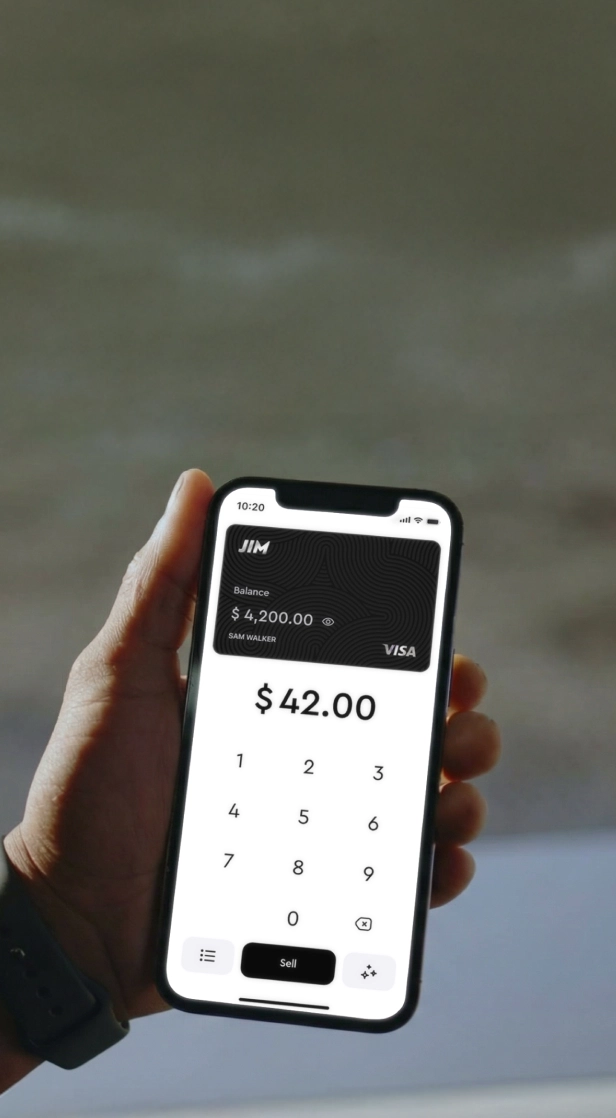
For purse businesses that need to accept payments on-site, JIM offers a streamlined solution. With JIM, you can accept debit, credit, and digital wallets directly through your smartphone. Just tap and done.
At just 1.99% per transaction with no hidden costs or extra hardware needed, it's particularly useful for craft fairs or trunk shows. Average commission rates from other mobile payment providers are often higher, which makes this a cost-effective option.
- Get Started: Download the JIM app for iOS.
- Make a Sale: Type the sales amount, hit sell, and ask your customer to tap their card or device on your phone.
- Access Funds: Your money is available right on your JIM card as soon as the sale is done, with no waiting for bank transfers.
Here are 3 immediate steps to take:
- Activate the default payment gateway on your e-commerce platform.
- Download the JIM app to prepare for in-person sales opportunities.
- Compare your online payment fees with the 1.99% rate for in-person sales to understand your costs.
Step 6: Secure funding and manage your finances
Find your startup capital
You might want to explore an SBA Microloan. These government-backed loans go up to $50,000, but the average is around $13,000, with interest rates between 8-13%. They are great for inventory and equipment purchases.
Also, look into grants like the Amber Grant, which awards $10,000 to a woman-owned business each month. Many new owners drain their personal savings, so securing a small business credit line early can provide a vital cash cushion.
Set up your financial systems
Plan for $4,000 to $10,000 in working capital for your first six months. This covers marketing, platform fees, and reordering popular styles before your revenue stream is steady. A frequent misstep is underestimating these ongoing costs.
Open a separate business checking account immediately. It keeps your finances clean for tax purposes and is a requirement for an LLC. Then, set up accounting software like Wave (free) or QuickBooks Self-Employed to track every dollar from day one.
Here are 3 immediate steps to take:
- Open a dedicated business checking account.
- Research the application requirements for an SBA Microloan.
- Set up an accounting system with a platform like Wave or QuickBooks.
Step 7: Build your team and manage operations
In the beginning, you will likely be your only employee. As you scale, your first hire might be a part-time Virtual Assistant (VA) for $18-$30 per hour. They can manage customer service emails and social media scheduling, which frees you to focus on design and marketing.
There are no specific certifications needed for this role. Instead, look for someone with strong communication and organizational skills. Many new owners hire help too early, which can strain cash flow. A good rule of thumb is to wait until you reach $5,000-$8,000 in consistent monthly revenue.
Streamline your workflow
Use a free project management app like Asana or Trello to create a visual workflow for your orders. You can set up columns for "Payment Received," "Packing," and "Shipped." This helps prevent fulfillment errors as your order volume grows and keeps you organized from the start.
Here are 3 immediate steps to take:
- Create a workflow board on a platform like Trello to track orders.
- Draft a job description for a future part-time Virtual Assistant.
- Set a monthly revenue target that will signal it is time to hire.
Step 8: Market your brand and acquire customers
Build your presence on social media
Focus your efforts on visual platforms like Instagram and Pinterest. Plan to post high-quality product and lifestyle photos 3-5 times per week. Many new owners only use static images, but you should also create Instagram Reels to showcase features, which can double your engagement.
Use paid ads and influencers
Once you have organic traction, run targeted Facebook and Instagram ads. You can start with a budget of $15-$20 per day. Aim for a Customer Acquisition Cost (CAC) below your profit margin. For a purse business, a typical e-commerce conversion rate is 1-2%.
You might also want to partner with micro-influencers who have 10,000 to 50,000 followers. Their audience is often more engaged, and some will promote your product in exchange for a free purse. This is a cost-effective way to get authentic exposure.
Here are 3 immediate steps to take:
- Create a content calendar for one week of Instagram posts.
- Research five micro-influencers in the fashion niche who fit your brand.
- Outline a test ad campaign on Facebook with a $15 daily budget.
Step 9: Price your purses for profit
First, calculate your total landed cost for each purse. This includes the unit price from your supplier, shipping, import duties, and packaging. A frequent oversight is to only use the factory price, which can unexpectedly shrink your margins. Your price must cover all expenses.
Determine your pricing model
A common approach is cost-plus pricing. For purses, a standard markup is between 2.5 and 4 times your landed cost. If a purse costs you $30 to get to your door, a 3x markup means a retail price of $90. This leaves a $60 gross margin for marketing and other costs.
For unique, custom-made designs, you might consider value-based pricing. This model sets the price based on the perceived value to the customer, not just your costs. It works well if your brand has a strong story or uses premium, hard-to-find materials.
Now that you have a model, research your competitors. Look at the prices of five similar purses on other e-commerce sites and marketplaces like Etsy. This helps you position your brand correctly. A higher price can signal luxury, while a lower one might attract budget shoppers.
Here are 3 immediate steps to take:
- Calculate the full landed cost for one of your main purse designs.
- Apply a 3x markup to your landed cost to set a baseline retail price.
- Analyze the pricing of five direct competitors to see where your brand fits.
Step 10: Implement quality control and scale your business
Maintain consistent product quality
Create a quality control (QC) checklist for every shipment. Inspect specific points on each purse like stitch alignment, zipper function, hardware integrity, and fabric blemishes. This ensures every product that goes out the door meets your brand’s standard.
Many new owners only check the first few items in a batch. Instead, you should inspect a random 10% sample from every order. Aim for a defect rate below 2% to maintain customer trust and minimize returns.
Plan your growth
Once you consistently reach $8,000-$10,000 in monthly revenue, it is a good signal to scale. This could mean placing larger production orders to lower your unit costs or hiring your first part-time employee to help with packing and shipping.
When your order volume grows beyond 100 units per month, a spreadsheet becomes difficult to manage. You might want to look at inventory management software like Katana or Cin7 Core. These systems help you track stock levels and prevent overselling.
Here are 3 immediate steps to take:
- Create a quality control checklist for your purse inspections.
- Set a monthly revenue goal that will trigger your first hire.
- Review inventory management software like Katana for future use.
You now have a roadmap to launch your purse business. Remember, your brand's story is as important as the product. Let that unique perspective guide your designs and marketing. You have a solid plan, now go bring it to life.
For those first in-person sales, a simple solution like JIM lets you accept payments right on your phone. It has a flat 1.99% transaction fee and needs no extra hardware. Download JIM so you are ready from day one.
.avif)