Launching a rage room is a rewarding venture that blends a knack for creating unique experiences with sharp business acumen. The market is quite accessible for new entrepreneurs, though this doesn't guarantee an easy path to success. You'll find consistent demand from diverse groups, including corporate teams, birthday parties, and anyone looking for a unique way to de-stress.
This guide will take you through the practical steps of validating your business concept, selecting the right location, securing permits, and sourcing equipment to help you launch a successful rage room business in the U.S.
Step 1: Plan your business and validate your idea
Market and competitor research
Start by analyzing your local market. Use Google Trends to gauge interest in "rage rooms" in your city. Also, check local community forums on Facebook or Reddit to ask potential customers what they would want from the experience.
Next, map out your competition. A simple search on Google Maps or Yelp for "smash room" or "rage room" will show you who is already out there. Look at their websites, pricing, and customer reviews to find what you can do better.
Estimate your startup costs
Your initial investment will be considerable, so a detailed budget is a must. Many new owners underestimate build-out expenses. Soundproofing and safety modifications are not cheap, often running from $10,000 to $50,000 alone.
Here is a typical cost breakdown to get you started:
- Lease deposit and first month's rent: $3,000 - $10,000
- Room build-out and soundproofing: $10,000 - $50,000
- General liability insurance: $5,000 - $15,000 (annual)
- Initial inventory (breakables, safety gear): $5,000 - $10,000
- Permits and licenses: $500 - $2,000
Your total startup costs will likely fall between $23,500 and $87,000. This range gives you a realistic financial target to aim for as you secure funding.
Here are 3 immediate steps to take:
- Analyze Google Trends data for "rage room" searches in your target city over the last 12 months.
- Create a spreadsheet of at least three competitors, and note their pricing, packages, and negative reviews.
- Draft a preliminary budget that lists your expected costs for rent, build-out, and initial inventory.
Step 2: Set up your legal structure and get licensed
Choose your business structure
You should consider forming a Limited Liability Company (LLC). This structure protects your personal assets from business debts. An LLC also offers pass-through taxation, which means profits are taxed on your personal return, avoiding the double taxation of a corporation.
Many new owners make the mistake of operating as a sole proprietorship. This choice leaves your personal finances exposed if the business is sued. An LLC provides a vital layer of protection that is worth the initial filing fee, which typically runs from $50 to $500.
Secure federal, state, and local permits
First, get a free Employer Identification Number (EIN) from the IRS website. You will need this for taxes and to hire employees. Next, register your business name and file your LLC paperwork with your state's Secretary of State office.
Locally, you will need a general business license from your city or county clerk. The most time-consuming permit is often the Certificate of Occupancy. This inspection ensures your location meets all building and safety codes. The process can take 30 to 90 days, so start it early.
Here are 3 immediate steps to take:
- Decide on your business structure, and if you choose an LLC, file the Articles of Organization with your state.
- Apply for a free Employer Identification Number (EIN) directly from the IRS website.
- Contact your local building and safety department to understand the requirements for a Certificate of Occupancy.
Step 3: Secure insurance and manage risk
Find the right insurance policies
Your next move is to protect your business with the right insurance. A standard business policy will not cover the unique activities of a rage room, so you need specialized coverage from an agent who understands entertainment venues.
You will need a package that includes several policies. Here are the main ones to discuss with your agent:
- General Liability: This is your most important policy. It must explicitly cover injuries to participants. Look for at least $1 million per occurrence.
- Property Insurance: This protects your building and its contents, like your front desk and safety gear.
- Workers' Compensation: If you hire employees, this is legally required in most states to cover on-the-job injuries.
If you use a company vehicle to haul breakables, you will also need commercial auto insurance. A common mistake is to select a generic liability policy, which often excludes participant-related claims. Always verify this specific coverage is included.
Expect annual premiums for a proper package to be between $7,000 and $20,000. You should contact providers like Cossio Insurance Agency, Philadelphia Insurance Companies, or Nexo Insurance for quotes.
Implement risk management procedures
Beyond insurance, you need solid safety protocols. Your insurer will require a detailed liability waiver that all customers must sign. You should also conduct a mandatory safety briefing before each session to review rules and proper equipment use.
Here are 3 immediate steps to take:
- Request quotes from at least two insurance providers that specialize in entertainment venues.
- Draft a comprehensive liability waiver and have a lawyer review it.
- Confirm that any general liability policy you consider explicitly covers participant injuries.
Step 4: Find your location and buy equipment
Select and secure your space
You will want a space between 1,500 and 3,000 square feet. This provides enough room for a reception area, two smash rooms, and storage. Focus your search on properties in commercial or light industrial zones, as they are more tolerant of noise.
When you negotiate your lease, you might want to ask for a Tenant Improvement (TI) allowance. This can help offset soundproofing costs. Some new owners sign a lease without clarifying noise restrictions, so get written permission from the landlord for your specific business activities.
Source your gear and breakables
Once your location is secured, you can buy equipment. Your main costs will be safety gear and the items customers break. You can find many breakables for free or at a low cost if you get creative with your sourcing.
Here is a look at what you should budget for your initial inventory:
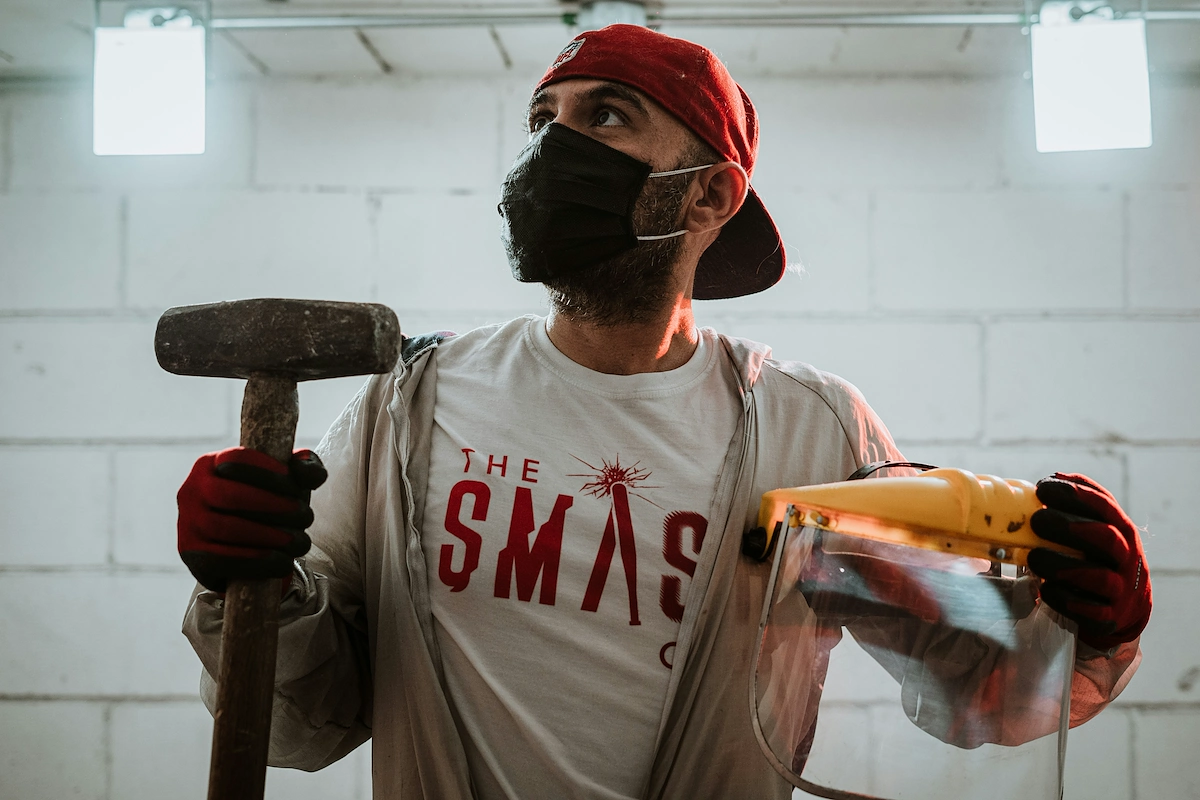
- Safety Gear: Expect to pay $50 to $100 per set for coveralls, face shields, and gloves.
- Weapons: Baseball bats, crowbars, and sledgehammers cost around $20 to $50 each.
- Breakables: Partner with local bars for free bottles or check thrift stores for cheap glassware.
Here are 3 immediate steps to take:
- Search commercial real estate listings for properties zoned for light industrial use.
- Ask potential landlords about a Tenant Improvement allowance for your build-out.
- Contact two local restaurants to arrange a pickup schedule for their empty glass bottles.
Step 5: Set up your payment processing
Choose your payment solution
Most customers will book online, so your system must accept credit cards and digital wallets. You should also require a deposit for large groups to protect against no-shows. This is a common practice that secures your revenue for popular time slots.
When you choose a payment solution, look for low transaction fees and fast fund access. For rage room businesses that need to accept payments on-site or on-the-go, JIM offers a streamlined solution. With JIM, you can accept debit, credit and digital wallets directly through your smartphone—just tap and done.
At just 1.99% per transaction with no hidden costs or extra hardware needed, it's particularly useful for handling walk-ins or selling upgrades like premium weapons. Many other payment solutions charge between 2.5% and 3.5%, so the savings are significant.
Getting started is straightforward:
- Get Started: Download the JIM app for iOS.
- Make a Sale: Type the sales amount, hit sell, and ask your customer to tap their card or device on your phone.
- Access Funds: Your money is available right on your JIM card as soon as the sale is done—no waiting for bank transfers.
Here are 3 immediate steps to take:
- Compare two online booking systems that integrate with payment processors.
- Define your deposit policy for group bookings to prevent lost revenue from no-shows.
- Download the JIM app to explore its features for on-site sales.
Step 6: Fund your business and manage finances
Secure your startup capital
Your business plan and budget from Step 1 are your keys to funding. Many rage room owners turn to SBA loans. The SBA 7(a) program is a popular choice, offering loans from $50,000 to $150,000 for businesses like this.
Lenders will want to see a strong business plan and a personal credit score over 680. Expect to provide a 10-20% down payment. Interest rates typically hover around the prime rate plus 2-5%.
If traditional banks say no, look at online lenders like Accion Opportunity Fund. Their approval process is faster, but interest rates can be higher. Grants specific to rage rooms are uncommon, but check your state's economic development website for small business grants.
Establish your financial operations
Many new owners secure just enough for the build-out and forget about operating cash. You should have at least $15,000 to $25,000 set aside for your first six months. This working capital covers rent, utilities, and inventory before sales stabilize.
From day one, track all your income and expenses with accounting software like Wave or QuickBooks. This discipline will save you major headaches during tax season and helps you monitor your business's financial health in real-time.
Here are 3 immediate steps to take:
- Research the SBA 7(a) loan requirements on the SBA website.
- Draft a six-month working capital budget that includes rent, payroll, and inventory costs.
- Check your personal credit score to see where you stand for loan applications.
Step 7: Hire your team and set up operations
Build your core team
Your first hires will be Safety Monitors, who guide customers and oversee sessions. They handle safety briefings, monitor the rooms, and manage cleanup. Plan to pay them between $15 and $20 per hour. You will also need a Front Desk associate to manage bookings and waivers.
While no specific rage room certifications exist, you should require all staff to have First Aid and CPR training. This shows customers and your insurer that you prioritize safety. Many new owners skip this, but it is a small investment for significant peace of mind.
Streamline your daily workflow
Efficient operations are all about managing your staff and time well. A good rule of thumb is to have one Safety Monitor for every two active rooms. This ensures proper oversight without overstaffing. Understaffing on a busy Saturday can lead to accidents or bad reviews.
To manage shifts, you can use scheduling software like Homebase or When I Work. These platforms help you create schedules and communicate with your team easily. Also, create a detailed cleanup checklist for staff to follow. This can cut your room turnover time from 15 minutes down to five.
As you grow, aim to keep your total payroll costs between 25% and 35% of your gross revenue. This is a healthy benchmark for entertainment venues and helps ensure profitability.
Here are 3 immediate steps to take:
- Draft job descriptions for a Safety Monitor and a Front Desk associate, outlining their specific duties.
- Research local providers for First Aid and CPR certification courses for your future employees.
- Create a free account on Homebase or When I Work to explore their scheduling features.
Step 8: Market your business and get customers
Build your online presence
Your first customers will find you online. Set up your Google Business Profile with high-quality photos and your hours. This is free and puts you on Google Maps. Also, focus on visual platforms like Instagram and TikTok. Post videos of sessions to show people what to expect.
A common mistake is to only post on social media. You should also build an email list through your booking system. Send a monthly newsletter with special offers to get repeat customers. Aim for a Customer Acquisition Cost (CAC) under $25 per new customer through these channels.
Create local partnerships
Connect with other local businesses to create a referral network. Offer a special discount to clients of local therapists or corporate wellness programs. You can also partner with bars to get their empty bottles and promote your business to their patrons at the same time.
Themed events are another great way to attract groups. You could run a "Finals Week Stress Relief" special for college students or a "Smash Your Goals" package for corporate teams. These targeted promotions often have a higher conversion rate than general advertising.
Here are 3 immediate steps to take:
- Set up and fully optimize your Google Business Profile with photos and accurate information.
- Reach out to three local corporate event planners to introduce your team-building packages.
- Plan a themed event for an upcoming holiday and create a simple promotional graphic for it.
Step 9: Set your prices and packages
Develop your pricing tiers
Most rage rooms use time-based packages. You might offer a 15-minute solo session for $30-$45. A common next tier is a 25-minute package for two people at $70-$90. This structure encourages pairs and boosts your average revenue per booking.
Many new owners make the mistake of pricing too low to attract customers. This approach can make it difficult to cover high fixed costs like rent and insurance. Instead, focus on the value of the experience you provide. Your pricing should reflect that.
Offer profitable add-ons
Upsells are where you can significantly increase profit. While a standard package includes glassware, you can offer premium items for an extra fee. For example, you could charge an additional $15 for a printer or $25 for a small television.
Here are a few package ideas to get you started:
- Solo Smash: 15 minutes, one person, one crate of small items.
- Date Night: 25 minutes, two people, two crates plus one medium item.
- Office Demolition: 45 minutes, up to four people, four crates plus one large electronic item.
With your breakables sourced cheaply or for free, your profit margin on these add-ons can be over 90%. This is a key part of a successful revenue strategy.
Here are 3 immediate steps to take:
- Draft three distinct pricing packages with specific time limits and item counts.
- Create a list of five potential premium add-ons and set a price for each.
- Analyze two competitors' websites to compare their group package pricing and structure.
Step 10: Control quality and scale your business
Maintain your service quality
Once your doors are open, consistent quality keeps customers coming back. You can track this by sending a post-session survey asking for a 1-5 star rating. Aim for an average score of 4.5 or higher. Also, monitor your Google and Yelp reviews daily and respond within 24 hours.
While no official rage room certifications exist, ensure all staff maintain their First Aid and CPR training. Some owners let their inventory quality drop to save money. This is a mistake. Always provide a satisfying mix of breakables, from thick glass to old keyboards.
Know when to scale
Growth should be data-driven. When you have more than 15 bookings per day consistently, it is a good signal to hire another Safety Monitor. If your weekend slots are booked 3-4 weeks out, it might be time to build another smash room.
Thinking about a second location? Wait until you operate at 80% capacity for six straight months. When you reach that point, use a booking system like FareHarbor or Checkfront. They can manage multiple locations and complex staff schedules, which simplifies the expansion process.
Here are 3 immediate steps to take:
- Create a simple post-session customer satisfaction survey to track your service quality.
- Set a calendar reminder to check your online reviews daily and respond to all new feedback.
- Define your key growth metric, such as reaching 80% booking capacity for three consecutive months, as a trigger for expansion planning.
Conclusion
You now have a clear path to open your rage room. The key is to remember you sell an experience, not just a service. Keep your focus on safety and customer fun, and you will build a strong business. Your journey starts now.
And when you're ready for walk-ins or package upgrades, a simple payment solution helps. JIM turns your phone into a card reader for a flat 1.99% fee, no hardware needed. Download JIM and you're set.