How to Start an Uber Business in 2026: Costs, Licenses, and Scaling Guide
See article summary
- Budget $15,000 to $25,000 for a used Uber-eligible vehicle, plus roughly $250 in registration and gear.
- Form an LLC to separate personal assets from business liability; state filing fees run $35 to $500.
- Personal auto insurance will not cover rideshare driving, so add a rideshare endorsement or commercial policy.
- Set aside money for self-employment tax of 15.3% plus federal income tax, paid quarterly.
- Track every trip and expense from day one to maximize deductions and avoid tax penalties.
Starting an Uber business takes a compliant vehicle, the right insurance, and a clear grip on taxes. Demand holds steady across commuters, tourists, and late-night riders, and the steps below cover licensing, startup costs, financing, and fleet growth for a U.S. operation.
How much does it cost to start an Uber business?
Startup costs fall into three buckets: the vehicle, legal setup, and insurance. A reliable, used car that meets Uber's requirements runs $15,000 to $25,000, business registration and a vehicle inspection add about $250, and rideshare coverage adds $150 to $300 per month for a commercial policy. Renting through an Uber partner program cuts the upfront vehicle cost but adds a weekly expense.
Break down your startup costs
Your initial investment will vary by city and vehicle choice, but you should budget for a few key items. A reliable, used vehicle that meets Uber's requirements can cost between $15,000 and $25,000. Renting a car through an Uber partner program reduces this initial cost, though it adds a weekly expense.
Factor in commercial rideshare insurance, which can add $150 to $300 per month for a full commercial policy. The National Association of Insurance Commissioners notes that states require rideshare drivers to carry minimum liability limits of $50,000 per person, $100,000 per incident, and $25,000 for property damage, and rates vary by state and driving record. A rideshare endorsement on a personal policy costs less, often $15 to $60 per month, but a separate commercial policy is required in some states. Also set aside about $250 for business registration, a vehicle inspection, and essential gear like a quality phone mount.
Below is a startup-cost snapshot for three common driver profiles.
| Cost category | Owner-operator (own car) | Rideshare rental | Fleet starter (2 cars) || --- | --- | --- | --- || Vehicle | $15,000 to $25,000 | $250 to $350 per week | $30,000 to $50,000 || Insurance (monthly) | $150 to $300 | Included in rental | $300 to $600 || Registration and gear | $250 | $100 | $500 || Estimated first-year total | $18,000 to $29,000 | $14,000 to $20,000 | $35,000 to $55,000 |Figures are illustrative ranges for planning; actual costs depend on your state, vehicle, and insurer.
Four steps before you spend a dollar
- Identify three potential high-demand zones in your city.
- Check driver density in those zones using the rider app during peak and off-peak hours.
- Create a detailed startup budget listing vehicle, insurance, and registration costs.
- Look up your city's specific business license requirements for rideshare drivers.
Do I need an LLC to drive for Uber?
You do not need an LLC to drive for Uber, but forming one separates your personal assets from business debts if you face legal issues from an accident. Most new drivers start as sole proprietors, which is simpler, but an LLC offers stronger protection once you scale to a second vehicle or hire drivers.
Choose your business structure
Form a Limited Liability Company, or LLC, if your state filing fee is under $200 and you plan to add a second vehicle within 12 months. This structure separates your personal assets from business debts. Many new drivers operate as sole proprietors, but an LLC offers better protection if you face legal issues from an accident.
State filing fees for an LLC range from $35 to $500. The Small Business Administration reports that the total cost to register a business is usually under $300, though fees vary by state and structure. With an LLC, profits pass through to your personal tax return, which simplifies your year-end accounting. This avoids the double taxation you see with a corporation.
Secure the right permits
Once your business entity is registered, secure the necessary permits. Check with your city or county clerk for a local business operating permit, which typically costs $50 to $100 annually. This is separate from Uber's own process.
Your state's Public Utilities Commission, or PUC, or Department of Motor Vehicles sets the rules for Transportation Network Company, or TNC, drivers. Uber's app walks you through these state-specific background and vehicle checks, but knowing the source of the regulations helps you stay compliant as rules change.
How key entities connect
The pieces fit together in a specific order. Your LLC is the legal owner of the business, and it needs a free Employer Identification Number, or EIN, from the IRS to open a business bank account. The EIN and LLC then support your TNC permit application, which Uber verifies before you can accept rides. Commercial rideshare insurance is the final layer, required by your state and by Uber before your first trip.
Four steps to get licensed
- Research the LLC formation fee on your state's Secretary of State website.
- Contact your city clerk's office about the application for a business license.
- Review your state's TNC driver requirements on its PUC or DMV website.
- Schedule a vehicle inspection at an Uber Greenlight Hub or an approved auto shop.
What insurance do Uber drivers need?
Your personal auto insurance policy will not cover you while driving for Uber, and a coverage gap exists when your app is on and you are waiting for a ride request. You need a rideshare endorsement on your personal policy or a separate commercial policy to close that gap.
Find the right rideshare policy
To close the gap, you need a rideshare endorsement on your personal policy or a separate commercial policy. An endorsement adds $15 to $50 to your monthly premium and protects you during that waiting period, known as Period 1. It also prevents your insurer from dropping you for commercial driving.
When you shop for a policy, get quotes from providers familiar with rideshare, such as Progressive, Allstate, and State Farm. Be explicit that you need coverage for Period 1 driving. This ensures you are protected from the moment you turn the app on.
Four steps to secure coverage
- Contact your current auto insurer to ask if they offer a rideshare endorsement.
- Get quotes from at least two other providers that specialize in rideshare coverage.
- Confirm in writing that the policy covers you while the app is on before you accept a ride.
- Upload your new insurance certificate to your Uber driver account.
What vehicle do I need to drive for Uber?
Your car must meet Uber's local requirements, which specify a vehicle age of 15 years or newer with four doors and seating for at least five. You can find the exact, up-to-date list for your city on Uber's vehicle requirements page before you commit to a car.
Outfit your car for success
A few key pieces of gear make the job smoother. A quality phone mount costs between $20 and $40 and is a must-have for safe navigation. A dual-facing dash cam, which runs from $100 to $250, protects you in case of disputes.
Drivers who skip the dash cam to save money often need it after an accident or a false report from a passenger. It is a smart, one-time purchase for peace of mind. A multi-port USB charger for passengers is a small touch that goes a long way.
Four steps to get road-ready
- Verify your vehicle model against Uber's approved list for your city.
- Purchase a sturdy, reliable phone mount for your dashboard or vent.
- Invest in a dual-facing dash cam and install it correctly.
- Buy a multi-port USB charger and charging cables for common phone types.
How do Uber drivers get paid and manage earnings?
Uber processes all passenger payments and deposits your earnings weekly into your bank account. For quicker access, you can use the Instant Pay feature to cash out up to five times a day for a small fee. Tracking income and expenses in a separate spreadsheet gives you a clearer view of profitability and simplifies tax time.
Handle payments for extras
You might decide to sell bottled water or snacks to boost your income. For these on-the-go sales, you will need a way to accept card payments since Uber's app only covers the ride fare.
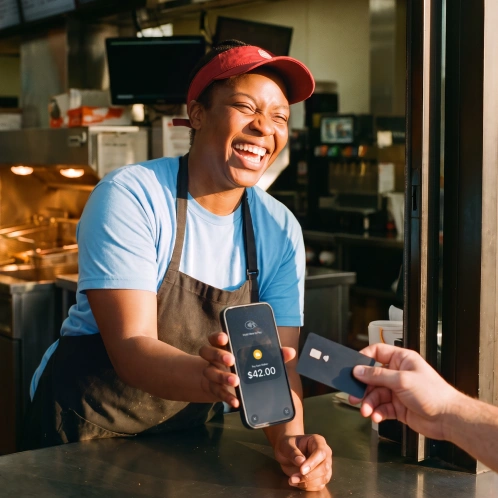
For drivers who need to accept payments on the go, JIM offers a streamlined solution. With JIM, you can accept debit, credit, and digital wallets directly through your smartphone. Just tap and you are done.
At just 1.99% per transaction with no hidden costs or extra hardware, it is great for small sales in your car. Other mobile payment services often charge nearly 3% plus a fixed fee, so JIM's rate is a significant saving.
- Get Started: Download the JIM app for iOS.
- Make a Sale: Type the sales amount, hit sell, and ask your customer to tap their card or device on your phone.
- Access Funds: Your money is available right on your JIM card as soon as the sale is done. There is no wait for bank transfers.
Four steps to manage payments
- Set up direct deposit in your Uber Driver app for weekly payouts.
- Review the fee for Instant Pay to decide if you will use it.
- Download the JIM app to handle any potential in-car sales.
- Create a basic spreadsheet to log your daily earnings and business expenses.
How are Uber earnings taxed, and how do I fund my business?
As an independent contractor, you owe self-employment tax of 15.3% plus federal income tax, and you must pay estimated taxes quarterly. For funding, a personal loan from a credit union or an SBA Microloan covers startup costs if you cannot self-fund.
Fund your startup
Most drivers self-fund their startup costs. If you need a loan, a personal loan from a credit union for $2,000 to $5,000 is a common route. The Consumer Financial Protection Bureau reports that borrower interest rates vary widely by credit profile, with subprime borrowers paying roughly 9% to 13%. Lenders generally require a credit score above 670 to qualify for better rates, but thresholds vary by lender.
Look into an SBA Microloan. These are not direct government loans but are offered through local nonprofit lenders, with loans up to $50,000. You can use the SBA's Lender Match service to find one. These loans are designed for small startups and have flexible terms.
Estimate your working capital
Plan to have enough cash to cover your first six months of operation. For a full-time driver, this means budgeting around $1,800 for gas, $1,200 for insurance, and $600 for a maintenance fund. This buffer keeps you running before your business is consistently profitable.
How Uber driver taxes work
As an independent contractor, you are responsible for your own tax withholding. Uber reports your earnings on Form 1099-K (for payments processed through the platform) or Form 1099-NEC (for other payments), and you report the income on Schedule C (Form 1040), Profit or Loss from Business. The same self-employment tax and quarterly payment rules apply to any independent contractor earning 1099 income.
Two taxes apply. First, self-employment tax of 15.3%, which covers Social Security and Medicare, calculated on Schedule SE (Form 1040). Second, federal income tax on your net profit, which falls in brackets from 10% to 37% depending on your total income.
You can deduct business expenses to lower your taxable income. The standard mileage deduction lets you deduct a set rate per business mile driven, which is simpler than tracking actual costs for gas, depreciation, and maintenance. Keep a mileage log from day one.
A practical habit is to transfer 25-30% of your gross earnings into a separate savings account after each week. The IRS estimated tax safe harbor lets you avoid underpayment penalties if you pay at least 90% of your current-year tax or 100% of your prior-year tax, whichever is less. For more detail, see IRS Publication 505, Tax Withholding and Estimated Tax.
Four steps to fund and file
- Check your credit score to see if you qualify for a personal loan.
- Use the SBA's Lender Match service to find local microloan providers.
- Calculate a six-month budget for your fuel, insurance, and maintenance costs.
- Open a separate savings account to hold your estimated tax payments.
How do I build a team and scale to a fleet?
Scaling means shifting from driver to manager, finding reliable drivers, and setting a clear pay split. A common pay structure is a percentage split where the driver keeps 50-60% of net earnings after Uber's fees, though splits vary by agreement and market.
Find and manage your drivers
You can find drivers through local job boards or referrals. Before anyone gets behind the wheel, have them sign a clear driver agreement. This document should outline the pay split, who covers fuel, and how you will handle traffic tickets or insurance deductibles.
Fleet owners who rely on verbal agreements run into trouble. A written contract protects both you and your driver. It sets clear expectations from the start and prevents disputes over earnings or vehicle damage later on.
A sample weekly profit picture
A well-managed vehicle with a consistent driver can generate a net profit of $200 to $400 per week for you as the owner. Here is how a sample week breaks down, using illustrative figures for a single car.
| Line item | Sample weekly amount || --- | --- || Gross fares | $1,000 || Uber service fee (estimated 25%) | -$250 || Driver split (60% of net) | -$450 || Fuel | -$120 || Insurance allocation | -$40 || Maintenance reserve | -$50 || Net profit to owner | $90 to $200 |Actual results depend on your market, Uber's trip-by-trip service fee, fuel prices, and your driver agreement. Diligent tracking is what makes the numbers reliable.
Use technology to manage your fleet
Uber provides a Fleet app that lets you add drivers and vehicles to your account. You can use it to monitor trips and earnings. For more detailed oversight, software like Fleetio tracks maintenance schedules and expenses for each car.
Four steps to scale
- Draft a driver agreement that details the earnings split and responsibilities.
- Create an account on the Uber Fleet platform to prepare for onboarding.
- Set up a maintenance and inspection schedule for each vehicle in your fleet.
- Review the features of a dedicated fleet management app like Fleetio.
How do I market my Uber service and build a reputation?
Your main marketing channel is the Uber app itself, and success depends on your driver rating. A high rating, like 4.95 or above, makes you more likely to get ride requests, especially premium ones. Focus on five-star service.
Create a premium in-car experience
A clean car and professional attitude are the baseline. To stand out, offer bottled water or a universal phone charger. These small touches often lead to higher tips, which can increase your hourly earnings by 10-15% as an illustrative range. They also contribute directly to positive reviews.
Chasing surge pricing alone is a short-term play. A better long-term strategy is to build a reputation in specific neighborhoods. Consistent, friendly service can make you a preferred driver for regulars, which provides more predictable income than random hotspots.
Develop a private client list, with legal care
For high-value trips like airport runs, you can build a direct client base. Keep professional business cards ready for passengers who ask about booking you privately. This lets you set your own rates, which are often 20-30% higher than Uber's net payout.
Before you do this, check your local regulations for private chauffeuring. Operating outside the app crosses into livery and TNC licensing territory, which varies dramatically by state. California requires a Transportation Charter Party, or TCP, permit from the California Public Utilities Commission. New York City requires a Taxi and Limousine Commission, or TLC, license. Texas regulates charter carriers through the Texas Department of Motor Vehicles. Each path requires commercial livery insurance beyond a rideshare endorsement, so verify the rules for your state before accepting private work.
Do not solicit riders during an active Uber trip, as this violates Uber's policy and can lead to deactivation.
Four steps to build your reputation
- Design and print simple business cards for private hire services.
- Stock your vehicle with passenger amenities like water and charging cables.
- Identify three local hotels or event venues to approach for potential partnerships.
- Review your city's licensing rules for independent chauffeur services.
How do I maximize earnings per hour with Uber's pricing?
Uber sets the base fares, so your strategy is about where and when you drive. Your goal is to maximize your earnings per hour after Uber's service fee. Uber's Marketplace Service Fee page explains that the fee varies from trip to trip, and a common range cited by drivers is 25-30%, but the exact percentage depends on each trip. A reasonable target is a net profit margin of 40-50% of your gross fares.
Master Uber's dynamic pricing
Use the rider app to learn your city's rhythm. Watch for surge pricing, which appears as a multiplier like 1.5x or 2.0x. A $20 base fare at a 2.0x surge becomes $40, which significantly boosts your income even after Uber's fee.
Drivers who chase red surge zones on the map often arrive too late. A better approach is to learn the patterns. For example, a concert ending creates a predictable 45-minute surge. Position yourself nearby 15 minutes before it ends instead of racing across town after the surge starts.
Price your private services
For private clients, a good starting point is to charge 20-30% more than what you would net from the same trip on Uber. For an airport run that nets you $40 on Uber, you could quote a private client $50. This covers your extra insurance and administrative effort.
Four steps to maximize earnings
- Track surge times in three key areas for one week to identify patterns.
- Calculate your break-even hourly rate, including fuel, insurance, and maintenance.
- Create a simple rate sheet for private airport and event transportation.
- Use the Uber rider app before you start your shift to check driver saturation in your target zone.
When should I expand my Uber fleet?
Consider adding a second vehicle once your first car consistently brings in over $1,000 in weekly gross fares. That threshold shows stable demand. Expanding too fast doubles costs without a guaranteed return, so wait until the first vehicle is profitable.
Know when to expand
A new driver can operate your existing car during your off-hours. This nearly doubles the vehicle's earning potential with minimal added capital expense. Once you have two profitable vehicles, you can decide whether to hire a dedicated driver or add another car.
Use software to manage growth
The Uber Fleet app is your starting point for adding drivers and tracking their earnings. For more detailed analytics, a program like Fleetio helps you track maintenance schedules and calculate your true cost-per-mile for each vehicle in your fleet.
A checklist before you add a car
- Check your current driver rating, acceptance rate, and cancellation rate in the Uber app.
- Set a weekly gross fare target for your first vehicle to gauge profitability.
- Explore the features within the Uber Fleet app to understand its capabilities.
- Calculate your current net profit per vehicle after all expenses are paid.
Run your Uber business like a business
Your Uber business is more than just driving. Success comes when you treat it like a real business, with a focus on service and smart financial choices. Keep your driver rating above 4.85, your trip acceptance rate above 85%, and your cancellation rate below 5% to stay in good standing.
And for those extra sales like snacks or water, JIM turns your smartphone into a card reader. You can accept payments easily with a flat 1.99% fee and no extra hardware. Download JIM to be ready for any opportunity.
Frequently Asked Questions
Do I need an LLC to drive for Uber?
How much does it cost to start driving for Uber?
Do Uber drivers pay quarterly taxes?
Is Uber's insurance enough for me?
What credit score do I need for a startup loan?
Can I accept private clients outside the Uber app?




Sell and get paid in seconds with Jim