Starting a rug cleaning business is an exciting venture that merges a keen eye for detail and fabric knowledge with smart business savvy. The industry pulls in billions of dollars annually, fueled by consistent demand from homeowners, offices, and hotels who need professional rug care.
This guide will take you through the practical steps of validating your business concept, securing funding, obtaining necessary licenses, and acquiring equipment to help you launch a successful rug cleaning business in the U.S.
Step 1: Validate your business idea and create a plan
Start by researching your local market. Join neighborhood forums like Nextdoor or local Facebook groups. Look for discussions about home services and see what people say about existing rug cleaners. This gives you direct insight into customer needs and complaints.
Analyze your competition
Use Google Maps to find every rug cleaner in your service area. Create a simple spreadsheet to track their services, pricing, and customer reviews. A common mistake is to compete only on price. Instead, look for service gaps you can fill.
For example, do competitors offer pickup and delivery? Do they specialize in certain materials like wool or silk? This information helps you define your unique position. You can also use databases like ReferenceUSA, often free through your local library, for more business data.
Estimate your startup costs
Your initial investment will likely range from $18,000 to $37,000. A reliable used van might cost $15,000 to $30,000, while a professional-grade portable extractor runs between $2,000 and $5,000. Budget another $500 for initial cleaning solutions.
Also, set aside funds for business setup. This includes about $100 to $500 for LLC formation and $600 to $1,200 for your first year of general liability insurance. A clear budget from the start helps you secure funding and manage cash flow.
Here are 3 immediate steps to take:
- Survey local online groups to identify common customer pain points with rug cleaning services.
- Create a spreadsheet of at least three local competitors, detailing their services and pricing.
- Draft a startup budget that lists estimated costs for a van, equipment, and business registration.
Step 2: Register your business and secure licenses
You should consider forming a Limited Liability Company (LLC). This structure separates your personal assets from business debts. If someone sues your business, your home and personal savings are protected. It offers a good balance of protection and simplicity for new owners.
Operating as a sole proprietor is simpler but leaves you personally liable for all business risks. Filing for an LLC with your state's Secretary of State costs between $50 and $500, depending on where you live. It is a worthwhile investment for peace of mind.
Federal and state registration
Once your LLC is approved, get an Employer Identification Number (EIN) from the IRS. It’s free and you will need it to open a business bank account or hire employees. You can apply for an EIN directly on the IRS website in minutes.
You will also need to register with your state's tax agency for sales tax or other state-specific business taxes. Check your state’s Department of Revenue website for the exact forms and requirements. Some states require a separate state tax ID number.
Local permits and compliance
Do not forget local permits. Most cities or counties require a general business operating license, which typically costs between $50 and $150 per year. A quick search for your city’s business license office will point you to the right government page and application.
Here are 3 immediate steps to take:
- Decide on your business structure and file the LLC formation paperwork with your Secretary of State.
- Apply for a free Employer Identification Number (EIN) on the IRS website.
- Research your city and county government websites for business license applications and fees.
Step 3: Secure insurance and manage risk
Your first policy should be General Liability insurance. A $1 million policy is standard and typically costs between $600 and $1,200 annually. This protects you if a client trips over your equipment or if you damage their property, like knocking over a lamp.
Since you will use a van for pickups and deliveries, you need a Commercial Auto policy. Personal auto insurance will not cover accidents that happen during business operations. This is a frequent oversight for new owners that can lead to denied claims.
Protect your work and your team
Also consider Professional Liability insurance. It covers mistakes specific to your work, such as using the wrong chemical and discoloring an expensive Persian rug. For property you transport, an Inland Marine policy protects against theft or damage to rugs in your van.
If you plan to hire help, even part-time, you will need Workers' Compensation. State laws mandate this coverage. For quotes, you might want to look at providers like The Hartford, Hiscox, or Next Insurance, as they often work with cleaning businesses.
Here are 3 immediate steps to take:
- Request quotes for a $1 million general liability policy from at least two insurers.
- Confirm that your business van is covered by a commercial auto policy, not a personal one.
- Ask insurers about adding professional liability coverage for accidental rug damage.
Step 4: Set up your location and buy equipment
Look for a commercial or light industrial space around 800 to 1,500 square feet. This gives you enough room for a dedicated wash floor, a drying area, and rug storage. Check your city’s zoning map online to confirm which areas permit this type of business.
Negotiate your lease
Many new owners get locked into long five-year leases. You might want to propose a three-year term with an option to renew. This provides an exit strategy if you outgrow the space. Also, ask the landlord about a Tenant Improvement (TI) allowance to help cover build-out costs.
Purchase your equipment
Beyond your van and portable extractor, a dedicated shop needs more hardware. A mechanical rug duster, like a Rug Badger, costs about $3,000 and removes dry soil effectively. For washing, you can build a sloped concrete wash floor with a drain.
A centrifuge is a major purchase, often $10,000 or more, but it cuts drying time from days to hours. Suppliers like Centrum Force and Excellent Supply carry this equipment. For cleaning solutions, you can start with a few gallons from a supplier like Bridgepoint Systems.
Here are 3 immediate steps to take:
- Research local commercial zoning for an 800-1,500 square foot space.
- Price out a mechanical rug duster from an industry supplier like Centrum Force.
- Ask a commercial real estate agent about typical Tenant Improvement allowances in your area.
Step 5: Set up your payment systems
Most clients expect to pay upon completion of the service. For larger commercial jobs or delicate, high-value rugs, you might want to ask for a 50% deposit upfront. This helps cover your initial supply and labor costs before you begin the work.
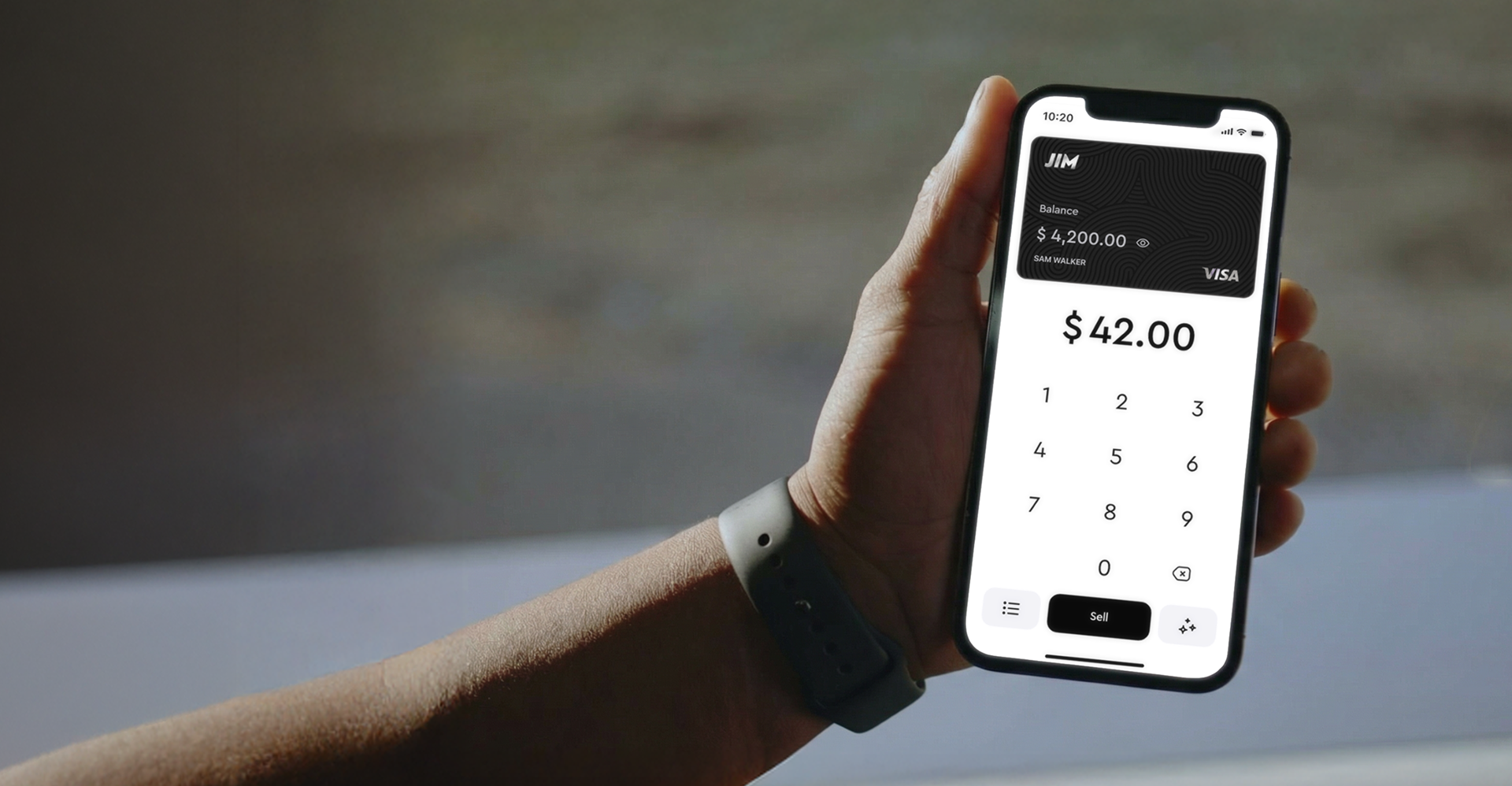
When you choose a payment solution, pay close attention to transaction fees. Many providers charge between 2.5% and 3.5% and sometimes add monthly fees. For a business that needs to accept payments on-site or on-the-go, JIM offers a streamlined solution.
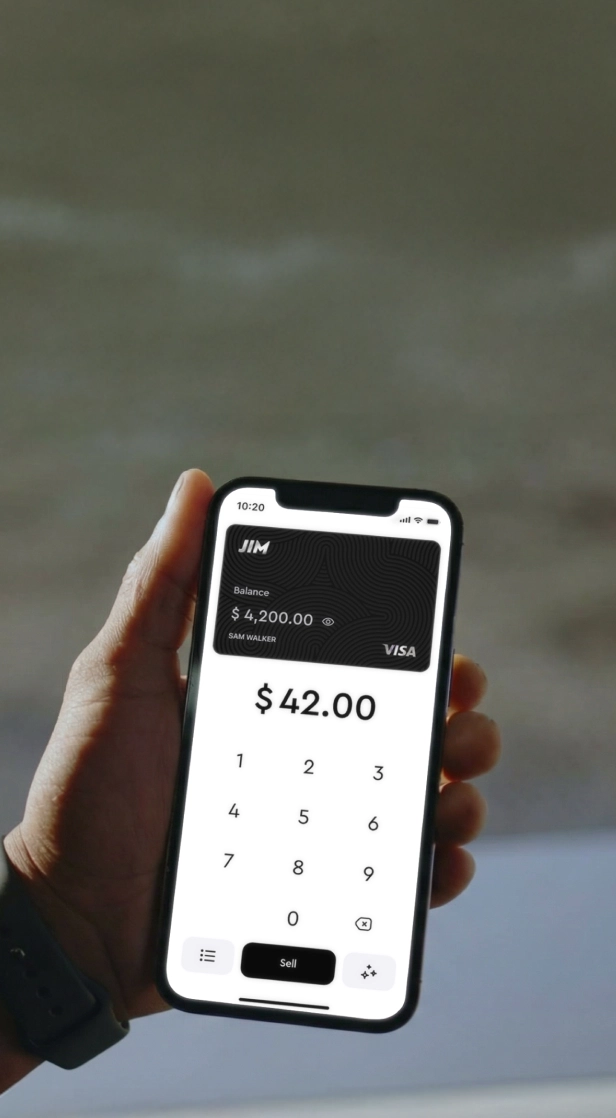
With JIM, you can accept debit, credit and digital wallets directly through your smartphone - just tap and done. At just 1.99% per transaction with no hidden costs or extra hardware needed, it's particularly useful for collecting final payment at a customer's home upon delivery.
Getting started is straightforward:
- Get Started: Download the JIM app for iOS.
- Make a Sale: Type the sales amount, hit sell, and ask your customer to tap their card or device on your phone.
- Access Funds: Your money is available right on your JIM card as soon as the sale is done - no waiting for bank transfers.
Here are 3 immediate steps to take:
- Decide on your payment terms, such as payment on delivery or a 50% deposit for large jobs.
- Compare JIM's 1.99% transaction rate to other payment solutions you find.
- Download the JIM app to explore its interface for on-site payments.
Step 6: Secure funding and manage your finances
For your initial funding, you might want to look at an SBA 7(a) loan. These are designed for small businesses and can range from $5,000 to $50,000 for a startup like this. Lenders will want to see a solid business plan and a good personal credit score, usually above 680.
Another path is equipment financing. This lets you get a loan specifically for your van or centrifuge, often with the equipment itself as collateral. This can be easier to secure than a general business loan, with rates that are competitive.
Plan your working capital
You will need about $10,000 to $15,000 in working capital to cover your first six months. This fund pays for rent, insurance, fuel, and cleaning solutions before your business generates consistent income. A spot where new owners often get tripped up is the marketing budget.
Set aside at least $500 to $1,000 per month for the first quarter to spend on local advertising. This initial push is what gets your phone to ring. Without it, even the best equipment will just sit there. Think of it as fuel for your business engine.
Here are 3 immediate steps to take:
- Review the requirements for an SBA 7(a) loan on the official SBA website.
- Contact a lender to get a quote for equipment financing on a work van.
- Draft a six-month operating budget that includes a minimum of $500 per month for marketing.
Step 7: Build your team and streamline operations
Hiring your first technician
Your first hire should be a Rug Cleaning Technician. Look for someone with an IICRC certification in rug cleaning, as this shows they have formal training. Plan to offer an hourly wage between $18 and $25, depending on their experience and your local market.
This person will handle pre-inspections, dusting, washing, and operating equipment. A frequent misstep is hiring someone without specific rug experience, which can lead to costly damage. The IICRC training helps prevent this by ensuring they understand different fibers and cleaning methods.
Setting up your workflow
With a technician on board, managing jobs is your next focus. You might want to use scheduling software like Jobber or Housecall Pro. These platforms help you dispatch jobs, track progress, and handle customer communication from one place, which prevents missed appointments or double bookings.
As a benchmark, a single full-time technician can typically generate between $80,000 and $120,000 in annual revenue. Tracking this ratio helps you know when your workload justifies hiring a second technician or a part-time delivery driver to improve efficiency.
Here are 3 immediate steps to take:
- Create a job description for a Rug Cleaning Technician, including IICRC certification as a preferred qualification.
- Research scheduling software like Jobber to see how it fits your planned workflow.
- Calculate your revenue-per-technician goal based on your local market pricing.
Step 8: Market your business and get customers
Establish your online foundation
Your first move should be to claim and complete your free Google Business Profile. Upload at least 10 high-quality photos of your equipment and work. This profile is what appears in Google Maps searches, so encourage your first few customers to leave reviews immediately.
Once your profile is active, you might want to run Google Local Services Ads. You pay per lead, not per click, and a budget of $20 to $30 per day can start generating calls. These ads put you at the very top of search results with a "Google Guaranteed" badge.
A frequent misstep is to spread a small budget across too many platforms. You will see better returns if you focus your initial ad spend on one channel, like Google, before you expand to Facebook or Yelp ads.
Build local partnerships
You can also generate business through referrals. Reach out to interior designers, high-end flooring stores, and real estate agents. Offer them a 10-15% commission for every client they send your way. A single partnership can provide a steady stream of work.
As you market, track your Customer Acquisition Cost (CAC). In this industry, a CAC between $75 and $150 is a healthy benchmark. If you spend $300 on ads and get three new jobs, your CAC is $100, which is a sustainable figure.
Here are 3 immediate steps to take:
- Set up and fully complete your Google Business Profile with at least 10 high-quality photos.
- Allocate a starting budget of $20 per day for Google Local Services Ads in your target zip codes.
- Draft an email to introduce your referral program to three local interior designers.
Step 9: Set your pricing and define your services
Choose your pricing model
Most rug cleaners charge by the square foot. You might want to set a base rate of $3 to $5 per square foot for synthetic rugs. For natural fibers like wool or silk, a higher rate of $6 to $9 is standard due to the specialized care required.
You should also create a menu of add-on services. A frequent misstep is to include intensive services in your base price. Instead, charge an extra $1 to $2 per square foot for heavy pet urine treatment, which erodes your profit on difficult jobs if not priced separately.
Calculate your profit margin
Aim for a gross profit margin of 60-70% on each job. If an 8x10 foot rug costs you $100 in labor and supplies, you should charge between $250 and $330 to hit this target. This margin covers your overhead like rent and insurance while ensuring profitability.
To finalize your rates, call a few competitors and ask for a quote on a standard-sized rug. This gives you real-world pricing intelligence. You do not have to be the cheapest, but you need to know where you stand in the market before you launch.
Here are 3 immediate steps to take:
- Set your per-square-foot price for both synthetic and wool rugs.
- Create a price list for add-on services like pet stain removal and moth treatment.
- Call two local competitors to get a price quote for cleaning an 8x10 foot rug.
Step 10: Maintain quality and scale your operations
Establish your quality standards
Create a detailed checklist for every job. This should include a pre-inspection form to document existing damage and a post-cleaning review to confirm all stains are addressed. This simple document prevents most customer disputes.
Encourage your technicians to pursue an IICRC Certified Rug Cleaner (CRC) designation. This advanced certification shows a commitment to industry best practices. It also becomes a powerful marketing point that justifies your premium pricing.
You should track your re-do rate, with a goal to keep it below 2%. If more than two out of every 100 jobs require a second cleaning, it is a signal that your process or training needs review.
Know when to grow
A frequent misstep is to hire based on gut feeling. Instead, use revenue as your guide. When your lead technician consistently generates over $100,000 in annual revenue, it is time to start the hiring process for a second technician.
Also, watch your physical space. Once your drying racks are at 80% capacity on a regular basis, you should begin to research larger commercial locations. This prevents a bottleneck that slows down your entire operation.
As you add staff, scheduling software like Jobber becomes even more valuable. It helps you manage multiple crews, track job profitability, and maintain clear communication without things falling through the cracks.
Here are 3 immediate steps to take:
- Draft a post-cleaning quality control checklist for your technicians to use.
- Check the IICRC website for upcoming Certified Rug Cleaner (CRC) course dates.
- Calculate your current drying rack capacity to establish your 80% benchmark.
You now have a clear guide to start your rug cleaning business. Success in this field is about trust, built through meticulous work on every single rug. With this plan, you are ready to turn your hard work into a respected local service.
As you finish each job, getting paid should be simple. JIM lets you take card payments directly on your smartphone for a flat 1.99% fee, with no extra hardware. Your money is available right away. Download JIM and you are ready for your first customer.
.avif)