How to start a school transportation business (2026 guide)
See article summary
- A single-bus school transportation launch costs $9,000 to $30,000 and needs 30 to 90 days for state permits.
- Form an LLC, get a free USDOT number from the FMCSA, then file state school bus operator permits.
- Federal insurance minimums are $1.5 million for 15 or fewer seats and $5 million for 16 or more.
- CDL drivers need both "S" (School Bus) and "P" (Passenger) endorsements; budget $20 to $28 per hour.
- Districts pay on Net-30 or Net-60, so keep $15,000 to $25,000 in working capital for the first six months.
A single-bus school transportation operation typically runs $9,000 to $30,000 in startup costs and needs 30 to 90 days of lead time for state permits. Those two numbers shape every decision that follows, from how you fund the business to when you can accept your first route.
Every step from licensing and insurance minimums to vehicle purchase and contract bidding has a hard requirement you cannot skip. Miss the FMCSA insurance minimums and no district will sign you; skip the state permit window and you lose a semester of revenue.
Step 1: How do you validate your local school transportation market?
Start with your local market. Contact the transportation departments of nearby public and private schools and ask when their current contracts expire and how to become an approved vendor. This information is often public record, and it sets your entire timeline.
Next, map your competition. The Federal Motor Carrier Safety Administration's SAFER database lists every registered carrier in your area, so you can see who already holds the routes you want. Cross-check with a simple online search for local school bus companies and note their fleet size and the districts they serve.
Startup cost breakdown for one bus
Initial costs vary, but a single-bus operation often requires $9,000 to $30,000. A reliable used school bus runs $7,000 to $20,000. The insurance down payment is the next largest line, often between $3,000 and $6,000, so get quotes early.
Add business registration, commercial driver's license (CDL) fees, and vehicle inspection costs, which add another $1,000 to $2,500. With these numbers, build a realistic financial forecast for your first year.
As an illustration, a single-bus launch in a mid-cost state might break down like this: a $12,000 used Type C bus, a $4,500 insurance down payment, $1,200 in LLC and CDL filing fees, $600 in safety gear, and a $2,000 working-capital cushion, for roughly $20,300 out the door. Your numbers will vary, but this gives you a template to pressure-test against your own quotes.
Market-validation checklist:
- Contact three local school districts to ask about their transportation contract bidding cycle.
- Use the FMCSA SAFER database to identify two major competitors in your county.
- Request insurance quotes from three providers that specialize in commercial auto policies.
Step 2: What licenses and legal structure do you need?
Business entity and federal registration
Form a Limited Liability Company (LLC). This structure protects your personal assets from business debts and lawsuits, which matters in a high-liability industry like student transportation. A sole proprietorship leaves your home and savings exposed, so treat the LLC as a requirement, not an option.
File your LLC paperwork with your Secretary of State. This typically costs between $50 and $500. With your entity formed, register federally: get a USDOT number from the FMCSA. A USDOT number is the unique identifier the federal government uses to track your safety and compliance records, and registration is free.
State and local compliance
Your state's Department of Transportation (DOT) or Public Utilities Commission sets its own rules, including specific school bus operator permits and vehicle inspection certificates. Check their website for the full list of requirements and fees, because the details vary by state. Some states issue school bus operator authority through the DMV rather than the DOT, and a few require a separate motor carrier permit on top of your USDOT number. Read your state agency's school transportation page before you plan your timeline, because the paperwork and fees vary.
Processing times for state-level permits range from 30 to 90 days, so start this process early. You will also need a general business license from your city or county. A call to your local clerk's office clarifies the exact steps.
Licensing to-do:
- File for your LLC with your state's Secretary of State.
- Apply for a free USDOT number on the FMCSA's online portal.
- List all required permits from your state's DOT website.
- Contact your city clerk to ask about local business license requirements.
Step 3: What insurance does a school transportation business require?
Your largest policy is commercial auto liability. Under 49 CFR Part 387, the FMCSA sets the minimum financial responsibility for passenger carriers at $1.5 million for vehicles that seat 15 or fewer passengers and $5 million for buses that seat 16 or more. These are floors, not targets, and many districts demand higher limits in their contracts.
Add a general liability policy of at least $1 million to cover non-vehicle incidents. If you hire drivers, workers' compensation insurance is required. Commercial property insurance applies if you own or lease an office or bus depot.
Insurance costs and providers
Annual premiums for a single bus range from $8,000 to $15,000. The initial down payment is often 20 to 25% of the total, a figure to build into your startup budget. Skip generalist agents and work with an industry specialist, because student transportation has risks, from driver conduct to vehicle maintenance, that a generalist will underprice and then exclude.
Specialty providers like National Interstate, Lancer Insurance, and BusInsure understand those risks. They can also help you navigate state-specific filing requirements that a generalist will miss.
Coverage checklist:
- Request quotes for a $5 million commercial auto policy from two specialist insurers.
- Ask about bundling general liability with your auto policy for potential savings.
- Inquire about discounts for safety programs and vehicle telematics.
- Draft a basic driver screening policy that includes background checks and driving record reviews.
Step 4: How do you secure a location and equip your fleet?
Find a location zoned for commercial vehicle parking, often labeled "Industrial" or "Commercial." Confirm the zoning with your city's planning department. A single bus needs about 500 square feet for parking and maneuvering, so size your space accordingly.
When you review lease options, secure a one- to two-year term to maintain flexibility. Clarify in the agreement who covers security features like fencing and lighting. A poorly lit or unsecured lot is a problem new owners overlook until a vehicle is damaged or stolen.
Vehicle and safety equipment
With parking secured, outfit your vehicles. Commercial-grade two-way radios cost between $150 and $400 per unit. A compliant first-aid kit and fire extinguisher add another $100 per bus.
A GPS telematics system runs $20 to $40 per vehicle monthly. Some school districts require stop-arm cameras for contract eligibility, and those systems cost $500 to $1,500 per bus, so confirm requirements before you buy.
Fleet setup to-do:
- Contact your local planning office to confirm zoning for commercial vehicle parking.
- Get quotes for a GPS telematics system from two different providers.
- Create a shopping list for safety gear for one bus, including a first-aid kit and fire extinguisher.
- Ask a potential school district partner if they mandate stop-arm cameras.
Step 5: How do you set up payment processing for schools and parents?
School and private payments
Most school districts pay on Net-30 or Net-60 terms, meaning you wait 30 to 60 days after invoicing before payment arrives, typically via check or ACH transfer. Your contract must clearly define these terms. Set up ACH capabilities with your bank early, because this detail delays many owners' first payment.
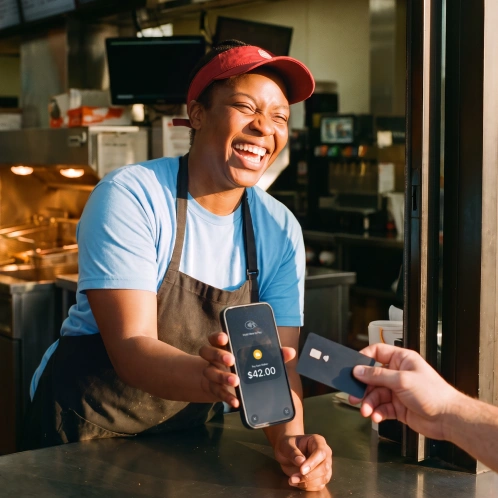
For private routes and field trips, you need to accept card payments on the spot from parents and trip organizers. JIM turns your smartphone into a card reader for debit, credit, and digital wallets at a flat 1.99% per transaction with no extra hardware, which fits the field-trip scenario where a parent hands you a card in a parking lot. Other providers often charge closer to 3% plus monthly fees, so the rate matters on every charter trip.
Payment setup checklist:
- Draft your standard payment terms (Net-30, Net-60) for school contracts.
- Ask your business bank about setting up for ACH transfers.
- Compare two mobile payment options for on-the-spot parent payments.
Step 6: How do you fund the business and manage working capital?
Funding sources and loan options
Equipment financing is a strong first option. Lenders provide funds specifically for your bus purchase, using the vehicle itself as collateral, which often means better terms than an unsecured loan. New owners commonly secure $10,000 to $50,000 this way.
The Small Business Administration is another route. Its Microloan program provides up to $50,000 through intermediary lenders for working capital, equipment, and supplies. The SBA does not set a fixed interest rate; the rate is negotiated between you and the intermediary lender, though rates typically fall between 8% and 13%. Intermediary lenders usually look for a personal credit score above 680 and a solid business plan.
Calculating your working capital
Calculate your working capital before you launch. For a single-bus operation, plan for $15,000 to $25,000 to cover your first six months. This buffer covers your large insurance down payment, fuel, and unexpected maintenance. Because districts pay on Net-30 or Net-60 terms, you cannot rely on immediate income, and underestimating this buffer is the fastest way to a cash crunch within weeks of launch. Carry these numbers into your business plan so lenders see a realistic cash-flow forecast.
Funding to-do:
- Research two lenders that offer equipment financing for commercial vehicles.
- Check your credit score to see if you meet the typical 680+ requirement.
- Use the SBA's Lender Match service to find local SBA-approved lenders.
- Calculate your estimated 6-month operating costs for fuel, insurance, and maintenance.
Step 7: How do you hire drivers and run daily operations?
Driver requirements and compensation
Your first hire is a driver. They must hold a Commercial Driver's License (CDL) with both the "S" (School Bus) and "P" (Passenger) endorsements. The S endorsement certifies a driver to operate a school bus carrying students, and the P endorsement covers vehicles designed for 16 or more passengers; federal rules require both when transporting students, per FMCSA CDL guidance. Hiring someone with a basic CDL forces you to wait while they add the endorsements.
Plan for a wage of $20 to $28 per hour, depending on your location and the driver's experience. Run a comprehensive background check and a DOT-mandated drug test. This process takes 2 to 4 weeks, so start your search early.
Operational systems and backup plans
Route management software like Routefinder or Transfinder helps you optimize schedules and provide real-time tracking, a feature many school districts value. These systems also simplify the reporting required for contract compliance.
Line up substitute drivers before you need them. If your primary driver is unavailable, you need a qualified backup ready, or a single sick day puts your school contract at risk. Keep a list of at least two potential substitutes.
Operations checklist:
- Draft a job description for a school bus driver that specifies CDL "S" and "P" endorsements.
- Research the DOT drug screening providers in your area.
- Request a demo from a routing software provider like Routefinder.
- Contact two experienced, licensed drivers to ask about their availability as substitutes.
Step 8: How do you market your services and win school contracts?
Your primary marketing channel is direct outreach. Identify the transportation directors at your target school districts and contact them by email and phone. This is a relationship sale, so plan a follow-up sequence of 3 to 5 touchpoints over several weeks.
Attend public school board meetings, where contracts are often discussed and awarded. Public comment periods give you a chance to learn about a district's needs and introduce your company.
Crafting a winning bid
Your bid proposal is your most critical marketing document. It must detail your safety protocols, driver screening process, and vehicle maintenance schedule. Districts award contracts on reliability and safety, not just the lowest price, so a generic proposal loses to a customized one.
Customize each bid to the district's specific Request for Proposal (RFP). A strong bid outline includes: a company overview and years in operation; safety record and on-time performance history; driver screening and training protocols; vehicle maintenance and inspection schedule; insurance certificates meeting the district's limits; references from other districts or private clients; and pricing broken down per route.
For private charters, a simple website and a Google Business Profile work well. Once you land your first few private trips, ask for testimonials, because positive reviews attract parents and private groups.
Contract-winning checklist:
- Draft an outreach email template for school transportation directors.
- Find the schedule for the next two school board meetings in your target district.
- Outline a standard bid proposal using the seven-point structure above.
- Create a Google Business Profile for your company.
Step 9: How do you set pricing and protect your profit margins?
School contract pricing models
For public school contracts, the common model is a flat daily rate per route, ranging from $200 to $350 per day for one morning and one afternoon run. Private schools often prefer a per-student monthly fee between $350 and $500.
Your price must cover all costs plus profit. Bidding too low just to win the contract leaves you operating at a loss. Aim for a net profit margin of 15 to 25% after all expenses.
Private charter and field trip rates
For private trips, charge an hourly rate of $80 to $150 per hour with a four-hour minimum, so even short trips stay profitable. Charge for deadhead miles, the travel time to and from the pickup location, and start the clock when the bus leaves your lot and stop it when it returns. State this clearly in your charter agreement to prevent billing disputes.
To see how pricing flows to margin, work a single route: a $300 daily rate across 180 school days is $54,000 in annual revenue. Subtract roughly $15,000 in insurance, $8,000 in fuel, $5,000 in maintenance, and $25,000 in driver wages, and you are left with about $1,000, a thin margin that shows why cost control and full route utilization matter. Run this calculation on your own numbers before you bid.
Pricing to-do:
- Calculate your total cost-per-mile, including fuel, insurance, and maintenance.
- Decide on a per-route or per-student model for your bid proposals.
- Set an hourly rate and minimum charge for private charter trips.
- Research the charter rates of two local competitors to ensure your pricing is competitive.
Step 10: How do you maintain quality and scale the operation?
Set your quality standards
Your reputation depends on reliability. Aim for an on-time performance rate of 98% or higher, a benchmark school districts track closely and often write into their contracts as a service-level requirement. Keep a log of all parent complaints, because tracking them helps you spot patterns before they become major issues.
For professional standards, explore resources from the National Association for Pupil Transportation (NAPT), the industry's largest membership organization, which offers professional development and certifications that strengthen your credibility with districts and parents.
Know when to expand
Add a new bus when your current routes consistently run at 85% capacity. Once you manage five or more routes, hire an office manager. Owners who try to do it all for too long burn out, and service quality drops.
As you grow, manual tracking becomes a liability. Fleet management software like BusBoss or TripSpark manages complex routes, vehicle maintenance schedules, and compliance reporting for larger operations.
Scaling checklist:
- Set a formal on-time performance goal of 98% or higher for all routes.
- Explore the professional development resources on the NAPT website.
- Establish a benchmark for adding a new bus, such as when routes reach 85% capacity.
- Request a demo from a fleet management software provider like BusBoss or TripSpark.
Starting a school transportation business comes down to the trust you build with schools and parents. Reliability is your best asset, and the operators who win long-term contracts are the ones who treat on-time performance, safety, and transparent pricing as daily disciplines rather than one-time setup tasks.
Frequently Asked Questions
How much does it cost to start a school transportation business?
Do I need a CDL to drive a school bus?
What insurance is required for a school transportation business?
How do school transportation contracts pay?
Can I start a school bus business with one bus?


Sell and get paid in seconds with Jim