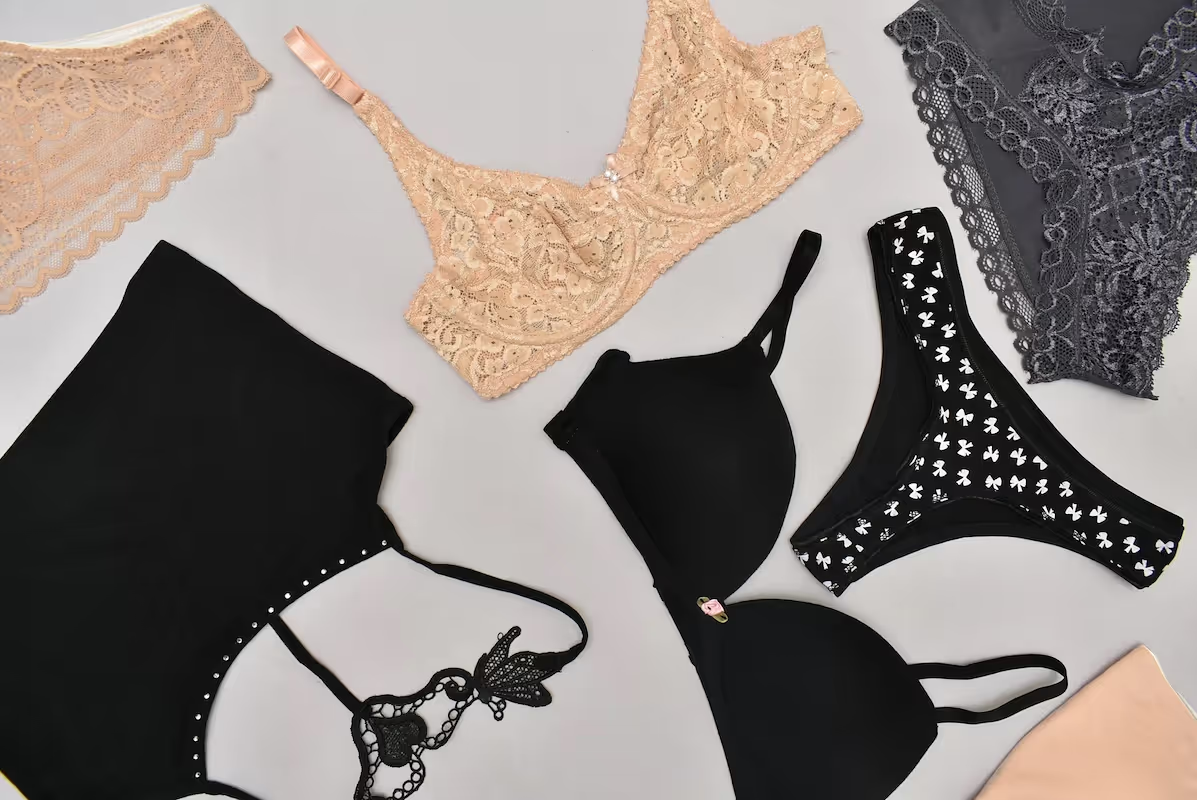
Starting a shapewear business is a rewarding venture that blends an eye for design and material quality with sharp business acumen. The global shapewear market is a multi-billion dollar industry, fueled by consistent demand for products that offer support for daily wear, special occasions, and post-partum recovery.
This guide will take you through the practical steps of validating your business concept, building supplier relationships, acquiring inventory, and securing funding to help you launch a successful shapewear business in the U.S.
Step 1: Validate your business plan
First, confirm people want what you plan to sell. Use Google Trends to compare search interest for different shapewear types, like "postpartum girdle" versus "tummy control shorts". Also, search hashtags on Instagram and TikTok to see what styles get the most engagement.
Analyze your competition
Look at the top 5 shapewear brands on major retail sites and on their own e-commerce stores. You can use platforms like Ahrefs to see what keywords they rank for. Note their pricing, materials, and what customers say in reviews. This helps you find a gap in the market.
Estimate your startup costs
A realistic budget is your foundation. Initial inventory can range from $5,000 to $15,000. An e-commerce website might cost $2,000 to $10,000 to develop. Many new owners forget to budget enough for professional product photography, which can be $500 to $2,000 but directly impacts sales.
- Initial Inventory: $5,000 - $15,000
- E-commerce Website: $2,000 - $10,000
- Branding & Marketing: $1,000 - $5,000
- Business Formation & Legal: $500 - $1,500
Here are 3 immediate steps to take:
- Track search volume for three specific shapewear styles you want to sell.
- List the top three complaints you see in competitor product reviews.
- Create a draft startup budget based on the cost ranges provided.
Step 2: Establish your legal structure and licenses
Consider forming a Limited Liability Company (LLC). It separates your personal assets from business debts. Many new owners start as a sole proprietorship to save on fees, but this choice leaves your personal finances vulnerable if the business faces legal issues.
You can file for an LLC through your state's Secretary of State website. The cost typically ranges from $50 to $500, and processing can take a few days to several weeks. This step is foundational before you open a business bank account.
Next, get an Employer Identification Number (EIN) from the IRS. It is free and you can apply online. You will also need to follow the Textile Fiber Products Identification Act, which is enforced by the Federal Trade Commission (FTC) for proper product labeling.
You will need a seller's permit from your state's Department of Revenue to collect sales tax. In addition, check with your city or county clerk's office for a general business operating license. These permits can cost between $50 and $400 annually.
Here are 4 immediate steps to take:
- Decide between an LLC and a sole proprietorship for your business structure.
- Apply for a free Employer Identification Number (EIN) on the IRS website.
- Review the FTC's textile labeling rules to ensure compliance.
- Find your state's seller's permit application and your city's business license form.
Step 3: Secure your insurance and manage risk
Key insurance policies for your business
Product liability insurance is a top priority. It protects you if a customer claims your shapewear caused an injury or skin reaction. A $1 million policy is standard, with annual premiums often ranging from $500 to $1,500 for a new online business.
You will also need general liability insurance for claims like advertising injury. If you hold inventory, commercial property insurance covers loss from theft or damage. Once you hire employees, workers' compensation is legally required in most states to cover on-the-job injuries.
Finding the right provider
A mistake some new owners make is choosing a minimal policy to save money, not realizing a single product claim can be financially devastating. It is wise to get coverage that truly protects your assets. Look for providers that specialize in e-commerce businesses.
You can get quotes from insurers like Hiscox, The Hartford, or Next Insurance. They are familiar with small retail businesses and can help you bundle policies. Compare their offerings to find the best fit for your budget and risk level.
Here are 3 immediate steps to take:
- Request quotes for a $1 million product liability policy.
- Compare annual premiums from two e-commerce insurance specialists.
- Assess your inventory's value to determine your commercial property coverage needs.
Step 4: Set up your workspace and find suppliers
Your operational space
For an online store, a dedicated 100-200 square foot area in your home can work. This gives you enough room for shelving and a packing station. Check your local city ordinances for home-based business rules, but this is usually straightforward for e-commerce without customer foot traffic.
Your fulfillment and marketing equipment
Your next focus is the equipment for fulfillment and marketing. Many new owners are surprised by how much product photography influences sales. A good setup from the start prevents the need for costly reshoots later.
- Photography Kit: A DSLR camera ($500+), lighting kit ($150+), and a mannequin ($100-$300) create professional images.
- Shipping Station: A thermal label printer like a Rollo or Zebra ($150-$250) and a digital shipping scale ($30) will streamline your process.
- Inventory Storage: Basic metal shelving units ($70-$200 each) will keep your products organized and accessible.
Find your manufacturing partner
Now that your space is planned, it is time to find a supplier. Platforms like Alibaba are a common starting point to find overseas manufacturers. Look for suppliers with a "Gold" status and several years of experience. You can also explore domestic options, though costs may be higher.
When you contact them, ask for their Minimum Order Quantity (MOQ). This is often between 100 to 500 units per style and color. A smart way to check quality is to order a smaller test batch first. This move helps you avoid tying up too much capital in unproven inventory.
Here are 3 immediate steps to take:
- Designate a 100-200 square foot space for your inventory and packing station.
- Create a budget for a photography kit and shipping station based on the price ranges.
- Contact two suppliers on Alibaba to request their MOQ for a shapewear style you like.
Step 5: Set up your payment processing
Choose your payment gateway
Your e-commerce store needs a way to accept payments. Most customers will use credit cards, debit cards, or digital wallets like Apple Pay. Payment gateways like Stripe or PayPal integrate directly with platforms like Shopify, making this process smooth.
When you compare options, look closely at the transaction fees. Many new owners don't realize that average commission rates can be 2.5% to 3.5% plus a fixed fee per sale. These costs can add up, especially on items with smaller profit margins.
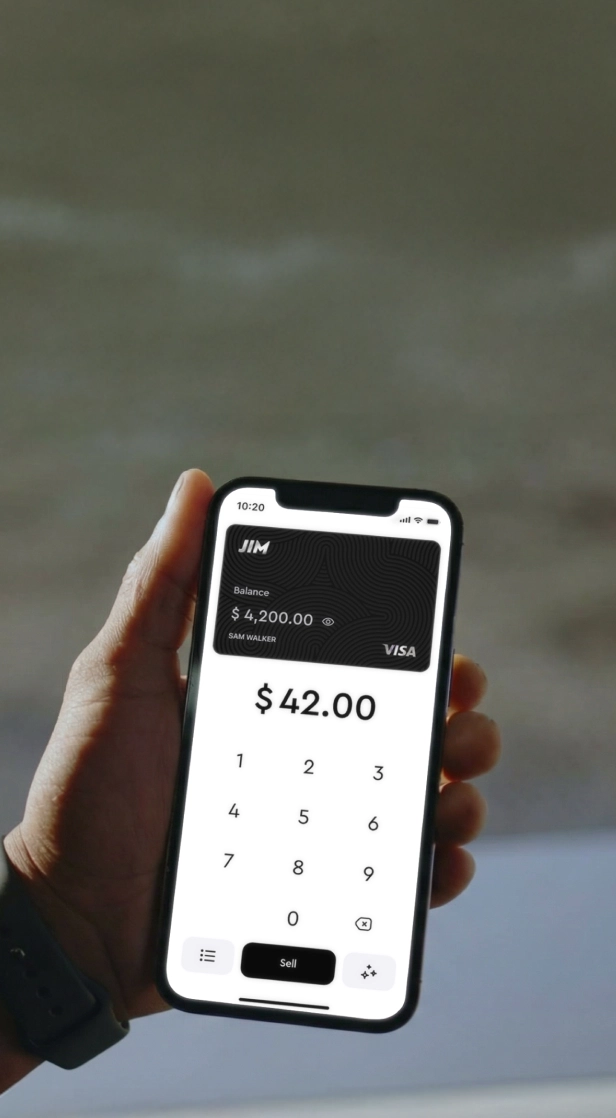
For shapewear businesses that also sell at pop-up events or markets, accepting payments on the go is a must. JIM offers a streamlined solution. With JIM, you can accept debit, credit, and digital wallets directly through your smartphone—just tap and done.
At just 1.99% per transaction with no hidden costs or extra hardware needed, it's particularly useful for these in-person sales. This rate is noticeably lower than many other providers.
- Get Started: Download the JIM app for iOS.
- Make a Sale: Type the sales amount, hit sell, and ask your customer to tap their card or device on your phone.
- Access Funds: Your money is available right on your JIM card as soon as the sale is done—no waiting for bank transfers.
Here are 3 immediate steps to take:
- Compare the transaction fees for two major payment gateways for your online store.
- Check which payment gateways integrate easily with your chosen e-commerce platform.
- Download the JIM app to explore its features for potential in-person sales.
Step 6: Secure your funding and manage finances
Funding options
You will need about $10,000 to $25,000 in working capital for your first six months. This covers inventory reorders, marketing, and other operational costs. A detailed financial projection is your best asset when you approach lenders.
The SBA Microloan program is a great starting point. It offers up to $50,000 with interest rates between 8% and 13%. You will generally need a credit score of 680 or higher to qualify.
You might also look into grants, which you do not have to repay. The Amber Grant, for example, awards funds to women entrepreneurs. Competition is high, but a strong business story can make your application stand out.
Managing your finances
Once you have funding, open a dedicated business bank account to keep your finances separate. This simplifies tax time and gives you a clear view of your cash flow.
Use accounting software from day one. Platforms like QuickBooks Online or Xero start around $30 per month. They help you track sales, expenses, and inventory value, which is vital for understanding your actual profit margins.
Here are 4 immediate steps to take:
- Draft a 6-month budget to project your working capital needs.
- Check your credit score to see if you meet the 680+ requirement for SBA loans.
- Research the application requirements for the Amber Grant.
- Compare the monthly plans for QuickBooks Online and Xero.
Step 7: Hire your team and set up operations
You will likely handle most tasks yourself at first. Once you consistently process 10-15 orders per day, you might want to consider your first hire. This move prevents burnout and keeps your shipping times fast, which customers notice.
Your first hires
A part-time Fulfillment Associate is a great first step. This person packs orders, manages inventory counts, and processes returns. Expect to pay between $15 and $20 per hour. No special certifications are needed for this role.
As sales increase, a part-time Customer Service Representative becomes valuable. They answer customer emails, handle size exchange requests, and manage social media messages. This role typically pays $18 to $22 per hour.
Streamline your workflow
With a team in place, you need to organize the work. An order management platform like ShipStation connects to your store and simplifies label printing. Plans start around $9.99 per month and can save you hours each week.
Some owners try to manage schedules with texts, which quickly becomes messy. For scheduling your team, an app like When I Work is a better option. It helps you manage shifts and communicate with staff in one place.
Here are 4 immediate steps to take:
- Write a job description for a part-time Fulfillment Associate.
- Set your daily order volume target for making your first hire.
- Explore ShipStation's features for automating shipping tasks.
- Review the free plan for When I Work to see how it functions.
Step 8: Market your brand and acquire customers
Focus your initial marketing on visual platforms like Instagram and TikTok. You can partner with micro-influencers (10k-50k followers) who often have higher engagement. Their rates are typically more accessible, ranging from $100 to $500 per post, and their audience trusts their recommendations.
Once you have some organic traction, you can introduce paid ads. A good place to start is with Meta ads for Facebook and Instagram. A test budget of $20-$50 per day is enough to see what resonates with your audience. Keep an eye on your Customer Acquisition Cost (CAC), aiming to keep it under $50.
A mistake some owners make is to stretch their marketing budget across too many channels at once. It is more effective to master one or two platforms first. For example, you might want to concentrate on Instagram influencer collaborations before you expand to Google Ads or email marketing.
Track your website's conversion rate, which for fashion e-commerce is typically 1-2%. If your rate is lower, you may need to improve your product pages. User-generated content campaigns are also powerful. Encourage customers to post photos with a unique hashtag to build social proof.
Here are 4 immediate steps to take:
- Identify five micro-influencers in the fashion or body positivity niche.
- Set a daily test budget of $20 for your first Meta ad campaign.
- Calculate your target Customer Acquisition Cost based on your product margins.
- Create a unique brand hashtag for a user-generated content campaign.
Step 9: Set your pricing strategy
Your pricing should cover your costs and position your brand. A common approach is cost-plus pricing. Calculate your landed cost per item—this includes manufacturing, shipping, and import duties. Then, apply a markup of 2.5x to 4x to set your retail price.
For example, if a bodysuit costs you $15 to get, a 4x markup means a retail price of $60. This strategy aims for a gross profit margin between 50% and 70%, which is standard for apparel e-commerce and gives you room for marketing costs.
Analyze competitor pricing
Look at what your direct competitors charge for similar items. You can categorize them to find your place in the market. A mistake some new owners make is pricing too low, which can signal poor quality. Your price must align with your brand's perceived value.
- Budget Tier: Products often sell for $30-$45.
- Mid-Range Tier: Prices typically fall between $50-$75.
- Premium Tier: Items are priced at $80 or more, reflecting superior materials or design.
Here are 4 immediate steps to take:
- Calculate the full landed cost for one of your main products.
- Apply a 3x and a 4x markup to determine a potential price range.
- Research the prices of three direct competitors for a similar product.
- Decide if you want to position your brand in the budget, mid-range, or premium tier.
Step 10: Maintain quality and scale your operations
Establish your quality control process
Your brand's reputation depends on consistent quality. For every inventory shipment, inspect a sample of items for seam strength, fabric consistency, and accurate sizing. A good goal is to keep your product defect rate below 2%.
You can also ask your manufacturer if their materials are OEKO-TEX STANDARD 100 certified. This certification shows that the textiles have been tested for harmful substances, which is a strong selling point for products worn close to the skin.
Plan your growth triggers
Once you consistently ship 20-25 orders per day, it is time to think about expansion. This is a good benchmark to hire another fulfillment associate or lease a small commercial space. A mistake some owners make is waiting too long, which can lead to shipping delays and negative reviews.
With growth comes complexity. Manual inventory tracking becomes difficult. You might want to consider an inventory management system like Cin7 or Skubana to automate stock levels and forecast demand. These platforms often start around $300 per month.
Here are 4 immediate steps to take:
- Create a quality inspection checklist for every new inventory batch.
- Ask your manufacturer if their fabrics are OEKO-TEX certified.
- Define your daily order threshold for hiring your next team member.
- Compare the features of two inventory management systems like Cin7 or Skubana.
Your shapewear business is about more than just the product. It’s about helping people feel confident. Remember your brand's story and customer connection matter as much as the fit. You have the roadmap. Now go build your brand.
As you meet customers at pop-ups, a simple payment solution helps. JIM turns your phone into a card reader for a flat 1.99% fee, no extra hardware needed. This keeps sales easy so you can focus on your customers. Download JIM and be ready for your first sale.
.avif)