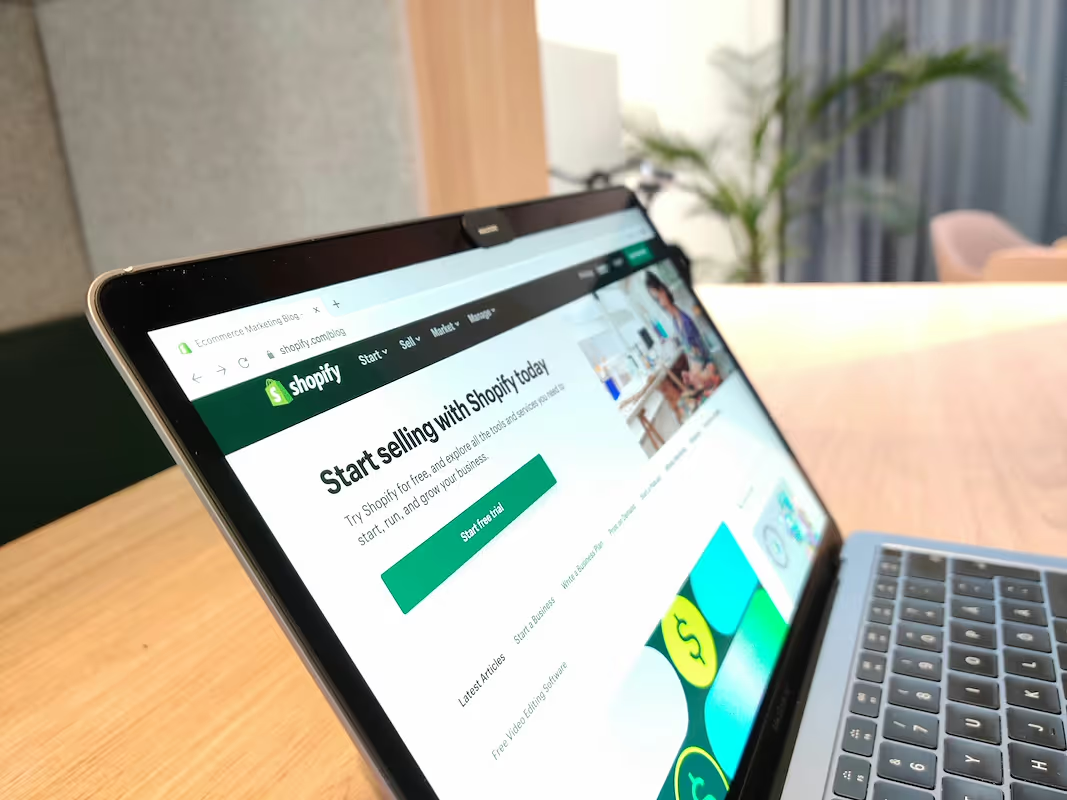
Starting a Shopify business is an exciting venture that combines creative marketing and product curation with solid business savvy. The low startup costs and global reach make it an attractive market to enter, but this accessibility also means competition is high.
This guide will take you through the practical steps to validate your business concept, build supplier relationships, acquire inventory, and obtain the right licenses to help you launch a successful Shopify business in the U.S.
Step 1: Plan your business and validate your idea
A good first move is to use Google Trends to compare search interest for different product ideas over time. You can also explore niche communities on Reddit or Facebook to find what problems customers want solved and the language they use.
Analyze your competition
Once you have a niche in mind, identify your top competitors. Use a platform like Ahrefs or Semrush to see their popular pages and keywords. Many new store owners skip this step, but a clear view of the landscape shows you what already works.
Estimate your startup costs
With this in mind, let's map out your initial investment. A clear budget helps prevent early cash flow problems. Your startup costs will likely fall between $700 and $6,000, depending on your product. Key expenses include:
- Shopify Plan: Starts at $29 per month after the trial period.
- Domain Name: Around $15 per year.
- Initial Inventory: Budget $500 to $5,000. This is the most variable cost.
- Theme and Apps: A premium theme can be a one-time cost of $200-$350. Apps might add $50-$100 monthly.
- Business Formation: An LLC can cost between $50 and $500, based on your state.
Here are 4 immediate steps to take:
- Compare three potential product ideas on Google Trends.
- Identify and list the top three Shopify stores in your chosen niche.
- Create a simple spreadsheet to budget for your initial costs.
- Research your state's requirements for an LLC or sole proprietorship.
Step 2: Set up your legal structure and get licensed
Choose your business structure
An LLC is a popular choice for new store owners because it separates your personal assets from business debts. A sole proprietorship is simpler to set up but offers no liability protection. You can start as a sole proprietor and convert to an LLC later as your business grows.
Secure your licenses and permits
First, get a free Employer Identification Number (EIN) from the IRS website. You will need this to open a business bank account and file taxes. Next, apply for a state Seller's Permit, which allows you to collect sales tax from customers in your state.
Costs for a Seller's Permit can range from free to $100, with processing times from a few days to several weeks. Also, check with your city or county for a local Business Operating License. Many new owners overlook sales tax obligations, so understand your state's "nexus" rules early.
Here are 4 immediate steps to take:
- Decide if an LLC or sole proprietorship is right for you.
- Apply for a free EIN on the IRS website.
- Find your state's Department of Revenue website to research its Seller's Permit process.
- Check your local city or county government website for business license requirements.
Step 3: Protect your business with the right insurance
Your next move is to secure insurance. General Liability is the baseline, but for a Shopify store, Product Liability Insurance is what truly protects you. It covers claims if a product you sell causes harm to a customer.
Many new sellers assume their general policy covers this, but it often does not. You should confirm that product liability is explicitly included or purchase it as a separate policy. This protects you from costly lawsuits.
For a small store, a policy with a $1 million liability limit is a solid start. Expect annual premiums to fall between $400 and $1,500. This cost depends on the types of products you sell.
Other coverage to consider
If you store customer data, Cyber Liability Insurance is a smart addition to guard against data breaches. Also, if you hold significant inventory at home or in a warehouse, look into Commercial Property Insurance. Workers' compensation is only necessary if you have employees.
When you shop for quotes, you might want to check out providers that understand e-commerce, such as The Hartford, Hiscox, or use a broker like CoverWallet to compare options easily.
Here are 4 immediate steps to take:
- Request quotes from two e-commerce insurance providers like Hiscox or The Hartford.
- Review your product line to identify potential liability risks.
- Ask insurers if product liability is included in their general liability policy.
- Decide if you need cyber liability insurance based on the data you will handle.
Step 4: Source your products and manage inventory
Find your suppliers
You can find overseas manufacturers on a platform like Alibaba. For U.S.-based options, explore Thomasnet. When you contact potential suppliers, be clear about your product specifications. Many new owners place a large first order without a sample. Always order samples first to verify quality.
Expect minimum order quantities (MOQs) to range from 50 to 500 units. This number is often negotiable, especially if you build a good relationship. Ask about production lead times, which can be 30 to 60 days.
Set up your inventory space
Most Shopify stores start from home. A spare room or garage of 100-200 square feet works well. Before you stock up, check your local city or county website for home-based business zoning ordinances to ensure you comply.
You will need some basic equipment. Budget for industrial shelving ($75-$200), a digital shipping scale ($30), a thermal label printer like a Rollo or Dymo ($150-$250), and initial packing supplies like boxes and tape.
Here are 4 immediate steps to take:
- Identify three potential suppliers on Alibaba or Thomasnet.
- Request product samples from your top supplier choice.
- Check your city's website for home-based business zoning rules.
- Create a budget for shelving, a label printer, and packing materials.
Step 5: Set up your payment processing
Shopify Payments is the platform's built-in processor and activates automatically with your store. For online sales, expect fees around 2.9% plus 30 cents per transaction, though rates improve with higher-tier plans. A lot of new owners forget to factor these fees into their pricing.
Now, if you plan to sell at pop-ups or local markets, you need a way to take payments on the go. For this, JIM offers a streamlined solution. With JIM, you can accept debit, credit, and digital wallets directly through your smartphone. Just tap and done.
At just 1.99% per transaction with no hidden costs or extra hardware needed, it's a strong option. Other mobile payment providers often charge close to 3%. JIM is particularly useful for Shopify owners who want a simple, low-cost way to handle in-person sales without extra equipment.
- Get Started: Download the JIM app for iOS.
- Make a Sale: Type the sales amount, hit sell, and ask your customer to tap their card or device on your phone.
- Access Funds: Your money is available right on your JIM card as soon as the sale is done. No waiting for bank transfers.
Here are 4 immediate steps to take:
- Review the specific Shopify Payments transaction fees for your chosen plan.
- Decide if you will sell in person at markets or pop-ups.
- Compare JIM's 1.99% rate with other mobile payment options.
- Download the JIM app to explore its interface before your first event.
Step 6: Fund your business and manage finances
Secure your funding
A good place to start is with an SBA Microloan. These loans range from $500 to $50,000 and are designed for new businesses. Interest rates typically fall between 8% and 13%. You will need a solid business plan and a decent credit score to qualify.
Once your store has a sales history, you might qualify for Shopify Capital. This program offers cash advances based on your revenue. Repayment happens automatically as a percentage of your daily sales, which helps manage cash flow when sales fluctuate.
You could also look into small business grants. While competitive, programs like the Amber Grant or NASE Growth Grants provide funds you do not have to repay. These often require a compelling story about your business vision.
Plan your working capital
You will want to have enough cash to cover at least six months of operating expenses. Many sellers get tripped up here; they budget for inventory but forget about marketing, app fees, and other monthly costs. Also, open a separate business bank account to keep your finances clean from day one.
Here are 4 immediate steps to take:
- Research SBA Microloan lenders in your area.
- Calculate your estimated operating costs for the first six months.
- Look into the eligibility requirements for a small business grant like the Amber Grant.
- Open a dedicated business bank account to separate your finances.
Step 7: Hire your team and set up operations
You will likely handle everything yourself at first. Once you consistently hit around $10,000 in monthly revenue, or when daily tasks take more than 4-5 hours, it is time to hire. This prevents burnout and frees you to focus on growth.
Your first hire: The E-commerce Assistant
Your first team member is often a part-time Virtual Assistant (VA) or E-commerce Assistant. They can handle customer service emails, process returns, and update product listings. No specific certifications are required, but look for experience with Shopify.
Expect to pay between $15 and $30 per hour for a skilled remote assistant. A frequent mistake is to write a vague job description. Be explicit about the tasks you need done to avoid confusion and set clear expectations from the start.
Operations software
To manage tasks, you might want to use a project management platform like Asana or Trello. For customer service, a helpdesk app like Gorgias integrates directly with Shopify and can save you hours each week. It pulls customer order data right into the support ticket.
As you grow, a good rule of thumb is to keep your total payroll costs between 15% and 30% of your gross revenue. This ratio helps you scale your team sustainably without hurting your profit margins.
Here are 4 immediate steps to take:
- Set a monthly revenue goal that will trigger your first hire.
- Draft a job description for a part-time E-commerce Assistant with specific duties.
- Create a free account on Asana or Trello to start to organize your own tasks.
- Outline the top five repetitive tasks you would delegate to a new hire.
Step 8: Market your store and acquire customers
You can start with Facebook and Instagram ads. A good initial budget is $20-$50 per day. Aim for a Return on Ad Spend (ROAS) of at least 3:1. Many new owners burn cash by not targeting a specific audience, so use Facebook's Audience Insights to narrow your focus.
While ads bring quick traffic, you also need a long-term strategy. Start a blog focused on your niche. Use a free resource like Ubersuggest to find keywords your customers search for. This effort builds organic traffic over a 6 to 12 month period.
Track your key metrics
You need to know your numbers. A key metric is Customer Acquisition Cost (CAC). To find it, divide your monthly marketing spend by the number of new customers. For many e-commerce stores, a CAC under $50 is a healthy target, but this varies by industry.
Email marketing often provides a high return. Use an app like Klaviyo, which integrates with Shopify. A mistake many sellers make is not setting up an abandoned cart email flow immediately. This simple automation can recover 10-15% of sales you would otherwise lose.
Here are 4 immediate steps to take:
- Set up a Facebook Business Manager account and install the Pixel.
- Use Ubersuggest to find three blog post ideas for your niche.
- Calculate your target Customer Acquisition Cost (CAC).
- Create a three-part abandoned cart email sequence in Klaviyo.
Step 9: Set your pricing strategy
Your pricing directly impacts your profit. A simple method is cost-plus pricing. First, calculate your landed cost per item—this includes manufacturing, shipping, and import duties. A mistake many new sellers make is forgetting to factor in marketing and transaction fees, which can erode profits.
Once you have your landed cost, apply a markup. A 100% markup (2x your cost) is a common starting point, which gives you a 50% gross margin. For a product that costs you $15 to get, you would price it at $30.
You should also use competitive pricing. Look at what your top three competitors charge for similar items. You can do this manually or use a browser extension like Koala Inspector to analyze their stores. This helps you position your products in the market.
You might also consider psychological pricing, like setting a price at $29.99 instead of $30. Bundle deals are another way to increase the average order value. For example, sell three related items together for a 10% discount.
Here are 4 immediate steps to take:
- Calculate the full landed cost for your top product, including all fees.
- Research the prices of your three main competitors for a similar product.
- Set a target gross margin, like 50%, and calculate your initial retail price.
- Plan one bundle deal to encourage larger purchases.
Step 10: Control quality and scale your operations
Maintain your product quality
You need to set clear quality standards. Aim for a product defect rate below 2% and a return rate under 5% due to quality issues. To monitor this, inspect a random 10% sample from every new inventory shipment you receive.
A lot of sellers get complacent with a trusted supplier and stop spot-checking after a few good orders. Quality can drift over time, so you should maintain your inspection routine with every single batch to catch problems early.
Know when to scale
Once you consistently handle 20-30 orders per day or your revenue tops $20,000 per month, it is time to consider a Third-Party Logistics (3PL) provider. This move frees you from packing boxes so you can focus on growth.
As your product line expands beyond 50-100 SKUs, a spreadsheet becomes a liability. You might want to look at inventory management software like Skubana or Cin7. These systems sync stock levels and help prevent overselling.
Here are 4 immediate steps to take:
- Set a target defect rate (e.g., under 2%) for your products.
- Establish a revenue or order volume goal that will trigger your search for a 3PL.
- Research two inventory management systems like Skubana or Cin7.
- Create a simple checklist for inspecting each new batch of inventory.
You have the roadmap to launch your Shopify store. Success isn't about one big move, but consistent small steps, from inventory checks to ad spend reviews. The plan is ready. Now it's time to execute.
As you grow and start to sell in person, a solution like JIM can help. It turns your smartphone into a card reader, so you can accept payments for a flat 1.99% fee without extra hardware. Download JIM and be ready for your first sale.
.avif)