How to Start a Roller Skating Rink Business
See article summary
- A roller skating rink costs $200,000 to $500,000 to open, driven by the rink floor and lease build-out.
- Form an LLC, get a free EIN from the IRS, and secure a Certificate of Occupancy before opening day.
- Budget $10,000 to $30,000 a year for insurance, including general liability, property, and workers' comp.
- Most rinks fund through an SBA 7(a) loan of $300,000 to $750,000, backed by a 20-30% down payment.
- Keep labor at 20-30% of revenue and track party rebooking and average spend per visitor weekly.
Opening a roller skating rink costs between $200,000 and $500,000 and requires a 15,000 to 25,000 square foot building zoned for assembly use. Most rinks fund the build-out through an SBA 7(a) loan, form an LLC for liability protection, and reach break-even within 12 to 18 months once party bookings and concession sales stabilize. The Roller Skating Association International has served as the industry trade body since 1937, and the recreational facilities sector contributes an estimated $219 billion to the U.S. economy annually, according to the International Association of Amusement Parks and Attractions. Source: Roller Skating Association International.
Below you will find location criteria, a permit checklist, startup cost ranges, financing paths, and a worked revenue model for launching a roller skating rink in the U.S.
How do you plan and validate a roller skating rink business?
Validate demand before you sign a lease. Research your local market using U.S. Census Bureau data to analyze demographics in your target area, focusing on the number of families with children aged 5 to 17. Survey local schools and community groups to gauge direct interest in a new rink. Source: U.S. Census Bureau Business Formation Statistics.
Next, map out your competition. Look beyond other skating rinks on Google Maps and consider all family entertainment centers, including bowling alleys, trampoline parks, and go-kart tracks. Analyze their pricing, party packages, and online reviews to find a gap you can fill.
How much does it cost to open a roller skating rink?
Roller rink startup costs range from $200,000 to over $500,000. The building lease and rink floor are the largest expenses. Many new owners underestimate renovation costs, so get multiple quotes. A poor quality floor leads to frequent, expensive repairs down the line.
Here is a sample breakdown:
- Building Lease and Renovation: $100,000 - $300,000+
- Skate Inventory (400 pairs): $40,000 - $60,000
- Concession and Arcade Equipment: $30,000 - $80,000
- Insurance, Licenses, and Permits: $10,000 - $20,000
- Initial Marketing and Grand Opening: $5,000 - $15,000
Here are 3 immediate steps to take:
- Draft a survey for local parents about their entertainment habits and price sensitivity.
- Create a spreadsheet listing all competitors within a 20-mile radius and their offerings.
- Develop a preliminary budget with low and high estimates for each cost category.
How do you establish your legal structure and secure licenses?
Most new rink owners form a Limited Liability Company (LLC). It protects your personal assets from business debts and lawsuits. Profits pass through to your personal taxes, which simplifies filing. An S Corp is another option, but the setup is more complex.
A frequent misstep is mixing personal and business finances. Once your LLC is approved, open a dedicated business bank account. This separation is vital for liability protection and makes tracking expenses for tax season much easier.
Key permits and licenses
With your business entity formed, you can tackle licensing. Your rink will need several permits to operate legally. These requirements vary by city and state, so start your research with your local government's website. Expect permit fees to range from $500 to $2,000 total.
- Business Operating License: Issued by your city or county.
- Certificate of Occupancy: Confirms your building is safe and up to code. This involves fire marshal and building inspections and can take 60 to 90 days.
- Health Department Permit: Required for your concession stand.
- Employer Identification Number (EIN): A federal tax ID from the IRS needed to hire employees. Apply for free through the IRS EIN online application.
Here are 3 immediate steps to take:
- File your LLC articles of organization with your state's Secretary of State.
- Apply for a free EIN directly on the IRS website.
- Contact your local city clerk to get a checklist of all required business permits.
How do you secure insurance and manage risk at a roller rink?
Insurance is a major operational cost, so plan for it early. Your rink requires several layers of protection. Many new owners get caught by surprise with premium costs, which can range from $10,000 to $30,000 annually depending on your size and location. Request quotes from brokers who specialize in amusement and family entertainment centers, since general agents often do not understand the unique risks of a skating rink.
Essential insurance policies
- General Liability: This covers slip-and-fall injuries. Seek at least $1 million per occurrence and $2 million aggregate coverage.
- Property Insurance: This protects your building, rink floor, and equipment. Ensure your policy specifically covers the full replacement value of your skate inventory, a frequent oversight.
- Workers' Compensation: This is mandatory in most states and covers employee injuries on the job. The U.S. Department of Labor directs employers to their state workers' compensation board for specific requirements. Source: U.S. Department of Labor, Workers' Compensation.
If you plan to host adult nights with alcohol, you will also need a Liquor Liability policy. This is a separate policy that many standard insurers will not write for entertainment venues.
Finding the right provider
Work with an insurance broker who specializes in amusement or family entertainment centers. Consider providers like K&K Insurance, Philadelphia Insurance Companies, or USI Insurance Services for knowledgeable quotes.
In addition to insurance, have an attorney draft a liability waiver for all skaters. Waiver enforceability varies by state, and some jurisdictions limit or void waivers for minors, so confirm the rules with a local attorney before relying on one. Post clear warning signs about the inherent risks of skating throughout the facility.
Here are 3 immediate steps to take:
- Contact a broker from K&K Insurance or a similar specialist for a preliminary quote.
- Consult a local attorney to draft a participant liability waiver that complies with your state's laws.
- Develop a daily safety inspection log for the rink floor, rental skates, and handrails.
How do you find a location and buy equipment for a roller rink?
Look for a commercial building between 15,000 and 25,000 square feet. It needs to be zoned for "assembly" or "recreation" use. A common oversight is ceiling height; you need at least 18 feet for proper lighting and an open feel. Also, confirm the location has ample parking.
Lease negotiation and build-out
When you find a spot, secure a 5 to 10-year lease. Landlords favor long-term tenants and may offer a tenant improvement (TI) allowance. This is a sum of money they provide to help you build out the space, which can significantly offset your renovation costs.
Stocking your rink
Your equipment will be a large part of your budget. For skates, check with suppliers like Southeastern Skate Supply or Riedell. Buy your initial fleet of 400 to 500 pairs in one bulk order to secure better pricing. Here are some typical costs:
- Rink Floor Installation (wood or coated concrete): $60,000 - $150,000+
- Professional Sound System: $5,000 - $15,000
- Specialty Lighting (lasers, strobes): $3,000 - $10,000
A mistake some new owners make is buying residential-grade concession equipment. Commercial-grade popcorn machines and pizza ovens are built for high volume and will save you from breakdowns during a Friday night rush.
Here are 3 immediate steps to take:
- Contact a commercial real estate agent who specializes in large retail or warehouse spaces.
- Request catalogs and pricing from at least two skate suppliers.
- Draft a list of "must-have" lease terms, including a request for a tenant improvement allowance.
How do you set up payment processing for your rink?
Your rink will handle many small transactions, so your payment system must be fast. For party bookings, require a 25 to 50% non-refundable deposit. The remaining balance is then paid on the day of the event.
When you choose a payment solution, look for reliability and low transaction fees. Some owners get locked into contracts with high monthly fees and commission rates that can reach 2.5% to 3.5%, which eats into profits from concessions and admissions.
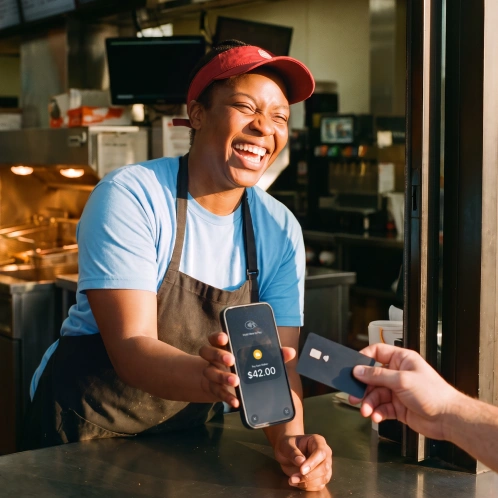
For rinks that need to accept payments on-site or on-the-go, JIM offers a streamlined solution. With JIM, you can accept debit, credit, and digital wallets directly through your smartphone. Just tap and the payment is complete.
At just 1.99% per transaction with no hidden costs or extra hardware needed, it is particularly useful for taking party deposits over the phone or selling merchandise at a local community event. This rate is often lower than what other card readers offer.
- Get Started: Download JIM app for iOS
- Make a Sale: Type the sales amount, hit sell, and ask your customer to tap their card or device on your phone
- Access Funds: Your money is available right on your JIM card as soon as the sale is done. No waiting for bank transfers.
Here are 3 immediate steps to take:
- Outline your payment policy for party bookings, including deposit amounts and final payment deadlines.
- Compare transaction fees and contract terms from at least two payment processors that serve entertainment venues.
- Download the JIM app to test its payment flow for your business needs.
How do you secure funding for your roller rink?
The SBA 7(a) loan is a common path for funding a skating rink. Lenders will want to see a detailed business plan and typically require a down payment of 20 to 30%. Prepare a loan application that shows you have a solid grasp on your future revenue. Source: SBA 7(a) loans.
Loan terms and working capital
SBA 7(a) loans can reach $5 million, but a rink might seek between $300,000 and $750,000. For variable-rate loans, the SBA sets maximum interest rates based on loan size: the base rate plus 2.75% for loans of $50,001 to $250,000, and up to the base rate plus 4.75% for loans of $25,000 or less. A mistake some owners make is focusing only on startup costs. You also need six months of working capital, which could be $60,000 to $120,000.
This cash reserve covers payroll, rent, and utilities before your rink becomes profitable. In addition to the SBA, explore equipment financing. These loans use your skates and kitchen appliances as collateral, which can make approval easier.
Also look for local economic development grants. Your city may offer funds for businesses that create community spaces and jobs. These are competitive but worth investigating.
Here are 3 immediate steps to take:
- Finalize your business plan with detailed 3-year financial projections.
- Contact your local Small Business Development Center (SBDC) for free assistance with your loan application.
- Calculate your working capital needs by totaling six months of projected operating expenses.
Are roller skating rinks profitable?
A well-run roller rink can reach an 8 to 15% net margin once it fills off-peak hours and builds a steady party pipeline. The first 12 to 18 months often run at break-even while you build your customer base. Profitability depends on three levers: session attendance, party bookings, and concession margins.
A worked revenue model
Consider a rink drawing 400 skaters per week at an average $13 admission and rental fee, hosting 20 birthday parties per month at $325 each, and running concessions at a 75% gross margin. Monthly revenue breaks down as follows:
- Public sessions: 400 skaters per week at $13 = $22,500 per month
- Birthday parties: 20 parties at $325 = $6,500 per month
- Concessions at 75% margin on $12,000 in food sales = $9,000 gross profit per month
That totals roughly $38,000 in monthly revenue. After rent, payroll at 20 to 30% of revenue, insurance, and utilities, a rink at this volume can net 8 to 15% before debt service. These are illustrative figures, not guarantees, and your actual numbers will depend on local pricing, capacity, and how efficiently you fill weeknights.
How do you hire your team and set up operations?
Your rink will likely need a team of 8 to 12 part-time employees, plus one full-time manager. Focus your hiring on people with strong customer service skills. Understaffing on a busy Saturday night is a quick way to get bad reviews.
Key roles and compensation
- Rink Manager: Oversees all operations, scheduling, and inventory. Expect to pay a salary of $40,000 to $60,000 annually.
- Skate Guards: Monitor the floor for safety. Pay typically starts at minimum wage up to $15 per hour. First Aid and CPR certifications are a big plus.
- Concession and Party Staff: Handle sales and host events. These roles usually pay minimum wage, often with the opportunity for tips from parties.
Before you open, ensure your team is properly trained. Your concession staff will need food handler's permits, a requirement from your local health department. Also, run background checks on all employees, as you will be working with children.
To manage your team, use scheduling software like Homebase or When I Work. These platforms help prevent scheduling gaps and control labor costs. Your labor budget should stay between 20 and 30% of your total revenue.
Here are 3 immediate steps to take:
- Write job descriptions for a Rink Manager, Skate Guard, and Party Host.
- Contact your local health department about food handler permit requirements.
- Create a trial account with a scheduling software like Homebase to test its features.
How do you market your roller rink and attract customers?
Plan your grand opening 4 to 6 weeks in advance. A simple promotion like "First 100 Skaters Free" can create significant local buzz. Announce the event in local Facebook groups and send a press release to community news outlets to maximize your reach before you even open.
After opening, use targeted digital ads. On Facebook and Instagram, you can target parents aged 30 to 50 within a 15-mile radius of your rink. A starting budget of $500 per month can generate consistent party inquiries. Aim for a customer acquisition cost under $50 per booked party.
Build local partnerships
Contact local schools, churches, and youth sports leagues. Offer a "Skate Night" fundraiser where you donate 15 to 20% of admission revenue back to their organization. This strategy helps fill your rink on slower weeknights and builds strong community ties.
A frequent misstep is to focus only on new customers. Collect email addresses at your front desk and concession stand, then set up an automated birthday reminder sequence for every family that books a party. A family that celebrates one birthday at your rink is a candidate for a return booking the following year, and a triggered email 11 months after their visit is far more effective than a generic weekly newsletter.
Here are 3 immediate steps to take:
- Draft a grand opening press release and compile a list of local media contacts.
- Create a list of 10 local schools and youth organizations to approach for fundraiser nights.
- Set up an email capture system at the register and configure an automated birthday rebooking sequence.
How do you set pricing for your roller rink?
Admission and rental fees
Your admission price sets the first impression. Most rinks charge between $10 and $15 for a 2 to 3 hour public skate session. Plan for a separate skate rental fee, typically $4 to $6. This unbundling allows you to capture revenue from skaters who bring their own equipment.
Party package pricing
Birthday parties are your profit engine. Create tiered packages. A basic package could be $250 for 10 guests, covering admission and skate rentals. A premium option at $400 could add pizza, drinks, and a dedicated party host for 15 guests.
Many new owners forget to build in upsells. Offer add-ons like arcade tokens, glow sticks, or a 15-minute private lesson to increase the value of each party booking. This can boost party revenue by 15 to 25%.
Concession margins
Concessions deliver 70 to 80% gross margins, often the highest-margin revenue line in a rink. Aim for a food cost percentage of 20 to 30%. A slice of pizza that costs you $1 to prepare can sell for $4. A fountain soda with a cost of $0.25 can sell for $2.50.
Here are 3 immediate steps to take:
- Call three local family entertainment centers to get their current party package pricing.
- Create a concession menu with prices calculated to achieve a 70% profit margin.
- Draft two birthday party packages with a list of optional add-ons for each tier.
How do you maintain quality and scale your roller rink operations?
Once your doors are open, your focus shifts to consistency. Before each shift, walk the rink to inspect the floor for damage, check handrails for stability, and test rental skates for wheel and stopper integrity.
Measuring your success
Track specific metrics to gauge performance. Many owners get caught up in daily revenue but miss the bigger picture. Look at these numbers weekly to spot trends before they become problems.
- Party Rebooking Rate: Aim for at least a 15% rebooking rate from birthday families for future events.
- Average Spend Per Visitor: Calculate this by dividing total daily revenue by the number of admissions. An increase shows your upsells are working.
- Online Review Score: Monitor Google and Yelp reviews. Your goal should be to maintain a 4.5-star rating or higher.
These targets reflect operator rules of thumb rather than published industry averages. Track your own baseline in the first quarter and adjust from there.
When to grow your business
Growth should be data-driven. When your weekend public skate sessions consistently hit 80% capacity for a full month, it is time to consider adding another session. For staffing, a good rule of thumb is to hire a new part-time party host for every 10 additional parties you book per month.
To manage this growth, look at rink management software like CenterEdge or Roller. These platforms handle online party bookings, ticketing, and scheduling, which frees you up to focus on operations. A frequent mistake is to expand without the cash flow to support it, so ensure you have three months of operating expenses saved before you commit to a major expansion.
Here are 3 immediate steps to take:
- Create a daily inspection checklist for your rink floor, skates, and safety equipment.
- Set up a simple spreadsheet to track your party rebooking rate and average spend per visitor.
- Request a demo from a rink management software provider like CenterEdge to see how it can streamline your booking process.
Starting a roller skating rink is about creating a community hub. Your success hinges on the experience you provide, from the music to the staff. You have the roadmap, now go make your dream a local landmark.
As you welcome your first customers, keep payments simple. JIM turns your smartphone into a card reader, so you can accept payments for a flat 1.99% fee without extra hardware. Download JIM to get set up.
Frequently Asked Questions
How profitable is a roller skating rink?
How much does a skating rink owner make?
Are roller skating rinks a good business?
How much does it cost to start a skating rink?
Do you need a license to open a roller skating rink?


Sell and get paid in seconds with Jim