Starting a spiritual coaching business is a rewarding venture that combines deep empathy and communication skills with business acumen. The wellness market is a multi-billion dollar industry, with steady demand for guidance from people navigating career changes, seeking personal growth, or going through major life transitions.
This guide will take you through the practical steps of validating your business concept, obtaining necessary permits, and marketing your services to help you launch a successful spiritual coaching business in the U.S.
Step 1: Plan your business and validate your idea
First, define your ideal client. You can find them in online communities like Facebook groups for mindfulness or subreddits such as r/spirituality. Survey at least 20 people to understand their challenges and what they would pay for guidance. This direct feedback clarifies your service offering.
With your client profile in mind, look at your competition. Search Instagram, YouTube, and professional directories to find other spiritual coaches. Analyze their packages and pricing. A frequent misstep is to underprice your services, so focus on the value you provide, not just the lowest cost.
Estimate your startup costs
Your initial investment can vary, so it is wise to map out potential expenses. Key costs include professional certification, business registration, and basic marketing. A detailed budget helps you plan your financial runway before you land your first client.
- Certification: $500 - $5,000. While not legally required, a reputable certification builds credibility. Skipping this step can make it harder to attract clients who look for formal training.
- Business Formation (LLC): $50 - $500, depending on your state.
- Website and Insurance: $400 - $1,000 annually for hosting and liability coverage.
In total, you might expect to invest between $1,000 and $6,500 to launch properly. Planning for these expenses allows for a smoother start and reduces financial pressure as you build your client base.
Here are 3 immediate steps to take:
- Survey 20 potential clients in relevant online forums to define their needs.
- Analyze the service packages and pricing of 5 established spiritual coaches.
- Create a startup budget that includes certification, legal, and website costs.
Step 2: Set up your legal and financial foundation
You might want to form a Limited Liability Company (LLC). It protects your personal assets if your business faces legal issues. Many new coaches operate as sole proprietors by default, which puts personal savings and property at risk. Registering an LLC is a safeguard.
File your Articles of Organization with your state's Secretary of State. Costs range from $50 to $500. Processing can take a few days to several weeks, so plan accordingly. This step officially creates your business as a legal entity.
Once your LLC is approved, get an Employer Identification Number (EIN) from the IRS. It is free and you can apply online. You will need this number to open a business bank account and file taxes, even if you have no employees.
Secure your business license and bank account
Spiritual coaching does not require a specific professional license. However, you will likely need a general business license from your city or county. Check your local government's website or the Small Business Administration (SBA) for requirements. Fees are typically $50 to $150 annually.
With your LLC documents and EIN, open a dedicated business bank account. This keeps your business and personal finances separate, which is vital for accurate bookkeeping and tax reporting. Do not mix your personal funds with business income.
Here are 4 immediate steps to take:
- Decide on your business structure and file for an LLC with your state.
- Apply for a free Employer Identification Number (EIN) on the IRS website.
- Contact your city or county clerk to inquire about a general business license.
- Open a separate bank account for your coaching business.
Step 3: Protect your business with the right insurance
Types of insurance to consider
The most important policy is professional liability, also known as Errors and Omissions (E&O). It covers claims of negligence if a client alleges your guidance caused them emotional or financial harm. Many new coaches overlook this, thinking their work is low-risk.
You should also look at general liability insurance. This policy handles claims of property damage or bodily injury. While less common for online coaches, it is valuable if you ever meet clients in person or get accused of libel or slander online.
Look for coverage of at least $1 million per occurrence for both policies. Annual premiums for a combined package typically range from $500 to $1,200. This is a manageable cost that provides significant peace of mind.
When you shop for policies, focus on insurers familiar with the wellness industry. Providers like Hiscox, NEXT Insurance, and the CM&F Group specialize in coverage for coaches and consultants. They understand the unique risks involved with giving personal advice.
Here are 3 immediate steps to take:
- Request quotes for professional and general liability insurance.
- Compare policies from at least two providers that specialize in coaching.
- Confirm that a potential policy covers claims related to emotional distress.
Step 4: Set up your coaching space and equipment
Most spiritual coaches start online from a home office. You do not need a commercial space. Designate a quiet area of at least 100 square feet. Before you begin, check your local zoning laws for home-based businesses to ensure you comply with any regulations.
Choose your technology
Your online presence is your storefront. Poor audio or video quality can distract clients and undermine your credibility. Many new coaches make the mistake of relying on a basic laptop camera. A small investment in better equipment makes a big difference in how professionally you appear.
- Webcam and Microphone: A high-definition webcam like a Logitech C920 ($60-$80) and a USB microphone such as a Blue Yeti ($100-$130) provide clear video and sound.
- Lighting: A simple ring light ($30-$60) eliminates shadows and creates a warm, inviting look for your video calls.
- Scheduling Software: Use a platform like Calendly or Acuity Scheduling. They offer free plans and automate booking, which saves you administrative time.
With this in mind, your total technology setup should cost between $190 and $270. This one-time expense elevates the client experience from your very first session.
Here are 4 immediate steps to take:
- Check your city’s website for home-based business zoning rules.
- Designate a quiet, clutter-free space in your home for calls.
- Compare prices for a quality webcam and a USB microphone.
- Create a free account on a scheduling platform like Calendly.
Step 5: Set up your payment processing
Most coaches require payment upfront for single sessions or packages. This simplifies bookkeeping and ensures you are paid for your time. For longer coaching programs, you might ask for a deposit with recurring monthly payments.
Look for a payment solution with low transaction fees and fast access to your money. Many new coaches get caught by high fees from other providers, which often range from 2.5% to 3.5% plus monthly charges.
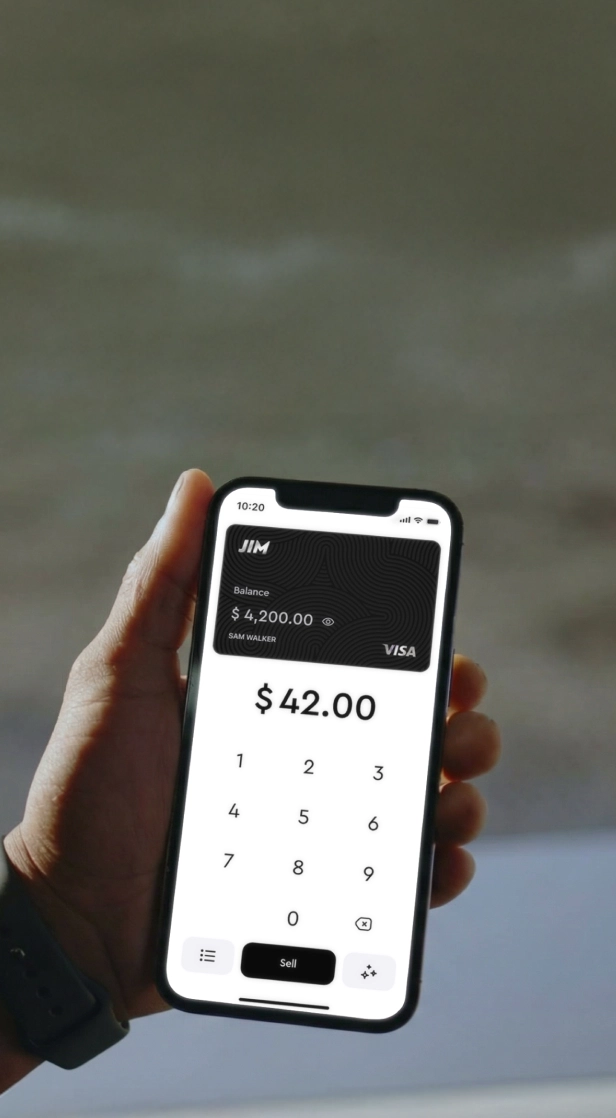
For coaches who meet clients in person or at events, JIM offers a streamlined solution. With JIM, you can accept debit, credit, and digital wallets directly through your smartphone. Just tap and you are done.
At just 1.99% per transaction with no hidden costs or extra hardware, it is particularly useful for taking payments after a one-on-one session or at a wellness retreat.
- Get Started: Download the JIM app for iOS.
- Make a Sale: Type the sales amount, hit sell, and ask your customer to tap their card or device on your phone.
- Access Funds: Your money is available right on your JIM card as soon as the sale is done. There is no waiting for bank transfers.
Here are 3 immediate steps to take:
- Decide on your payment terms, such as payment upfront for packages.
- Compare payment processors and their transaction fees.
- Download the JIM app to explore its features for in-person payments.
Step 6: Secure funding and manage your finances
Most coaches bootstrap their business with personal savings. If you need external capital, an SBA Microloan is a solid option. These loans range from $500 to $50,000. Expect interest rates between 8% and 13%. You will need a good credit score and a clear business plan to qualify.
You might also explore grants, though they are competitive. The Amber Grant is a popular choice for women entrepreneurs. These programs often require a compelling story about your business mission, not just financial projections.
Plan your first six months of capital
With your funding source in mind, calculate your working capital for the first six months. This is the money you need to operate before your business becomes profitable. It covers ongoing costs like marketing, software subscriptions, and insurance.
A new coach often needs $3,000 to $8,000 for this period. Some people underestimate this runway, expecting clients to arrive overnight. It usually takes three to six months to build a consistent income, so this buffer is your financial safety net.
Here are 3 immediate steps to take:
- Calculate your working capital needs for the first six months.
- Review the SBA Microloan requirements on their official website.
- Research the application process for a business grant like the Amber Grant.
Step 7: Hire your team and set up operations
You will likely start as a one-person operation. Your first hire will probably be a part-time Virtual Assistant (VA) to handle administrative work. This frees you to focus on coaching clients and growing your business, not on scheduling emails.
When to hire your first team member
Once you spend more than five hours a week on non-coaching tasks, consider a VA. They handle email, scheduling, and social media updates. Rates for a skilled VA range from $25 to $50 per hour. No specific certifications are needed, but look for experience with coaches.
Many new coaches try to do everything themselves to save money, which often leads to burnout. Delegating administrative work is an investment in your own energy and the long-term health of your business. It allows you to serve your clients better.
Streamline your client management
As you grow, a simple scheduler is not enough. You might want to use a client relationship management (CRM) platform like HoneyBook or Dubsado. These systems manage contracts, invoices, and client communication in one place, which creates a professional client experience from start to finish.
Here are 3 immediate steps to take:
- Track your administrative hours for one week to identify tasks to delegate.
- Research Virtual Assistant services on a platform like Upwork.
- Sign up for a free trial of a client management system like HoneyBook or Dubsado.
Step 8: Market your business and acquire clients
Focus on content marketing
Create a blog or YouTube channel to share your perspective on topics your ideal client cares about, like mindfulness or career transitions. This builds trust before you ever ask for a sale. Your goal is to demonstrate your expertise and connect with potential clients on a deeper level.
Many new coaches make the mistake of marketing too broadly. Instead, focus on a specific niche, such as professionals dealing with burnout or individuals navigating grief. A narrow focus makes your message resonate and simplifies your marketing efforts.
Use social media and track your results
Use platforms like Instagram or TikTok to share short video clips with a single tip or a brief guided meditation. Use relevant hashtags, such as #spiritualawakening or #mindfulnesscoach, to help your ideal clients find you. Consistency is more important than frequency.
As you drive traffic to your website, expect a lead conversion rate of around 1-3%. This means for every 100 visitors, you can anticipate one to three inquiries. You can track this metric for free with a tool like Google Analytics to see what works.
Here are 4 immediate steps to take:
- Define your specific client niche, such as professionals experiencing burnout.
- Create and share one piece of content, like a short video tip, on Instagram.
- Write one blog post that addresses a problem your ideal client has.
- Set up a free Google Analytics account to monitor your website traffic.
Step 9: Set your prices and create packages
Many new coaches only charge by the hour, which can limit your income potential. A better approach is to create packages that reflect the transformation you provide. This shifts the focus from time to value, which clients appreciate.
Structure your service offerings
You might want to offer a mix of options to appeal to different client needs. This allows people to engage with your work at various price points. It also creates a clear path for clients to continue working with you.
- Single Session: $150 - $300 for a 60-minute call. This is a good entry point for new clients who want to experience your coaching style.
- Three-Month Package: $1,500 - $3,000. This typically includes six bi-weekly sessions plus email or text support between calls.
- Group Program: $200 - $500 per person for a six-week course. This model lets you serve more people at once and build a community.
To set your own numbers, research the websites of five to ten other coaches in your niche. A frequent mistake is to compete on price. Instead, analyze the value they include, such as workbooks or community access, to position your own offers effectively.
Here are 3 immediate steps to take:
- Research the packages and prices of five other spiritual coaches.
- Draft a price for a single 60-minute session.
- Outline one three-month coaching package, including its price and what it contains.
Step 10: Maintain quality and scale your business
While spiritual coaching has no official governing body, you can signal quality with a certification from an organization like the International Coaching Federation (ICF). This demonstrates a commitment to professional standards and ethics, which can build trust with prospective clients.
Measure your service quality
Track client outcomes to gauge your effectiveness. You might want to monitor your client retention rate after their initial package ends. A good benchmark is 50% or higher. Also, aim for at least 20% of new clients to come from direct referrals, as this shows high satisfaction.
Once you are booked at 80% capacity for two consecutive months, it is a sign to either raise your prices by 15-20% or develop a group coaching program. A frequent misstep is to launch a group program too early. First, secure a base of 10-15 happy one-on-one clients.
As your client list grows, you can use a client management system like HoneyBook or Dubsado to automate workflows. These platforms handle contracts, scheduling, and follow-up emails, which frees you to focus on coaching instead of administration.
Here are 4 immediate steps to take:
- Review the credentialing paths on the International Coaching Federation (ICF) website.
- Calculate your client retention and referral rates from the last quarter.
- Set a revenue goal that will trigger a price increase for your packages.
- Explore the automation features in a CRM like HoneyBook or Dubsado.
Your spiritual coaching business begins with connection. Success depends on the trust you build, so remember your authentic voice is your greatest asset. You have the roadmap, now take the first step.
And when you secure your first clients, a simple payment solution helps. JIM turns your smartphone into a card reader for a flat 1.99% fee, with no extra hardware. Download JIM to get paid easily.
.avif)