Launching a sports business is a rewarding venture, letting you combine a passion for athletics with sharp business acumen. The industry pulls in hundreds of billions of dollars annually, fueled by steady demand for everything from team merchandise and event tickets to training programs for local athletes and community leagues.
This guide will take you through the practical steps of validating your business concept, securing funding, obtaining the right licenses, and acquiring equipment to help you launch a successful sports business in the U.S.
Step 1: Plan and validate your business idea
First, define your niche. Will you run a retail shop, a training facility, or an event company? This choice dictates your entire plan. A frequent misstep is to assume your passion for a sport equals market demand. Validate your idea with hard data.
Check participation numbers from local park districts or school athletic departments. You can also survey community sports leagues directly to ask what equipment or services they need. For broader industry data, reports from sources like IBISWorld can offer valuable perspective on market trends.
Startup cost breakdown
Initial investment can vary widely. A service-based business like coaching has lower startup costs than a retail store or facility. Many new owners underestimate insurance needs, so you should consult an agent who specializes in sports businesses to get proper liability coverage.
- Equipment: $5,000 - $20,000 for training gear or initial retail stock.
- Licenses and Insurance: $500 - $2,500 for the first year.
- Marketing and Website: $1,000 - $3,000 for a basic site and launch campaigns.
- Facility Deposit (if needed): $4,000 - $15,000 depending on your location.
Here are 3 immediate steps to take:
- Identify your specific niche, like youth soccer training or pickleball equipment retail.
- Use Google Maps to list five local competitors and analyze their offerings.
- Create a draft budget based on the cost ranges for equipment and insurance.
Step 2: Set up your legal structure and get licensed
Choose your business structure
Most new sports businesses should consider forming a Limited Liability Company (LLC). It protects your personal assets if the business is sued. A sole proprietorship is simpler but offers no liability protection, a significant risk in the sports world.
An LLC costs between $50 and $500 to file with your Secretary of State, with processing taking a few days to several weeks. This structure allows you to be taxed like a sole proprietorship, which simplifies your initial tax filings.
Secure federal, state, and local licenses
First, get a free Employer Identification Number (EIN) from the IRS website. You will need this for taxes and to open a business bank account. The process is online and takes just minutes to complete.
Next, check with your city or county clerk for a general business operating license, which can cost $50 to $150 annually. If you plan to host events, you may also need a Special Event Permit for each one.
A common oversight is neglecting specific sports-related permits. If you coach youth sports, you will likely need a background check and certifications from a governing body like USA Football or a similar organization for your sport.
Here are 3 immediate steps to take:
- Decide if an LLC is the right structure for your liability needs.
- Apply for a free Employer Identification Number (EIN) directly on the IRS website.
- Contact your local city hall to ask about the cost and application for a general business license.
Step 3: Secure insurance and manage risk
Key insurance policies for sports businesses
In the sports world, injuries and accidents are real possibilities. The right coverage protects you from claims that could otherwise shut you down. Most sports businesses need several policies to be fully protected.
General liability is the baseline, but professional liability is just as important if you offer coaching. It covers claims of negligence related to your professional services. A client getting hurt from your instruction is a common risk not covered by general liability alone.
- General Liability: Covers bodily injury and property damage. Plan for $1 million in coverage, with annual premiums of $400 to $1,200.
- Professional Liability: Protects against claims of bad advice. Coverage of $1 million is standard, costing $500 to $1,500 annually.
- Workers’ Compensation: Required in most states as soon as you hire your first employee.
You might be tempted to use a general agent, but providers who specialize in sports are a better fit. Consider getting quotes from K&K Insurance or Sadler Sports & Recreation Insurance. They understand the unique risks involved.
Risk management beyond insurance
Beyond insurance, you should use waivers and release of liability forms. These documents inform participants of the risks and can offer a layer of legal protection. Have an attorney review your waiver to ensure it is enforceable in your state.
Here are 3 immediate steps to take:
- Request quotes from two specialty providers like K&K Insurance or Sadler Sports.
- Ask an agent if a combined General and Professional Liability policy is available.
- Draft a participant waiver and find a local attorney to review it for you.
Step 4: Find a location and buy equipment
Your location sets the stage. For a small training facility, you might look for 1,500 to 3,000 square feet. A retail shop could work with 1,000 to 2,000 square feet. Check with your city’s planning department for commercial zoning that permits your type of sports activity.
When you find a spot, negotiate the lease. Ask for a tenant improvement allowance to help pay for build-out costs like installing turf or mirrors. Many new owners forget to confirm the lease allows for the noise and traffic a sports business generates, so get that in writing.
Purchase your core equipment
Focus on versatile gear first and expand later. Overspending on niche equipment before you have the clientele is a frequent misstep. You can find quality new and used items from suppliers like Rogue Fitness for training gear or by contacting wholesale distributors for retail products.
- Basic Gym Setup: $8,000 - $15,000 for squat racks, weights, and benches.
- Retail Store Fixtures: $3,000 - $7,000 for shelving, displays, and a sales counter.
- Specialty Surfaces: $4 - $8 per square foot for artificial turf or rubber flooring.
Here are 3 immediate steps to take:
- Contact your city’s planning department to confirm zoning for two potential locations.
- Ask a potential landlord about a tenant improvement allowance during your tour.
- Get quotes for a basic equipment package from two different suppliers.
Step 5: Set up your payment processing
Accepting payments
For services like coaching, you should collect payment upfront. If you offer memberships or long-term training, set up recurring monthly payments. This approach helps maintain a predictable cash flow for your business.
Many new owners run into trouble by not having a clear deposit and cancellation policy. Your client contract should clearly state if deposits are non-refundable and specify the notice period required for cancellations to avoid disputes.
When you choose a payment solution, look for low transaction fees and quick access to your money. Many providers charge between 2.5% and 3.5% and may include monthly fees. These costs can impact your profit margin over time.
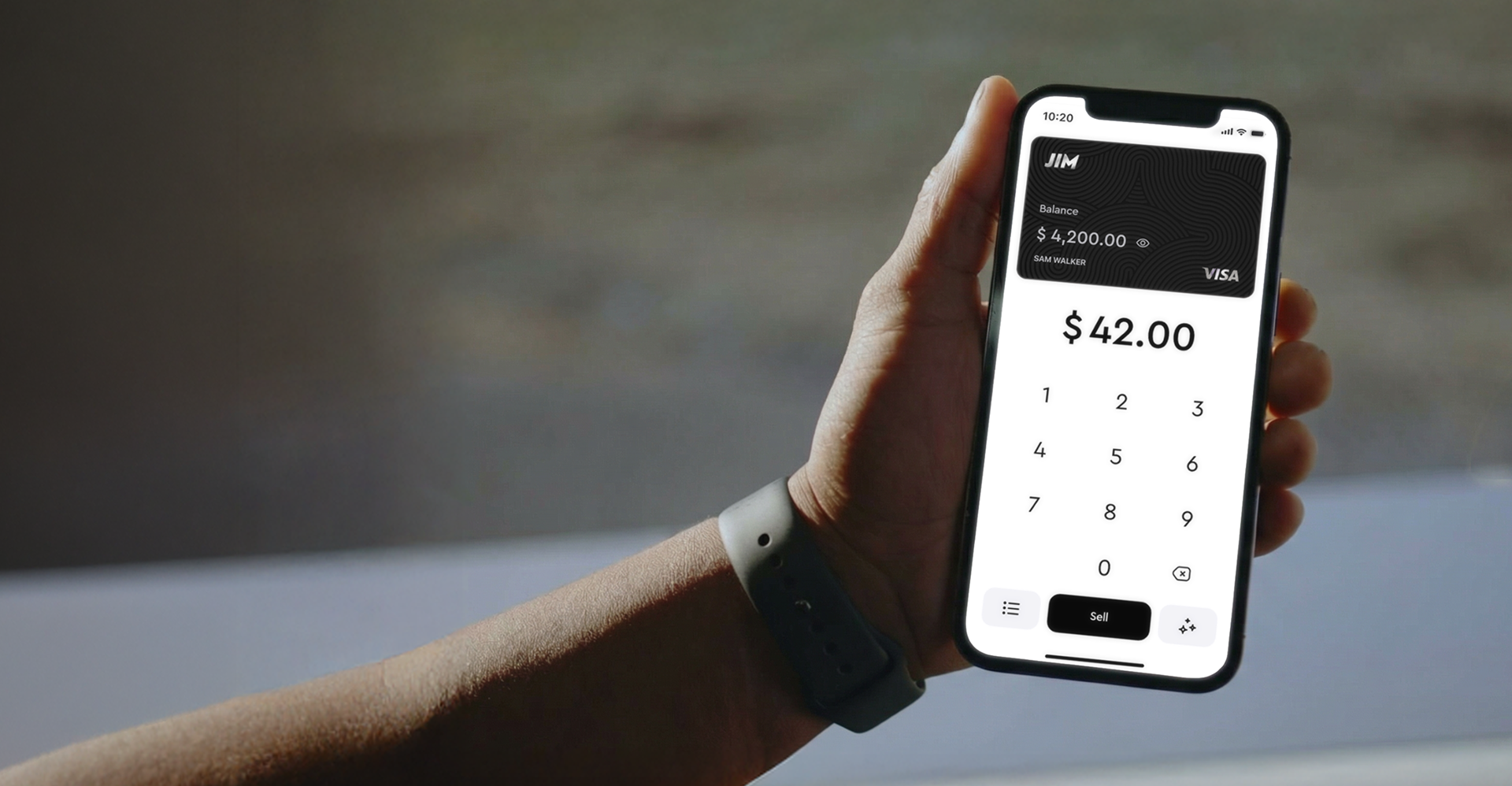
For sports businesses that need to accept payments on-site or on-the-go, JIM offers a streamlined solution. With JIM, you can accept debit, credit, and digital wallets directly through your smartphone. Just tap and done.
At just 1.99% per transaction with no hidden costs or extra hardware needed, it is particularly useful for collecting registration fees at a local tournament or selling merchandise on the sidelines.
Getting started is straightforward:
- Get Started: Download the JIM app for iOS.
- Make a Sale: Type the sales amount, hit sell, and ask your customer to tap their card or device on your phone.
- Access Funds: Your money is available right on your JIM card as soon as the sale is done. No waiting for bank transfers.
Here are 3 immediate steps to take:
- Draft your payment, deposit, and cancellation policies for client contracts.
- Compare the total cost of two different payment solutions, including all fees.
- Download the JIM app to see how it works on your phone.
Step 6: Secure funding and manage finances
The SBA 7(a) loan program is a solid option for sports businesses. Lenders typically look for a credit score above 680 and a detailed business plan. Loan amounts often range from $50,000 to $250,000 with interest rates around Prime + 3%.
You might also explore industry-specific grants. Organizations like the U.S. Soccer Foundation offer grants for facilities that create safe play spaces. PlayCore also provides funding for outdoor recreation projects. These grants are competitive but can reduce your loan burden.
Plan your working capital
Plan to have at least six months of operating expenses in cash. This is your financial runway. It covers rent, payroll, and marketing before your revenue becomes consistent. Many new owners get tripped up by seasonal dips and run out of cash too soon.
A baseball training facility might be slow in the fall, while a ski rental shop is quiet in the summer. You need to budget for these slow periods from day one to avoid a cash crunch. This foresight separates businesses that last from those that do not.
Here are 3 immediate steps to take:
- Check your credit score and review the SBA 7(a) loan requirements.
- Research one sports-related grant program, like those from the U.S. Soccer Foundation.
- Calculate your total operating expenses for a six-month period.
Step 7: Hire staff and set up operations
Build your team
Your first hires will likely be part-time coaches and a front desk associate. Coaches can earn $25 to $60 per hour depending on experience. A front desk person typically makes $15 to $20 per hour. Create clear job descriptions that outline their exact duties from day one.
All staff who interact with clients should have CPR and First Aid certifications. For coaches, you should also require credentials from your sport’s national governing body. Many new owners hire based on passion alone, but uncertified instructors can increase your liability risk significantly.
Streamline your daily operations
With a team in place, you need a system to manage schedules and bookings. You might want to look at software like TeamSnap or Mindbody. These platforms handle client registration, class scheduling, and payment collection, which frees up your time to focus on growing the business.
As you grow, keep an eye on your payroll costs. A healthy benchmark for a sports service business is to keep total staff expenses between 30% and 40% of your gross revenue. This ratio helps ensure you remain profitable while still paying your team a competitive wage.
Here are 3 immediate steps to take:
- Draft a job description for a part-time coach, including pay range and required certifications.
- Research local providers for CPR and First Aid training for your future staff.
- Explore the features of a scheduling platform like TeamSnap or Mindbody to see how it fits your business model.
Step 8: Market your business and get customers
Start with grassroots marketing. You can partner with local schools or community sports leagues. Offer to run a free 30-minute skills clinic for a team. This approach builds goodwill and can generate your first paying clients directly from the community.
With some local presence, you can expand to digital ads. Use Facebook or Instagram to target specific zip codes and demographics, like parents of school-aged children. A modest budget of $300 to $500 per month is enough to start seeing results.
Track your results
Pay close attention to your Customer Acquisition Cost (CAC). For a local sports service, a CAC under $100 per new client is a good goal. If you spend $300 on ads and sign up five new clients, your CAC is $60, which is a great result.
Many new owners make the mistake of casting too wide a net with their marketing. A flyer at a community center or a hyper-targeted social media ad to people in a 5-mile radius is often more effective and less costly than a generic city-wide campaign.
Here are 3 immediate steps to take:
- Draft an email to two local school athletic directors to propose a partnership.
- Outline a one-month social media ad campaign with a $300 budget.
- Review your website’s sign-up page to make sure your offer is clear and the form is simple.
Step 9: Set your pricing strategy
Your pricing model directly shapes your cash flow. For services, you can charge per session, offer packages, or sell monthly memberships. A private coaching session might be $60, while a 10-session package could go for $540, a 10% discount.
Monthly memberships, priced from $150 to $300, create predictable revenue. A frequent mistake is to underprice your services to attract clients. This can devalue your brand and make it difficult to cover costs later on. Set prices that reflect your expertise.
Price your retail products
If you sell merchandise, a standard approach is to use a 50% to 100% markup. For example, a jersey you buy wholesale for $30 could be priced at $45 to $60. This should give you a gross profit margin of 33% to 50%.
With these numbers in mind, you should research your local market. Do not just guess. Create a simple spreadsheet and list the prices of at least three direct competitors for their main services. This data gives you a solid foundation for your own pricing.
Here are 3 immediate steps to take:
- Decide if you will offer session packages with a 10% or 15% discount.
- Research the prices of three local competitors for a service you plan to offer.
- Calculate the retail price for one product using a 50% markup from its wholesale cost.
Step 10: Maintain quality and scale your business
Once your business is running, your focus shifts to consistency and growth. You can track service quality with a client retention rate. Aim for 75% or higher. A simple Net Promoter Score (NPS) survey after a program also gives you a clear metric. A score over 50 is a strong signal.
Many owners let quality slip as they get busier. Keep your coaching standards high by requiring all new hires to hold certifications from a national governing body for your sport. This maintains the value of your service and protects your reputation.
Know when to grow
Growth should be data-driven. When a coach’s schedule is consistently 80% booked for a month, it is time to hire another part-time coach. If you have a persistent waitlist of 10 or more clients for a popular class, you should add more sessions or explore a facility expansion.
With this in mind, plan to reinvest profits when you hit key milestones. A 25% year-over-year revenue increase is a good benchmark to justify upgrading equipment or leasing a larger space. As you add staff, software like Pike13 or Upper Hand can manage complex schedules and payroll.
Here are 3 immediate steps to take:
- Create a simple one-question client feedback survey to send after a session.
- Set a client retention goal of 75% for your next business quarter.
- Review the features of a management platform like Pike13 to see how it handles multi-staff scheduling.
Conclusion
You have the steps to turn your passion for sports into a business. The real key to success is your connection to the local community, as they are your future fans and clients. You have the game plan, now it is time to play.
And when it comes to getting paid, keep it simple. JIM turns your smartphone into a card reader for a flat 1.99% fee, with no extra hardware needed. This makes it easy to manage your money from the start. Download JIM to see how it works.
.avif)