Starting a storage container business is an exciting venture that combines logistical planning and sales skills with sharp business savvy. It's a multi-billion dollar industry, fueled by consistent demand from construction companies, moving homeowners, and retailers who need overflow storage.
This guide will take you through the practical steps of securing funding, selecting a location, acquiring your containers, and obtaining the right permits to help you launch a successful storage container business in the U.S.
Step 1: Plan your business and validate the market
Start by researching local demand. Use Google Trends to compare search volume for "storage container rental" in your target cities. Also, speak directly with potential clients like construction managers and event organizers to understand their needs and pain points.
Once you have a feel for demand, size up the competition. A mistake many new owners make is only looking at websites. You should also call competitors for quotes to learn their real pricing and service models. This gives you actual market data.
Estimate your startup costs
A significant portion of your initial investment will be assets. A new or used 20-foot container can cost between $3,000 and $5,000, while a 40-foot unit runs from $5,000 to $8,000. You might want to start with at least 5-10 units.
Then, consider delivery logistics. A reliable flatbed truck and a tilt trailer are necessary for transport. This equipment can represent a large upfront cost, often $50,000 or more, so exploring leasing options can help manage cash flow initially.
Here are 3 immediate steps to take:
- Call three local competitors to get rental and delivery quotes.
- Use Google Trends to check search demand for storage containers in your area.
- Create a startup budget that lists initial container and vehicle acquisition costs.
Step 2: Set up your legal structure and get licensed
Most owners choose a Limited Liability Company (LLC). It protects your personal assets if the business is sued. Profits pass through to your personal taxes, which simplifies bookkeeping compared to a corporation. This structure offers a good balance of protection and simplicity for a new venture.
Your first official move is to get an Employer Identification Number (EIN) from the IRS, which is free online. With your EIN, you can register your LLC with your state's Secretary of State. This process typically costs between $50 and $500, depending on your state.
Secure the right permits
Next, focus on local rules. You will need a general business license from your city or county. A frequent misstep is ignoring zoning. You must confirm your storage yard is zoned for industrial or commercial use. Expect this permit process to take several weeks to complete.
If you deliver containers yourself, you will deal with transportation regulations. Any commercial vehicle with a gross weight over 10,001 pounds requires a USDOT number from the Federal Motor Carrier Safety Administration (FMCSA). This is a non-negotiable for compliance and safety.
Here are 4 immediate steps to take:
- Apply for a free EIN on the IRS website.
- File your LLC formation documents with your Secretary of State.
- Contact your local planning department about zoning requirements.
- Check the FMCSA website to see if you need a USDOT number.
Step 3: Secure your insurance and manage risk
With your legal structure in place, the next move is to protect your business. Insurance is a cost of doing business, and the right policies shield you from accidents that could otherwise be financially devastating. You will need several layers of protection.
Key insurance policies to consider
General Liability insurance is your baseline. A $1 million policy is standard and typically costs $500 to $1,200 annually. It covers claims if a customer is injured at your yard or if you damage their property. This is a must-have before you open.
Because you deliver containers, you need Commercial Auto insurance. Expect to pay $5,000 to $15,000 annually for a $1 million liability policy. Your rate depends on your vehicle and driving history. Also, get Inland Marine insurance to protect your containers while in transit or at a customer's site.
A mistake some owners make is to assume their General Liability covers containers off-site. It often does not. You might want to get quotes from providers like The Hartford or Acuity Insurance, who understand the risks specific to rental equipment and transportation.
Here are 3 immediate steps to take:
- Request a quote for a $1 million General Liability policy.
- Ask potential insurers about adding Inland Marine coverage for your containers.
- Compare Commercial Auto insurance rates from at least two providers.
Step 4: Find your location and buy equipment
You will need a yard of at least a half-acre, which can hold around 50 containers. Look for properties zoned for industrial or heavy commercial use. When you negotiate a lease, try to secure a 'right of first refusal' on adjacent land for future expansion.
Purchase your containers and delivery vehicle
You can start with 5-10 containers. A mix of 20-foot and 40-foot units offers flexibility for different customer needs. Suppliers like Box-Hub or Container One often sell units individually, so you do not need to commit to a large bulk order at first.
For deliveries, a tilt-bed trailer is more efficient than a standard flatbed. It simplifies unloading at customer sites. Some new owners buy a standard flatbed to save money, but the tilt function saves significant time and labor, which improves your service.
Here are 3 immediate steps to take:
- Contact your city's planning department to verify zoning for potential lots.
- Get quotes for 20-foot and 40-foot containers from at least two suppliers.
- Research leasing options for a tilt-bed trailer and truck.
Step 5: Set up your payment processing
It is standard practice to collect the first month’s rent and the delivery fee upfront. Your rental agreement should clearly state these terms, along with due dates for recurring payments. Most customers will expect to pay with a credit card or through an ACH bank transfer.
Choose a payment solution
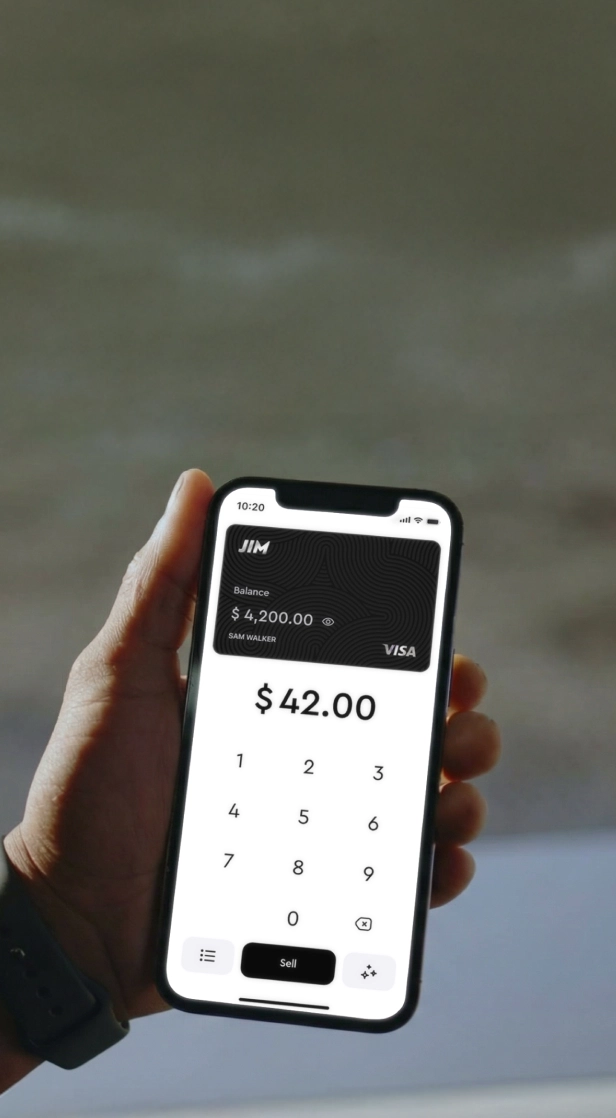
For storage container businesses that need to accept payments on-site or on-the-go, JIM offers a streamlined solution. With JIM, you can accept debit, credit, and digital wallets directly through your smartphone. Just tap and you are done.
Many owners get stuck with high fees from other providers, where average commission rates can run from 2.5% to over 3.5%. At just 1.99% per transaction with no hidden costs or extra hardware needed, JIM is particularly useful for collecting payments upon container delivery.
Getting started is straightforward:
- Get Started: Download the JIM app for iOS.
- Make a Sale: Type the sales amount, hit sell, and ask your customer to tap their card or device on your phone.
- Access Funds: Your money is available right on your JIM card as soon as the sale is done, with no waiting for bank transfers.
Here are 3 immediate steps to take:
- Draft your standard payment terms for your rental agreement.
- Compare payment processing rates from different providers.
- Download the JIM app to see how it works for on-site payments.
Step 6: Secure funding and manage your finances
Explore your funding options
Equipment financing is a popular route because the containers themselves act as collateral. Lenders focus more on the asset's value than your business history, which can make approval easier. You might want to seek quotes from online lenders that specialize in equipment loans.
Also, look into an SBA 7(a) loan. These government-backed loans can fund equipment and provide working capital. A common mistake is to apply with a low credit score. You will generally need a score of 680 or higher and a detailed business plan to qualify.
Calculate your working capital
With your assets funded, you need cash for day-to-day operations. This working capital covers fuel, insurance payments, and marketing for your first few months. Underestimating this figure is a frequent misstep that can stall a business before it gets going.
For the first six months, you should budget at least $20,000 to $40,000 in working capital. This buffer allows you to operate without stress while you build your customer base and rental income starts to flow in. It is your financial safety net.
Here are 3 immediate steps to take:
- Request an equipment financing quote for your initial container purchase.
- Check your credit score to see if you meet SBA 7(a) loan requirements.
- Create a six-month operating budget to pinpoint your working capital needs.
Step 7: Hire your team and set up operations
Key roles and responsibilities
Your first hire will likely be a Driver-Operator. This person is the face of your business, responsible for safe delivery and pickup. A mistake some owners make is to hire a general truck driver. You should look for someone with specific experience on a tilt-bed trailer to avoid property damage.
A qualified driver typically earns between $50,000 and $70,000 annually. They will likely need a Commercial Driver's License (CDL), depending on your truck's weight. It is a good idea to confirm your state's specific CDL requirements before you post the job.
Once you have a few dozen containers rented, an Office Manager becomes valuable. This role handles customer calls, schedules deliveries, and manages billing for a salary of around $40,000 to $55,000. They are the operational hub that keeps everything running smoothly.
Streamline your daily workflow
With your team in place, you need a system to manage your fleet. Instead of spreadsheets, you might want to use rental management software like Jobber or RentalMan. It helps you track container availability, schedule jobs, and automate invoicing to prevent double-bookings.
As you scale, a good financial target is to generate $150,000 to $200,000 in annual revenue per employee. This ratio is a healthy benchmark in the rental industry and helps you decide when it is the right time to hire more staff.
Here are 4 immediate steps to take:
- Draft a job description for a Driver-Operator with tilt-bed experience.
- Confirm your state's CDL requirements for your delivery vehicle.
- Schedule a demo with a rental management software provider.
- Set a revenue-per-employee goal for your first year.
Step 8: Market your business and get customers
Build your online presence
Your first move should be to set up a Google Business Profile. Fill it out completely with photos of your containers and yard. Ask your first few customers for reviews to build trust. A strong profile is your best free marketing asset.
Some owners overlook local SEO. You want to appear when someone searches "storage container rental near me." A complete Google profile with positive reviews is the fastest way to get this visibility and attract inbound leads without spending on ads.
Connect with commercial clients
Next, focus on relationships. Connect with construction site managers, restoration companies, and event organizers. You could offer a small discount on their first rental. One good commercial relationship can lead to dozens of rentals over time.
Once your foundation is set, you might consider targeted Google Ads. Focus on keywords like "20-foot container rental [your city]." A realistic customer acquisition cost (CAC) can be $100 to $300 per new customer, so track your spending carefully.
Here are 4 immediate steps to take:
- Create and fully populate your Google Business Profile.
- Ask your first three customers to leave a Google review.
- Identify five local construction companies to contact.
- Research local keywords for a potential Google Ads campaign.
Step 9: Set your pricing and profit margins
Establish your rental rates
Most of your revenue will come from monthly rentals. A standard 20-foot container typically rents for $100 to $150 per month. A 40-foot unit can command $175 to $250 per month. You should also charge separate fees for delivery and pickup, usually between $100 and $200 each way.
Many new owners make the mistake of only competing on price. Instead, you can justify a higher rate with better service, such as guaranteed next-day delivery or providing newer, cleaner containers. This builds a reputation for quality, not just for being the cheapest option.
Calculate your profitability
Your profit margins on rentals are strong. A container that costs $4,000 can pay for itself in about 24 to 36 months. After that, the monthly rent is almost pure profit, minus small costs for insurance and maintenance. This is where the business becomes highly profitable.
To set your final prices, call at least three local competitors to get their complete rental and delivery quotes. This gives you a real-world baseline. Use this data to position your business where you want it in the market, whether that is as a budget-friendly or premium service provider.
Here are 4 immediate steps to take:
- Call three competitors to get their full pricing structure.
- Create a price list for your 20-foot and 40-foot rentals, including delivery fees.
- Calculate the break-even timeline for one of your containers.
- Draft the late fee and damage policy for your rental agreement.
Step 10: Maintain quality and scale your operations
Establish your quality standards
Before each rental, inspect every container. You can use the IICL-5 standards as a reference for condition. Your own check should confirm the unit is wind and water-tight, the doors seal properly, and the floor is solid. Some owners let maintenance slip as they get busy, which quickly hurts their reputation.
You should also track your service quality. Aim for an on-time delivery rate of 98% or higher. After a job is complete, you might want to send a simple one-question survey to gauge customer satisfaction. This helps you spot problems before they become patterns.
Know when to expand
Use data to guide your growth. Once your fleet utilization stays above 80% for three consecutive months, it is a clear sign to order more containers. This data-driven approach prevents you from buying assets too early or turning away new customers due to lack of inventory.
The same principle applies to your team. When you consistently hit $150,000 to $200,000 in annual revenue per employee, it is time to hire. As you grow, rental management software like InTempo or Point of Rental helps you manage a larger fleet and automate maintenance schedules.
Here are 4 immediate steps to take:
- Create a pre-rental inspection checklist for your containers.
- Set a fleet utilization target, such as 85%, to trigger new purchases.
- Define a target for your on-time delivery rate.
- Schedule a demo with a rental software provider like InTempo.
You have the roadmap to launch your storage container business. Remember, your best marketing is a clean, on-time delivery. That first positive customer experience is what builds momentum. Now you have the steps, go make it happen.
A smooth payment process is part of that experience. JIM turns your phone into a card reader, so you can accept payments on-site for a flat 1.99% fee with no extra hardware. Download JIM to get started.
.avif)