Starting a summer camp is a rewarding venture that blends a passion for child development with smart business sense. It's a multi-billion dollar market with consistent demand for all kinds of camps, from sports and arts to specialized STEM programs.
This guide will take you through the practical steps of validating your concept, obtaining necessary permits, selecting the right location, and hiring staff to help you launch a successful summer camp business in the U.S.
Step 1: Create your business plan and validate your concept
First, confirm there is real demand for your camp idea. You can survey local parents through online community groups or PTA meetings to understand what they look for in a summer program. The American Camp Association also provides valuable data on industry trends.
Once you have a feel for the market, analyze your local competition. Use Google Maps to identify nearby camps and review their offerings with the ACA’s "Find a Camp" database. A frequent misstep is to pick a theme you love before you confirm parents will pay for it.
Estimate your startup costs
Your initial investment will vary, but you should plan for several key expenses. A thoughtful budget prepares you for the financial side of the launch. Expect to allocate funds for the following categories:
- Insurance: $1,000 - $5,000
- Permits and licenses: $500 - $2,000
- Equipment and supplies: $3,000 - $15,000
- Marketing and website: $1,000 - $5,000
For a smaller camp, initial costs often land between $7,500 and $37,000. It is wise to add a 20% contingency fund to your budget for any unexpected expenses that may arise.
Here are 3 immediate steps to take:
- Survey at least 25 local parents to confirm interest in your camp theme.
- Analyze 3-5 direct competitors and note their pricing and program schedules.
- Draft a startup budget that includes a 20% contingency fund.
Step 2: Set up your legal structure and get licensed
Choose your business structure
You might want to register your camp as a Limited Liability Company (LLC). This structure protects your personal assets from business debts and lawsuits. It also simplifies your taxes by letting profits pass through to your personal return, which avoids double taxation.
Filing for an LLC typically costs between $50 and $500 through your state’s Secretary of State website. The process is usually completed online in just a few days.
Secure your permits and licenses
First, get a federal Employer Identification Number (EIN) from the IRS website. It is free and you will need it to hire staff. Once you have that, investigate your state’s requirements, which are often the most time-consuming part of this process.
Contact your state’s Department of Health for a camp operating permit or child care license. Many new owners underestimate this timeline; applications can take 60-120 days to approve, so you should start at least four months out.
You will also need a general business license from your city or county, which can cost $50 to $400. If you plan to serve food, you will need a separate food handler’s permit from the local health department.
Here are 3 immediate steps to take:
- Register your business name and file for an LLC with your Secretary of State.
- Apply for a free Employer Identification Number (EIN) on the IRS website.
- Identify your state’s specific camp licensing requirements and application deadlines.
Step 3: Secure your insurance and manage risk
To protect your camp, you need the right insurance. General liability is your foundation, covering accidents and injuries. You should aim for a policy with at least $1 million per occurrence, with $2 million being a safer bet for camps with high-risk activities.
Key insurance policies for your camp
Beyond general liability, you will likely need a few other policies to be fully protected. These often include:
- Professional liability: Covers claims of negligence related to your program's instruction or supervision.
- Property insurance: Protects your location and equipment from damage or theft.
- Workers’ compensation: Required in most states as soon as you hire your first employee.
- Commercial auto: If you use any vehicles to transport campers.
Annual premiums can range from $1,500 to $10,000, based on your camp’s size and activities. You might want to get quotes from specialists like K&K Insurance, Markel, or The Redwoods Group, as they understand camp-specific risks better than general agents.
Many new owners overlook securing abuse and molestation coverage. This is not standard in a general liability policy and must be added as a specific rider. Without it, you are exposed to significant risk, so confirm this is included in your policy.
Here are 3 immediate steps to take:
- Request quotes from at least two specialized camp insurance providers.
- Ask for a policy with a minimum of $1 million in general liability coverage.
- Verify that your policy explicitly includes an abuse and molestation coverage rider.
Step 4: Find your location and buy equipment
Select and lease your site
Look for facilities zoned for "recreational" or "child care" use, which you can confirm with your city’s planning department. A good rule of thumb is to have at least 50 square feet of indoor space per child. Schools, churches, and community centers are often open to seasonal rentals.
When you negotiate a lease, push for a 3-4 month term. Some new owners get locked into year-long contracts for a seasonal business. A short-term agreement saves money and better fits your operational calendar.
Purchase your equipment and supplies
With your location secured, you can buy your supplies. You can find bulk discounts from suppliers like S&S Worldwide or School Specialty, but be mindful of their minimum order requirements to avoid overspending. Focus on items that support your camp’s theme.
Here are some typical costs for items you will likely need:
- Arts and crafts supplies: $500 - $2,000
- Sports equipment: $300 - $1,500
- Folding tables and chairs: $1,000 - $3,000
- Stocked first-aid kits: $100 - $300 each
Here are 3 immediate steps to take:
- Check local zoning laws for "recreational facility" or "child care center" classifications.
- Contact three potential venues about their seasonal lease options.
- Price out a basic equipment list from a supplier like S&S Worldwide.
Step 5: Set up your payment processing
Most camps require a non-refundable deposit, around 10-25%, to secure a spot. The full balance is typically due 30-60 days before camp starts. This approach helps manage your cash flow and confirms attendance early.
You will need a way to handle online registrations and payments. A detail many new owners miss is the high transaction fees in some camp software, which can range from 2.9% to 4% plus a per-transaction fee.
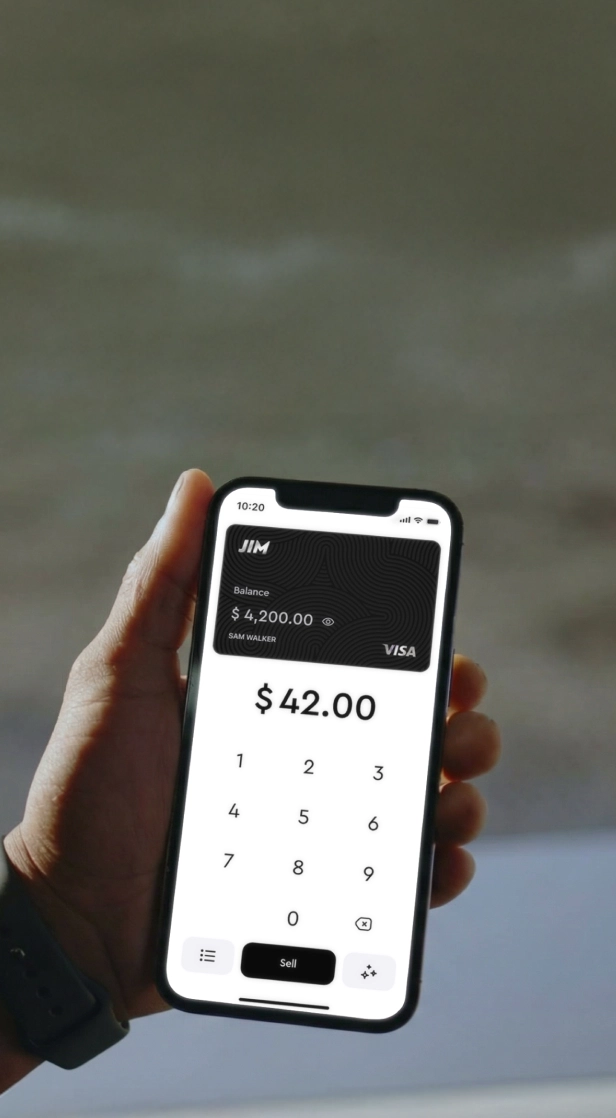
For camps that need to accept payments on-site, JIM offers a streamlined solution. With JIM, you can accept debit, credit, and digital wallets directly through your smartphone. Just tap and you are done.
At just 1.99% per transaction with no hidden costs or extra hardware needed, it is particularly useful for last-minute sign-ups or selling camp merchandise. This rate is much lower than what many other providers offer.
- Get Started: Download the JIM app for iOS.
- Make a Sale: Type the sales amount, hit sell, and ask your customer to tap their card or device on your phone.
- Access Funds: Your money is available right on your JIM card as soon as the sale is done, with no waiting for bank transfers.
Here are 3 immediate steps to take:
- Decide on your deposit amount and final payment deadline.
- Compare the transaction fees of at least two camp management software options.
- Download the JIM app to test its on-site payment process.
Step 6: Secure your funding and manage finances
Find your startup capital
You can fund your camp with an SBA Microloan, which offers up to $50,000. These loans have interest rates between 8-13% and are great for initial equipment or marketing costs. Local credit unions are another solid option, as they often favor community-focused businesses.
Many new owners approach lenders without a detailed budget. Make sure your business plan clearly outlines how you will spend every dollar. This shows you are prepared and increases your chances of approval.
Also, look for grants through the American Camp Association or local community foundations. They are competitive but offer funds you do not have to repay.
Set up your financial systems
Plan to have enough working capital to cover three to six months of operating costs before camp starts. For a small camp, this is typically $10,000 to $20,000 for rent, initial payroll, and marketing.
Open a dedicated business bank account right away. This separation is vital for clean bookkeeping and simplifies tax filing. You might also want to use accounting software like Wave or QuickBooks to track your income and expenses from the start.
Here are 3 immediate steps to take:
- Research SBA Microloan requirements on the official SBA website.
- Open a separate business bank account for your camp.
- Create a budget and track expenses with software like Wave.
Step 7: Hire your staff and plan operations
Build your camp team
Your staff-to-camper ratio is a key safety metric. The American Camp Association recommends a 1:6 ratio for campers aged 6-8 and 1:8 for those aged 9-14. You will need Camp Counselors to lead activities and Lead Counselors to manage small groups.
Plan to pay Camp Counselors $15-$20 per hour, while Lead Counselors can earn $20-$25. All staff must have current CPR and First Aid certifications. You can find local courses through the American Red Cross. This is non-negotiable for insurance and safety.
Some new owners, in a rush to get started, overlook a critical step. You must run a comprehensive background check on every single employee before they start. This is a standard practice that protects your campers and your business from significant risk.
Streamline your daily schedule
Once your team is taking shape, you can focus on daily logistics. To manage schedules and parent communication, you might look into software like CampMinder or CircuiTree. These platforms help organize camper information, attendance, and daily activities in one place.
Here are 4 immediate steps to take:
- Determine your staff-to-camper ratio based on your campers' age groups.
- Write job descriptions for Camp Counselors and Lead Counselors with clear pay rates.
- Mandate and verify CPR and First Aid certification for all staff members.
- Select a vendor to perform background checks on all final candidates.
Step 8: Market your camp and get sign-ups
Focus on digital and local outreach
Start your marketing 4-6 months before camp begins. Use Facebook and Instagram ads to target parents in your zip code with interests like "parenting" or "after-school activities." A good customer acquisition cost (CAC) to aim for is under $100 per camper.
Many new owners rely only on digital ads. You should also build local partnerships. Offer a referral discount to PTAs or sponsor a youth sports team to get your name out. This approach builds trust directly within your community.
You might want to create an early bird discount. Offer 10-15% off for registrations made 90 days before the start date. This helps secure initial sign-ups and provides early cash flow. A frequent misstep is to announce registration without a clear incentive.
Your website is your digital storefront. Make sure it has clear photos, a detailed schedule, and an easy-to-find "Register Now" button. A website with a confusing layout can lose you a potential customer in seconds.
Here are 4 immediate steps to take:
- Create an early bird discount of 10-15% for the first 30 days of registration.
- Set up a Facebook ad campaign targeting parents within a 10-mile radius.
- Contact two local schools or community centers about partnership opportunities.
- Review your website to ensure the registration button is visible on the homepage.
Step 9: Set your pricing and profit margins
Your price must cover all costs and deliver a profit margin between 20-40%. To find your base cost, add up all expenses for the summer and divide that by your total number of camper-weeks. This gives you a break-even number to build from.
Choose your pricing model
Most camps use either an all-inclusive or tiered model. An all-inclusive price simplifies marketing. A tiered model lets you offer a basic week for $350 and a premium robotics week for $475. This can attract a wider range of families and increase revenue per camper.
After you know your costs, look at what competitors charge. Review 3-5 local camps to see their weekly rates. A frequent mistake is to price too low just to attract sign-ups. This can make your business unsustainable before it even gets going.
With this in mind, set your final price. If your cost per camper is $275 per week, a price of $385 gives you a 28% profit margin. This is a healthy target for a new day camp in most suburban areas.
Here are 4 immediate steps to take:
- Calculate your total cost per camper for one week.
- Research the weekly rates of 3-5 local competitors.
- Decide between a tiered or an all-inclusive pricing model.
- Set a final price that targets a 20-40% profit margin.
Step 10: Run quality control and scale your operations
Maintain your quality standards
Once your camp is running, you might want to pursue American Camp Association (ACA) accreditation. This is a voluntary but powerful mark of quality that parents recognize. The process involves a thorough review of your operations, from safety to staff training.
To measure your own success, send parent satisfaction surveys after each session. Aim for a 90% or higher satisfaction score. Another key metric is your camper return rate. A rate over 60% shows you have created a program that families value and trust.
Know when to grow
Many new owners expand too quickly, which can dilute quality. Before you add a second location, make sure your waitlist consistently exceeds 25% of your capacity. Your profit margin should also hold steady above 25% for two consecutive seasons.
As you scale, managing logistics manually becomes difficult. Software like CampMinder or Brightwheel can help you handle registrations, parent communication, and billing across multiple sessions or locations. This frees you up to focus on program quality instead of paperwork.
Here are 4 immediate steps to take:
- Review the standards for ACA accreditation on their official website.
- Draft a post-camp parent survey with 5-7 key questions.
- Calculate your camper return rate from your most recent season.
- Analyze your waitlist numbers to gauge unmet demand.
Starting a summer camp is more than a business, it's about creating lasting memories. The real success comes from the small details that make your camp special. You have the steps, now go build a program that kids will talk about for years to come.
And as you handle payments, remember that simple is often best. JIM turns your phone into a card reader for a flat 1.99% fee, with no extra hardware. It makes taking payments for last-minute sign-ups or merchandise easy. Download JIM to get started.
.avif)