Starting a sweepstakes business is an exciting venture that blends creative marketing with sharp business savvy. The industry is worth billions, with steady demand for promotional contests from brands looking to boost engagement, generate leads, and launch new products.
This guide will take you through the practical steps of validating your business concept, navigating legal requirements, securing funding, and building a prize strategy to help you launch a successful sweepstakes business in the U.S.
Step 1: Validate your concept and plan your launch
Begin by analyzing active campaigns on platforms like Gleam or by searching #sweepstakes on social media. This shows you what prizes, entry methods, and brands are currently popular. A frequent misstep is trying to serve all industries at once. Instead, focus on a niche.
You might target local restaurants or tech startups, for example. This focus makes your service more attractive to a specific client base and simplifies your marketing efforts from the start.
Analyze competitors and costs
Use a platform like SEMrush to see what keywords competitors rank for. You can also review their past campaigns to understand their prize strategies and client lists. This research helps you find gaps in the market you can fill.
Now, let's talk about startup costs. A realistic budget ranges from $7,500 to over $25,000. This includes legal document drafting ($2,000-$7,000), website development ($3,000+), and state registration or bonding ($500-$2,500).
Resist the temptation to use generic online templates for your official rules. This area requires professional legal guidance to ensure compliance. Budgeting for it upfront is a non-negotiable part of a solid foundation.
Here are 3 immediate steps to take:
- Identify a potential business niche (e.g., e-commerce brands, local businesses).
- Create a spreadsheet to track 5-10 direct competitors and their offerings.
- Draft a preliminary startup budget with low and high estimates for each cost category.
Step 2: Establish your legal framework and secure licenses
Most sweepstakes businesses start as a Limited Liability Company (LLC). This structure protects your personal assets if the business faces legal issues. It also provides pass-through taxation, meaning profits are taxed once on your personal return, unlike a C-Corp.
Once you form your LLC, get an Employer Identification Number (EIN) from the IRS. It’s free on the IRS website and you will need it to open a business bank account and file taxes. Think of it as a Social Security number for your business.
Navigate federal and state regulations
The Federal Trade Commission (FTC) oversees sweepstakes nationally. A frequent error is creating an illegal lottery. Remember, a legal sweepstakes must offer a free method of entry. If you require a purchase to enter, it becomes a private lottery, which is illegal.
State laws add another layer. New York and Florida, for example, require you to register and post a bond for any prize pool over $5,000. This process can take 4-8 weeks and involves fees, so plan for it well in advance to avoid campaign delays.
Here are 4 immediate steps to take:
- File for an LLC with your state's Secretary of State office.
- Apply for a free Employer Identification Number (EIN) on the IRS website.
- Research the specific registration and bonding rules for New York and Florida.
- Schedule a consultation with a lawyer who specializes in promotion law.
Step 3: Secure insurance and manage risk
Your first move is to get quotes for General Liability and Professional Liability (also called Errors & Omissions or E&O) insurance. Expect to need at least $1 million in coverage for each. Annual premiums typically range from $900 to $2,500 combined for these foundational policies.
Some new owners assume General Liability is enough. However, E&O is what protects you from claims of negligence or mistakes in your work, such as a typo in the official rules or an error in prize fulfillment. This coverage is your financial backstop for human error.
Address unique sweepstakes risks
Because you will collect entrant data, you face data breach risks. You should add Cyber Liability insurance to your policy. This covers costs related to data recovery and notifying affected users. It can often be bundled with your General Liability policy for a better rate.
Once you have those policies in place, consider your future plans. If you hire even one employee, you will need Workers' Compensation insurance. If you lease a physical office, you will need Commercial Property insurance. For now, focus on the liability coverages.
You can get quotes from providers like Hiscox or The Hartford, who frequently work with marketing agencies. A broker such as Insureon can also compare policies from multiple carriers to find coverage that fits your specific promotional business model.
Here are 4 immediate steps to take:
- Request quotes for $1 million General Liability and Professional Liability policies.
- Ask potential insurers about adding Cyber Liability coverage.
- Contact a business insurance broker to compare carrier options.
- Determine if you need Workers' Compensation based on your hiring plans.
Step 4: Set up your workspace and get equipped
Your physical footprint can be minimal. Most sweepstakes businesses operate effectively from a home office, so you likely will not need to worry about special commercial zoning. If you prefer a separate space, a co-working membership or a small 200-500 sq ft office is sufficient.
Should you decide to lease a small office, you might want to negotiate a shorter 12 or 24-month term. Landlords are often flexible with low-impact administrative businesses, and this gives you more freedom than a standard 3-5 year commitment.
Invest in your digital toolkit
Your primary operational expense will be software. Platforms like ShortStack or Gleam are built to manage entries and help with compliance. Basic plans start near $99 per month, but a budget of $300-$500 per month is more realistic for robust client work.
Some new owners try to rely on free versions, but these often lack the features needed for legal compliance and professional campaign management. In addition to software, you need a reliable computer ($1,200+) and a VoIP business phone line from a provider like RingCentral (around $30/month).
Here are 4 immediate steps to take:
- Compare the monthly and annual plans for ShortStack and Gleam.
- Get a quote for a VoIP business phone service.
- Research local co-working space membership costs.
- Create a detailed budget for your computer, software, and internet service.
Step 5: Set up your payment processing
Establish clear payment terms from day one. A common structure is a 50% deposit to begin work and the final 50% due upon campaign launch. This ensures you have cash flow to cover initial expenses for your client's project.
For any project over a few thousand dollars, use a simple client agreement. This document should outline the scope of work, timeline, and payment schedule. It prevents misunderstandings and formalizes the partnership, which clients appreciate.
Now, let's talk about how you will accept those payments. You need a solution with low transaction fees and quick access to your money. Many providers charge upwards of 2.5-3% plus a fixed fee per sale, which can add up.
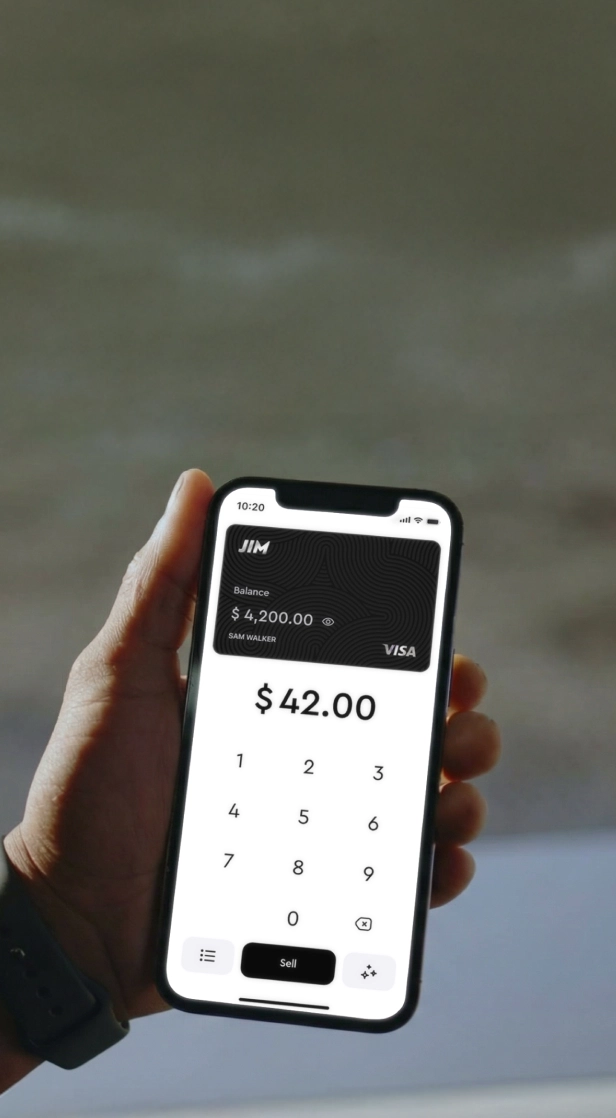
For sweepstakes businesses that need to accept payments on-site, JIM offers a streamlined alternative. You can accept debit, credit, and digital wallets directly on your smartphone. There is no extra hardware needed, just a tap from your client's card or device.
The rate is just 1.99% per transaction with no hidden costs. This is particularly useful when you secure a new local business client and want to take a deposit on the spot. It makes the process feel quick and professional.
- Get Started: Download the JIM app for iOS.
- Make a Sale: Type the sales amount, hit sell, and ask your customer to tap their card or device on your phone.
- Access Funds: Your money is available right on your JIM card as soon as the sale is done - no waiting for bank transfers.
Here are 4 immediate steps to take:
- Draft your standard payment terms, such as a 50% deposit.
- Create a simple client agreement template for larger projects.
- Compare the transaction fees of different payment solutions.
- Download the JIM app to explore its features for in-person payments.
Step 6: Fund your business and manage finances
Most sweepstakes businesses are funded through personal savings or a business line of credit. For external funding, an SBA Microloan is a strong option. These loans go up to $50,000, with interest rates typically between 8-13%. Lenders will want to see a solid business plan and a personal credit score over 640.
Calculate your working capital
You will need about $10,000 to $15,000 in working capital to cover your first six months. A frequent oversight is to budget only for one-time startup costs, which leaves no room for monthly software fees, marketing, and other operational expenses before revenue becomes consistent.
While you should not rely on them, you might also look into grants. Programs like the NASE Growth Grants offer funds for small businesses. These are highly competitive, so treat them as a potential bonus rather than a core part of your funding strategy.
Here are 4 immediate steps to take:
- Calculate your specific 6-month working capital needs based on your budget.
- Check your personal credit score to see if you meet lender requirements.
- Research local lenders that participate in the SBA Microloan program.
- Review the eligibility criteria for a NASE Growth Grant.
Step 7: Build your team and streamline operations
You will likely handle operations yourself at first. Your first hire should be a Campaign Manager to oversee client projects and prize fulfillment. This role typically commands a salary of $50,000 to $70,000, depending on experience.
Many owners wait until they reach $80,000-$100,000 in annual revenue before they bring on a full-time employee. Before that, you might use freelancers for tasks like copywriting or graphic design. This approach keeps your overhead low as you grow.
Set up your operational workflow
To manage multiple campaigns, you need a project management system. Platforms like Asana or Trello help you track deadlines, client communication, and tasks. Their free or basic plans are often enough to get you started.
A frequent miscalculation is underestimating the time prize fulfillment takes. You should map out this entire process from winner notification to prize shipment. This clarity helps you delegate the work effectively when you do hire someone.
Here are 4 immediate steps to take:
- Draft a job description for a Campaign Manager role.
- Set a revenue target for your first full-time hire.
- Compare the features of Asana and Trello for campaign management.
- Create a step-by-step checklist for your prize fulfillment process.
Step 8: Market your business and acquire customers
Target decision-makers directly
Focus your efforts on LinkedIn. Many new owners make the mistake of posting general content. A better approach is to use LinkedIn Sales Navigator to build a list of marketing managers or brand directors in your niche. Direct, personalized outreach is more effective.
You can also write articles on your website about complex topics like prize fulfillment or state-specific rules. This positions you as an expert and attracts businesses that search for these solutions. Share these articles on your LinkedIn profile to demonstrate your knowledge.
Set realistic marketing goals
The sales cycle for B2B services can be long. A realistic client acquisition cost (CAC) can range from $500 to $2,000. Cold email outreach often has a low conversion rate, sometimes just 1-3%, so persistence is important. Track your outreach efforts in a simple spreadsheet.
One effective campaign is to offer a free 15-minute "Campaign Idea Session" to qualified prospects. This gives them a taste of your expertise without a major commitment. It builds trust and often leads to a paid project to execute the ideas you discussed.
Here are 4 immediate steps to take:
- Optimize your LinkedIn profile to appeal to B2B marketing clients.
- Build a target list of 50 marketing managers in your business niche.
- Draft a short, personalized email template for your outreach.
- Outline one blog post topic that addresses a common client pain point.
Step 9: Price your services and create packages
Start with a flat-fee model. A standard package for campaign setup, rules, and winner selection often runs between $3,000 and $5,000. This structure gives clients clarity on their investment from the start and simplifies your billing process.
A frequent mistake is to only price for the visible work. You must account for administrative time and software costs. Aim for a 40-50% profit margin on each project to ensure healthy growth and cover your operational overhead.
Create tiered service packages
You might offer a "Basic" package at $3,500. A "Pro" package at $7,000 could add prize sourcing and fulfillment. For larger clients, an "Enterprise" package at $15,000+ might include influencer outreach and detailed analytics reporting.
With these numbers in mind, research your competitors. Some list prices publicly, but you may need to pose as a potential client to request a quote. This gives you real-world data to position your own rates effectively in the market.
Here are 3 immediate steps to take:
- Draft three pricing tiers with specific services included in each.
- Calculate your target project price to achieve a 40% profit margin.
- Research three competitors to benchmark your rates against the market.
Step 10: Implement quality control and scale your operations
Measure your service quality
To maintain high standards, track a few key metrics. Aim for a client retention rate above 80%. You can also measure the average lead acquisition cost for your clients' campaigns to demonstrate clear ROI. This data justifies your fees and builds long-term trust.
Some new owners focus on landing clients and forget to monitor campaign performance. A single error in the official rules or a delayed prize fulfillment can damage your reputation. A simple quality checklist for each project helps prevent these issues.
Know when to grow
Once you approach $80,000 in annual revenue, it is a good time to consider your first full-time hire. This frees you to focus on sales. You might also upgrade your sweepstakes software from a basic plan to one with more robust analytics.
As you add clients, a dedicated CRM like the free version of HubSpot becomes valuable for managing your sales pipeline. It helps you track leads and follow-ups so opportunities do not fall through the cracks. This is a step up from a simple spreadsheet.
Here are 4 immediate steps to take:
- Create a quality control checklist for every campaign launch.
- Start tracking your client retention rate and average campaign ROI.
- Set a revenue goal that will trigger your first full-time hire.
- Set up a free HubSpot account to manage your sales leads.
You now have the steps to build a successful sweepstakes business. The key is balancing the creative fun of a giveaway with the serious details of legal compliance. Get the rules right, and the rest will follow. Your detailed plan is the first big win.
When you secure that first client, make payment easy. JIM lets you accept cards right on your phone, with no extra hardware needed. The 1.99% rate keeps things simple and predictable as you grow. Download JIM and be ready for that first sale.
.avif)