Starting a tire recycling business is a rewarding venture that combines environmental responsibility with sharp business savvy. The industry is a multi-billion dollar market, fueled by steady demand for recycled tire products in asphalt, playground surfaces, and energy production.
This guide will take you through the practical steps of securing funding, obtaining the right permits, selecting a location, and acquiring equipment to help you launch a successful tire recycling business in the U.S.
Step 1: Plan your business and validate the market
Market validation
Start by confirming demand. Contact your state's environmental protection agency for reports on annual scrap tire generation. Also, review market data from the U.S. Tire Manufacturers Association to understand end-product demand.
A frequent mistake is starting without confirmed buyers. Before you invest, identify potential customers for your crumb rubber or tire-derived fuel. Reach out to asphalt companies, civil engineering firms, and playground manufacturers to gauge interest.
Competitor and cost analysis
Next, map out your competition. Use industrial directories like Thomasnet to find existing recyclers in your target region. Note their services and scale. This helps you find a niche, like focusing on a specific end-product that is underserved.
Speaking of costs, your initial investment requires careful planning. Budget for these core expenses:
- Equipment (Shredders, Granulators): $150,000 - $500,000+
- Permits and Licensing: $5,000 - $25,000
- Site Lease (Initial Deposit/Prep): $10,000 - $30,000
- Collection Fleet (Trucks/Trailers): $50,000 - $150,000
Your total startup costs could range from $215,000 to over $700,000. A detailed business plan is your roadmap to secure funding for these figures.
Here are 3 immediate steps to take:
- Contact your state's environmental agency to request scrap tire generation statistics.
- Identify three potential buyers for your recycled material and initiate contact.
- Draft a preliminary budget with a breakdown of equipment, site, and licensing costs.
Step 2: Secure your legal structure and licenses
Your first move is to establish a legal entity. You might want to form a Limited Liability Company (LLC). This structure protects your personal assets if the business incurs debt or faces legal action. Profits pass through to your personal tax return, which simplifies filings.
Navigating permits and regulations
The Environmental Protection Agency (EPA) sets federal standards, but your state's Department of Environmental Protection (DEP) is your main point of contact. They issue the core permits you need. A frequent misstep is underestimating the timeline, so start this process early.
You will likely need two main permits. A Scrap Tire Transporter Permit allows you to collect tires, and a Waste Tire Processing Facility Permit lets you recycle them. Budget between $1,000 and $10,000 for these, and expect a processing time of 90 to 180 days.
Here are 3 immediate steps to take:
- File for an LLC with your state's Secretary of State office.
- Contact your state's DEP to request the application packet for tire transporter and processor permits.
- Consult an attorney to review your permit applications before submission.
Step 3: Secure insurance and manage risk
Essential coverage
Insurance is your financial backstop. You will need a suite of policies. A frequent error is to underinsure, which can expose your business to significant financial loss if an accident occurs. Your plan should include several key policies.
Start with General Liability coverage of at least $1 million. You also need Commercial Property insurance for your site and equipment, plus Commercial Auto for your collection trucks. If you have employees, Workers’ Compensation is legally required in most states.
Unique industry hazards
Tire recycling presents unique risks. Tire piles are a major fire hazard, and a standard policy might not cover them. You should confirm your policy includes pollution liability to handle potential environmental cleanup costs after a fire.
Annual premiums can range from $15,000 to $50,000. For policies tailored to this industry, you might contact specialists like AmWINS, RPS Insurance, or McGowan Insurance Group. A general agent may not understand your specific risks.
Here are 3 immediate steps to take:
- Contact three insurance brokers who specialize in the recycling industry for quotes.
- Ask each broker about specific endorsements for tire pile fires and pollution liability.
- Draft a basic safety manual for equipment operation to share with your insurer.
Step 4: Select your location and equipment
You will need a site of at least one to two acres. Focus your search on properties zoned for heavy industrial use, often classified as I-2 or I-3. This zoning typically permits outdoor storage and processing, which are necessary for tire recycling operations.
A mistake people often make is signing a lease without confirming local fire codes. Contact your local fire marshal for specific rules on tire pile dimensions and setback distances from buildings. This information is vital before you commit to a location.
Acquiring your core machinery
Your primary shredder is the largest equipment expense, running from $100,000 to $300,000. A secondary granulator to produce finer crumb rubber can cost an additional $50,000 to $150,000. You will also need conveyors and magnetic separators to complete your processing line.
You might want to contact suppliers like CM Shredders or Granutech-Saturn Systems. They can provide quotes for complete systems. To manage your initial capital outlay, ask about refurbished equipment, which can offer significant savings without a major drop in performance.
Here are 3 immediate steps to take:
- Identify three potential industrial-zoned properties of at least one acre.
- Contact your local fire marshal to request the regulations for tire pile storage.
- Request quotes for a primary shredder and a granulator from two equipment suppliers.
Step 5: Set up your payment processing
For large contracts with civil engineering or asphalt firms, Net 30 payment terms are standard. For smaller jobs like collecting tires from auto shops, you will want payment upon collection. A lack of clear policies for each customer type can disrupt your cash flow.
You need a payment solution that handles both scenarios. Look for one that can create invoices for your Net 30 clients and also accept immediate payments in the field. This flexibility is important.
On-the-go payments
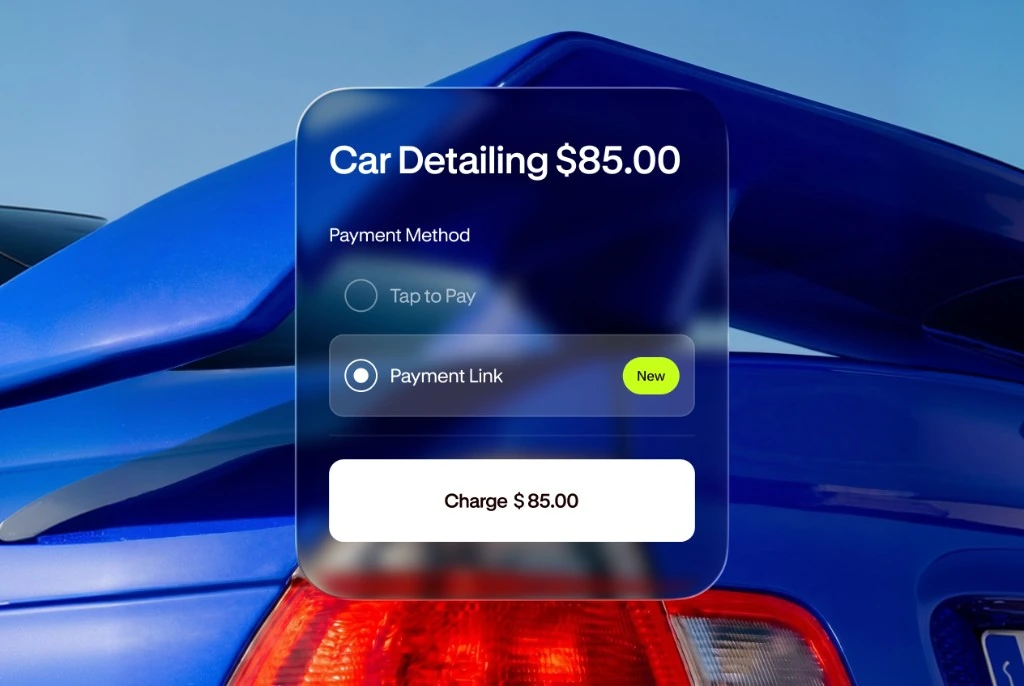
To collect payments on-site, JIM offers a streamlined solution. With JIM, you can accept debit, credit, and digital wallets directly through your smartphone—just tap and it is done. At just 1.99% per transaction with no hidden costs or extra hardware, it is a cost-effective choice.
Other providers often charge 2.5% or more. It is particularly useful when you collect tipping fees from auto shops on your routes. The process is simple:
- Get Started: Download the JIM app for iOS.
- Make a Sale: Type the sales amount, hit sell, and ask your customer to tap their card or device on your phone.
- Access Funds: Your money is available right on your JIM card as soon as the sale is done—no waiting for bank transfers.
Here are 3 immediate steps to take:
- Define your payment terms for both large contract clients and smaller collection jobs.
- Download the JIM app to see how it works on your phone.
- Calculate potential savings by comparing JIM's 1.99% rate to other quoted rates.
Step 6: Secure funding and manage your finances
SBA loans and industry grants
The Small Business Administration (SBA) 7(a) loan is a strong option. It can fund equipment, real estate, and working capital. Lenders typically look for a solid business plan and a good credit score. You might secure between $300,000 and $750,000 with these loans.
Beyond loans, you can also explore grants. The Environmental Protection Agency (EPA) offers Small Business Innovation Research (SBIR) grants. These are competitive but can provide significant funding if your process introduces a new recycling technology or improves an existing one.
Plan your working capital
Many new owners focus on equipment costs but miscalculate their daily operating expenses. You will need cash on hand to cover payroll, fuel, and insurance for the first six months. A good estimate for this working capital is between $75,000 and $150,000.
Here are 3 immediate steps to take:
- Contact your local Small Business Development Center (SBDC) for free help with your SBA loan application.
- Review the current EPA SBIR program solicitations to see if your business model qualifies.
- Create a six-month operating budget to determine your exact working capital needs.
Step 7: Hire your team and set up operations
Building your core team
Your initial team will be lean. You will likely need one Equipment Operator ($20-$25/hour) to run the shredder and one Truck Driver ($22-$28/hour) with a Commercial Driver's License (CDL). Add one or two General Laborers ($15-$18/hour) for sorting and site maintenance.
A frequent misstep is hiring operators with no mechanical aptitude, which leads to equipment downtime. You might want to look for candidates with experience in manufacturing or heavy machinery, even if it is not in recycling.
Training and safety compliance
Beyond a CDL for your driver, all plant staff should have OSHA 10-hour safety training. This is a baseline for demonstrating your commitment to safety, which insurers will notice. Forklift certification is also a valuable credential for your operators and laborers.
To manage your collection routes and driver schedules, you can look into fleet management software. Systems like Samsara help optimize routes and track your vehicles, which reduces fuel costs and improves efficiency from day one.
Here are 3 immediate steps to take:
- Draft job descriptions for an Equipment Operator and a CDL Truck Driver, including pay ranges.
- Research local providers for OSHA 10-hour safety training courses.
- Request a demo from a fleet management software provider like Samsara.
Step 8: Market your business and acquire customers
Focus on your supply chain first
Your marketing should first target tire suppliers. Direct outreach is effective here. Identify auto repair shops, car dealerships, and fleet service centers in a 50-mile radius. A frequent error is to rely on a website alone. You should visit these businesses in person.
Create a simple, one-page sales sheet that lists your tipping fees and contact information. To secure your first clients, you might offer a 10% discount on the first pickup. This approach helps build your initial collection volume and establishes a local presence quickly.
Secure buyers for your end-product
Once your supply is steady, shift focus to buyers. Use LinkedIn to connect with project managers at civil engineering firms and purchasing agents at asphalt companies. These are the people who specify or buy tire-derived aggregate and crumb rubber.
You should also join your state's recycling association. Annual membership often costs between $300 and $500, but the member directory gives you direct access to decision-makers at manufacturing plants and large construction firms who need your recycled materials.
Here are 3 immediate steps to take:
- Create a list of 20 local auto shops and dealerships to visit with your sales sheet.
- Draft a one-page sales sheet with your tipping fees and service details.
- Research your state's recycling association to review its membership benefits and directory.
Step 9: Develop your pricing strategy
Pricing your collection and end-products
Your revenue comes from two sources: tipping fees for collecting tires and sales from your recycled materials. You should price these two streams separately. A frequent mistake is to set tipping fees without factoring in your full transportation and labor costs.
For collection, a typical tipping fee is $2 to $5 per passenger tire. For commercial truck tires, you might charge $8 to $15. Your goal is to cover your collection costs and add a small profit. This fee is your first line of revenue.
For end-products, prices fluctuate with demand. Crumb rubber can sell for $200 to $400 per ton. Tire-derived fuel (TDF) often goes for $30 to $60 per ton. Your target net profit margin after all expenses should be around 20% to 30%.
Setting your rates
To set competitive rates, you can call other recyclers in your region and ask for their price list. Pose as a potential customer. This gives you a direct look at the market rates for tipping fees. You can adjust your prices based on this information.
You might want to offer volume discounts. For example, a shop that gives you over 100 tires a month could get a 10% discount on tipping fees. This strategy helps secure a consistent supply of raw material for your operation.
Here are 3 immediate steps to take:
- Call three local competitors to get quotes for their tire collection fees.
- Calculate your break-even cost per ton for producing crumb rubber.
- Create two separate price sheets, one for collection services and one for your end-products.
Step 10: Establish quality control and scale your business
Maintain product quality
Your buyers expect a consistent product. You should follow ASTM International standards, specifically ASTM D5603 for crumb rubber size and purity. This standard defines acceptable levels of steel and fiber contamination.
A frequent mistake is neglecting regular testing. You can send samples to a third-party lab monthly to verify your material meets specifications. Aim for a contamination level below 0.5% to attract premium buyers for applications like turf infill.
Know when to expand
Growth should be data-driven. Once you consistently operate at 80% of your shredder's capacity for three consecutive months, it is time to budget for a second processing line. This prevents bottlenecks as you take on more supply.
For your collection fleet, if your trucks are booked more than a week out, you should start the process to hire another driver. As your operation grows, you might want to look into industry-specific software like ScrapRight to manage inventory and track production yields.
Here are 3 immediate steps to take:
- Review the ASTM D5603 standard for crumb rubber specifications.
- Set a calendar reminder to evaluate your production capacity every month.
- Request a demo from an industry software provider like ScrapRight to see how it can streamline operations.
Conclusion
You now have the complete blueprint, from permits to pricing. The key is to secure your end-product buyers before you invest heavily in equipment. With a solid plan and clear demand, you are ready to build a profitable and sustainable business.
For those on-the-go collection fees, JIM makes payments simple. It turns your phone into a card reader, letting you accept payments for a flat 1.99% fee with no extra hardware. Get your cash flow right from the start. Download JIM.