Starting a touchless car wash business is an exciting venture that blends technical know-how with sharp business savvy. It’s a chance to tap into a multi-billion dollar industry, where there's steady demand from daily commuters, fleet operators, and car enthusiasts alike.
This guide will take you through the practical steps of selecting the right location, acquiring equipment, securing funding, and navigating permits to help you launch a successful touchless car wash business in the U.S.
Step 1: Create your business plan and validate your idea
First, gauge local demand. Use your city’s traffic count data to find high-volume roads. Then, review demographic information for target zip codes with the U.S. Census Bureau’s American Community Survey to confirm there is a solid base of potential customers with disposable income.
With this in mind, analyze your competition. Use Google Maps to plot every car wash within a five-mile radius of your preferred spots. Visit them to note their pricing, services, and customer volume. For broader market data, reports from industry analysts like IBISWorld can be useful.
Understand your startup costs
The initial investment requires careful financial planning. Your budget should account for land, equipment, and construction. A frequent oversight involves the cost of utility hookups and site preparation, which can easily add tens of thousands to your total project cost.
Here is a typical breakdown of initial expenses:
- Land or Lease: $50,000 - $250,000+ for a down payment or initial lease.
- Touchless Equipment Package: $100,000 - $250,000 for the core machinery.
- Construction and Site Prep: $200,000 - $750,000, depending on the scope.
- Permits and Impact Fees: $10,000 - $50,000.
Here are 3 immediate steps to take:
- Analyze demographic data from the U.S. Census Bureau for two to three potential zip codes.
- Drive through your target areas and log every competitor's location and services.
- Draft a preliminary budget with low-end and high-end estimates for each cost category.
Step 2: Set up your legal structure and get licensed
You might want to form a Limited Liability Company (LLC). It protects your personal assets from business debts and lawsuits. This structure also provides pass-through taxation, meaning profits are taxed on your personal return, which simplifies your accounting.
Once your business is structured, get a free Employer Identification Number (EIN) from the IRS website. You will need this for tax purposes and to hire employees. After that, register your business name with your state’s Secretary of State and apply for a sales tax permit.
Navigate local permits and regulations
This brings us to local requirements. Contact your city’s planning and zoning department for a permit checklist. You will likely need a building permit, a sign permit, and a certificate of occupancy. These can cost between $2,000 and $10,000 and take 60-120 days to process.
A frequent hang-up is water discharge. Your local public works department enforces EPA water standards. You must submit a detailed water reclamation and discharge plan. Getting this wrong can cause significant delays, so address it as soon as you secure your location.
Here are 4 immediate steps to take:
- File LLC formation documents with your state's Secretary of State.
- Apply for a free EIN directly from the IRS website.
- Request a complete permit application package from your city's planning department.
- Outline your water reclamation and disposal plan for your permit applications.
Step 3: Secure your insurance and manage risk
Your foundational coverage will be a Business Owner's Policy (BOP), which bundles General Liability and Property Insurance. Aim for at least $1 million in liability coverage. A BOP can cost between $2,000 and $5,000 annually, depending on your location and equipment value.
If you hire employees, you must also carry Workers' Compensation insurance, as required by your state. In addition, a Commercial Auto policy is necessary if the business owns a vehicle for any operational purpose.
Address car wash specific risks
A frequent oversight is the "care, custody, or control" exclusion in general liability policies. You must confirm your policy specifically covers damage to customer vehicles from equipment malfunction. Without this, a major claim could be denied, leaving you responsible for expensive repairs.
Slip-and-fall accidents are another significant exposure due to constantly wet surfaces. While proper signage helps reduce this risk, your liability insurance is the ultimate financial protection against personal injury claims.
You might want to get quotes from insurers who focus on the car wash industry. Providers like Insurtec, AmWINS Program Underwriters, and the Joseph D. Walters Agency understand these unique risks and can offer policies tailored to your needs.
Here are 4 immediate steps to take:
- Request quotes for a Business Owner's Policy with at least $1 million in liability coverage.
- Confirm with any potential insurer that their policy covers customer vehicle damage.
- Check your state's specific requirements for Workers' Compensation insurance.
- Contact at least one specialized car wash insurance provider for a comparative quote.
Step 4: Secure your location and purchase equipment
Look for a lot between 15,000 and 20,000 square feet. This provides enough room for the wash bay, queuing lanes, and vacuum stations. Your property will need a commercial zoning classification, often labeled C-2 or C-3, which permits automotive services. Confirm this with the city's planning department.
When you negotiate a lease, ask for a "build-out" period. This gives you several months of reduced or free rent while you construct the facility. A frequent misstep is not securing an exclusivity clause. This term prevents the landlord from leasing nearby space to another car wash.
Choose your core equipment
Your main equipment purchases will include the touchless automatic system, a water reclamation unit, and a payment kiosk. You can get package deals from suppliers like PDQ, Ryko, and Sonny's The CarWash Factory. They do not have minimum order quantities for large equipment.
Here are some typical price ranges:
- Touchless Gantry or Tunnel System: $100,000 - $250,000
- Water Reclamation System: $20,000 - $50,000
- Automated Pay Station: $15,000 - $30,000
Here are 4 immediate steps to take:
- Identify three potential lots with C-2 or C-3 commercial zoning.
- Request equipment package quotes from at least two major suppliers.
- Draft a lease proposal that includes a six-month build-out period.
- Ask your attorney to add an exclusivity clause to any lease review.
Step 5: Set up your payment system
Your customers will expect to pay with credit, debit, and digital wallets. You should also plan for a monthly subscription model. This creates a reliable, recurring revenue stream for your business and builds customer loyalty.
Choose your payment processor
When you select a payment processor, look for low transaction fees and fast access to your funds. Many providers charge between 2.5% and 3.5% per swipe, plus monthly fees. These costs can add up quickly and reduce your profit margin.
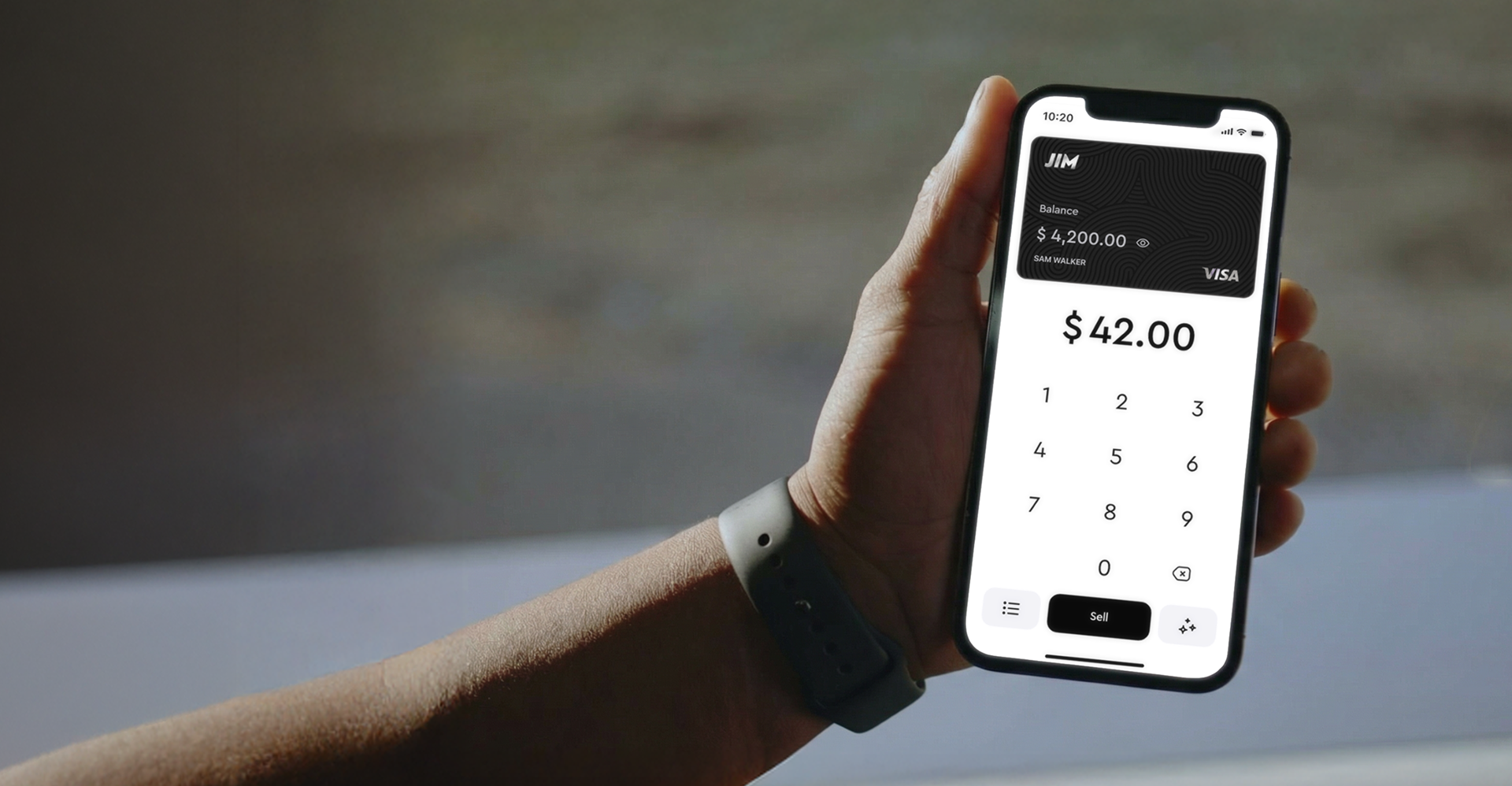
For businesses that need to accept payments on-site, JIM offers a streamlined solution. You can accept debit, credit, and digital wallets directly on your smartphone. At just 1.99% per transaction with no hidden costs, it is great for selling monthly memberships in the queue.
Getting started is straightforward:
- Get Started: Download the JIM app for iOS.
- Make a Sale: Type the sales amount, hit sell, and ask your customer to tap their card or device on your phone.
- Access Funds: Your money is available right on your JIM card as soon as the sale is done - no waiting for bank transfers.
Here are 4 immediate steps to take:
- Decide on your wash package pricing and monthly subscription tiers.
- Compare the total cost of two payment processors, including all fees.
- Download the JIM app to test its workflow on your phone.
- Outline a script for employees to offer subscription upgrades to customers.
Step 6: Secure funding and manage your finances
Explore your funding options
The Small Business Administration (SBA) is a strong ally for new car wash owners. You might want to look into their 7(a) and 504 loan programs, which can fund projects between $500,000 and $5 million. These are great for covering land, construction, and equipment costs.
To qualify, lenders typically look for a 10-20% down payment and a credit score above 680. Interest rates often hover around the Prime rate plus 2.75% to 4.75%. Many applications get delayed due to simple mistakes, so use the SBA's official checklist to ensure yours is complete.
You can also pursue equipment financing directly from suppliers. This path is often more straightforward because the machinery itself acts as collateral. It frees up your other capital for site work and operational expenses.
Calculate your working capital
With funding in mind, you need to plan for your first six months of operating costs. This includes payroll, utilities, insurance, and chemical supplies. A healthy working capital reserve is typically between $50,000 and $100,000 to keep things running smoothly before revenue stabilizes.
Something many new owners underestimate is the grand opening budget. You should set aside at least $5,000 to $10,000 for initial marketing. This investment is what drives your first wave of customers through the door and builds early momentum.
Here are 4 immediate steps to take:
- Contact an SBA-preferred lender to discuss 7(a) and 504 loan pre-qualification.
- Ask your top equipment suppliers for their financing terms and rates.
- Create a detailed six-month operating budget to pinpoint your working capital needs.
- Allocate a specific amount in your budget for a grand opening marketing campaign.
Step 7: Hire your team and set up operations
Build your core team
You will likely need two key roles. A Site Manager handles daily oversight, staff schedules, and inventory for about $45,000-$60,000 annually. Attendants guide cars and perform light maintenance, typically earning $15-$20 per hour.
Formal certifications are rare in this field. Your equipment supplier usually provides the necessary technical training for your team. A frequent misstep is to skip this training to save time, which can lead to improper maintenance and expensive downtime.
Streamline your daily workflow
To keep operations smooth, you might want to use scheduling software. Programs like Homebase or Washify help you manage shifts and communicate with staff. This avoids confusion and ensures you have coverage during peak hours.
As you plan your budget, aim for labor costs to be between 15% and 25% of your total revenue. This is a standard benchmark in the automatic car wash industry. Exceeding this range can significantly reduce your profits.
Here are 4 immediate steps to take:
- Draft job descriptions for a Site Manager and an Attendant with pay ranges.
- Schedule equipment training with your supplier for your first hires.
- Compare features of scheduling software like Homebase and Washify.
- Set a target labor cost of 20% in your financial projections.
Step 8: Market your business and acquire customers
Plan your grand opening campaign
Your grand opening sets the tone. You might want to budget $5,000 to $10,000 for a strong launch. A direct mail campaign to 10,000 homes in your primary zip codes with a "First Wash Free" offer can generate a 1-2% response rate, bringing in your first customers.
At the same time, run targeted ads on Facebook and Instagram. You can focus on users within a five-mile radius who have shown interest in cars or auto care. A $500 ad spend can reach over 20,000 local prospects and help build initial brand awareness.
Drive repeat business and loyalty
Once you have customers, focus on retention. A simple loyalty program, like a "Buy 5, Get 1 Free" offer managed through a digital system, encourages repeat visits. This is also the perfect time to promote your monthly subscription plans for recurring revenue.
Many owners forget to actively manage their online reputation. Set up your Google Business Profile and encourage happy customers to leave a review. Positive reviews are powerful social proof and directly influence new customers who find you through search.
Here are 4 immediate steps to take:
- Get quotes for a direct mail campaign targeting 10,000 local households.
- Create a "First Wash Free" offer to use in your launch promotions.
- Outline a simple loyalty program to encourage repeat business.
- Set up and fully complete your Google Business Profile page.
Step 9: Set your pricing and packages
You might want to offer three tiers: a basic wash around $10, a mid-tier with wax for $15, and a premium package with tire shine for $20. This structure appeals to different customer budgets and encourages upselling.
Also, introduce a monthly subscription plan. For example, offer unlimited basic washes for $25-$35 per month. This model creates predictable revenue and encourages customer loyalty. It is a powerful way to secure your cash flow.
Calculate your profit margins
Your cost per wash for chemicals, water, and electricity will likely be between $1.50 and $2.50. This means a $10 basic wash can yield a gross profit of over 75%. Track these costs carefully to protect your margin.
Some owners make the mistake of setting prices too low to compete. This can attract volume but may not cover your fixed costs like rent and loan payments. It is often better to compete on quality and use temporary promotions.
Here are 4 immediate steps to take:
- Calculate your direct cost-per-wash for chemicals, water, and utilities.
- Create three distinct wash packages with prices between $10 and $20.
- Design a monthly subscription offer and set its price point.
- Visit three local competitors to document their pricing menus.
Step 10: Maintain quality and scale your operations
Establish your quality standards
To maintain consistent service, you should track key performance metrics. Aim for fewer than two customer complaints per 100 washes. Also, perform daily spot-checks on random vehicles to ensure they are clean, dry, and free of soap residue.
Many owners skip creating a formal inspection process. You can avoid this by making a daily checklist for your team. It should cover bay cleanliness, nozzle function, and chemical levels. This simple step prevents small issues from becoming costly problems.
You might also want to join the International Carwash Association’s WaterSavers program. This certification shows customers your commitment to water conservation and can be a strong marketing point, setting you apart from competitors who do not have it.
Know when to grow
With your quality locked in, you can plan for expansion. Once your single bay consistently serves 150-200 cars per day, it is time to model the return on investment of adding a second bay. This is a common industry benchmark for growth.
Pay close attention to your queue. If customers regularly wait more than 10 minutes during peak hours, you should hire another attendant to manage traffic flow. For tracking these metrics, you can use industry software like DRB Systems to monitor car counts automatically.
Here are 4 immediate steps to take:
- Create a daily quality control checklist for your staff to use.
- Review the requirements for the ICA’s WaterSavers certification program.
- Set a daily car count target that will trigger your expansion plan.
- Research management software like DRB Systems to track key performance metrics.
Building a touchless car wash is a detailed process, but you have the steps. The key is to focus on the customer experience; a clean bay and simple process will set you apart. You have the blueprint, now go build it.
A smooth payment process is part of that great experience. JIM turns your phone into a card reader, so you can accept payments anywhere on-site for a flat 1.99% fee. It keeps things simple for you and your customers. Download JIM to get started.
.avif)