Starting a truck wash business is an exciting venture that combines hands-on skill with smart business planning. The industry pulls in billions of dollars annually, fueled by consistent demand from long-haul fleets, local delivery companies, and construction crews.
This guide will take you through the practical steps of securing funding, obtaining the right permits, selecting a location, and acquiring equipment to help you launch a successful truck wash business in the U.S.
Step 1: Create a business plan and validate your market
Start by researching your local market. Spend a few days observing truck traffic near industrial parks, distribution centers, and major highways. You can also request traffic count data from your state's Department of Transportation to get precise numbers for potential locations.
Analyze your local competition
Use Google Maps to identify every truck wash in a 50-mile radius. Visit their locations to observe their busyness, services offered, and pricing structure. This firsthand information is more valuable than any online report and helps you find gaps in the market.
Estimate your startup costs
Your initial investment will be significant, so a detailed budget is necessary. While costs vary by location, you can use these figures for a preliminary estimate. Many new owners underestimate the cost of water reclamation, which is often a permit requirement.
- Land and construction: $150,000 - $750,000+
- Automated wash equipment: $75,000 - $300,000
- Water reclamation system: $40,000 - $100,000
- Permits, licenses, and fees: $2,000 - $10,000
Here are 3 immediate steps to take:
- Identify three potential locations and monitor their daily truck traffic.
- Create a spreadsheet of five local competitors detailing their services and prices.
- Draft a preliminary budget using the cost ranges provided above.
Step 2: Set up your legal structure and get licensed
Choosing a Limited Liability Company (LLC) is a smart move for most new truck wash owners. It separates your personal assets from business debts. Profits pass through to your personal tax return, which simplifies paperwork compared to a corporation.
Once you register your business with your state, get an Employer Identification Number (EIN) from the IRS. It’s free on their website and you will need it to open a business bank account and hire any employees down the line.
Navigate permits and regulations
Your city or county will require a general business license, and you will also need a sign permit for any exterior signage. These are usually straightforward applications handled by the city clerk or planning department, often costing a few hundred dollars.
The most complex permit is for wastewater discharge, governed by your local environmental protection or public works department. This process can take 3-6 months and cost $1,000 to $5,000, so start this conversation immediately after you have a potential location in mind.
Here are 4 immediate steps to take:
- Decide on an LLC structure and file the paperwork with your Secretary of State.
- Apply for a free Employer Identification Number (EIN) directly on the IRS website.
- Contact your local public works department to get their wastewater permit application.
- Ask your city clerk for a complete checklist of local business operating permits.
Step 3: Secure your insurance and manage risk
You will need several insurance policies. Start with General Liability coverage of $1 million to $2 million, with annual premiums from $2,000 to $5,000. Also, get Property Insurance for your building and equipment. If you plan to hire staff, Workers' Compensation is mandatory in most states.
A frequent oversight is to skip Garagekeepers Liability. This specific policy covers damage to a customer's truck while in your care, an exposure your General Liability policy does not cover. Without it, one accident could put you out of business before you even get started.
Work with a specialized insurance provider
You might want to avoid a general insurance agent. They often miss the unique risks of a truck wash. Instead, get quotes from providers who focus on the commercial trucking industry, such as Progressive Commercial, National Truck & Trailer Services, or InsureMyRig. They know the specific coverages you need.
Here are 4 immediate steps to take:
- Request quotes for a $2 million General Liability policy.
- Confirm that any policy quote includes Garagekeepers Liability coverage.
- Contact an industry-specialized agent like Progressive Commercial or InsureMyRig.
- Review your environmental liability coverage with your agent.
Step 4: Select your location and buy equipment
Look for a site of at least one acre, or about 44,000 square feet. This space allows for easy truck entry and exit. Check with your local planning department for properties zoned for "Industrial" or "Heavy Commercial" use, as these typically permit vehicle service operations.
When you negotiate a lease, aim for a term of 10 years or more to protect your equipment investment. A frequent misstep is to ignore environmental clauses. Have a lawyer confirm who is responsible for any potential soil or water contamination before you sign anything.
Purchase your wash equipment
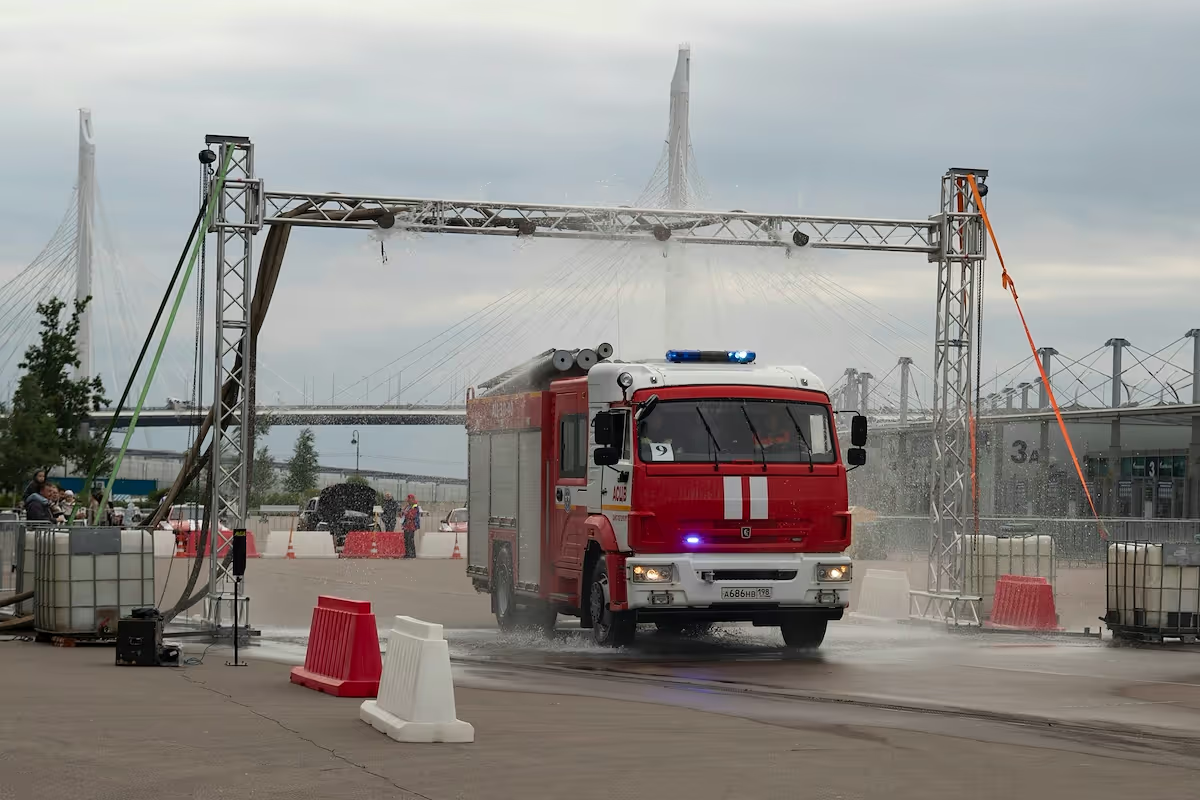
With a location secured, you can focus on equipment. An automated gantry or drive-through system is the heart of your operation. You will also need pressure washers for detail work and a water reclamation system to comply with environmental regulations and reduce utility costs.
- Automated wash system: $100,000 - $250,000
- Water reclamation system: $40,000 - $100,000
- Pressure washers (2-4 units): $2,000 - $8,000
Contact industry-specific suppliers like InterClean or Westmatic. They understand the demands of high-volume truck washing. Ask them for quotes based on your bay size and projected number of washes per day to ensure the equipment can handle the workload.
Here are 4 immediate steps to take:
- Verify the zoning classification for three potential sites with your city's planning office.
- Ask a commercial real estate lawyer to review environmental clauses in a sample lease.
- Request quotes from two automated wash system suppliers like InterClean or Westmatic.
- Get a cost estimate for a water reclamation system that meets local discharge permit rules.
Step 5: Set up your payment processing
Most of your revenue will come from credit cards and fleet accounts. For local companies, offer to set up monthly billing. This secures recurring business and simplifies their payment process. Just be sure to have a clear contract that outlines payment terms.
Choose your payment solution
When you select a payment processor, look closely at the transaction fees. Many providers charge 2.5% to 3.5% plus monthly fees. A frequent mistake is to sign a long-term contract without reading the fine print on equipment leases or termination penalties.
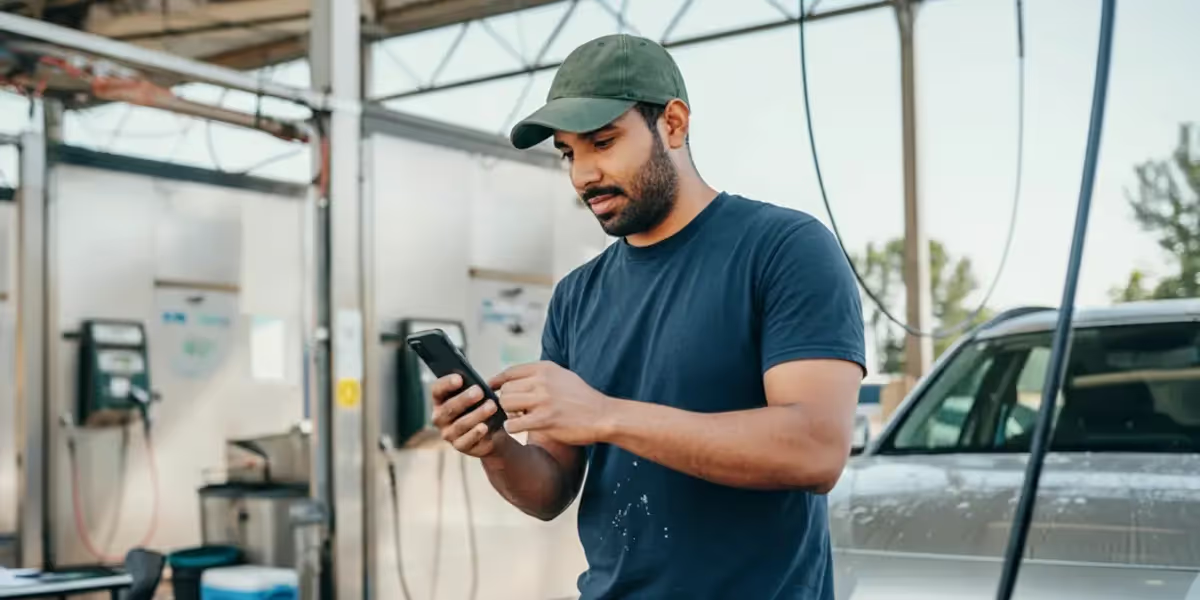
For truck washes that need to accept payments on-site, JIM offers a streamlined solution. With JIM, you can accept debit, credit, and digital wallets directly through your smartphone. The customer just taps their card on your phone and the sale is done.
At just 1.99% per transaction with no hidden costs or extra hardware, it is a great fit for mobile detailing or quick payments from owner-operators. This rate is significantly lower than what many traditional processors offer.
- Get Started: Download the JIM app for iOS.
- Make a Sale: Type the sales amount, hit sell, and ask your customer to tap their card or device on your phone.
- Access Funds: Your money is available right on your JIM card as soon as the sale is done - no waiting for bank transfers.
Here are 3 immediate steps to take:
- Draft a sample fleet account agreement for local businesses.
- Compare the total cost of two traditional payment processors against JIM's flat rate.
- Download the JIM app to see how it works.
Step 6: Secure funding and manage your finances
SBA loans are a popular choice. The SBA 7(a) program is flexible, while the 504 loan is great for real estate and equipment. You will likely need a credit score over 680 and a 10-20% down payment. Lenders want to see a detailed business plan.
You can also finance your equipment directly. This separates the large purchase from your main business loan. Ask suppliers like Westmatic or InterClean if they have financing partners. These loans often use the equipment itself as collateral, which can simplify the approval process.
Calculate your working capital
Your loan should include working capital for the first six months. Many new owners focus on equipment costs and run out of cash for payroll, soap, and utilities. You should budget for at least $50,000 to $100,000 to cover these initial operating expenses.
Here are 4 immediate steps to take:
- Contact your local SBA office to find a preferred lender for 7(a) or 504 loans.
- Ask your top two equipment suppliers about their in-house or partner financing options.
- Create a detailed six-month operating budget to determine your exact working capital needs.
- Check your personal credit score with Experian or Equifax to see where you stand.
Step 7: Hire your team and set up operations
You will want to hire at least two Wash Bay Attendants to start. Their main job is to guide trucks and operate the wash equipment. Plan to pay them between $15 and $20 per hour. You might also add a Detailer who handles interior cleaning and exterior polishing for $18 to $25 per hour.
A Site Manager is also a good idea to handle daily scheduling, inventory, and customer service. This role typically earns a salary between $45,000 and $60,000 per year. They will be your key person on the ground, freeing you up to focus on growing the business.
Many new owners find out the hard way that understaffing during peak hours leads to long waits and lost customers. For a single-bay wash, start with two attendants and one manager to ensure smooth service. This prevents a bad first impression with new clients.
Streamline your daily workflow
No specific certifications are required, but you should create your own training program. Focus on safe equipment operation, proper chemical handling, and how to upsell services like aluminum brightening or trailer washouts. This training directly boosts both safety and revenue.
To organize your team, consider scheduling software like Connecteam or When I Work. These platforms help you manage shifts, track hours, and communicate with staff from your phone. It avoids the confusion of text message threads and paper schedules.
As you operate, keep your total labor costs between 35% and 45% of your gross revenue. This benchmark helps you know if you are overstaffed or if your pricing is too low. It is a key metric for maintaining profitability in this industry.
Here are 4 immediate steps to take:
- Draft job descriptions for a Wash Bay Attendant and a Site Manager.
- Set your starting pay rates based on local market averages.
- Review scheduling software like Connecteam or When I Work.
- Create a basic safety training checklist for new hires.
Step 8: Market your business and get customers
Focus your initial efforts to secure fleet accounts, as these provide consistent revenue. Create a list of local trucking, construction, and delivery companies. Call their fleet managers directly to introduce your services and offer a tour of your facility.
Many new owners rely too much on drive-by traffic and miss out on steady contract work. A single fleet account with 20 trucks washed weekly is more valuable than 100 random one-off customers. This is how you build a stable business.
Build your online and local presence
Set up your Google Business Profile immediately. It is free and puts you on the map for drivers who search "truck wash near me." Encourage your first few customers to leave a review. Positive reviews give new customers confidence to try your service.
You can also form partnerships with nearby truck stops and repair shops. Offer them a 10% referral fee for every new customer they send your way. In addition, create an introductory offer, like a 15% discount on the first month of service for new fleet contracts.
Here are 4 immediate steps to take:
- Create a target list of 25 local companies that operate truck fleets.
- Set up and complete your Google Business Profile with photos of your facility.
- Draft a simple introductory offer for new fleet accounts.
- Visit two nearby truck repair shops to propose a referral partnership.
Step 9: Develop your pricing strategy
Start with a simple, a la carte menu. A standard tractor wash might be priced between $45 and $65. A full tractor and trailer wash could range from $75 to $120. Offer add-ons like trailer washouts for $35 or aluminum brightening for an extra $25.
Set up your fleet account pricing
Fleet accounts are your bread and butter, so create a tiered discount structure. For example, you could offer a 10% discount for fleets that commit to 20-40 washes per month. For larger accounts with over 40 washes, a 15% discount is a strong incentive.
Many new owners are tempted to set their prices too low just to win business. This approach often backfires because it makes it difficult to cover your fixed costs. Your gross profit margin on each wash, before labor and overhead, should be in the 60-75% range.
To get your numbers right, revisit the competitor spreadsheet you made earlier. Update it with detailed pricing for every service they offer. This direct comparison is the best way to position your business competitively without sacrificing your profit margin from day one.
Here are 3 immediate steps to take:
- Create a detailed price list of at least three local competitors.
- Draft your standard service menu with prices for each a la carte option.
- Outline a tiered discount structure for potential fleet accounts.
Step 10: Maintain quality and scale your operations
Establish your quality standards
Your reputation hinges on consistency. Create a simple quality checklist for every wash, covering streak-free windows, clean wheel wells, and complete road film removal. A key metric to watch is your re-wash rate; if it climbs above 2%, your process needs immediate attention.
A frequent misstep is failing to formalize this standard. A laminated, photo-based checklist in the wash bay ensures every employee delivers the same result. This simple system is what keeps valuable fleet accounts loyal and prevents inconsistent service from damaging your brand.
Know when to grow
Growth should be driven by data. When customer wait times consistently exceed 15 minutes during peak hours, it is time to hire another wash attendant. For larger expansion, like adding a second bay, use your capacity as a guide. Operating at 80% capacity for 3-6 months signals sustained demand.
As you add more fleet accounts, you might consider a customer relationship management (CRM) system like Jobber. It helps you track service history, schedule recurring washes, and automate invoicing, which keeps your client management professional as you scale.
Here are 4 immediate steps to take:
- Create a photo-based quality checklist for your wash attendants.
- Calculate your re-wash rate and set a goal to keep it under 2%.
- Determine your maximum daily wash capacity to set an 80% growth benchmark.
- Review a CRM like Jobber to see how it can manage fleet account billing.
Starting a truck wash is about more than just soap and water. Your success will depend on securing those steady fleet accounts for consistent revenue. You have the roadmap, now it is time to put your plan into motion and build a business that lasts.
As you get started, you will need a simple way to get paid. JIM turns your phone into a card reader, so you can accept payments without extra hardware for a flat 1.99% fee. Download JIM and get ready for your first customer.
.avif)