Starting a vacation rental cleaning business is an exciting venture that combines a keen eye for detail and reliability with smart business sense. The vacation rental industry is a multi-billion dollar market, which means there's a consistent demand for top-notch cleaning services from Airbnb hosts, property managers, and boutique rental owners.
This guide will take you through the practical steps of validating your idea, obtaining the right permits, acquiring your equipment, and landing your first clients to help you launch a successful vacation rental cleaning business in the U.S.
Step 1: Plan your business and validate your idea
Market and competitor research
First, gauge the demand in your area. Use a site like AirDNA to find the number of active vacation rentals in your target zip codes. A high density of listings points to a healthy customer base. You might be tempted to cover a huge area, but it's better to start small.
Focus on a 15-20 mile radius to keep your travel costs low and response times fast. Once you have your target area, search Google for “vacation rental cleaning [your city]” to see who your competitors are. Note their pricing, services, and what customers say in reviews.
Budgeting your startup costs
Your initial investment will likely be between $2,000 and $5,000. This isn't just one big expense but a combination of several key items. Plan for about $500 to $1,500 for professional-grade equipment like a high-quality vacuum and steam cleaner.
You should also set aside $300 to $700 for your first batch of cleaning supplies. In addition, budget between $500 and $1,000 for business insurance and any required local permits. Tracking these costs upfront prevents surprises later.
Here are 3 immediate steps to take:
- Use AirDNA to identify three local zip codes with a high concentration of rentals.
- List five local competitors and analyze their service packages and pricing.
- Create a startup budget with estimated costs for equipment, supplies, and insurance.
Step 2: Set up your legal structure and get licensed
Choose your business structure
Protect your personal assets by forming a Limited Liability Company (LLC). This structure separates your business from your personal finances. Filing costs range from $50 to $500 depending on your state, and it simplifies your taxes with a pass-through status.
It's tempting to operate as a sole proprietor to save on fees, but this leaves your personal assets vulnerable if something goes wrong on a job. An LLC provides a vital layer of protection you should not skip.
Secure your licenses and insurance
Once your LLC is formed, get a free Employer Identification Number (EIN) from the IRS website. You need this to open a business bank account. Then, contact your city clerk for a general business license, which usually costs $50 to $100 annually.
You will also need general liability insurance. A standard policy with $1 million in coverage costs about $400 to $700 per year. Consider adding a janitorial bond, as many property managers require it for protection against employee theft.
Here are 4 immediate steps to take:
- File for an LLC with your state's Secretary of State.
- Apply for a free Employer Identification Number (EIN) online with the IRS.
- Contact your local city clerk about obtaining a business license.
- Request quotes for general liability insurance and a janitorial bond.
Step 3: Insure your business and manage risk
Secure your core insurance policies
A general liability policy is your first line of defense. A standard $1 million policy costs between $400 and $700 annually and covers third-party claims, such as a guest slipping on a freshly mopped floor. This is non-negotiable for property managers.
You should also add professional liability insurance. This protects you from claims of negligence, like if you accidentally damage an expensive appliance. This coverage typically adds another $300 to $600 per year to your premium but provides significant peace of mind.
Plan for future growth
Once you hire your first employee, you must get workers' compensation insurance, as it is required by state law. Costs are usually calculated as a percentage of payroll. If you purchase a dedicated work vehicle, you will also need a commercial auto policy.
A mistake some new owners make is choosing a general insurance agent. You might want to get quotes from specialists like Hiscox, Next Insurance, or Thimble. They understand the unique risks of this industry, from property damage to claims of incomplete cleaning.
Here are 4 immediate steps to take:
- Request quotes for a $1 million general liability policy.
- Ask about adding professional liability insurance to cover accidental damages.
- Check your state's workers' compensation laws if you plan to hire staff.
- Contact an industry specialist like Hiscox or Next Insurance for a quote.
Step 4: Equip your business and find a home base
Choose your operational base
You do not need a commercial storefront. A home office works for administrative tasks, but check local rules about storing cleaning chemicals. A 5x10 foot storage unit, costing $50 to $150 monthly, is a better option for equipment and bulk supplies.
Stock your cleaning arsenal
Resist the urge to use your home vacuum. Professional-grade equipment is built for heavy use and delivers better results. A mistake some new owners make is buying cheap gear that fails quickly, which leads to costly downtime and unhappy clients.
- Commercial Backpack Vacuum: $300 - $500
- Canister Steam Cleaner: $150 - $250
- Microfiber Mop System: $50 - $100
- Full Cleaning Caddy with Supplies: $200 - $400
Once you have the equipment, source your consumables. You can buy supplies in bulk from vendors like Uline or WebstaurantStore to lower your per-unit cost. Just be mindful of your storage space and initial cash flow before you place a large order.
Here are 3 immediate steps to take:
- Research local storage units and compare monthly rates for a 5x10 space.
- Price out a commercial backpack vacuum and a canister steam cleaner from two different suppliers.
- Create a starter supply list and compare bulk pricing on Uline versus retail costs.
Step 5: Price your services and get paid
Define your pricing structure
Most hosts prefer flat-rate pricing for predictability. A good starting point is $100-$150 for a one or two-bedroom property and $180-$250 for a three or four-bedroom home. This helps clients budget and simplifies your invoicing.
For initial deep cleans or unusual properties, you might want to charge an hourly rate of $35 to $55 per cleaner. A mistake some owners make is to forget to factor in travel and prep time, which can quickly eat into your profit on an hourly job.
You can also boost your revenue with add-on services. Consider offering laundry service for $15-$25 per load, restocking guest amenities for a $10 service fee plus the cost of items, or deep cleaning appliances for an extra $30-$50 each.
Set up your payment systems
Establish clear payment terms from the start. It is standard practice to require payment upon completion of the service. For regular clients with a signed contract, you could move to weekly invoicing. Avoid offering Net 30 terms, as this can strain your cash flow.
You will need a way to accept credit cards, as most property managers expect it. Many payment solutions charge commission rates near 3% plus a fixed fee per transaction, which adds up. With this in mind, it pays to compare your options.
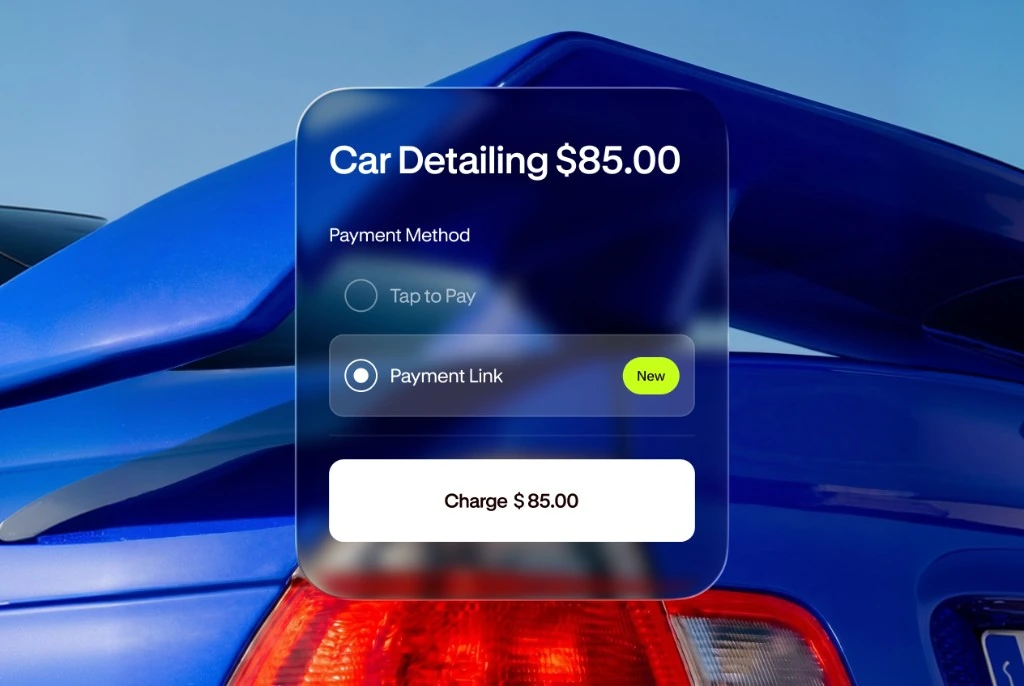
For vacation rental cleaning businesses that need to accept payments on-site, JIM offers a streamlined solution. With JIM, you can accept debit, credit, and digital wallets directly through your smartphone. At just 1.99% per transaction with no hidden costs or extra hardware needed, it is particularly useful for collecting payment from a new client on the spot.
- Get Started: Download the JIM app for iOS.
- Make a Sale: Type the sales amount, hit sell, and ask your customer to tap their card or device on your phone.
- Access Funds: Your money is available right on your JIM card as soon as the sale is done, with no waiting for bank transfers.
Here are 4 immediate steps to take:
- Create a flat-rate price sheet based on property size and bedroom count.
- Decide on your payment terms, such as payment upon completion.
- List your prices for add-on services like laundry and restocking.
- Download the JIM app to explore its on-the-go payment features.
Step 6: Fund your business and manage your finances
Secure your startup funding
SBA Microloans are a great option for this business model. These loans range from $500 to $50,000 and often have interest rates between 8% and 13%. Lenders like Accion Opportunity Fund specialize in smaller loans and look for a solid business plan and a personal credit score above 620.
You might also consider a business credit card for initial supply purchases. Many offer 0% introductory APRs for 12-18 months. This can be a smart way to finance your equipment without immediate interest payments. Just be sure to have a plan to pay it off before the promotional period ends.
Manage your working capital
Aim to have at least six months of operating expenses in the bank. For a new cleaning business, this is typically between $3,000 and $6,000. This buffer covers your insurance, fuel, marketing costs, and supply replenishment during your first few months.
A mistake some new owners make is mixing personal and business funds. Open a dedicated business checking account as soon as your LLC is formed. This simplifies bookkeeping and makes tax time much easier. It also reinforces the legal separation your LLC provides.
Here are 4 immediate steps to take:
- Research SBA Microloan lenders that operate in your state.
- Apply for a business credit card with a 0% introductory APR offer.
- Open a dedicated business checking account for all transactions.
- Calculate your estimated operating costs for the first six months to set a savings goal.
Step 7: Hire your team and set up operations
Hiring your first cleaners
Your first hire will likely be a Turnover Cleaner. This role pays between $18 and $25 per hour. Their duties go beyond cleaning to include staging the property, restocking supplies, and reporting any damage. Reliability is the most important trait you can look for.
Formal certifications are not standard in this field. Instead, you should develop your own training program. Create a detailed photo-based checklist for each property so your standards are clear and consistent. This document becomes your primary training guide for every new team member.
A mistake some new owners make is hiring independent contractors to save on payroll taxes. You might want to classify your team as W-2 employees to avoid potential legal issues with worker misclassification, especially as you grow your client base and team.
Streamlining your operations
Once you have a team, you need a system to manage jobs. Platforms like TurnoverBnB or Breezeway can sync with a host's booking calendar. They automatically schedule cleanings and notify your staff, which removes a huge administrative burden from your plate.
To know when to hire, you can use a simple revenue metric. A good rule of thumb is that one full-time cleaner can service about $50,000 to $70,000 in annual revenue. This helps you make data-driven decisions instead of guessing when it is time to expand.
Here are 4 immediate steps to take:
- Draft a job description for a Turnover Cleaner that emphasizes reliability.
- Create a detailed cleaning and staging checklist for a sample property.
- Research the features and pricing of scheduling software like TurnoverBnB.
- Consult an accountant about hiring W-2 employees versus 1099 contractors.
Step 8: Market your business and get clients
Build your direct outreach strategy
Focus your initial efforts on property management companies. They control multiple properties and provide steady work. Find them on LinkedIn or by searching for "vacation rental management [your city]". A personalized email that highlights your reliability and insurance works well.
A mistake some new owners make is relying on a single outreach method. You might find that for every 20 targeted emails you send, you get one or two quote requests. Track this simple metric to understand what messages work best.
Establish your online presence
You will need a simple website that showcases your services and contact information. Use high-quality photos of a staged property to build trust. Also, set up a free Google Business Profile so local hosts can find you through search.
You can also get listed on industry marketplaces like the one on TurnoverBnB. Hosts actively use these platforms to find reliable cleaners. This puts your business directly in front of people who are ready to hire.
Here are 4 immediate steps to take:
- Create a list of 10 local property management companies to contact.
- Draft a template email for your direct outreach campaign.
- Set up a free Google Business Profile for your business.
- Create a profile on the TurnoverBnB marketplace.
Step 9: Scale your business and improve efficiency
Refine your pricing for profitability
As you gain clients, you should move beyond basic flat rates. Adopt a cost-plus pricing model to guarantee profit on every job. Calculate your total cost per clean—including labor, supplies, and a portion of overhead—and then add your desired markup.
Aim for a gross profit margin of 40% to 50%. For example, if a clean costs you $90 in total, a price of $150 gives you a 40% margin. A mistake some owners make is not adjusting prices regularly, which erodes profits as supply and labor costs rise. Review your numbers quarterly.
Implement systems for efficiency
With a growing team, consistency is everything. Standardize your workflow with photo-based checklists for each property. This ensures every cleaner delivers the same high-quality result. You can also create pre-packed cleaning kits for different property sizes to cut down on prep time.
Use your scheduling software, like TurnoverBnB, to track the actual time spent on each job. This data is gold. If you notice a specific property consistently takes longer than you estimated, it is a clear signal that you need to adjust the price for that client.
Here are 4 immediate steps to take:
- Calculate your all-in cost-per-job for a one, two, and three-bedroom property.
- Set a target gross profit margin of at least 40% for all services.
- Use your scheduling software to start tracking time-on-job for every clean.
- Create a standardized, pre-packed cleaning kit for your most common property type.
Step 10: Maintain quality and scale your operations
Implement quality control measures
Your reputation depends on consistency. Use your photo-based checklists for every clean, but also as a quality control document. A key metric to track is your call-back rate. Aim to keep it below 2%, as anything higher suggests a problem with your process.
When you bring on new staff, you should personally inspect their first 5 to 10 cleans. This helps you catch issues early and reinforce your standards. It shows your team you care about the details and helps them succeed from the start.
Know when to grow
A mistake some owners make is waiting until they are overwhelmed to hire. A better approach is to start the hiring process when your team hits 75% of its capacity. Remember, one full-time cleaner can typically service $50,000 to $70,000 in annual revenue.
As you add more cleaners, your scheduling software like TurnoverBnB or Breezeway becomes even more important. Use it to manage the larger team and analyze performance data. This helps you make smart decisions about expansion instead of just guessing.
Here are 4 immediate steps to take:
- Track your call-back rate with a goal to keep it under 2%.
- Personally inspect the first 5-10 jobs completed by any new hire.
- Begin the hiring process when your team reaches 75% capacity.
- Use your scheduling software to analyze time-on-job data for training insights.
You now have a complete roadmap to launch your vacation rental cleaning business. Remember, your success depends on reliability. Hosts need a partner they can trust for every single turnover. With a solid plan, you are ready to build a business that property managers will value.
And when it is time to get paid, you will want a simple way to accept cards. JIM turns your smartphone into a card reader, so you can take payments on-site for a flat 1.99% fee, with no extra hardware. Download JIM to get started.