Starting a vendor business is a rewarding venture that combines a passion for your product with sharp business sense. The market is attractive because of its flexibility and lower startup costs than a traditional storefront, but this accessibility doesn't guarantee an easy path to success.
This guide will take you through the practical steps of validating your concept, obtaining the right permits, acquiring inventory, and finding the best locations to help you launch a successful vendor business in the U.S.
Step 1: Plan your business and validate your concept
Begin by visiting local events like farmers' markets or street fairs. Pay attention to which booths draw crowds and what products people actually buy. Note the price points and overall presentation of successful vendors to understand what works in your area.
Analyze your competition
Use social media platforms like Instagram and local event websites to identify vendors selling similar products. See how they market themselves. The Small Business Administration (SBA) also offers free local data to help you understand your market's size and demographics.
Estimate your startup costs
A realistic budget is your next move. Initial costs can range from $800 to over $3,800. Many new vendors miscalculate their pricing by forgetting to factor in all expenses. Make sure your prices cover not just inventory but also your time and fees to ensure profitability.
Break down your expenses. You might spend $50-$500 on permits, $200-$1,000 on your booth setup (tent, tables), and $500-$2,000 for initial inventory. A mobile payment processor is another consideration for accepting card payments on the go.
Here are 3 immediate steps to take:
- Visit at least three local markets to research products and pricing.
- Create a detailed budget that includes inventory, permits, and booth equipment.
- Draft a simple business plan outlining your unique product and target customer.
Step 2: Set up your legal structure and get licensed
Choosing a business structure is your first legal decision. Many vendors opt for a Limited Liability Company (LLC) because it separates your personal assets from business debts. A sole proprietorship is simpler but offers no liability protection, a risk you may not want to take.
Secure your federal and state tax numbers
You will likely need an Employer Identification Number (EIN) from the IRS. It is required for LLCs and corporations, and it is free to apply for online. Also, contact your state's Department of Revenue or equivalent tax agency to register for a seller's permit, which allows you to collect sales tax.
Obtain local permits and licenses
Your city or county clerk's office issues general business licenses, which can cost $50 to $100. You will also need a specific vendor or peddler's license to operate at markets and events. These vary widely in cost, from $50 to over $500, and can take several weeks to process.
A frequent misstep is assuming one permit covers multiple locations. Always verify permit requirements for each specific city or event organizer you plan to work with. Their rules might require separate applications and fees, so check ahead to avoid fines or being shut down on event day.
Here are 4 immediate steps to take:
- Decide on a business structure, like an LLC, and register it with your state.
- Apply for a free Employer Identification Number (EIN) directly from the IRS website.
- Register for a seller's permit through your state's Department of Revenue.
- Contact your local city clerk to inquire about business and vendor license costs and applications.
Step 3: Protect your business with the right insurance
Event organizers will almost always require you to have General Liability insurance. This policy covers accidents like a customer tripping over your tent's leg. Expect to pay $300 to $600 annually for a standard $1 million coverage plan, which is the typical requirement.
You should also get Product Liability insurance, which protects you if a product you sell causes harm. This is often bundled with a General Liability policy, but you need to confirm it is included. It is a must-have for anyone selling items for consumption or use.
If you use a vehicle exclusively for your business, your personal auto policy will not cover it. You will need a Commercial Auto policy. To protect your inventory and equipment while in transit or at an event, look into Inland Marine insurance, sometimes called property insurance.
Many new vendors get surprised when an event asks to be listed as an "additional insured" on their policy. Before you buy a policy, confirm with the provider that this is possible. You can get quotes from small business specialists like Next Insurance, Hiscox, or The Hartford.
Here are 4 immediate steps to take:
- Get quotes for a $1 million general liability policy.
- Confirm that product liability coverage is included in your policy.
- Ask potential insurers if they allow adding event organizers as an "additional insured."
- Compare annual premiums from small business specialists like Next Insurance or Hiscox.
Step 4: Choose your locations and buy equipment
With your legal and insurance paperwork in order, you can focus on where you will sell. Start by researching local farmers' markets, street fairs, and festivals. Application deadlines can be months in advance, and fees range from $50 to over $300 per day for a standard 10x10 foot space.
A mistake many new vendors make is to pin their hopes on a single weekly market. You should apply to several events to build a consistent schedule, as some are more competitive to enter than others. Before you pay a high booth fee, ask organizers for past attendance figures.
Stock your booth
Your booth is your storefront. You will need a commercial-grade 10x10 pop-up tent, which costs between $150 and $400. Cheaper models often fail in bad weather. Also, plan for two or three 6-foot folding tables at about $40-$80 each, plus tablecloths and product displays.
When you source inventory, be aware of supplier terms. A craft supplier might have a minimum order quantity (MOQ) of $100, while a larger wholesaler may require you to have a resale certificate and a higher initial purchase. Always clarify these requirements upfront.
Here are 4 immediate steps to take:
- Research and shortlist five local markets, noting their fees and application deadlines.
- Create a detailed budget for your complete booth setup, including a tent and tables.
- Contact one potential inventory supplier to ask about their minimum order quantities.
- Ask an event organizer about their average daily foot traffic before you commit.
Step 5: Set up payment processing
At a busy market, you need to make sales quickly. While cash is simple, most customers expect to pay with a card or digital wallet. A mobile payment solution is a must-have to capture every possible sale.
Many vendors get caught by high transaction fees. Some providers charge between 2.5% and 3% per sale, plus hardware costs. These fees can eat into your profits, so it pays to compare your options carefully.
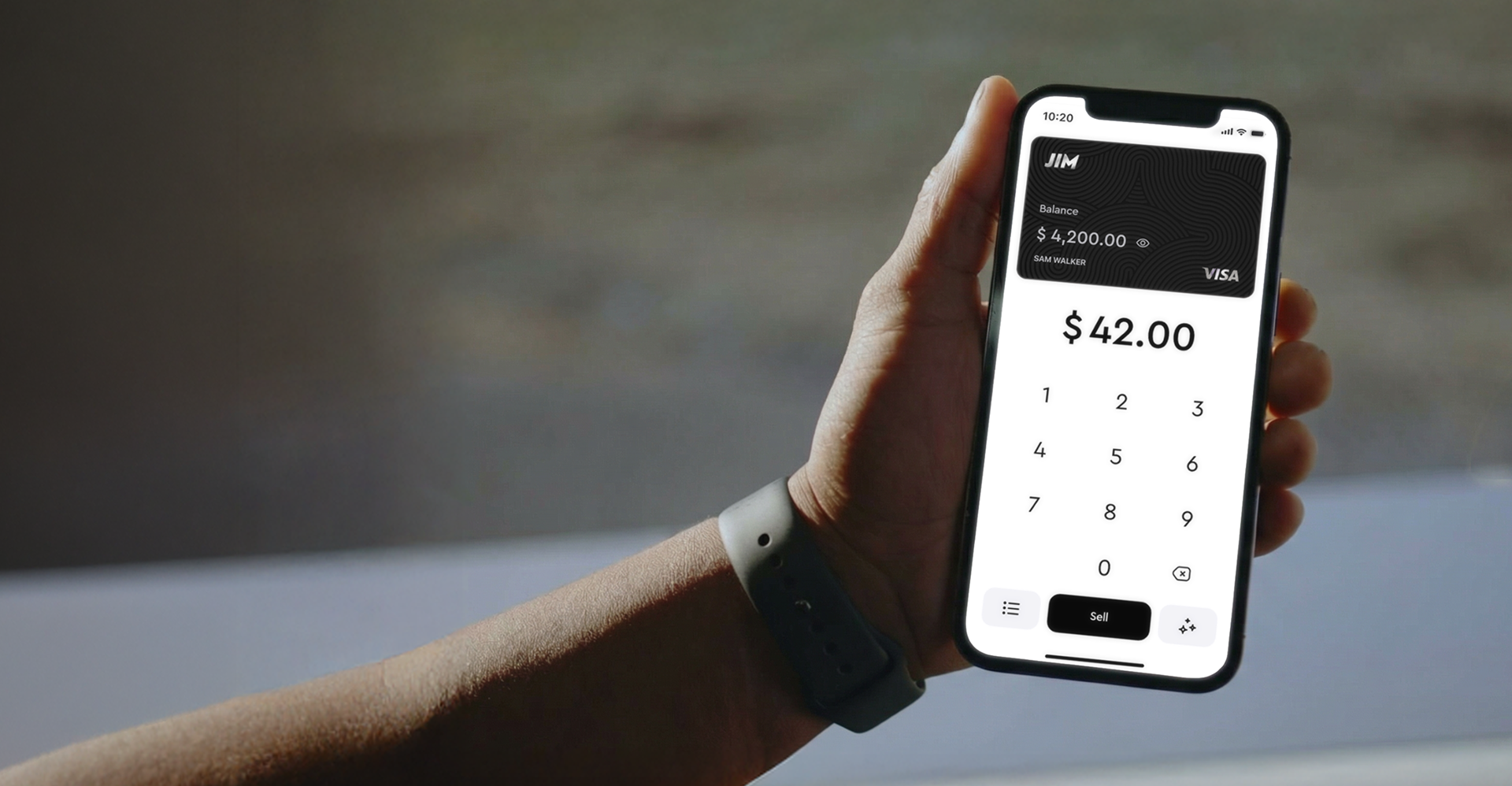
For vendors who need to accept payments on-site, JIM offers a streamlined solution. With JIM, you can accept debit, credit, and digital wallets directly through your smartphone. Just tap and done. At just 1.99% per transaction with no hidden costs or extra hardware needed, it's particularly useful for keeping the line moving at a busy festival.
- Get Started: Download the JIM app for iOS.
- Make a Sale: Type the sales amount, hit sell, and ask your customer to tap their card or device on your phone.
- Access Funds: Your money is available right on your JIM card as soon as the sale is done, no waiting for bank transfers.
Here are 4 immediate steps to take:
- Compare transaction fees of at least two mobile payment solutions.
- Check if your preferred payment solution requires extra hardware.
- Confirm how quickly you can access your funds after a sale.
- Download the JIM app to explore its features.
Step 6: Fund your business and manage finances
Most vendors self-fund with personal savings. If you need a boost, you might want to look into an SBA microloan. These average around $13,000 with interest rates between 6% and 9% and are designed for new businesses. Kiva also offers 0% interest loans up to $15,000.
Estimate your working capital
Many new vendors focus on startup costs but forget about working capital, which is the cash you need for the first six months. You should budget for inventory replenishment ($1,500-$4,000), booth fees ($600-$2,000), and marketing ($300-$600) to keep your business running smoothly.
Keep your finances separate
Open a dedicated business bank account from day one. Mixing personal and business funds creates a bookkeeping nightmare and can put your personal assets at risk, even if you have an LLC. A separate account makes it easy to track your profitability and prepare for taxes.
Here are 4 immediate steps to take:
- Open a dedicated business checking account.
- Calculate your estimated working capital needs for the first six months.
- Research the requirements for an SBA microloan in your area.
- Explore Kiva's 0% interest loan platform to see if you qualify.
Step 7: Staff and operate your business
Most vendors start solo to keep costs down. Once your sales grow, you might find that an extra person helps manage customer flow and allows you to focus on engagement. This is when you should consider hiring part-time help for busy events.
Hire your first team member
Look for an "Event Assistant" to help with setup, sales, and teardown. Pay for this role typically ranges from $15 to $25 per hour. If you sell food, your staff will likely need a Food Handler's Permit from your local health department.
Many vendors hire friends, but this can get complicated without clear expectations. It is a good idea to create a simple document that outlines duties and pay. Also, ensure any new hire knows your products and how to use your payment system.
Manage your operations
As you add staff, scheduling software like Homebase or When I Work can help you manage shifts. To decide if it is time to hire, look at your numbers. A good benchmark is to keep your total labor costs below 30% of your revenue.
Here are 4 immediate steps to take:
- Draft a simple job description for an Event Assistant role.
- Check your local health department's website for Food Handler's Permit requirements.
- Review scheduling software like Homebase to see its features.
- Calculate your current revenue per event to see if you can afford to keep labor costs under 30%.
Step 8: Market your business and get customers
Your marketing starts online. Set up a business profile on Instagram or Facebook. Post high-quality photos of your products at least three times a week leading up to an event. Use relevant hashtags like #[YourCity]Events or #[YourMarketName] to attract a local audience.
A mistake many vendors make is to only post about their own products. You should also engage with the social media pages of the markets you attend. A comment on their posts or a collaboration with a non-competing vendor can introduce your brand to a new audience.
Promote your booth before and during events
A week before a market, announce your booth number and a special offer. For example, "Visit us at booth #12 for 10% off your first purchase." A boosted Facebook post for $20-$30 can reach thousands of potential customers within a 10-mile radius of the event.
At the event, use an A-frame sign with clear pricing. You can also use a simple email sign-up sheet, perhaps offering entry into a product giveaway. Capturing just 2% of your booth visitors as email subscribers gives you a direct way to announce future market dates.
Here are 4 immediate steps to take:
- Set up a business profile on Instagram and post three high-quality product photos.
- Find the social media pages for two local markets and engage with their recent posts.
- Design a simple business card with a QR code that links to your social media page.
- Create a sign-up sheet to collect customer emails at your next event.
Step 9: Price your products for profit
Your pricing strategy directly impacts your success. A common approach is cost-plus pricing. Calculate your total cost per item, including materials, your time, and a portion of your overhead. Then, apply a markup. For many vendors, a 2x to 4x markup is a good starting point.
Set your markup
If a handmade candle costs you $5 to produce, a 2x markup means you price it at $10. This gives you a 50% gross profit margin. It is tempting to price lower than competitors, but if you do not cover your costs and time, you will not have a sustainable business.
Also, consider bundle pricing to increase your average sale. For example, you could sell single items for $8 each or offer a deal of three for $20. This encourages customers to buy more and can help move inventory faster, especially toward the end of an event.
Analyze competitor pricing
Walk around markets and browse online platforms like Etsy to see what similar products sell for. Do not just copy their prices. Instead, use this information as a benchmark. If your product has higher quality materials or a unique design, you may be able to justify a higher price point.
Here are 4 immediate steps to take:
- Calculate the full cost-of-goods-sold for one of your main products.
- Research the prices of three direct competitors at a local market or online.
- Apply a 3x markup to your product cost to determine a starting retail price.
- Create one bundle deal to test at your next event.
Step 10: Control quality and scale your business
Your reputation is built on consistency. Before each event, inspect your inventory. You might want to set a quality standard, such as a defect rate below 2%. If you sell food, a ServSafe Food Handler certification is the industry benchmark for you and any staff.
Know when to grow
Once your quality is solid, you can look at expansion. A good signal to hire help is when you consistently clear $1,000 in sales per event. An assistant can handle transactions, which frees you up to engage with customers and build relationships.
Many vendors get excited by success and book two events on the same day too soon. You should avoid this until you have a fully trained employee who can run a booth solo. This prevents brand damage from an poorly managed second location.
To manage this growth, inventory software is a great help. Systems like Square for Retail or Shopify POS can track stock across multiple locations. This helps prevent you from selling out of a popular item mid-event, which can disappoint customers.
Here are 4 immediate steps to take:
- Set a quality standard, like a defect rate under 2%, for your inventory.
- If you sell food, research local ServSafe certification course dates and costs.
- Analyze your sales data to see if you consistently pass the $1,000 per event mark.
- Review the inventory features of a system like Square for Retail.
Your vendor journey is about more than just sales; it's about building a local following. Remember that every event is a chance to connect with your community. You have the steps, now go make it happen.
To keep sales smooth, a simple payment solution helps. JIM turns your phone into a card reader for a flat 1.99% fee, with no extra hardware. Download JIM to be ready for your first customer.
.avif)