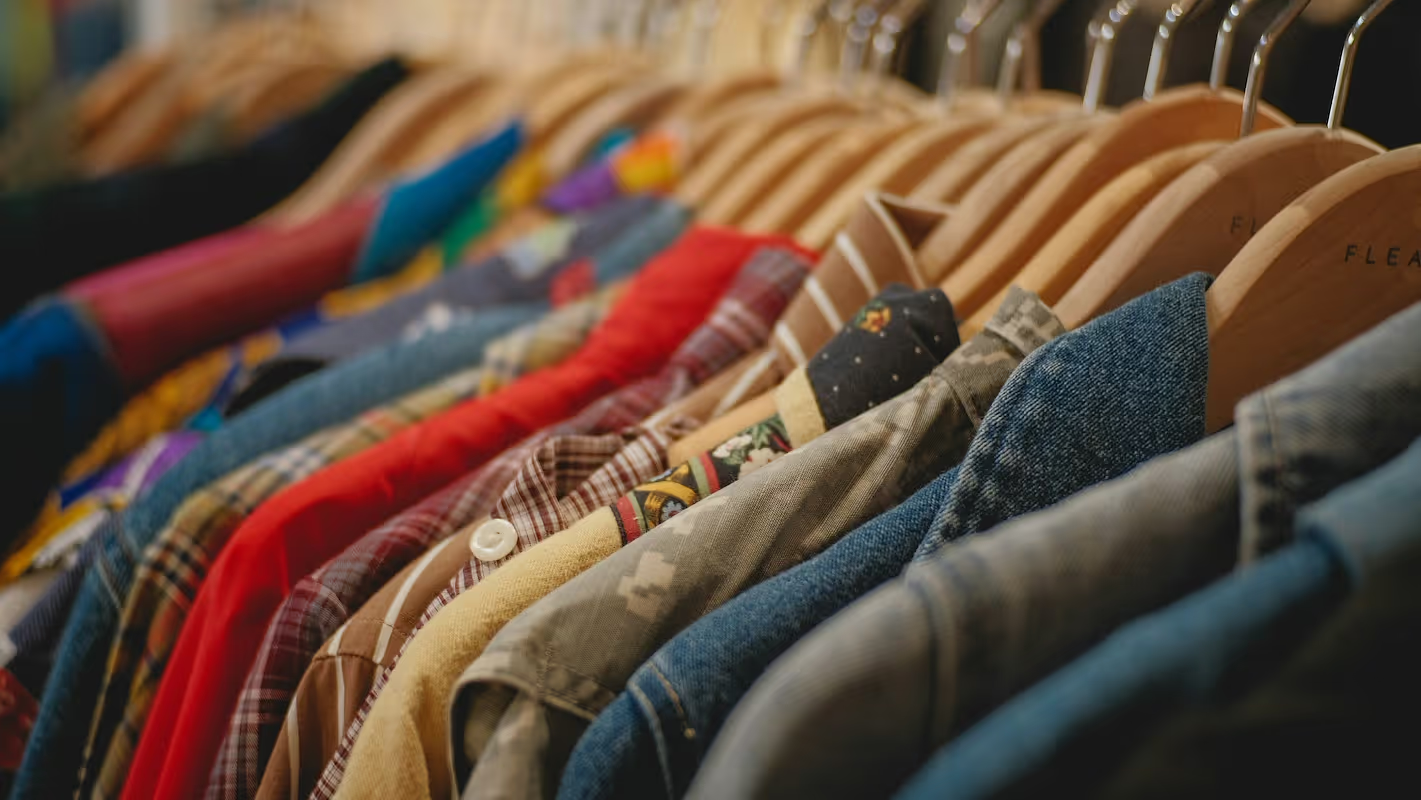
Starting a vintage clothing business is a rewarding venture that combines a passion for fashion history with sharp business savvy. The global market for secondhand apparel is worth billions, fueled by a steady demand for unique pieces from eco-conscious shoppers, collectors, and fashion enthusiasts.
This guide will take you through the practical steps of validating your business concept, sourcing unique inventory, building supplier relationships, and obtaining the right permits to help you launch a successful vintage clothing business in the U.S.
Step 1: Validate your business concept
First, define your niche. Your focus should be a specific era like the 70s or a category like band tees, not just general "vintage." Use Google Trends to check search volume for your ideas. This helps confirm demand before you spend a dime on inventory.
A frequent misstep is to buy inventory based on personal taste, not market data. To avoid this, study successful shops on Etsy and Depop. Note their pricing, photography, and what items move quickly. This direct analysis is more valuable than any generic report.
Typical startup costs
Your initial investment can range from $800 to over $3,000. A significant portion of this budget will go toward your first inventory haul, which could be between $500 and $2,000. It is wise to account for other expenses from the start.
Also, factor in business registration fees ($50-$400), an e-commerce site subscription ($30-$100 monthly), and initial shipping supplies ($100-$200). A small marketing budget of $100-$300 is also a good idea for initial promotion.
Here are 3 immediate steps to take:
- Research three specific vintage niches (e.g., 90s denim, 80s formalwear) using Google Trends.
- Analyze five competitor shops on Etsy or Depop, noting their top-selling items.
- Create a detailed startup budget based on the cost ranges provided.
Step 2: Set up your legal structure and get licensed
First, choose your business structure. An LLC is often the best choice because it separates your personal assets from business debts. This is a protection a sole proprietorship does not offer. You can file for an LLC through your state's Secretary of State website for about $50-$500.
Many new owners skip this step to save money, but that leaves personal assets like your car or home at risk if the business faces legal issues. The initial cost of an LLC is a worthwhile investment for peace of mind and professional credibility.
Permits and tax registration
Once your business is registered, get an Employer Identification Number (EIN) from the IRS. It is a federal tax ID number you need to open a business bank account. The application is free and takes minutes on the IRS website.
You will also need a Seller's Permit from your state's department of revenue. This permit lets you buy inventory wholesale without sales tax. It also means you must collect sales tax from customers in your state. These permits are often free but can cost up to $100.
Finally, check with your city or county clerk for a local business license. These typically cost between $50 and $150 annually. Processing can take a few weeks, so apply well before you plan to make your first sale.
Here are 4 immediate steps to take:
- Decide on a business structure and file for an LLC with your Secretary of State.
- Apply for a free Employer Identification Number (EIN) on the IRS website.
- Register for a Seller's Permit through your state's department of revenue.
- Contact your local city or county clerk to apply for a business license.
Step 3: Protect your business with the right insurance
First, you should consider General Liability insurance. This covers claims if a customer is injured, for example, at a pop-up shop. A typical policy with $1 million in coverage runs between $300 and $700 annually. It is a foundational layer of protection for any retail business.
Next, look into Commercial Property insurance. This protects your valuable inventory from theft, fire, or water damage. A frequent oversight is failing to increase coverage as your collection grows. You might want to update your policy after every large inventory purchase to stay fully protected.
Key coverage types and providers
Product Liability insurance is another important policy. It shields you if an item, like a vintage dress with old dye, causes an allergic reaction. This is often bundled with General Liability. If you hire anyone, you will also need Workers' Compensation, as it is legally required.
When you are ready to get quotes, look at providers familiar with e-commerce businesses, such as Hiscox, The Hartford, or Next Insurance. They understand the specific risks of online retail better than a general agent might. This can lead to more accurate coverage and better rates.
Here are 3 immediate steps to take:
- Get quotes for a General Liability policy that includes Product Liability coverage.
- Calculate the replacement value of your inventory for a Commercial Property insurance quote.
- Confirm if you need Workers' Compensation based on your state's laws for hiring.
Step 4: Secure your space and equipment
Most vintage businesses start at home. You should dedicate at least 100-200 square feet just for inventory storage and a workspace. Before you start, check your local city or county zoning regulations for home-based businesses to ensure you are compliant.
If you plan to open a physical store, look for properties with commercial retail zoning. When you negotiate a lease, you might propose a shorter 1-2 year term. This provides an exit strategy if the location does not generate enough foot traffic, a common issue for new shops.
Key equipment and supplies
You will need a few items to prepare and photograph your stock. A professional garment steamer, which costs between $80 and $150, is better than an iron for delicate fabrics. A mannequin or dress form ($100-$250) is also useful to display the actual fit of your garments.
Good lighting is what separates amateur and professional product photos. A basic softbox lighting kit can be found for $70-$150. For shipping, you can source mailers and boxes from suppliers like Uline or look into sustainable options from a company like EcoEnclose.
Here are 4 immediate steps to take:
- Measure a dedicated 100+ sq ft area in your home for inventory.
- Check your city's website for home-based business zoning rules.
- Create a budget for a garment steamer, mannequin, and lighting kit.
- Compare prices for shipping mailers from two different suppliers.
Step 5: Set up your payment processing
You need a reliable way to accept payments. Look for a solution that handles credit cards, debit, and digital wallets. A frequent oversight is underestimating transaction fees, which can eat into your profits. Many providers charge between 2.5% and 3.5% plus other fees.
A mobile payment solution
For a vintage business that sells at markets or pop-ups, JIM offers a streamlined solution. With JIM, you can accept debit, credit, and digital wallets directly through your smartphone. Just tap and done.
At just 1.99% per transaction with no hidden costs or extra hardware needed, it is particularly useful for flea markets. This rate is lower than the average 2.5% to 3.5% commission rates from other providers, which helps protect your margins on each sale.
Here is how it works:
- Get Started: Download JIM app for iOS
- Make a Sale: Type the sales amount, hit sell, and ask your customer to tap their card or device on your phone
- Access Funds: Your money is available right on your JIM card as soon as the sale is done - no waiting for bank transfers
Here are 3 immediate steps to take:
- Compare transaction fees from two different payment processors for your online store.
- Download the JIM app to explore its interface for in-person sales.
- List the payment types you want to accept, from credit cards to digital wallets.
Step 6: Fund your business and manage finances
You should plan for at least $3,000 to $7,000 in working capital for your first six months. This buffer covers new inventory buys, shipping costs, and marketing pushes beyond your initial startup budget. Many new owners only budget for the launch and run out of cash.
For smaller funding needs, an SBA Microloan is a good option. These loans range from $500 to $50,000 with interest rates typically between 6% and 9%. Lenders will want to see a solid business plan and a clear use for the funds.
Grants and alternative loans
You might also look at a platform like Kiva, which offers 0% interest crowdfunded loans up to $15,000. Qualification often depends on your social network's support rather than a credit score. It is a great way to get community buy-in from the start.
Also, look into grants. While competitive, they are free money. Search for programs like the Amber Grant for women entrepreneurs or check with your local arts council. Many people overlook these because they assume they will not qualify, so it is always worth a look.
Here are 4 immediate steps to take:
- Calculate your estimated working capital needs for the first six months.
- Review the requirements for an SBA Microloan on the SBA website.
- Explore the Kiva platform to understand its loan process.
- Research one local or national grant program for small creative businesses.
Step 7: Hire your team and manage operations
As your business grows, you will not be able to do it all yourself. When you find yourself spending over 15 hours a week on administrative tasks like packing orders, it is time to consider your first hire. This frees you up to focus on sourcing and strategy.
Your first hires
Your first hire will likely be a part-time E-commerce Assistant. This person handles photography, writing product descriptions, and shipping. Expect to pay between $15 and $22 per hour. Many owners make the mistake of hiring for general retail skill instead of a passion for their niche.
Look for someone who understands your specific vintage aesthetic. No formal certifications are needed. Their knowledge of 90s streetwear, for example, is more valuable than years of generic retail experience. This ensures they can write compelling descriptions and connect with your customers.
Operational software
If you hire help for pop-ups or market stalls, you will need scheduling software. Apps like Homebase or When I Work offer free or low-cost plans. They let you create schedules, track hours, and communicate with your team directly from your phone, which simplifies payroll.
Here are 4 immediate steps to take:
- Draft a job description for a part-time E-commerce Assistant.
- Set a revenue goal that will trigger your search for a first hire.
- Research hourly rates for similar part-time roles in your city.
- Explore the features of a scheduling app like Homebase.
Step 8: Market your business and find customers
Focus your initial marketing on Instagram and TikTok. Post daily "drops" of new items at a consistent time to build anticipation. Video content, like try-on hauls or styling tips, performs much better than static photos. This helps customers see the fit and movement of the garments.
A frequent misstep is using broad hashtags like #vintagefashion. Instead, use hyper-specific tags like #90sgrunge or #truevintage to attract serious buyers. Aim for an engagement rate of 1-3%, a solid benchmark for fashion accounts on Instagram.
Paid advertising and metrics
Once you have organic traction, you might test Meta ads with a small budget of $10-$20 per day. Target users interested in specific decades, sustainable clothing, or even competitor brands. This lets you reach a wider, yet relevant, audience.
Track your Customer Acquisition Cost (CAC). If you spend $100 on ads and get four new customers, your CAC is $25. Compare this to your average profit per item to ensure your ad spend is profitable. Many online stores aim for a CAC that is less than a third of the customer's lifetime value.
Here are 4 immediate steps to take:
- Plan five video content ideas for TikTok or Instagram Reels.
- Research and list 15 niche hashtags for your specific vintage category.
- Set a test budget of $50 for your first Meta ad campaign.
- Calculate the maximum CAC you can afford based on your average profit per item.
Step 9: Price your inventory for profit
A good starting point for pricing is the cost-plus model. You might aim for a 4x to 8x markup on your cost of goods. If you paid $10 for a dress, you would price it between $40 and $80. This simple formula helps cover your initial cost and other hidden expenses.
Speaking of expenses, remember to factor in your time for sourcing, cleaning, and mending. Also account for platform fees, which can be 10% or more. These costs should be built into your final price to protect your profit margin, which should ideally be above 50%.
Research and value-based pricing
Now, let's move beyond simple markups. Check "sold" listings on Etsy and eBay for comparable items. A frequent mistake is to price solely on what you paid. That $5 thrifted jacket might be a rare designer piece worth $250. Its market value matters more.
For unique items, use value-based pricing. A vintage concert tee from the 80s could have a 10x or even 20x markup. Its price is dictated by rarity, condition, and demand. This strategy maximizes profit on your best finds and separates you from other sellers.
Here are 4 immediate steps to take:
- Calculate a 5x markup on three of your current inventory items.
- Factor in an estimated 15% for platform fees and time into your pricing model.
- Research the "sold" prices for five similar items on Etsy or eBay.
- Identify one high-value item and price it based on rarity, not cost.
Step 10: Maintain quality and scale your operations
To maintain consistency, create a simple grading system. You might use terms like Mint, Excellent, or Good. Check every item for specific flaws like faint stains, loose seams, or odors. This ensures customers know exactly what they are buying and builds trust.
You should also track your return rate due to quality issues. Aim to keep it below 5%. In addition, monitor customer reviews for feedback on item condition. This data gives you a clear picture of how well you meet customer expectations.
When to expand
Once you consistently hit a revenue target, like $5,000 per month, you can plan for growth. If you spend over 15 hours a week on fulfillment, it is time to hire help. These metrics prevent you from expanding before you are ready.
A frequent mistake is to scale inventory without the right systems. This can lead to selling the same unique jacket on two different platforms. It creates a poor customer experience and can damage your reputation.
To avoid this, use an inventory management system. Software like Sellbrite or Veeqo automatically syncs your stock across Etsy, Shopify, and other channels. This is a key step when you manage a larger collection.
Here are 4 immediate steps to take:
- Create a simple quality grading system (e.g., Mint, Excellent, Good) for your items.
- Track your return rate for one month to set a quality baseline.
- Set a monthly revenue goal that will signal it is time to expand.
- Explore an inventory management system like Sellbrite to see how it syncs listings.
You have the steps to launch your vintage clothing business. Remember, the best shops balance a love for fashion history with a sharp eye for what sells. Trust your taste, but verify with data. Now you are ready to start your hunt.
As you connect with customers at pop-ups, keep payments simple. JIM turns your phone into a card reader for a flat 1.99% fee, with no extra hardware. This protects your profit on every unique find. Download JIM and be ready for your first sale.
.avif)