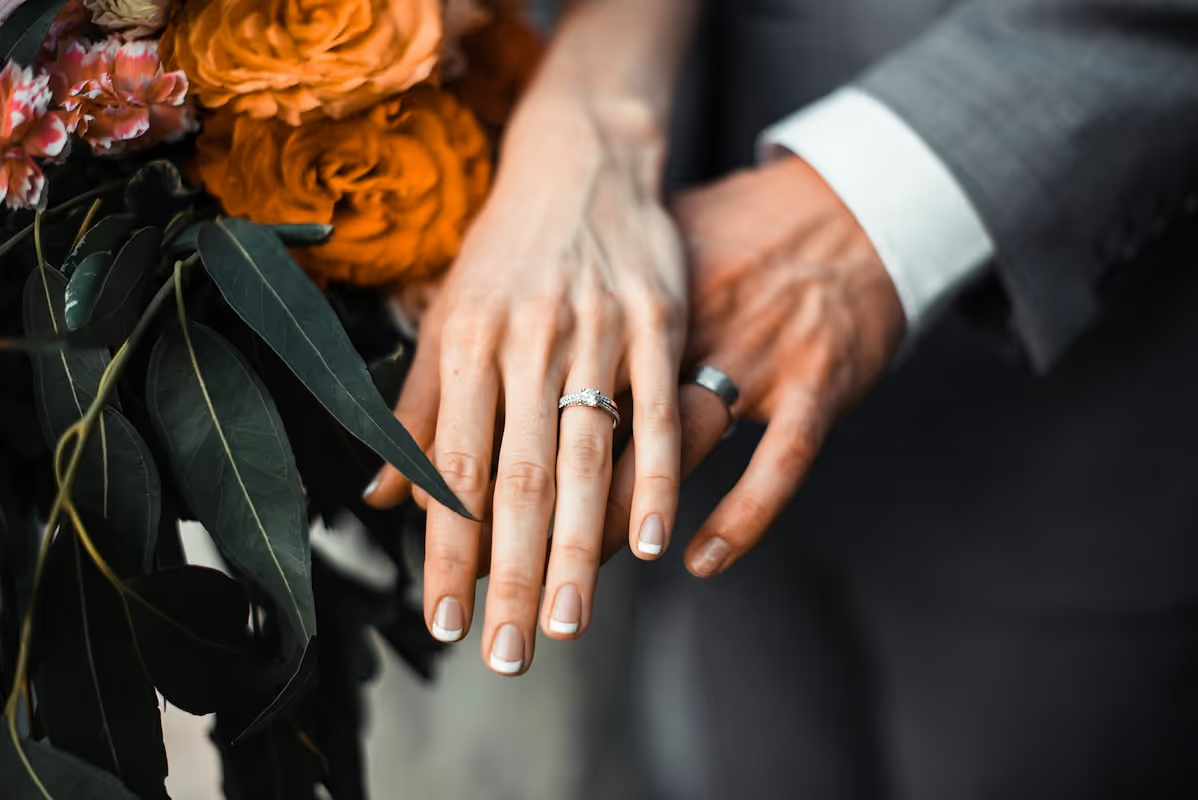
Starting a wedding photography business is a rewarding venture that blends creative artistry with smart business sense. The wedding services market is a multi-billion dollar industry, with steady demand for photographers at ceremonies, receptions, and engagement shoots.
This guide will take you through the practical steps of acquiring the right equipment, building a portfolio, obtaining necessary permits, and marketing your services to help you launch a successful wedding photography business in the U.S.
Step 1: Plan your business and research the market
Start by studying your local market. A good first step is to review the preferred vendor lists from 5-10 popular wedding venues in your area. This research shows you who is already established and trusted. Also, browse directories like The Knot and WeddingWire to gauge local styles.
While on those directories, analyze what your competitors offer. Note their package prices, the number of hours included, and if they offer extras like engagement shoots. This data helps you position your own services competitively from day one.
Typical startup costs
Your initial investment will mostly be equipment. A frequent misstep is buying too much gear at once. You can start with a solid setup and build your kit as you book clients. Your primary expenses will likely fall into these ranges.
- Professional Camera Body: $1,500 - $3,000
- Two to Three Core Lenses: $2,000 - $4,000
- Lighting and Accessories: $500 - $1,500
- Business Formation and Licensing: $100 - $500
- Website and Editing Software: $300 - $700 (annual)
This puts your initial startup range between $4,400 and $9,700. When you set your prices, remember to factor in these costs, taxes, and insurance. Many new photographers underprice because they forget to account for business overhead.
Here are 3 immediate steps to take:
- Identify 10 local wedding venues and review their photographer lists.
- Analyze the pricing and packages of 5 direct competitors in your area.
- Create a startup budget using the cost estimates provided.
Step 2: Establish your legal structure and get licensed
You might want to form a Limited Liability Company (LLC). This structure separates your business and personal assets, which provides protection. Many photographers start here instead of as a sole proprietor because it offers liability coverage without the complexity of a corporation. Tax-wise, profits pass through to your personal return.
Once you decide on a structure, register your business with your state. Then, get an Employer Identification Number (EIN) from the IRS. It is free to apply for on the IRS website and acts like a Social Security number for your business.
Secure state and local permits
Next, check with your state's Department of Revenue for a seller's permit. You will need this to collect sales tax on products like prints and albums. Also, your city or county clerk’s office will require you to have a general business license, which typically costs $50 to $150 annually.
Some locations require special-use permits for photoshoots. A permit for a state park or public garden could cost $100 to $250 and may need 3-4 weeks for approval. Always check the venue’s policy before a shoot to avoid fines.
Here are 4 immediate steps to take:
- File for an LLC with your state's Secretary of State office.
- Apply for a free EIN directly on the IRS website.
- Contact your city clerk to get a general business license application.
- Research permit requirements for two popular wedding venues in your area.
Step 3: Secure your business insurance
Your next move is to protect your business. Most wedding venues require photographers to carry general liability insurance, often with a minimum of $1 million in coverage. This protects you if a guest trips over your gear or if you damage venue property.
You should also get professional liability insurance, also known as errors and omissions. This covers you for claims related to your service, like if your memory cards corrupt and you lose the wedding photos. It is a frequent concern for new photographers.
Typical costs and where to look
A basic policy that bundles general and professional liability might cost between $400 and $1,000 annually. You will also want equipment insurance to cover your cameras and lenses against theft or damage. This coverage amount should match the replacement value of your gear.
Look for quotes from providers that understand photographers. Companies like Hiscox, The Hartford, and the Professional Photographers of America (PPA) offer tailored policies. A general agent may not grasp the specific risks you face.
Here are 4 immediate steps to take:
- Request quotes for a $1 million general liability policy.
- Create an inventory of your gear to calculate needed equipment coverage.
- Review insurance plans from Hiscox and the Professional Photographers of America (PPA).
- Ask two local venues about their vendor insurance requirements.
Step 4: Set up your workspace and buy gear
Most wedding photographers start with a home office, so you do not need a commercial studio. Designate a space of at least 100 square feet for your computer, editing station, and gear storage. This keeps your work organized and separate from your personal life.
Check your local zoning laws for home-based businesses. Since you will meet clients on-location, you likely will not have issues with residential zoning restrictions. These rules usually focus on businesses that create heavy foot traffic or noise, which does not apply here.
Choose your core equipment
You do not need every piece of gear on day one. A frequent misstep is overspending on equipment that sits unused. Instead, acquire a reliable core kit and rent specialty lenses for specific jobs until you can justify the purchase.
Your initial gear should focus on versatility and reliability. A second camera body is not a luxury; it is your safety net if your primary camera fails. Here is a breakdown of what you should prioritize.
- Two Mirrorless or DSLR Camera Bodies: $1,500 - $3,000 each
- Versatile Zoom Lens (24-70mm f/2.8): $1,800 - $2,300
- Portrait Lens (50mm f/1.8 or 85mm f/1.8): $200 - $600
- Two to Three Speedlights for Lighting: $200 - $500 each
- High-Speed Memory Cards (128GB+): $50 - $150 each
For purchasing gear, look at reputable online retailers like B&H Photo Video or Adorama. They offer competitive pricing and a wide selection. You might also find good deals on used equipment from platforms like KEH Camera or MPB.
Here are 4 immediate steps to take:
- Designate a 100-square-foot area in your home as your office.
- Research the price of a 24-70mm f/2.8 lens on B&H and Adorama.
- Add a second, backup camera body to your startup budget.
- Browse the used lens selection on KEH Camera or MPB.
Step 5: Set up your payment processing
Establish clear payment terms from the start. Most photographers require a 50% non-refundable retainer and a signed contract to reserve a wedding date. The final balance is usually due 14 to 30 days before the event. This structure protects your booking and ensures full payment.
For photographers who need to accept payments on-site, JIM offers a streamlined solution. With JIM, you can accept debit, credit, and digital wallets directly through your smartphone. Just tap and the transaction is done. Many processors charge 2.5% to 3.5%, but JIM is just 1.99% per transaction with no hidden costs.
This is particularly useful for collecting a deposit during an in-person consultation or selling prints after the wedding. No extra hardware is needed. Getting started is straightforward.
- Get Started: Download the JIM app for iOS.
- Make a Sale: Type the sales amount, hit sell, and ask your customer to tap their card or device on your phone.
- Access Funds: Your money is available on your JIM card as soon as the sale is done, with no waiting for bank transfers.
Here are 3 immediate steps to take:
- Draft your standard payment terms, including the retainer percentage and final payment due date.
- Download the JIM app to see how it works for on-the-go payments.
- Add your payment terms to your client contract template.
Step 6: Secure funding and manage your finances
Find your startup capital
You might not need a large bank loan. Many photographers start with a personal loan between $5,000 and $10,000. These often have interest rates from 8% to 20% based on your credit. Another route is equipment financing directly from retailers like B&H Photo Video.
A frequent misstep is to fund everything with high-interest credit cards. This can quickly eat into your profits. Instead, look into programs for small businesses. The SBA Microloan program offers loans up to $50,000 and is a great fit for startup gear and marketing costs.
Set up your financial systems
You will need working capital for the first three to six months before bookings become consistent. Budget for $3,000 to $6,000 to cover insurance, software, and marketing. This buffer prevents financial stress while you build your client base.
From day one, open a dedicated business checking account. Mixing personal and business funds creates a headache for taxes and makes it hard to track profitability. A separate account also presents a more professional image to lenders and clients.
Here are 4 immediate steps to take:
- Open a separate business checking account for your photography business.
- Research SBA Microloan lenders in your state.
- Calculate your working capital needs for the first six months.
- Check equipment financing options on B&H or Adorama.
Step 7: Build your team and streamline operations
Hire your support team
You will not need full-time employees at first. Instead, build a network of reliable freelancers. Your two primary hires will be a second shooter and an assistant. A second shooter captures alternate angles and candid moments during the wedding day.
Expect to pay an experienced second shooter between $50 and $100 per hour. An assistant, who helps with gear and lighting, typically earns $25 to $40 per hour. A frequent mistake is hiring someone without vetting their work. Always review a potential shooter’s portfolio to ensure their style complements yours.
Streamline your workflow
Once the wedding is over, the work continues with editing. You can outsource this to a freelance photo editor for about $0.25 to $0.50 per image. This frees you up to focus on booking your next client instead of spending 20-30 hours culling and editing.
To manage your clients, contracts, and payments, use a client management system. Platforms like HoneyBook, Studio Ninja, or Sprout Studio are popular in the industry. They automate inquiries and invoicing for a monthly fee, usually between $30 and $60.
Here are 4 immediate steps to take:
- Draft a standard contract for freelance second shooters.
- Search local photography groups for assistants to build a contact list.
- Compare the features of HoneyBook and Studio Ninja with a free trial.
- Research freelance photo editor rates on a platform like Upwork.
Step 8: Market your business and get clients
Build your online presence
Your website is your digital storefront. It should feature your best 20-30 images, clear package information, and an easy-to-use contact form. All your marketing efforts should direct potential clients back to this site.
Use Instagram and Pinterest to showcase your work. Post high-quality images 3-5 times per week and tag venues, florists, and planners. This expands your reach to their followers. A frequent mistake is to rely only on social media and neglect a professional website.
Start a blog on your website. Write articles that help couples, like "Top 5 Outdoor Wedding Spots in [Your City]." This improves your search engine ranking and attracts local clients who look for venue information online.
Network with other vendors
Connect with wedding planners and venue coordinators. Ask to be on their preferred vendor list. These relationships are a powerful source of referrals. A single planner can send you 5-10 weddings per year.
Track where your leads come from. A simple spreadsheet will do. When an inquiry comes in, ask how they found you. A typical website inquiry conversion rate is 2-4%, so you need consistent traffic to get bookings.
Here are 4 immediate steps to take:
- Identify 10 local wedding planners to introduce your business to.
- Post a gallery from a recent shoot on Instagram and tag all vendors involved.
- Outline a blog post about a popular wedding venue in your area.
- Create a spreadsheet to track the source of every new client inquiry.
Step 9: Price your services and create packages
Choose your pricing model
Most photographers use a package-based model. This bundles hours of coverage with specific deliverables like an online gallery or an album. You could also offer an hourly rate, typically $300 to $500, for elopements or shorter events.
A frequent mistake is to forget your cost of doing business (CODB). Your price must cover gear, insurance, software, taxes, and your time for shooting and editing. Aim for a profit margin of 25-40% after all expenses are paid.
Build your packages
Create three distinct packages to give clients clear options. A simple structure works best. For example, your base package might offer 6 hours of coverage with one photographer for around $2,800. This appeals to couples with smaller budgets.
Your mid-tier package is often the most popular. It could include 8 hours, a second shooter, and an engagement session for about $4,200. A premium option at $5,800 might add two more hours of coverage and a high-quality wedding album.
Here are 4 immediate steps to take:
- Calculate your total cost of doing business for a single wedding.
- Create three tiered packages with specific deliverables and prices.
- Set an à la carte price list for extras like albums or additional hours.
- Review your top five competitors' packages to ensure your prices are competitive.
Step 10: Deliver consistent quality and scale your business
Maintain your quality standards
Consistency is what turns a one-time client into a referral source. Create a checklist for every gallery you deliver. It should confirm that all images are sharp, color-corrected to your signature style, and delivered within your promised timeframe, typically 4-6 weeks.
To measure quality, send a simple feedback survey after you deliver the final gallery. Also, track your referral rate. A high number of clients from past weddings is a strong indicator of service quality. You might also consider a certification like the PPA's Certified Professional Photographer (CPP) to build credibility.
Know when to grow
Growth should be a deliberate decision. If you are booking over 80% of your available dates or turning down more than five qualified leads a month, it might be time to hire an associate photographer. This allows you to take on more work without being at every wedding yourself.
Many photographers make the mistake of expanding too quickly, which can dilute their brand. Ensure your systems and editing style are rock-solid before you bring on other shooters. Use a gallery delivery platform like Pixieset or Pic-Time to streamline client proofing and print sales as you scale.
Here are 4 immediate steps to take:
- Create a quality checklist for every gallery before delivery.
- Set up a simple post-delivery client feedback survey.
- Research the Certified Professional Photographer (CPP) requirements.
- Track the number of qualified leads you turn down each month.
You now have a clear path to launch your wedding photography business. Remember that your connection with the couple is just as important as your camera skills. Trust your vision and get ready to build something wonderful.
To keep your business operations smooth, consider how you will take payments. JIM turns your smartphone into a card reader for a flat 1.99% fee, no extra hardware needed. Download JIM to handle transactions with ease.
.avif)